The Wilder Precedent: How a Horse Racing Warrant Justifies Mass Detainees Hot News

The Wilder Precedent: How a Horse Racing Warrant Justifies Mass Detainees

(SeaPRwire) - The federal government is currently running a dangerous stress test on the Fourth Amendment, using the Idaho border as the laboratory. The core issue is not merely a local dispute over horse betting. It is a structural pivot in how immigration enforcement interacts with traditional criminal law. By exploiting a narrow legal loophole, agencies have effectively decoupled mass detention from specific, individualized suspicion. This shift creates a legal gray zone that favors speed over due process. The result is a system where the presence at a crime scene becomes sufficient grounds for arbitrary detention, regardless of citizenship status or individual culpability. The official narrative relies on the specificity of the original FBI warrant. Authorities state that agents targeted the owner of La Catedral Arena and four others for unlicensed gambling and animal fighting. The Department of Homeland Security argues that detaining others present during a valid warrant execution is "common practice." They frame the action as a dismantling of an illegal enterprise. This language minimizes the broader impact. The claim suggests that collateral arrests are a natural, if unfortunate, byproduct of rigorous law enforcement. The administration maintains that the arrests were lawful because the primary target was correctly identified and seized. The reality on the ground contradicts this tidy legal fiction. The raid involved more than 200 law enforcement officers. They utilized armored trucks and snipers. Rubber bullets and flash-bang grenades were deployed against vehicles where civilians had fled. Approximately 105 people were arrested for alleged immigration violations. This included minors as young as fourteen. Two U.S. citizens, a mother and her three-year-old son, were zip-tied and denied food for hours. Of the 105 detained, seventy-five are believed to have been deported. The legal challenge argues that ICE piggybacked on an unrelated warrant to conduct a "fishing expedition." This distinction is critical. The warrant was for gambling, not for the mass of attendees present at a cultural festival. This case sets a dangerous precedent for future operations nationwide. If courts uphold the government’s position, it validates the use of general warrants as cover for broad immigration sweeps. The potential for institutional abuse is high. Communities will face heightened anxiety and self-censorship. The chilling effect will suppress participation in public life among vulnerable populations. The legal pendulum is currently swinging toward executive authority. The outcome will determine whether Fourth Amendment protections apply to immigration enforcement or remain a dormant statute. Watch the judge’s ruling on the qualified immunity motion. That decision will define the scope of federal power for years.
More
Silicon Valley Is Minting Billionaires. The Least Fortunate Are Waiting for the Billions to Show Up. Hot News

Silicon Valley Is Minting Billionaires. The Least Fortunate Are Waiting for the Billions to Show Up.

(SeaPRwire) - The AI revolution will not distribute itself. That is the uncomfortable arithmetic no one in a Palo Alto boardroom seems willing to articulate aloud. The same technology minting a new generation of billionaires can deliver life-saving vaccines at $2 a shot in Somalia and bring 92 percent recovery rates for malnourished children in South Sudan. Yet the capital keeps flowing upward. The question is not whether the tools exist. It is who gets to hold the checkbook when the crisis hits. The evidence base for what works in humanitarian crises has never been stronger. The IRC alone has conducted over 50 impact evaluations since 2020 and 500 cost analyses. They know how to negotiate with armed groups to reach populations cut off from healthcare. They know that tackling violence against women and violence against children together reduces both by over 70 percent. They know that giving aid before a climate disaster hits—in Afghanistan, recipients were three times less likely to fall deeper into poverty. But official development assistance from OECD countries dropped by a historic 23.1 percent in 2025. Governments are retreating from global problems. The IRC's digital helpdesk Signpost has reached 20 million displaced people in 12 languages. Major tech companies helped build it. And less than 1 percent of all aid is invested in anticipatory action. There is a brutal contrast between the rhetoric and the reality here. Philanthropy remains almost entirely domestic. Around 94 percent of American philanthropy stays within U.S. borders. Meanwhile, the 20 countries ranked at greatest risk of humanitarian crisis on the IRC Emergency Watchlist represent just 12 percent of the global population yet account for 90 percent of those in humanitarian need. Children in Sudan, Gaza, and South Sudan are three times more likely to die before their fifth birthday and ten times more likely to grow up in extreme poverty than children born elsewhere. These populations contributed the least to climate change and face its consequences alongside armed conflict with virtually no support to adapt. The effective altruism framework—treating generosity as a calculation rather than a sentiment—should not surprise anyone who has watched development work collapse under its own bureaucracy. We have the data. We have the tools. What we lack is the incentive structure to redirect capital toward the places where each additional dollar travels furthest. The same technology delivering fortunes in Silicon Valley built the infrastructure for Signpost. That technology is not neutral. It will go where the attention and the rewards are. If philanthropy stays local, the gap widens. The real test for this generation of wealth creators is not how much they give. It is where they choose to give it.
More
The $101 Million Burning Pit: Vivek Ramaswamy Discovers Trumpian Capital Cannot Buy the Buckeye State Hot News

The $101 Million Burning Pit: Vivek Ramaswamy Discovers Trumpian Capital Cannot Buy the Buckeye State

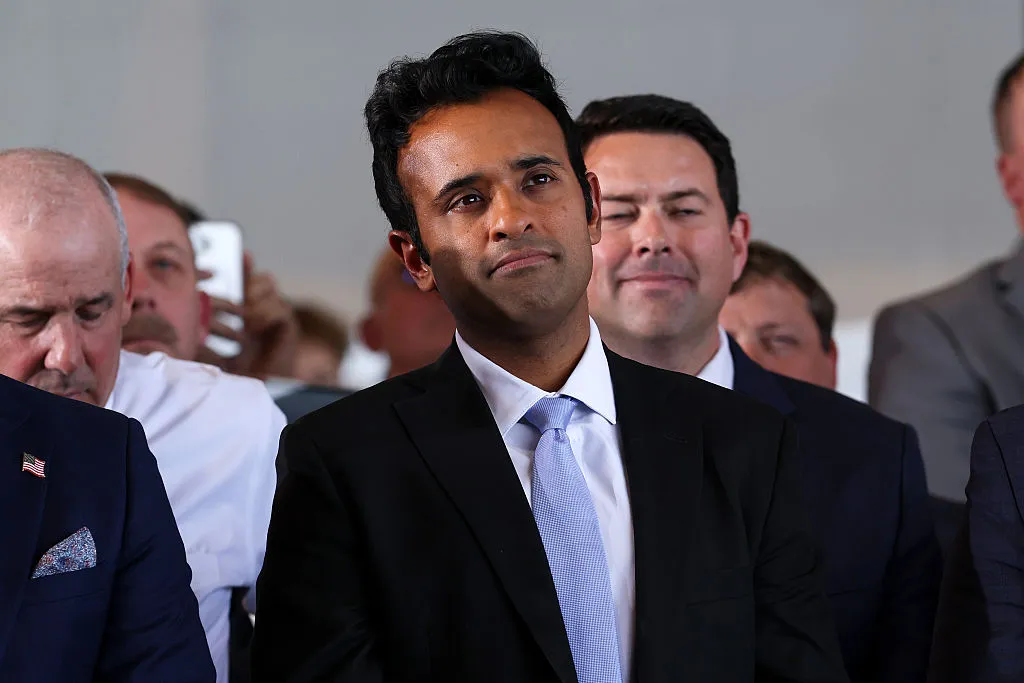
(SeaPRwire) - National political consultants still treat Ohio like a solved equation. They assume a reliable red electorate will rubber-stamp any endorsed brand. Vivek Ramaswamy is currently running into the harsh limits of that arrogance. Donald Trump carried Ohio by eight to eleven points across three cycles. Yet Ramaswamy now finds himself trailing Amy Acton. She is a former state health chief and a political novice. The demographic coalition that swept populist candidates into office does not automatically transfer to tech wealth. Suburban moderates are quietly stepping back. Working-class voters are unimpressed by performative social media stunts. Ohio has spent decades backing cautious, predictable conservatives. Ramaswamy promised to be the most conservative governor in the state's history. That friction is now turning what should have been an easy coronation into a brutal knife fight.The spending imbalance exposes deep structural panic inside the Republican apparatus. Ramaswamy and his aligned groups have unleashed $101 million on negative advertising. Ramaswamy personally funded $36 million of that war chest. Meanwhile, Acton and her supporters have spent barely a third of that amount. Money typically insulates an establishment candidate in statewide races. Here, massive capital deployment is delivering diminishing returns. Cracks appeared early during the spring primary. Auto entrepreneur Casey Putsch challenged Ramaswamy from the right on an explicit America First platform. Putsch ran hostile spots challenging Ramaswamy to games of cowboys and Indians. Trump endorsed Ramaswamy immediately, yet Putsch still captured nearly one-in-five primary votes. That primary margin sent an unmistakable warning signal. Millions of regular primary voters rejected the anointed national figure. Down-ballot mechanics expose a fractured state operation. Acton’s campaign has framed Ramaswamy as an out-of-touch corporate operator. She attacks his personal fortune and weaponizes local anti-billionaire grievances. The lifestyle disconnect is obvious to local precinct captains. Ohio is a compact, driveable state. Ramaswamy has instead relied on a private corporate jet to hop between events. When hecklers confronted him at Xavier University in Cincinnati, he walked off the stage entirely. Online videos showing him hitting tennis balls while rattling off economic talking points drew widespread ridicule. He was publicly booed during the Ohio State football season opener. Observers later mocked him for wearing a knock-off team jersey. At an October rally in Youngstown with Trump, Ramaswamy pivoted to safe meritocracy talking points. The scripted rhetoric cannot mask the ground-level resistance across suburban wards.The candidate's economic messaging clashes violently with local community interests. In boardrooms and suburban chambers of commerce, he pitches deregulation and broad tax cuts. Outside those rooms, he champions industrial AI data centers. Local communities widely distrust these power-hungry installations. The ads targeting Acton have devolved into accusations about personal stability. Her team retaliates by labeling him an investment fraud. Both sides are burning cash on personal character destruction. Neither nominee has an extensive legislative voting record to defend. In the parallel Senate contest, Jon Husted and Sherrod Brown duel over known legislative histories. In the governor’s race, voters face raw character assassination. Ramaswamy is running out of message discipline. When high-volume ad spending fails to move polling needles, campaigns get ugly fast.The party machine engineered this crisis by stripping away local gatekeeping. On February 24 of last year, Trump posted his absolute endorsement on Truth Social. That single post sidelined seasoned state veterans. It boxed out state Attorney General Dave Yost. It shut down state Treasurer Robert Sprague. It forced Lieutenant Governor Jim Tressel out of contention. Party leaders sacrificed regional institutional memory to satisfy national populist media figures. If Democrats flip the mansion, Ohio immediately re-enters the 2028 presidential battleground map. State party chairs across the Midwest are watching closely. Imposing charismatic donors over battle-tested local administrators creates massive electoral vulnerability. Centralized endorsements cannot override fractured base fundamentals.
More

Four Bodies, One Dry October: What the Wainwright Fire Exposes About Canada’s Strategic Blind Spot

(SeaPRwire) - Four soldiers dead inside a peacetime training installation is not a war story. It is a systems failure dressed in the language of tragedy. Prime Minister Mark Carney used the word "violent" to describe the blaze at Canadian Forces Base Wainwright on October 17, 2026. He called it one of the worst tragedies for forces on Canadian soil in peacetime. Those words carry weight, but they also reveal something uncomfortable. A country with a professional standing army of over 1,300 personnel at its busiest army base cannot explain why high winds, dry October conditions, and a rapidly spreading fire killed four of its own. The fact that Defense Minister David McGuinty told the public he "cannot recall an incident like this" tells you everything about how much institutional memory exists around this failure. Wainwright is not a secondary facility. It hosts the Canadian Manoeuvre Training Centre and the 3rd Canadian Division Training Centre. It is the preferred ground for army field force units based in Western Canada. Retired Major-General Denis Thompson described the training there as bringing together infantry and artillery in large-scale live-fire exercises, sometimes including air-dropped munitions. This is where Canada's land force learns to do the hardest things the country asks of anyone. And on this dry October day, the ground itself became the weapon. The raw facts are stark. The fire ignited within the training area in the late afternoon of October 17. The Canadian Armed Forces said the flames spread rapidly due to high winds, extending beyond the base perimeter toward the adjacent Municipal District of Wainwright. Four service members died. Dozens were wounded. Edmonton hospitals declared a Code Orange alert, a designation reserved exclusively for external disasters or mass casualty incidents. Wainwright Mayor Bruce Pugh confirmed to CBC that this was the largest mass casualty event the community had ever seen. Pugh, who lives over 100 miles southeast of Edmonton in a town of 6,600 where neighbors play on the same hockey teams and send kids to the same schools, said the base went quiet after the cannon fire stopped. He realized something had happened when the fire department was activated. The mayor noted that October had been dry and that high winds were a contributing factor. Alberta Health Services said it was gathering additional information. The military stated there is no indication of terrorism. McGuinty said an investigation would be launched and was en route to Edmonton. He had spoken with both Carney and Alberta Premier Danielle Smith. Meanwhile, Carney had recently returned to Ottawa after a visit to Alberta, where the province was preparing to vote on Monday about whether to begin the legal process of potentially separating from Canada. No details about what started the blaze had been released. The Canadian Armed Forces said additional details would be confirmed after next-of-kin were notified. The political arithmetic here is brutal. This incident lands in Alberta on the eve of a sovereignty referendum. A province already debating its place inside the country just lost four soldiers in a training accident its own government cannot yet explain. Carney's statement that "Canadians come together in crisis" reads as both sincere and strategically necessary. The phrase "worst tragedies for forces on Canadian soil in peacetime" is not neutral. It positions this event as a defining moment for the current government's competence. McGuinty's call to describe the incident as "very active and delicate" suggests an awareness that premature statements could trigger panic or political exploitation. But the real cost is not political theater. It is structural. Wainwright is one of Canada's busiest army bases, and it absorbed a catastrophe that triggered a Code Orange across the Edmonton hospital system. If a single dry October afternoon with high winds can take down one of the country's most critical training nodes, the question is not whether the investigation will find negligence or bad luck. The question is whether Canada has a realistic understanding of how fragile its military training infrastructure is against environmental and operational stress. The investigation is underway. The answers do not change what already happened. Four dead service members, dozens wounded, one Code Orange, and a national conversation about sovereignty happening 100 miles away. The investigation will take months. The political damage took one afternoon.
More
Denmark Tripled Cardiac Survival by Mandating School CPR. Seven U.S. States Are Still Missing the Memo. Hot News

Denmark Tripled Cardiac Survival by Mandating School CPR. Seven U.S. States Are Still Missing the Memo.

(SeaPRwire) - Two Michigan high school students sat in the bleachers on a late afternoon in 2024 when their physical education teacher collapsed from cardiac arrest during a student-teacher basketball game. Both had recently completed CPR training at a career-focused technical nursing center. They ran. They began chest compressions. They located and used an automated external defibrillator before emergency responders arrived. Their teacher lived. He is one of approximately 350,000 Americans who suffer an out-of-hospital cardiac arrest each year. Roughly nine out of ten of those victims do not survive. The difference between those who live and those who die is not primarily a question of hospital speed. It is a question of whether the person standing closest has the skill to act in the first few minutes. The U.S. school CPR mandate landscape is a patchwork of forty-three states and seven holdouts. Alabama required CPR for high school graduation as early as 1984. In West Virginia and Alaska, educators' unions formally backed CPR legislation. In Washington and Illinois, efforts advanced in memory of students lost to cardiac arrest. Seven states remain outside the mandate entirely: California, Colorado, Hawaii, Massachusetts, Nebraska, New Hampshire, and Wyoming. Massachusetts has since invested $425,000 to expand CPR education in public schools. Colorado includes hands-on CPR and AED instruction in its statewide health education guidelines but stops short of requiring schools to provide it. California Governor Gavin Newsom recently signed a resolution directing the Instructional Quality Commission to include high school CPR in the state's next health curriculum framework. San Francisco is taking an even broader approach, with paramedics and firefighters working to train 100,000 community members in CPR. At the federal level, Buffalo Bills safety Damar Hamlin, who suffered cardiac arrest on the field in 2023, became a leading advocate for the bipartisan HEARTS Act. Congress passed it unanimously in 2024. President Biden signed it into law that year. It supports schools in expanding AED access, CPR and AED education, and cardiac emergency response planning. The real-world survival data supports the mandate argument with unusual clarity. Denmark introduced nationwide resuscitation initiatives including mandatory school CPR education between 2001 and 2010. Bystander CPR rates more than doubled during that decade. Thirty-day survival after out-of-hospital cardiac arrest more than tripled. A study of nearly 300,000 out-of-hospital cardiac arrests across twenty U.S. states found that patients had twelve percent higher odds of receiving bystander CPR in states with high school CPR education laws compared to those without. The International Liaison Committee on Resuscitation research shows children can absorb the early links in the chain of survival from age four and perform effective chest compressions by age twelve. The WHO-endorsed KIDS SAVE LIVES initiative provides a scalable blueprint calling for recurring, age-appropriate basic life support education beginning in childhood. Schools already rehearse fire drills and lockdown drills for dangers that are statistically rare. Cardiac arrest is far more common and far less rehearsed. Legal fears that still slow adoption in the seven holdout states are not grounded in evidence. Every state has Good Samaritan laws protecting those who render emergency aid in good faith. A thirty-year review of U.S. litigation across all fifty states from 1989 to 2019 found no cases in which a layperson who provided CPR was held liable for causing harm. Georgia's Wesley's Law and Indiana's Stop the Bleed programs offer a clear operational playbook. After their son's overdose death, Laura and Larry Gay championed legislation requiring public schools in Georgia to stock naloxone. By 2025, the state launched an opioid-settlement-funded initiative to provide overdose-reversal kits to public schools statewide, along with training resources for staff. In Indiana, emergency-response professionals helped expand Stop the Bleed training in schools, and the state's Secured School Safety Grant program now offers funding for school bleeding-control programs and kits. Broadening collaboration among the American Medical Association, American Red Cross, Project ADAM, and the American Heart Association could accelerate CPR education nationwide. The seven states that have not mandated CPR education are not facing an unsolved policy question. The data exists. The federal law exists. The legal precedent exists. The funding models exist. What is missing is the final legislative call in seven statehouses. Cardiac arrest does not negotiate legislative timelines. Every minute without CPR is a percentage point the patient cannot recover.
More
The $2 Billion Gaza Pipeline: Netanyahu’s Containment Bet, Now in Black and White Hot News

The $2 Billion Gaza Pipeline: Netanyahu’s Containment Bet, Now in Black and White

(SeaPRwire) - Benjamin Netanyahu built his entire political brand on being the one man who could keep Israel safe. The documents TIME obtained dismantle that claim with brutal efficiency. They show Israel's own intelligence chiefs writing thank-you letters to Qatar's emir for funding Hamas-controlled Gaza. Nearly $2 billion moved through a system Israel helped design, approve, and administer. This was not a policy that happened to Netanyahu. It was his policy. And Israeli voters, heading to the polls on October 27, must now decide whether that policy was deliberate strategy, catastrophic negligence, or both. The paper trail is damning, and it is precise. It begins in 2007, when Hamas seized control of Gaza and Qatar began sending money. Ehud Olmert was prime minister then. Israel kept its distance from the transfers. Netanyahu changed that in 2012. His government approved a system where Israel delivered food and medical supplies, determined which Palestinian families qualified for financial aid, and enabled Qatari financing to expand Gaza's electricity supply. By 2018, Qatar had sent roughly $1.1 billion into the Strip. The number came from an analysis provided to Israeli ministers and reported by Haaretz. The funding covered humanitarian assistance, fuel, and government salaries. That year, the Qataris demanded formal documentation. They were tired of Israeli officials denouncing them in public while privately requesting more money. A senior official from the first Trump Administration confirmed that contradiction to TIME. So Israel, Qatar, and the United Nations formalized the arrangement. On October 2, 2018, they signed an agreement to finance fuel deliveries into Gaza. Two years later, Mossad director Yossi Cohen wrote to Qatar's Emir Tamim bin Hamad Al Thani. "It is indeed a great opportunity to express our gratitude and appreciation for the humanitarian aid efforts that the State of Qatar has provided the last few years to the Gaza Strip," Cohen wrote. "Undoubtedly, these humanitarian efforts have played a crucial role in improving the humanitarian situation within the Gaza Strip, and ensuring stability and safety in the region." A Mossad director does not write such letters by accident. He writes them because the prime minister wants the money to keep flowing. In August 2021, Qatar signed another agreement committing $40 million to a cash assistance program. UN special coordinator Tor Wennesland publicly praised such efforts as vital to improving Gaza's dire humanitarian situation. The strategic logic was twisted but coherent. Netanyahu believed something simple. Keep Hamas strong enough to rule Gaza. Not strong enough to threaten Israel. That would permanently split the Palestinians. No unified Palestinian leadership meant no two-state negotiation. Meanwhile, Israel could normalize relations with the Arab world. The aid would give Hamas something to lose. Containment through cash. That was the bet. It failed catastrophically on October 7, 2023. Hamas terrorists stormed southern Israel, murdered some 1,200 people, and took 251 more hostage. The financial lifeline did not moderate Hamas. It sustained the group's grip on power and helped enable the assault. Qatari officials now point out one thing. All aid passed through Israel. UN organizations delivered it, coordinating with Israeli authorities. Nothing went directly from Qatar to Hamas. Technically true. Politically hollow. Israel oversaw the mechanism, approved the families, signed the agreements, and created the delivery system. This had support across the board. Successive Israeli governments, the Palestinians, the Trump and Biden Administrations, the United Nations, and European powers all backed it. That does not absolve Netanyahu. It indicts an entire establishment that chose convenience over security. Qatar, after all, set up a Hamas political office in Doha at the request of the United States in 2011. Everyone knew who was receiving the money. Netanyahu's office declined to comment. One former Israeli defense official put it plainly: "It was a policy failure on our part born of good intentions that multiple prime ministers kept going. But Netanyahu was unquestionably at the center of it. He was the one who championed and accelerated the program, his government was in charge of the way it was run, and now we know as a society that we can never afford to make a mistake like that again." Israeli voters face their verdict on October 27. The documents guarantee they will render it with full knowledge of what their leader did. That is the only honest outcome left.
More
Trading Democracy for Diesel: How One Signature Rewired Washington’s Russia Playbook Hot News

Trading Democracy for Diesel: How One Signature Rewired Washington’s Russia Playbook

(SeaPRwire) - Washington just performed a magic trick. Congress passes a sanctions bill with overwhelming bipartisan support, names it after Lindsey O. Graham, and schedules it to bite on Oct. 18. Then the President picks up a pen on Friday and waves most of it away. The Lindsey O. Graham Sanctioning Russia and Iran Act, aimed at Russian officials, banks, and buyers of Russian crude, never gets its first day of enforcement. Jeff Colgan at Brown University calls it plainly: trading Ukrainian democracy for diesel. He is not being poetic. He is reading the receipts. The blocked law carried real teeth. Tariffs up to 100% on goods from major purchasers of Russian oil and gas. Sanctions on the financial plumbing feeding the war machine. The U.K.'s Foreign Office estimated in June 2025 that existing sanctions had already cost Moscow at least $450 billion in war funds since February 2022. Trump's waiver keeps old measures in place but kills the added squeeze. One week earlier, on Oct. 9, he announced a diesel deal with Russia. Treasury issued a temporary license authorizing Russian diesel transactions, including U.S. imports, through April 7, 2027. Trump claimed Russia would supply over 4.8 million tons and cut prices "IN RECORD NUMBERS." The economics do not support the theater. Tatiana Mitrova of Columbia's Center on Global Energy Policy says any pump-level benefit for Americans would be small, delayed, and modest at best. The waiver itself creates no new supply. The real winner is Moscow, which dodges sanctions that could have hit its far larger crude export revenues. Meanwhile Trump claimed an "energy ceasefire" on Oct. 11. Ukrainian officials reported Russian strikes hours later, and Zelensky said the agreement was news to him. That same day, Trump called for Zelensky's replacement. Now watch the maneuvering behind the curtain. The bill cleared Congress on Sept. 16 with overwhelming bipartisan backing, which means the waiver is not a partisan skirmish. It is an executive overriding his own party's stated position, days before midterm elections on Nov. 3. Fuel prices are the domestic obsession. Trump has repeatedly pressed Kyiv to halt strikes on Russian fuel infrastructure, blaming those attacks for American pump prices. Yet war-related disruptions tied to Iran and reduced Russian refinery activity are the bigger drivers. The political math favors cheap diesel over allied pressure, and everyone in the Capitol knows it. The alliance consequences compound quietly. Konstantin Sonin at the University of Chicago reads the waiver as a symbolic gift to Putin, a morale boost signaling that Washington is drifting away from its European role. Europe keeps tightening sanctions while Washington reverses direction. Mitrova warns this undermines a central pillar of Western strategy and reinforces the Kremlin's belief that it can simply outlast support. Zelensky responded on X: blocking the sanctions "definitely helps only the Russians" and "certainly does not stop the war." Both parties criticized the waiver. The criticism changed nothing. Watch the next sanctions bill die the same way, and Kyiv will stop asking Washington for permission before it acts.
More
The $1 Trillion Climate Lie: Why Debt Is Strangling the AI and Energy Pivot Hot News

The $1 Trillion Climate Lie: Why Debt Is Strangling the AI and Energy Pivot

(SeaPRwire) - There is a convenient silence at the World Bank and IMF fall meetings in Bangkok. Leaders talk about the war in Iran, the surge in AI, and soaring public debt. Climate change? It has vanished from the top of the agenda. Yet, the data tells a different story. The "triple shock" identified by the United Nations Development Programme is not just an economic problem. It is a climate disaster in financial disguise. The UNDP report points to high borrowing costs, energy price spikes, and extreme weather events driven by El Niño. These are not separate items. They are the same crisis. The most common policy response is not a fix. It is a bandage. Ninety-five countries have implemented fuel price supports. Think subsidies or tax cuts. The UNDP estimates explicit fuel subsidies could surpass $1 trillion this year globally. This approach is unsustainable. Backlash to higher prices persists even as governments bleed cash to keep citizens calm. While the broad majority resorts to subsidies, a smaller group of countries is attempting structural change. These nations are investing in renewable energy, energy efficiency, and electrification. Picture subsidies for electric buses or cutting tariffs on solar panels. This is the right path. But not every country can afford it. Heavy indebtedness and high interest rates are the primary blockers. El Niño and broader climate shocks make it harder for these economies to pay for new infrastructure that reduces exposure to fossil fuel volatility. The IMF’s World Economic Outlook is light on climate talk, but the logic holds. Indebtedness makes it difficult to invest in AI infrastructure. The IMF plots countries’ AI preparedness alongside the non-fossil share of their energy supply. Energy security and the capacity to adopt AI are intersecting. Dependence on volatile imported fossil fuels compounds this challenge, given AI’s massive energy needs. This emergent dynamic adds a new layer to the argument for non-fossil energy in emerging markets. But it also shows how complicated achieving that end will be. Cheap clean tech hardware is not enough. The financial architecture for deployment is broken. If you cannot borrow to build solar farms because your debt load is too high, the transition stalls. The "green" transition is currently a luxury item for the wealthy. For the rest, it is a distant hope blocked by the very debt that climate shocks are creating. The policy gap is not an oversight. It is a structural failure. We are funding the symptoms, not the cause.
More
One Sale in Ten Years: How a Widow with No Art Training Built the Van Gogh Empire Out of a Family Tragedy Hot News

One Sale in Ten Years: How a Widow with No Art Training Built the Van Gogh Empire Out of a Family Tragedy

(SeaPRwire) - The Van Gogh story is usually told as a tragedy of madness. That framing is wrong, or at least badly incomplete. Strip away the mythology and what remains is a brutal commercial failure story, and then one of the most successful asset-rehabilitation campaigns in the history of any market. Consider the numbers. Over ten years, Vincent van Gogh produced more than 800 paintings and 700 drawings. His brother Theo, a Paris art dealer and his sole source of income, managed to sell exactly one painting in Vincent's lifetime: Red Vineyard at Arles. That is a conversion rate no fund manager would survive. Vincent lived on a monthly allowance, complained constantly about being broke, sometimes lacked money for food, and begged his brother for more. The arrangement poisoned the relationship the way money always poisons families. In July of 1890, convinced he had failed as an artist and as a man, Vincent shot himself in the chest. He was 37. Six months later, Theo died from the ravages of syphilis. The ear-cutting episode fits the same economic logic. The standard account blames the fight with Gauguin, who was threatening to leave Arles. But the mutilation happened the very day Vincent likely learned that Theo and Jo were engaged. Experts including Martin Bailey suspect the real trigger was terror of abandonment, the fear that his patron-brother would build a new family and cut off the allowance. And the suicide came days after a tense Paris visit in which Theo talked of quitting his job, budgets were tight, and arguments erupted. Vincent left that apartment convinced he was a burden. This was not simply mental illness. It was a dependent supplier watching his only distribution channel wobble. Now look at what happened to the inventory. Jo van Gogh-Bonger, the young widow, inherited more than 400 paintings, works like The Potato Eaters, Irises, Sunflowers, the self-portraits, and The Starry Night. At the time the market priced them as the unpolished output of a depressed, crazy man. Commercially worthless. She had a baby to feed, little money, and canvases stuffed under beds, in closets, and at a nearby art supply store. She also had no formal art training. What she had was conviction and a plan. She read the hundreds of letters Vincent and Theo had exchanged, first to feel close to her dead husband, then because she recognized what they contained: proof that Vincent was not a lunatic who flung paint, but a deliberate craftsman who thought hard about his work. Her strategy was textbook brand-building, decades before the term existed. She organized exhibitions. She lobbied critics. She controlled the narrative by publishing the letters, which showed Vincent's vulnerability and anguish alongside his intelligence and his bond with Theo. In 1914 she pulled it off, releasing the letters in an ambitious three-volume book now regarded as one of the most revealing documents in art history. She even carried guilt about her own unintended role in the collapse, admitting she understood Vincent grew more isolated after she married his brother. None of that stopped the execution. The woman who was partly a trigger for the tragedy became the chief architect of the redemption. The commercial loop here deserves cold attention. Value in art is not manufactured at the easel. It is manufactured afterward, through narrative control, scarcity management, and relentless institutional placement. Jo understood this intuitively. She did not discount the work to move units. She built context, published primary-source material, and let the letters reframe the painter from madman to misunderstood genius. The market followed the story, not the brushwork. Stand in front of The Starry Night at the Museum of Modern Art today, where visitors whisper that it is overwhelming and magical, and you are looking at the finished product of her campaign. Painted in June 1889 inside an asylum in the south of France, assembled from a village, a sky, a cypress, and things Vincent had seen separately and fused together, it now anchors a reputation that Gauguin, hanging ignored one canvas to the left, never achieved. The lesson for anyone managing undervalued assets is uncomfortable and simple. Genius without a distributor dies broke, and the person who controls the posthumous narrative controls the price. Jo van Gogh-Bonger proved it with 400 worthless canvases and a printing press.
More
275,000 People Proved It. Your Company Is Still Betting on Coffee and Gyms. Hot News

275,000 People Proved It. Your Company Is Still Betting on Coffee and Gyms.

(SeaPRwire) - The modern workplace is drowning in productivity frameworks. KPI dashboards and engagement surveys line every executive dashboard. Everyone has one more app telling managers how to motivate their teams. HR departments pour millions into offsites, peer-recognition platforms, and wellness stipends. None of it seems to close the satisfaction gap. Burnout rates keep climbing. Turnover keeps accelerating. Yet here is the glaring oversight. Nobody is measuring the single variable that separates performers who coast from those who actually thrive. The research has been sitting in plain sight for two decades. It is called zest. It is not a fad or a feel-good slogan for a management seminar. It is a measured character strength. It has one of the strongest empirical correlations to mental well-being ever recorded. And most companies still treat it as optional enrichment rather than a core operational input. The data has been waiting patiently. The gap between what we know and what we do in the workplace has never been wider. Every leadership conference produces another engagement framework. Every HR team launches another pulse survey. None of them measure the one trait that the evidence says separates thriving employees from coasting ones. Meanwhile, burnout continues to rise and engagement scores continue to stagnate. Psychologists Christopher Peterson and Martin Seligman pioneered the field of positive psychology. That means the scientific study of human flourishing. They published Character Strengths and Virtues in 2004. It was a groundbreaking text that cataloged 24 universal character strengths. Zest is one of those 24. But it is not just another checkbox on a personality inventory. It is not a nice-sounding value statement on a corporate wall. An analysis of data from 130 studies involved more than 275,000 people globally. The findings should have entered mainstream management discourse long ago. Most character strengths were associated with greater mental health. But zest was one of only two strengths that had the strongest relationship to mental well-being. This held across countries and age groups. The other was hope. Just two strengths cleared this threshold. Zest and hope stood apart from the rest. Zest contributed to life satisfaction among children, adolescents, and adults. In a separate study of nearly 10,000 employed adults, those who scored high on zest reported higher work satisfaction. They were more likely to view their work as a calling. People who scored high on measures of zest also viewed their lives as meaningful. When you cultivate zest, you want to fully engage in life. You do not just view it from the sidelines. You wake to anticipation over the day's possibilities. You do not brace for the inevitable grind. The data is not ambiguous. The evidence base is too large to dismiss. This trait outperforms almost every other measured character strength. The outcomes matter to individuals and to the organizations they inhabit. Ryan Niemiec is a psychologist and author. He wrote The Power of Character Strengths. He also wrote Character Strengths Interventions: A Field Guide for Practitioners. He serves as the chief science and education officer at the VIA Institute on Character. The institute is a non-profit. It focuses on the science and practice of character strengths. Niemiec puts the practical lever for boosting zest in plain terms. He points straight to behavioral activation. He calls it one of the most proven strategies for depression. In practical terms, this means taking action to lift one's energy. He encourages people to engage every day in one healthy pleasure. One form of physical activity. And one action that makes you feel like you accomplished something. The examples are grounded and immediate. Take a brisk 10-minute walk every morning before the inbox opens. Engage in cardiovascular or strength-building challenges during the workweek. Practice Reiki or yoga when the calendar permits. Laugh with friends during a lunch break. Do not scroll through a feed thick with chaos and gloom. Engage in stimulating tasks and meaningful work. Do not default to mindless busywork. The VIA Institute on Character provides activities, workbooks, videos, and webinars. Some are free. They cover improving all 24 character strengths including zest. For those dealing with physical illness or chronic pain, Niemiec recommends professional assistance. A psychologist can help with the mental side. A physician can advise on the physical. A personal trainer can guide the behavioral shifts. For the vast majority of working adults navigating modern noise, the pathway to cultivating zest is straightforward. It is also critically underutilized. Most organizations have never heard of behavioral activation in this context. They have never connected it to character strength development. The tools are free and readily available. They just sit in the VIA Institute's library, gathering dust while companies chase the next engagement gimmick. The commercial implication becomes difficult to ignore once you sit with the numbers. Organizations spend billions annually on engagement initiatives. They fund wellness perks and leadership development programs. Yet the research consistently shows something counterintuitive. The employees who experience work as a calling are not the ones with the fanciest gym memberships. They are not the ones with the most generous parental leave policies. They are the ones who have cultivated genuine zest. They wake up to anticipation rather than dread. They engage fully in their tasks. They do not halfheartedly coast through obligations. They see their work as meaningful. They do not treat it as merely functional. True zest is not hyperarousal or excess caffeine. It is a cultivated cheerfulness and joy. It is vitality, exuberance, and joie de vivre. That is the French phrase for the joy of living. Research supports the idea that no one is ever too old to change. We can learn how to cultivate zest. It works regardless of our starting point. Some of us naturally carry this irresistible aliveness. We invigorate those around us. Others work hard to build it deliberately. The gap between where organizations invest and where the evidence points has never been wider. Every company could restructure a fraction of its wellness budget. They could teach behavioral activation basics to their workforce. The payback would not be limited to well-being metrics. It would show up in retention rates. In output quality. In error reduction. And in the quality of a team that genuinely wants to be present. For those who are hard on themselves, the investment case is even stronger. They expect their mental health to stretch under strain. They expect it to hold without development. Building skills, traits, and perspectives that help is not optional enrichment. It is infrastructure. Acquiring zest is a worthwhile investment. It helps through challenging times. It helps us see beauty and soar in our lives and workplaces. The data from 130 studies and 275,000 people is not a subtle whisper. It is the loudest signal in the room. Most leaders walk past it every single morning. No one needs a new app to start. The data already tells us what works. The question is whether anyone in the room will act on it. The research has been waiting. The next quarter is close enough to matter. It has already passed for most of them.
More
A Party Filmed in 1972, Released in 2025: Why One Unfinished Documentary Is Outclassing Everything in Theaters Hot News

A Party Filmed in 1972, Released in 2025: Why One Unfinished Documentary Is Outclassing Everything in Theaters

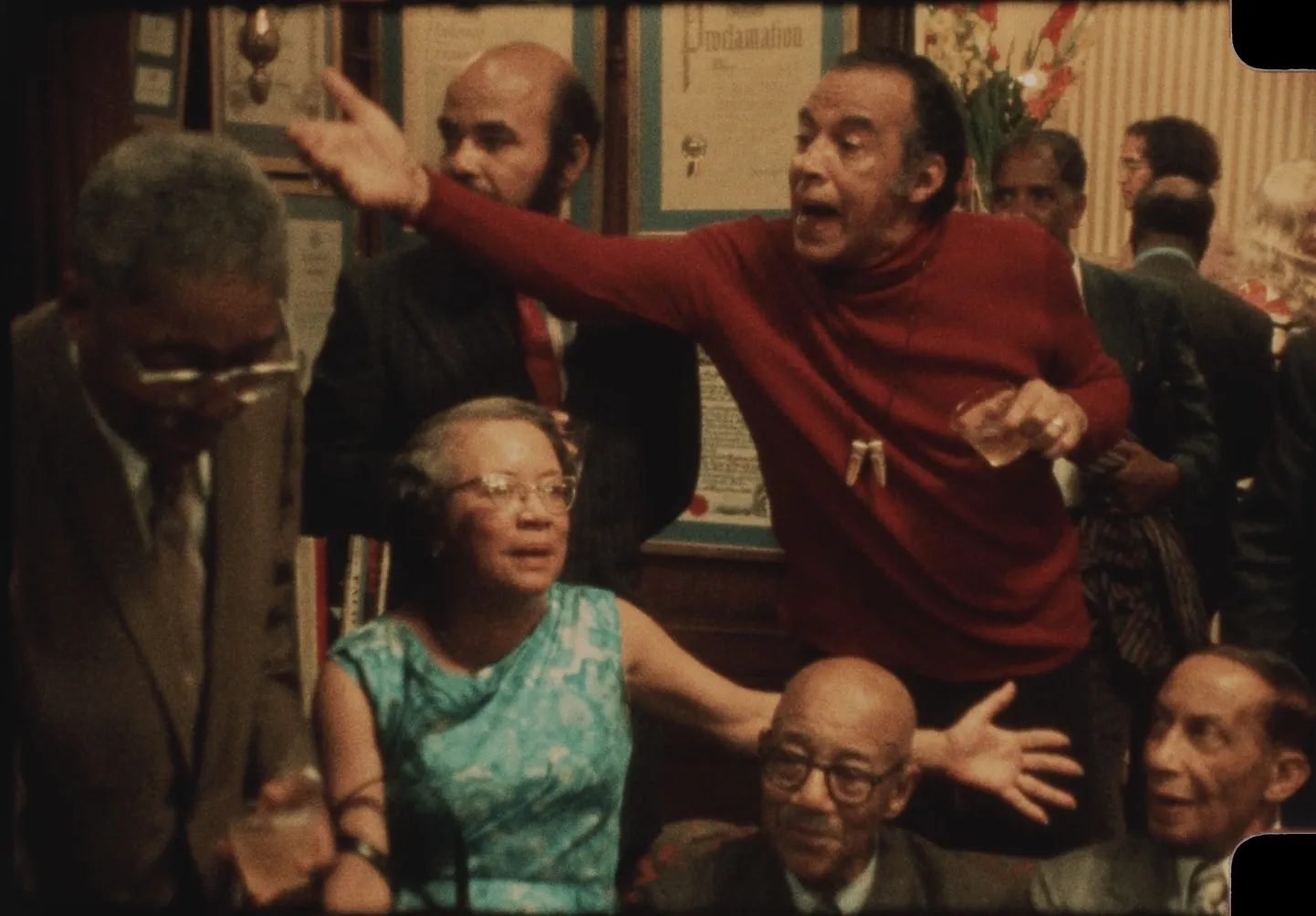
(SeaPRwire) - Forget the streaming wars for a minute. The most interesting media story this season is a film shot half a century ago, shelved for decades, and finished by the director's family after his death. Once Upon a Time in Harlem is not a product of any algorithm or content pipeline. It is a rescued asset, a piece of intellectual property that nearly died in the edit bay. And now critics are calling it one of the great documentaries of the year. That should unsettle every executive who thinks volume equals value. Here is the raw material. In 1972, filmmaker William Greaves borrowed Duke Ellington's Harlem apartment and gathered surviving giants of the Harlem Renaissance. Aaron Douglas, Arna Bontemps, Gerri Major, Eubie Blake. Many had not seen each other in fifty years. Greaves filmed the reunion, his son David working as a cinematographer. The goal was a record of how these people lived, and a meditation on how we honor the keepers of our past. Ellington, ill, never made it to his own party. The film nearly never existed. Greaves, already established through Symbiopsychotaxiplasm: Take One and the pioneering public television program Black Journal, called this project one of the most important of his life. He worked on it off and on for years. He died in 2014 with it unfinished. His son David and granddaughter Liani, a producer, finally completed it. Anne DeMare and Lynn True handled the edit. NEON is distributing. The gap between footage and release is over fifty years, which may be a record in delayed gratification. Now the industry angle. Documentaries are drowning in commissioned true-crime filler and celebrity hagiography, cheap to make, quick to forget. This film proves the opposite model works: patient preservation, authentic access, no narration crutch. The footage itself is the asset. Van Der Zee sits at Ellington's piano and plays. Richard B. Moore recites Claude McKay's If We Must Die from memory. Ida Mae Cullen argues, sharply, that the Renaissance lasted exactly one decade. No reenactments needed. Authenticity this dense cannot be manufactured or licensed. The deeper lesson concerns archive economics. Regina Andrews tells of working at the 135th Street library branch, befriending Cullen and Langston Hughes, and her friends quietly collecting dishes from Chinese restaurants so she could host poets. As she puts it, it was the joy of living and creating together. Moments like that are the real scarcity in media. Studios spend billions chasing franchises while unprocessed film cans sit in family storage, appreciating in cultural value. Whoever funds the next archive rescue gets prestige at a fraction of blockbuster cost. The next great documentary is already sitting in someone's attic, waiting for a family stubborn enough to finish it.
More
The Austen Reset: Why Daisy Edgar-Jones Is the Heroine of Modern Resilience Hot News

The Austen Reset: Why Daisy Edgar-Jones Is the Heroine of Modern Resilience

(SeaPRwire) - There is a specific type of cultural anxiety that triggers whenever a new Jane Austen adaptation hits the streamer’s queue. It is not merely nostalgia for Ang Lee’s 1995 classic. It is a fear that the material is too small for a modern, saturated market. The immediate reaction from critics and fans alike was one of dismay. How could anyone dare to top Emma Thompson’s work? But this reaction reveals a deeper structural problem in how we consume literature. We treat famous adaptations as terminal stops rather than starting lines. We cling to familiar favorites out of habit, not hunger. The release of this new *Sense and Sensibility* is a test case for that habit. It asks whether the audience is ready to let go of nostalgia or if they will just re-watch the old version. The answer, so far, is that the new version is not just a copy. It is a deliberate pivot toward a different kind of emotional truth. Georgia Oakley’s directorial debut in this genre brings a distinct shift in tone. She previously directed *Blue Jean*, a 2022 drama with a raw, emotional core. That background is visible here. The film does not rely on the glossy, high-gloss production value typical of period pieces. Instead, it uses the landscape as a character. The drowsy closeups of wildflowers and the placid grazing deer set a specific mood. It is a mood of suspension. The cinematography by Arnaud Potier creates a handsome, genteel look that avoids being pretentious. The contrast between the lively country dance and the formal, regimented London ball is sharp. Oakley makes no mistake about which environment allows for genuine connection. This is not just about costumes. It is about the economic reality of the era. The Dashwood women are in a precarious financial position. Their father died, and his property went to a son from a previous marriage, John, played by Tom Brooke. His wife, Fanny, played by Stacy Martin, is disagreeable. The sisters move into modest quarters arranged by Mrs. Jennings, played by Fiona Shaw. Shaw brings a blissfully dithery energy to the role. She is an unrepentant meddler. Her interventions drive the plot forward with chaotic efficiency. The casting is the true commercial driver here. Daisy Edgar-Jones plays Elinor, the sensible sister. Esmé Creed-Miles plays Marianne, the dreamer. The dynamic between them is the engine of the story. Marianne is set on the flirty Mr. Willoughby, played by Frank Dillane. He is fun and lively, which makes him dangerous. The more suitable suitor is Colonel Brandon, played by Herbert Nordrum. He is stalwart but dull. If you have not read the book, you are left to guess who wins. That is the point. The romance is a mask for a deeper anxiety. Marianne is self-centered. She wears her heart on her sleeve as a way to control outcomes. Creed-Miles makes her likable despite this flaw. When Marianne is hurt, the audience hurts with her. It is a raw, bruised anguish. Edgar-Jones plays Elinor with subdued fire. Elinor matches expectations with reality. She falls for Edward Ferrars, played by George MacKay, who is Fanny’s brother. He is kind and modest, the opposite of her arrogant sister-in-law. Edgar-Jones shows that Elinor wants more but does not ask for it. This is a crucial distinction. It is not just about romance. It is about the cost of being practical in a world that rewards performance. The industry implication is clear. This film targets a gap in the market for emotionally literate period content. It does not compete with the high-octane blockbusters. It competes with the comfort content that drives subscription retention. The success of *Blue Jean* proved Oakley can handle complex emotional narratives. This film proves she can scale that talent to a wider audience. The commercial loop is simple. Streamers need reliable content to keep subscribers engaged during low-impact news cycles. Classic literature offers that reliability. The end-game is not about replacing the 1995 version. It is about owning a new slot in the algorithm. The audience for austen is not shrinking. It is just getting fragmented. This film captures the fragment that is tired of sentimentality. It offers a heroine who is correct but not cold. That is a marketable product.
More
Trump’s 51st State Threat Is a Gift to Carney, Not a Death Sentence for Canada Hot News

Trump’s 51st State Threat Is a Gift to Carney, Not a Death Sentence for Canada

(SeaPRwire) - Mark Carney stands in Calgary telling Albertans that outsiders want to "break them so they can own them." Donald Trump has just returned to his old line about Canada becoming the 51st state. On paper this looks like an existential threat. In practice it is probably the single most useful thing that has happened to Canadian federal politics in five years. Carney has turned a foreign bully's worst insult into a domestic rallying cry, and the numbers already show it working. Let us separate the noise from the signal. Carney said the referendum on Alberta's independence comes at the "worst possible time" and warned that people outside the borders are working to break Canada. He did not name the United States. He does not need to. Trump made the threat explicit at a rally in Arizona, repeating that Canada will "end up being the 51st state." The context is clear. Trade negotiations collapsed in August. Canada's retaliatory tariffs came into effect last month. The two countries now stand locked in a full economic standoff. But the official rhetoric and the real intent are moving in different directions. Trump is using the language of annexation to pressure Ottawa. His actual weapon is market access. He has already weaponized it. Patrick Leblond of the University of Ottawa put it plainly: what is happening is not talk of invasion. It is economic squeeze applied to a country that sees itself as vulnerable. The original communique carries one subtext. The geopolitical reality carries another. On the Canadian side, the government is pushing "Canada Strong," a strategy built on choosing Canadian products and taking back economic power. Carney has spent months framing independence referendums in Alberta and Quebec as opportunities for Alberta to "stand up for the heart of Canada." He wants the country to feel cornered in a way that only produces unity. The official position is firm resistance. The real intent, at least from Carney's vantage point, is to convert external pressure into domestic cohesion. Here is what the data shows. Seventy-five percent of Albertans would vote to remain part of Canada, according to polling by 338Canada released on October 11. Only 31 percent of Quebecers back sovereignty, even though the Parti Québécois won Quebec's provincial election earlier this month. Quebec's incoming Premier Paul St-Pierre Plamondon has already said he intends to hold an independence referendum, but he also vowed not to initiate a vote while Trump remains in office. Carney himself admitted in a New York Times interview that he studied the risk of a U.S. invasion as a "tail risk" exercise. That is not panic. That is risk management dressed as preparation. Between Trudeau's resignation on January 6, 2025, and the federal election on April 28, Carney's Liberal Party jumped from 20 percent to 42.8 percent in the polls. Favorable views of the United States among Canadians have dropped. Lori Turnbull of Dalhousie University argues that Quebec would never seek alignment with the United States because Canadian cultural protections would disappear overnight. The evidence supports her. Canadian attachment to the federation is higher than attachment to any province, according to research by the Environics Institute for Survey Research in 2025. Trump's rhetoric is not fragmenting Canada. It is fusing it. The United States remains Canada's largest trading partner. Roughly $2.6 billion in goods and services crosses the border every day. Total trade stood at $872.3 billion in the most recent full-year figure available. Trade has declined by 4.6 percent from 2024 to 2025, but that number still represents one of the deepest bilateral economic relationships on the planet. Leblond warns that Trump will keep applying pressure. He called Canada a "small, weak country" in the White House's calculus. The economic threat is real and cumulative. The annexation threat is largely theater. Carney's challenge is no longer about defending sovereignty from a foreign army. It is about managing a trade war that hits factory floors, energy projects, and household budgets without fracturing the political coalition he has built. The Alberta vote on whether to hold an independence referendum arrives at a tense moment. But the math is on his side. The referendum itself may yet pass, yet even a "yes" vote on a second independence referendum does not equal separation. It equals leverage. Carney needs Alberta to feel threatened enough to reject the breakup. The external pressure gives him exactly that lever. The geopolitical pendulum is shifting. Canada has moved from negotiating partners treated with casual disdain under the previous American administration to a country whose unity is being stress-tested by the very man who claims it should belong to him. Carney is using that stress. The question now is not whether Trump's words will break Canada. The question is whether Canada can survive the trade pressure long enough to make its case for economic independence on its own terms. The answer to that will determine the real shape of the next decade of North American relations.
More
The Whale Eats Everything: How a Mid-Budget Genre Film Found Its Soul Under 60 Tons of Sperm Whales Hot News

The Whale Eats Everything: How a Mid-Budget Genre Film Found Its Soul Under 60 Tons of Sperm Whales

(SeaPRwire) - Studios spent last year chasing prestige horror. The results were uneven. A24 had their run. Neon built their brand. Now everyone wants a slice of that elevated-genre pie. Enter Whalefall. An 80-foot sperm whale. A 60-ton digestive tract. One diver with 106 minutes of screen time and roughly an hour of oxygen. This is not subtle. This is a survival film that chose the single most cramped setting in cinematic history. Whalefall opens with a devastating choice. Josh Brolin as Mitt Gardiner straps diving weights to himself. He jumps off his boat off Northern California's Monastery Beach. Before he goes, he seals letters for his wife and three children in a cooler. A year later his son Jay, played by Austin Abrams, goes back into those same waters. Not for closure. For his father's remains. Instead he gets swallowed whole by the very creature his father jumped to his death near. The squid is just the first problem. The stomach acid, the methane gas, the orca attack later, the threat of being crushed by constricting organs. None of it matters as much as what happens inside Jay's head. The marketing pushed this as a visceral creature-feature. Brolin told the Direct that the whale represents "a symbol of how to get out of our own way." That line does more narrative heavy lifting than half the trailers this season. The film's second act lives in flashbacks. Mitt was harsh. Emotionally abusive in ways that never made it to the surface until Jay was literally inside something that couldn't shake him off. The tough-love diving lessons Mitt drilled into him as a child become the only tools Jay has left. He survives not through heroics but through compliance. Through finally hearing what his father was trying to say. "The whale is forever." That closing line lands because the film earned it through suffering. What Whalefall gets right is harder to admit than what it gets wrong. The premise is preposterous. A man surviving inside a whale's stomach through chemical explosions and sheer will? Fine. We signed up for that. The cheese is real. Some of the dialogue could have used a rewrite. But the film does something most genre entries skip. It lets grief sit in the frame. It does not rush past the father-son dynamic to get to the next scare. Jay's hallucinations from oxygen deprivation are not just visual set pieces. They are therapy sessions with a ghost. The orca attack outside mirrors the internal predator. Jay is being hunted by his own unresolved trauma. The film understands that metaphor when most directors treat it as decoration. Where Whalefall faces headwinds is obvious. Horror audiences split in two camps. Crowd-pleaser tentpoles draw families and casual viewers. A24-style elevated horror draws cinephiles and critics. Whalefall sits in a middle ground that has historically been hard to monetize. The film carries 20th Century Studios branding behind it. That means some distribution muscle. It does not guarantee a comfortable path to profitability. The original 2023 novel by Daniel Kraus gives the property a built-in audience. That helps. It does not erase the risk of mid-budget genre releases in a market that increasingly rewards either superhero spectacle or festival darling prestige. The numbers will tell the real story. Box office performance over the opening weekend and hold patterns over subsequent weeks matter more than review scores. Austin Abrams carried Resident Evil earlier this year. His name recognition is real but niche. Josh Brolin brings gravitas. His presence signals that this film takes itself seriously even when the premise does not. That combination could attract an older horror demographic that most creature features ignore. The emotional core gives the film legs beyond opening weekend novelty. Whether the marketing campaign captures that depth remains the question. If Whalefall sells itself purely as a stomach-exploding splatter fest it will miss what actually works. If it leans into the grief narrative it might carve out a sustainable audience for a film that deserves one. The horror genre is consolidating. Mid-budget entries face upward pressure on production costs and downward pressure on theatrical window windows. Every release now carries an implicit bet that original concepts can compete with franchise IP. Whalefall is that bet wrapped in blubber. The film works when it remembers that horror at its best is about internal damage externalized. Jay does not escape the whale because he is tougher than his father. He escapes because he finally internalizes everything Mitt tried to force into him. The whale digests. So does grief. The film understands that process even when the squid beak does not give it much time to explain.
More
Five Days at the Podium: What Katie Zacharia’s Blink-and-Gone Tenure Really Tells Us About Trump’s Communications Machine Hot News

Five Days at the Podium: What Katie Zacharia’s Blink-and-Gone Tenure Really Tells Us About Trump’s Communications Machine

(SeaPRwire) - Washington has a long tradition of measuring loyalty in years, but this White House measures it in news cycles. Katie Zacharia's exit as press secretary after roughly five days is not merely a personnel footnote. It is a diagnostic tool. When a presidency burns through its public face faster than a campaign burns through yard signs, the pathology runs deeper than one unqualified hire. The comparison everyone reaches for is Anthony Scaramucci, whose eleven days as communications director in 2017 coined a unit of time now jokingly called a "Scaramucci." Zacharia managed less than half of that. Yet the Scaramucci episode ended with John Kelly, a chief of staff enforcing order. Zacharia's ended with Trump himself telling reporters, outside the White House, that he had advised her to "reconsider," while framing the whole affair as an act of compassion. That distinction matters. The first was institutional discipline. The second is a president improvising damage control in real time. The official narrative, delivered by Trump himself, is almost tender. "I just want her to be happy," he said. He insisted the decision was hers, promised to speak with her after a trip to Georgia, and complained that the media had treated her "pretty nastily" and "very unfairly." Read carefully, this is a familiar Trumpian move: convert a staffing failure into a persecution story. The real intentions sit underneath. Zacharia's first briefing lasted fourteen minutes and took questions from only three reporters, an abysmal debut that invited ridicule. Then came the credential problem. In his Truth Social post announcing the role, Trump called her "an attorney." She described herself as a lawyer. Asked where she had passed the bar, she answered, "when I moved to China," later claiming she misheard the question, before conceding to Sean Hannity on Fox that she had, in fact, failed the bar exam. Her defense was revealing: "those questions weren't asked," and she was being hired as press secretary, not White House counsel. Now place the biography against the vetting standard. Zacharia had worked as general counsel at the conservative nonprofit Fix California, as a communications adviser at Trump Media and Technology Group, and as a spokesperson for former Homeland Security Secretary Kristi Noem. She was a fixture on Fox News and Newsmax. On paper, this is precisely the résumé this administration rewards: loyalty, media fluency within friendly channels, and movement credentials. What it lacked was the one thing the press secretary's podium demands most, the ability to withstand hostile scrutiny from a briefing room that does not share her priors. Karoline Leavitt, the youngest press secretary in history, stepped down in August after returning from maternity leave and has since joined Fox News as a contributor. The conveyor belt is visible: the podium now functions less as an office of the presidency and more as a revolving audition for conservative media careers. The pendulum here swings in only one direction, and it is toward further erosion of the briefing as a serious instrument of government communication. An administration that selects its press secretary on loyalty metrics, fails to check a bar admission, and then retreats within a week has told every future candidate the same thing: the job is disposable, and so are you. Expect the next appointee to be safer, blander, and even more insulated from the press corps. The podium will survive. Its credibility will not.
More
The Elizabeth Holmes Documentary That Accidentally Indicts Its Own Directors Hot News

The Elizabeth Holmes Documentary That Accidentally Indicts Its Own Directors

(SeaPRwire) - Here is the uncomfortable truth about You Can See Everything: the convicted fraudster is not the most manipulative person in the frame. Nathan Fielder and Lance Oppenheim's film, which debuted to rapturous notices at the Telluride Film Festival and has been hailed as a reinvention of nonfiction cinema, spends its first half doing exactly what its subject spent years doing at Theranos. It performs transparency while carefully controlling the narrative. Holmes, convicted of fraud in 2018 and sentenced to just over 11 years in federal prison beginning May 2023, opened her home to the filmmakers for the 34 days before her incarceration. She promised to hide nothing. Fielder, ever the on-screen provocateur, catches her in slippery half-truths, then reacts with widening eyes and a slack puppet jaw for the cameras. The audience I screened it with giggled every time. That is the design. Faux-Kabuki irony has replaced earnestness as the dominant register of prestige documentary, and if this is where creative-nonfiction filmmaking is headed, the absence of Frederick Wiseman will be felt even more acutely. The facts of the production matter, because they reveal the film's true commercial architecture. Holmes and her partner Billy Evans, having withdrawn from public view, approached A24 themselves about making a documentary. Evans wanted the world to see the devoted partner and mother he believed had been unfairly villainized. Fielder and Oppenheim, friends and like-minded ironists behind Nathan for You, The Rehearsal, and Some Kind of Heaven, took the assignment. The first half delivers what both parties contracted for: Holmes insisting "All I know is my truth," smiling through every answer, never breaking eye contact with those glassy, translucent blue eyes the critic compares to 19th-century porcelain dolls, while Evans interrupts constantly to add his 3,268 cents and float plans for a new company. It is a feedback loop of self-justification, filmed. Then the film's second half breaks the loop entirely. Two years after Holmes went to prison, access collapses. Evans, recast as an increasingly sinister gatekeeper eager to monetize his wife's words and likeness, curtails everything. The filmmakers, deprived of their subject, pivot to enlisting Amanda Seyfried, who played Holmes in the 2022 miniseries The Dropout, as both stand-in and moral interlocutor. That pivot is where the film becomes genuinely watchable, and genuinely revealing. Fielder's sympathies visibly migrate. He begins to wonder whether Holmes is a victim not merely of public opinion but of the man raising her two children. Seyfried weighs the possibility that a woman who believed her company could disrupt health care was both manipulated and misjudged, while remaining sharp enough to notice Fielder tipping into emotional over-attachment. This is the real story the film stumbles into: not Holmes's credibility, which evaporated long ago, but the documentary industry's own. A production initiated by its subject's household, executed by directors whose brand is engineered awkwardness, and salvaged in post by recruiting a Hollywood actress to play moral conscience. Every layer is a transaction dressed as inquiry. The business loop is airtight. A24 gets a conversation piece. Fielder gets another auteur credit. Evans gets his rehabilitation campaign, then a villain edit when he stops cooperating. Holmes gets sympathetic coverage without granting a single honest answer. The only party with no seat at this table is the audience, which is sold the illusion of access while being shown a film whose second half exists precisely because access was revoked. Watch it as a case study in how narrative capital circulates when everyone involved has something to sell, and the person with the least to lose is the one already in prison.
More
Your “Harmless” Neck Lump Is a Ticking Clock: The 12 Symptoms ENT Doctors Say You’re Waiting On Until It’s Too Late Hot News

Your “Harmless” Neck Lump Is a Ticking Clock: The 12 Symptoms ENT Doctors Say You’re Waiting On Until It’s Too Late

(SeaPRwire) - The quiet killer in American healthcare isn't a disease. It's the gap between noticing a symptom and acting on it. ENT doctors all carry the same frustrating story. A patient notices something wrong. A benign explanation gets accepted. By the time a specialist looks properly, the damage is permanent. These cases aren't medical mysteries. They're system failures. The official guidance is clear enough. Sudden hearing loss in one ear is an emergency. Dr. Ryan Salvador, an ENT surgeon at Sinus & Snoring Specialists in Austin, watched his own father get dismissed at urgent care with a fluid diagnosis. Eight weeks passed before an ENT saw him. That ear is now completely deaf. Steroids could have helped. Timing killed the option. A neck lump that doesn't hurt deserves a two-week deadline. Dr. Shaun Desai treated a medical student who sat on a salivary gland tumor for eight months because he blamed a cold. Dr. Arnbjorn Toset hears the same rationalization daily: "Doctor, it's not hurting me." Pain isn't the yardstick. The throat that worsens into a "hot potato voice" can be a peritonsillar abscess. It can close the airway. An eye that swells during a sinus infection may mean the infection crossed the thin bone between sinus and orbit. Double vision is a late sign. A hoarse voice that lasts four weeks needs an ENT look. Salvador's teacher couldn't project her voice because a thyroid tumor had paralyzed one vocal cord. Even dentures that suddenly fit wrong can reveal a growth underneath. The real-world behavior runs in the opposite direction. Patients normalize. The muffled ear is congestion. The painless lump is harmless. The partner's snoring is a relationship problem, not a clue that the airway closes during sleep. Apnea raises blood pressure and ruins rest, but the complaint that reaches the doctor is about noise, not about the silent pauses. The salivary gland that swells with every meal gets ignored because it shrinks afterward. Toset says the pattern points to a blocked duct, a stone, or something else in the gland. The word "benign" is a diagnosis. It requires proof. Urgent care misses this because it's built for triage, not for detection. It rules out the catastrophic and sends you home with a story. That story becomes the reason you don't come back. Here's the blunt part. The knowledge exists. The tools exist. The patient journey still depends on self-advocacy, and self-advocacy is fragile. Nobody wants to be the person who cried wolf. So they wait. Salvador's words are the whole argument: "the earlier the better." That isn't a soft guideline. It's an ultimatum. Every symptom on this list has a reversible phase and an irreversible phase. The only variable is the date you book the appointment. Feeling a lump? Two weeks, not two months. Ear went quiet? Emergency room, not WebMD. Hoarseness past a month? Get the scope. The office exam takes two minutes. The surgery for what you delayed takes considerably longer. The system won't fix its triage culture overnight. Shorten your own delay instead.
More
The Sickness Nobody Talks About: Why the NFL’s Gladiatorial Engine Ignores Athletes’ Biology Until It’s Too Late Hot News

The Sickness Nobody Talks About: Why the NFL’s Gladiatorial Engine Ignores Athletes’ Biology Until It’s Too Late

(SeaPRwire) - Jalen Hurts sat in a London hotel room on a Wednesday night, and the ultrasound results came back with one word that should have been the end of the story: movement. The Eagles had already played a risk. They cleared their starting quarterback to take snaps after finding a superficial clot. Then the clot moved. Now Hurts misses Sunday's game against Carolina. Not because of a torn ligament. Not because of a concussion protocol. Because a vein in his calf decided to become a danger zone. The NFL treats athletes like they are made of reinforced steel. The body does not work that way. Veins can clot after trauma. Blood flow slows when you sit through long flights between games in different time zones. The risk multiplies when the league schedules a Thursday Night Football, a short week, and international travel all inside a seven-day window. Teams see the schedule as a puzzle of logistics. Doctors see a patient whose circulatory system is being pushed past its tolerance. Here are the facts as they unfolded. On October 4, Hurts was struck in the calf during the Eagles-Jaguars match at Tottenham Hotspur Stadium. Four days passed before he sought treatment. An ultrasound in London revealed a superficial blood clot. Doctors cleared him to play the next day anyway. A follow-up ultrasound Wednesday night showed movement in that clot. The Eagles announced Thursday he would miss Sunday's game against Carolina while treatment is determined. None of those details beyond the basic timeline have been disclosed by the organization. And according to Dr. Stephan Moll, a hematologist at the University of North Carolina who runs an Athletes and Blood Clots Clinic, the word movement is not even standard clinical language. It could mean the clot is growing. It could mean nothing more serious. What we know is limited. What we do not know is precisely what makes this dangerous. Superficial clots form in veins near the skin. They cause redness, warmth, tenderness. You can sometimes feel them as a hard line beneath the surface. Deep vein thrombosis forms inside the muscle. It causes swelling throughout the entire calf or ankle. The deeper the clot, the greater the risk that a fragment breaks loose and travels to the lungs. That is a pulmonary embolism. That is fatal. Dr. William Shutze, a vascular surgeon and vice president of the Society for Vascular Surgery, compares the venous system to a highway network. When one route is blocked, blood takes a detour. The question is whether that detour leads somewhere safe. The Eagles did not share clot length or proximity to the deep system. Those numbers matter. Clots longer than five centimeters or within three centimeters of where a superficial vein joins a deep one are treated more aggressively. Blood thinners become standard. Without those details, we are left guessing about the decision-making calculus inside the Eagles medical room. Did they weigh the risk of a pulmonary embolism against the cost of sitting their franchise quarterback? That is not a conspiracy theory. That is the exact calculation that happens in every sports medicine office under pressure from front offices. The deeper issue is structural. Athletes minimize symptoms because they do not want to lose playing time. Coaches demand availability because games have consequences. The commercial loop in professional sports rewards toughness and punishes caution. A player who says nothing about leg soreness stays on the field. A player who reports unusual swelling gets benched until someone proves the risk was real. The system selects for silence. Hurts' case exposes that selection pressure. He played after diagnosis. He sat after movement was detected. The timeline shows a team that tried to extract maximum value from a dangerous situation, then pulled back when the data forced a different answer. That is not negligence. That is the normal behavior of an organization operating under incentive structures that prioritize short-term performance over long-term health outcomes. The remedy is not emotional appeals to compassion. It is structural redesign. Mandatory vascular screening protocols for any lower extremity trauma. Standardized clot measurement criteria that remove subjective judgment from clearance decisions. Independent medical review boards with authority to override team physicians when imaging reveals high-risk features. These are not radical proposals. They are basic risk management practices applied to a population whose bodies are being pushed into pathological states. The NFL does not regulate itself because the revenue model depends on athletes playing. That is the commercial reality. Until the league accepts that a superficial clot can kill a player just as certainly as a spinal injury, the same calculations will repeat. Another quarterback will suit up. Another ultrasound will show movement. Another announcement will come on a Thursday.
More
The Broccoli Stem Problem: Why Food-Waste Experts Can’t Escape the Trash, Either Hot News

The Broccoli Stem Problem: Why Food-Waste Experts Can’t Escape the Trash, Either

(SeaPRwire) - You buy the squash because it looks beautiful. You make plans. A week later it sits in your crisper drawer going soft, and you toss it without a second thought. This is not a personal failing. It is a structural one. Even the people who study food waste professionally fall into the same trap. The gap between intention and action is wider than any of us would like to admit. Shelie Miller at the University of Michigan describes the pull perfectly. Autumn arrives. The acorn squash shows up. She puts it in the cart. Then life happens. Miller and her husband now rely on a shared grocery list just to stay honest. Jonathan Deutsch at Drexel Food Lab watches home cooks discard broccoli stems by the pound. He calls the interior tender and delicious. He air-fries it. Brian Roe at Ohio State buys apples in Costco quantities but keeps them in the fridge. One variable changed. Spoilage practically vanished. What does this mean for the industry? It means the food-waste problem is not a knowledge problem. It is an execution problem. Experts know the tactics. They build systems. They still face the same temptations and gaps in routine. The market for waste reduction is therefore huge and stubborn. Solutions that work depend on architecture, not awareness. Meal planning tools. Smart storage. Right-sized packaging. The companies that figure out how to embed these habits into daily life will capture real margin. The ones selling guilt will not. The end-game is simple. Food waste is a design failure. Retailers, manufacturers, and households all share blame. But the path to reduction runs through behavior engineering, not better PR. If you can remove the decision from the moment, people stop wasting food. That is the only business model that scales.
More
Proposition 40 Is the Band-Aid. The Bleeding Wound Is Corporate Power Hot News

Proposition 40 Is the Band-Aid. The Bleeding Wound Is Corporate Power

(SeaPRwire) - California voters face Proposition 40 this November. A one-time 5% wealth tax on the net worth of the state's billionaires, union-backed. Bernie Sanders and Ro Khanna have a federal version. A dozen states advanced millionaire or billionaire taxes this year. Maine, Washington, Hawaii, and Rhode Island already enacted one. The anger is justified. The arithmetic is brutal. The 25 wealthiest Americans pay a true tax rate of just 3.4%. Nurses and teachers pay more. That top group holds about 2% of the nation's wealth, nearly as much as the entire bottom half of the country combined. Forbes counted a record 3,428 billionaires this spring, worth $20.1 trillion, up $4 trillion in a year. Elon Musk topped the list at $839 billion and became history's first trillionaire this summer. Workers' share of economic output fell to 52.8%, the lowest since records began in 1947. Billionaire wealth at an all-time high while labor takes home an all-time low. The contrast is obscene. The tax is aimed at the wrong target. Respect the policy facts, then track what a wealth tax actually changes. It claws back winnings after the fact. It does not touch the machinery that mints new billionaires. This year's Forbes list added 390 newcomers. Musk, Bezos, and their peers are photographs on the wall. The camera is corporate power. Since the late 1990s, three-quarters of American industries have grown more concentrated. Corporate margins have roughly tripled since 1980. After-tax profits sat below 10% of GDP for virtually all of 1950 to 2010. Now they exceed 12%, near the record. Thomas Philippon calculates that weakened competition costs the typical household about $300 a month. Profit is simply what remains after wages are held down, taxes minimized, and costs pushed onto workers, communities, and the environment. The richest tenth of Americans own nearly 90% of household stock-market wealth. Every dollar shifted from paychecks to profit flows almost undiluted to the top. That is the actual loophole. Equity. The corporate structure producing this was deliberately built. Milton Friedman declared in 1970 that a corporation's only social responsibility is profit. Executive pay became a river of stock options and buybacks. Buybacks now send over a trillion dollars a year to shareholders instead of wages or investment. Before 1982, the practice was treated as market manipulation. Union membership fell from 20% of American workers to 10%. Antitrust enforcement went quiet. Look at the fortunes themselves. A federal watchdog found Walmart among the biggest employers of workers on Medicaid and food stamps. Taxpayers subsidize the payroll beneath the Walton dynasty. Amazon paid no federal income tax on billions in profit while Bezos's wealth compounded and warehouse union drives were fought. Political spending became the highest-return investment a large company can make. Lewis Powell's 1971 memo put business on a political war footing. Lobbying is now a multibillion-dollar industry, with business outspending labor and public-interest groups 34-to-one. Citizens United removed the last meaningful limits in 2010. The 2024 election cost nearly $16 billion, mostly corporate money. Under President Donald Trump, the exchange turned brazen. Corporations handed seven-figure donations to his inaugural fund. Oil executives were asked point-blank for $1 billion at a Mar-a-Lago dinner and watched climate rules fall. Paramount paid $16 million to settle a lawsuit legal experts dismissed while its merger awaited federal approval. The crypto industry spent more than $130 million on the 2024 races, saw enforcement cases evaporate, and is now pouring hundreds of millions into the 2026 midterms. This is not a side effect. It is the operating system. Vote for Proposition 40. Pass the state and federal versions. Let the revenue fund healthcare and schools. But understand the limit. The shareholder-primacy corporation is a policy choice. It was built through lobbying and lawmaking since the 1970s. It can be unmade. Early American corporate charters were granted for limited public purposes and could be revoked when abused. That tradition is recoverable. Ownership itself can be redesigned. I have studied companies deliberately structured so that no one can extract a dynastic fortune because the equity is legally locked to purpose. Patagonia's founder moved the company into a purpose trust in 2022, making extraction impossible by design. Bosch has been majority-owned by a foundation for decades and still competes ferociously. Steward ownership, employee ownership, and benefit corporations already operate in thousands of companies around the world. They attack wealth concentration at its source. The wealth-tax debate asks how to redistribute the gains that flowed from corporate power. That is the wrong question. Redistribute the power itself. Taxing billionaires is acceptable. Letting the machine keep minting them is the real failure.
More