
APEX FTE Expo 2026 Unites Aviation Leaders in Singapore and Honors Passenger Experience Excellence ACN Newswire

APEX FTE Expo 2026 Unites Aviation Leaders in Singapore and Honors Passenger Experience Excellence

SINGAPORE, Nov 21, 2026 - (ACN Newswire via SeaPRwire.com) - APEX FTE EXPO 2026 brought together nearly 2,000 registered airline, airport, and industry leaders at Marina Bay Sands Expo & Convention Centre, bringing APEX's flagship show back to Singapore for the first time in a decade as the largest end-to-end passenger experience and innovation expo, spanning every stage of the passenger journey. Hosted by the Airline Passenger Experience Association (APEX), Future Travel Experience (FTE), and the International Flight Services Association (IFSA), the EXPO united over 300 airline representatives from more than 60 airlines worldwide, airport operators, and more than 100 exhibitors under one roof, building on 15 years of APEX FTE's Asia event. The two days culminated in the APEX Awards Ceremony, where the industry honored the leaders, airlines, and innovators whose work passengers feel long after they land.Across two days of airline chief executive keynotes, exclusive announcements, live culinary showcases, and three award ceremonies, the EXPO followed the passenger from curb to cabin, from airport technology and digital identity to inflight connectivity, cabin design, and onboard hospitality. Changi Airport Group, steward of one of the world's most celebrated airports, joined as Headline Partner, with Executive Vice President of Airport Management Jayson Goh delivering the opening keynote following welcome addresses from APEX Group CEO Dr. Joe Leader and Future Travel Experience Managing Director Max Gosney."Passengers remember a journey by how it felt, from the first step into the terminal to the last bite of a meal at altitude. The airlines, airports, and partners who cultivate every step of the journey with care earn the loyalty that follows," APEX Group CEO Dr. Joe Leader emphasized. "With APEX's flagship show back in Singapore for the first time in a decade, the people behind the terminal, the cabin, the connection, and the table came together in Singapore to shape the end-to-end journey. The industry that we all craft together stands as one that treats the passenger's entire trip as the turnkey product and measures itself by how it moves from the curb to the cabin to home again."Leaders Across the Passenger ExperienceThe speaking lineup brought together airline and airport executives, digital innovators, technology and media leaders, and company founders and principals:Airline LeadershipAeroméxico CEO Dr. Andrés Conesa Labastida; Fiji Airways Managing Director and CEO Paul Scurrah AM; Royal Brunei Airlines INT. CEO Colonel Norsuriati binti Haji Sharbini; Oman Air CEO Nasser Al Sharji; Philippine Airlines President Richard Nuttall; Royal Brunei Airlines Chief Commercial Officer Joshua Kok Hwa Law; Air France Executive Vice President of Customer Experience Fabien Pelous; American Airlines Senior Vice President of Customer Experience Design and Strategy Rhonda Crawford; ZIPAIR Executive Officer and Chief Marketing Officer for Strategy Takuya Matsuo.Digital, AI, and Innovation LeadershipAeroméxico Chief Digital and Customer Experience Officer Andrés Castañeda; Changi Airport Group Senior Vice President of DIVA Digital Factory Jeffrey Loke; SimpliFlying Chief Product Officer Shubhodeep Pal; Axinom CEO Ralph Wagner; Pattern Labs CEO and Co-Founder Kellen Schroeter; Loyalty Status Co CEO Mark Ross-Smith; VIBEQUEST Founder and CEO Brandon Capps; Bytes not Bricks Founder Javed Malik.Airport LeadershipChangi Airport Group Executive Vice President of Airport Management Jayson Goh; Queensland Airports Ltd. Chief of Aviation Adam Rowe.Inflight Technology, Entertainment, and Media LeadershipHughes Senior Vice President and General Manager Reza Rasoulian; BBC Studios Senior Vice President of Out of Home and BBC News Commercial Development for Global Markets Zina Neophytou; Spafax Senior Vice President of Global Business Development Dimitrios Tsirangelos; Sam Chui Aviation Media Consultancy Founder and Principal Sam Chui.Design, Hospitality, and Industry Services LeadershipTangerine Founder and Chairman Martin Darbyshire; Malaysia Aviation Group Catering Operations CEO Sagar Sanjay Dighe; dnata Catering & Retail Chief Commercial Officer for Australia and Southeast Asia Mark Stubbings; SimpliFlying Founder & CEO Shashank Nigam; JCConsulting CEO Jeremy Clark; Dooks Capital Founder and Managing Partner Peter Bellew; Threedot Founder and Managing Director Eric Leopold; Engine Managing Partner James Samperi; Hôte Advisory Founder and Principal Vassilios Georgakopoulos.Airline CEOs and Presidents Took the StageAirline CEOs and presidents took the APEX Premium Conference Stage to share their visions for the passenger experience, with BBC News presenter Ben Thompson moderating:Aeroméxico CEO Dr. Andrés Conesa Labastida and SkyTeam ChairmanFiji Airways Managing Director and CEO Paul Scurrah AMOman Air CEO Nasser Al SharjiPhilippine Airlines President Richard NuttallThe opening "State of the Industry" panel, featuring Changi Airport Group, Royal Brunei Airlines, the National University of Singapore, and aviation media leader Sam Chui, set the tone with a look at autonomous airport technology, LEO connectivity, and bring-your-own-device entertainment.APEX Premium Conference Stage Turned the Cabin into a Growth EngineAPEX sessions explored how the cabin is evolving into an intelligent, connected, and commercially powerful space. Highlights included:Inflight Focus: From Inflight Entertainment to Intelligent Engagement, including an APEX exclusive on the BBC Studios streaming platform with BBC Studios, Panasonic Avionics, and Delta Air LinesThe Cabin as a Growth Engine, with Delta Air Lines, Spafax, and Thales Inflyt ExperienceWinning the Network Advantage, on multi-orbit connectivity with Aeroméxico, Royal Brunei Airlines, Telesat, and ViasatOn the EXPO Stage, the "Blueprint for Next-Gen Cabin Design" session gathered Airbus, Tangerine, Garuda Indonesia, AirBorneo Airways, and Delta Air Lines, while "From AI to ROI" and the CX Leaders Summit brought Etihad Airways, Star Alliance, Azerbaijan Airlines, Aeroméxico, and a former Air Canada executive together to connect artificial intelligence and human service with measurable results.FTE Advanced Smarter, More Seamless AirportsThe FTE Premium Conference Stage showcased the innovations reshaping the ground journey across Asia-Pacific and beyond. Changi Airport Group revealed its work on autonomous vehicles and Terminal X, Airport Authority Hong Kong shared how Hong Kong International Airport became the first airport to achieve IATA One ID certification, and Cathay Pacific detailed innovation across customer experience, airport operations, and staff empowerment. FTE also celebrated airline and airport innovators at the FTE APAC Pioneer Awards & Hall of Fame 2026 Ceremony.IFSA Showcased the Art of Exceptional ServiceIFSA programming placed hospitality at the heart of the passenger experience. In "The Value of Hospitality: Aviation's Greatest Asset?," JCConsulting, dnata, Air New Zealand, and Loyalty Status Co examined how airlines can measure the true worth of service. "Does Ownership Matter?" brought together Malaysia Aviation Group and American Airlines to weigh in-house, partner, and hybrid models for onboard delivery.Attendees savored the flavors of Singapore as the dnata culinary team prepared Dry Laksa and Ondeh Ondeh during the IFSA dnata Singapore Chef Showcase, while AMI Group led an IFSA wine tasting exploring the art of pairing wine with onboard dining.Connections That Drive BusinessBeyond the stages, the Speed Networking Forum connected suppliers with airline and airport buyers, while guided Tech & Innovation Tours spotlighted exhibitors across inflight services, airport technology, connectivity, and cabin design.APEX Best™ Regional Awards Honored Airlines Across Asia and the South PacificAhead of the evening's main ceremony, the APEX Best™ Awards Ceremony for Regional Awards honored airlines across Northeast Asia, Southeast Asia, Central/Southern Asia, Greater China, and the South Pacific, based on certified passenger feedback. Read the full list of regional winners here.A Grand Finale in Singapore: The APEX Awards CeremonyThe EXPO closed with the APEX Awards Ceremony at Swissôtel The Stamford, sponsored by Thales and Spafax. Airline chief executives, passenger experience leaders, and industry partners from across the globe gathered for an evening of recognition spanning lifetime achievement, passenger-rated airlines, and ideas that connect the cabin to the wider journey."Every honor presented in Singapore tonight traces back to a single question: what makes a journey better for the people onboard? The airlines and leaders recognized this evening answered that question with vision, discipline, and genuine care, and passengers noticed," APEX Group CEO Dr. Joe Leader commended. "From the leaders whose careers shaped our industry to the airlines that travelers themselves elevated through their ratings, tonight's honorees show what a better journey looks like. Here in Asia's growing aviation market, the global airline community comes together to celebrate them."The ceremony recognized the following honorees and winners:2026 APEX CEO Lifetime Achievement AwardAeroméxico CEO Dr. Andrés Conesa Labastida received the 2026 APEX CEO Lifetime Achievement Award, becoming the first Latin American airline CEO to earn the honor in APEX's five-decade history. Since becoming CEO in 2005, Dr. Conesa has guided Aeroméxico through industry upheaval, a global pandemic, and a successful financial restructuring, building Mexico's global airline into a benchmark for reliability and a distinctly Mexican spirit of service. Under his leadership, Cirium named Aeroméxico the world's most on-time global airline in 2024 and 2025. He joins a distinguished circle of honorees that includes Air France-KLM Group CEO Benjamin Smith and United Airlines CEO Scott Kirby. Read the full press release here.2026 APEX Lifetime Achievement AwardsAPEX presented two 2026 APEX Lifetime Achievement Awards to leaders whose careers have shaped what passengers experience in flight:Spafax Chief Executive Officer Niall McBain: Across nearly three decades as CEO, McBain transformed Spafax from a traditional inflight content provider into a global entertainment, creative, and media agency reaching nearly a billion passengers. A longtime champion of APEX, he helped sustain the association through the darkest days of the pandemic. Read the full press release here.Terry Steiner International Founder and President Terry Steiner: For more than three decades, Steiner has built the trusted bridge between Hollywood, independent film, and the world's airlines, championing independent cinema onboard and helping airlines curate entertainment that reflects their brands. Read the full press release here.2027 APEX Five Star™ and APEX Four Star™ Airline AwardsAPEX Official Airline Ratings™ constitute the first airline rating program based solely on certified passenger feedback, with ratings collected via TripIt® by SAP Concur across more than one million passenger-rated flights. This year, airlines around the world earned 2027 APEX Five Star™ and APEX Four Star™ recognition. Each distinction was earned entirely through the voices of the airlines' own passengers.Click here for the full list of 2027 APEX Five Star™ and APEX Four Star™ Airline Award recipients.2027 APEX Best™ Global AwardsFor more than a decade, the APEX Passenger Choice Awards® have recognized airline performance based entirely on verified passenger feedback. Determined by certified passenger ratings collected via TripIt® by SAP Concur, the 2027 APEX Best™ Global Awards honor the airlines travelers rated highest in the world across five categories:Best Cabin Service: Cathay PacificBest Entertainment: EmiratesBest Food & Beverage*: Turkish AirlinesBest Seat Comfort: Korean AirBest Wi-Fi: Qatar Airways*Best Food & Beverage Awards are presented in conjunction with the International Flight Services Association (IFSA).Click here for the full list of 2027 APEX Best™ Award winners.APEX Innovation AwardsDebuting this year, the APEX Innovation Awards celebrate the ideas making travel easier to navigate, more connected, and more human, honoring the airlines and partners putting new solutions in passengers' hands on the ground and in the air. Among this year's honors, the APEX Cabin Innovation Award recognizes work that brings design, technology, and hospitality together in the onboard environment. The 2027 APEX Innovation Award winners include:Inflight Connectivity: EmiratesInflight Entertainment: ThalesSafety Video: Philippine AirlinesAPEX/IFSA Cabin Innovation Award: Air FranceAPEX World Class™APEX World Class™ represents the pinnacle of airline recognition, honoring carriers that deliver excellence across safety and well-being, sustainability, guest service, and food and beverage execution. These airlines were recognized for passenger experience that meets the APEX World Class™ standard: ANA, Emirates, Fiji Airways, Japan Airlines, Oman Air, Qatar Airways, SAUDIA, Singapore Airlines, Turkish Airlines, and Xiamen Airlines.APEX/Crystal Cabin Award "Seamless Journey"Uniting two of aviation's most respected recognition programs, APEX and the Crystal Cabin Award Association celebrated the first APEX/Crystal Cabin Award "Seamless Journey," bringing the Crystal Cabin Award to Asia for the first time. The award honors visionary concepts that break down the boundaries between the aircraft cabin and the wider travel experience, connecting time onboard with the airport, the transfer, the destination, and beyond. The inaugural honor was presented to Air India for its Vista Digital Platform."The first APEX/Crystal Cabin Award Seamless Journey carried two reputations to Asia at once: Hamburg's rigor on the cabin and APEX's view of everything around it," APEX Group CEO Dr. Joe Leader reflected. "Air India's win shows that the best ideas now start from the passenger's whole trip, then work back to the seat. Judging that idea took two organizations willing to look beyond their own borders, and Singapore was the right stage for it."Together, the conversations and celebrations of APEX FTE EXPO 2026 left an industry united behind a single ambition: making every journey better for every passenger. The industry reconvenes next in Seoul on 3-4 November 2027. For more information on the APEX Awards Ceremony and photos of all the honors presented, please visit apex.aero.For a full list of upcoming APEX, IFSA, and FTE events, please visit APEX Events. For more information about APEX, visit apex.aero, sign up for the APEX Daily Experience e-newsletter, or follow APEX on X, Facebook, Instagram, and LinkedIn.About the Airline Passenger Experience Association (APEX)As a global non-profit and one of the world's largest international airline associations, APEX accelerates the industry with the backing of nearly every major airline and valued supplier. APEX reinvests all its resources in serving its members, strengthening the worldwide airline industry, advancing thought-leadership, fostering business opportunities via events, developing global initiatives, setting key airline standards, and highlighting well-deserved recognition across our industry. Since 2010, the APEX Passenger Choice Awards® have honored airlines based solely on verified passenger feedback, delivering transparent recognition that travelers can trust. In conjunction with both the International Flight Services Association (IFSA) and Future Travel Experience (FTE), APEX serves the full spectrum of the end-to-end travel experience.About the International Flight Services Association (IFSA)The International Flight Services Association (IFSA) is a global professional association serving the needs and interests of airline and railway personnel, caterers and suppliers who provide onboard services on regularly scheduled travel routes. Under the umbrella of APEX (Airline Passenger Experience Association) serving every major airline in the world, IFSA is dedicated to the advancement of the multibillion-dollar flight service industry. For more information, visit ifsa.apex.aero, or follow IFSA on X, Facebook, and LinkedIn.About Future Travel Experience (FTE)Future Travel Experience is an online media, events, creative, and industry leader dedicated to working with airports, airlines and industry stakeholders to enhance the end-to-end passenger experience and business performance. It has become a renowned hub through its in-person and digital events, media, working groups, and industry change initiatives where the world's most progressive airlines, airports, vendors, government agencies, cruise and rail operators, destination partners, and various other travel industry stakeholders share their latest passenger experience and business performance plans and visions, to collectively define the future of this sector.Contact:Kevin MendozaKMendoza@kellencompany.com+12122972102SOURCE: APEX (Airline Passenger Experience Association) Copyright 2026 ACN Newswire via SeaPRwire.com. All rights reserved. www.acnnewswire.com
More
BIP Asia Forum and E-Day connect global innovation and business leaders ACN Newswire

BIP Asia Forum and E-Day connect global innovation and business leaders

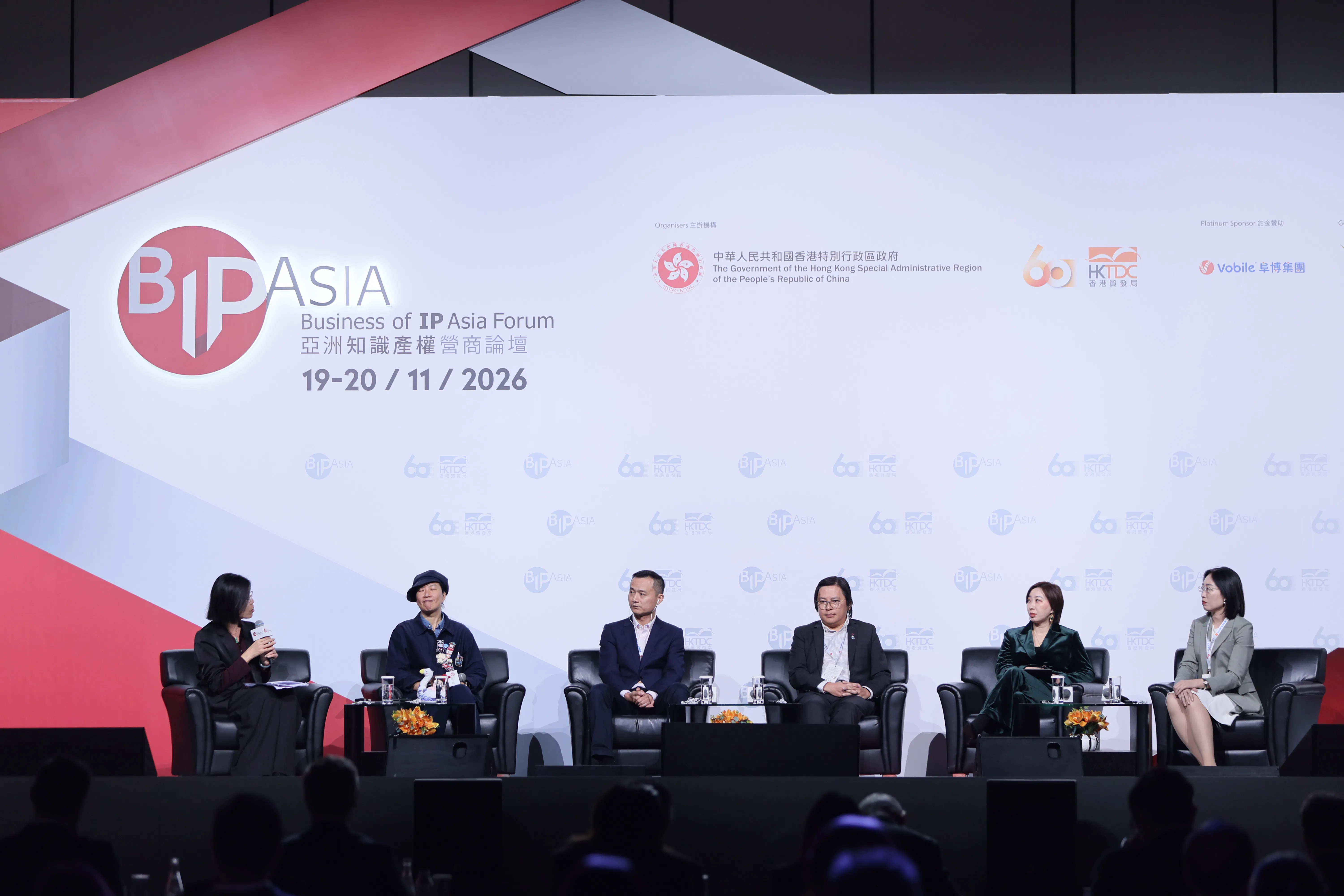
HONG KONG, November 20, 2026 - (ACN Newswire via SeaPRwire.com) - The 16th Business of IP Asia Forum (BIP Asia Forum), co-organised by the Hong Kong Trade Development Council (HKTDC) and the Hong Kong Special Administrative Region (HKSAR) Government, alongside the 18th Entrepreneur Day (E-Day), organised by the HKTDC, concluded successfully today at the Hong Kong Convention and Exhibition Centre. Bringing together leaders from the intellectual property (IP), innovation and technology, investment, and business sectors, the two-day events explored new opportunities arising from innovation-led growth. The BIP Asia Forum attracted over 3,400 participants, while E-Day drew more than 13,500 visits and facilitated 360 business matching sessions. Together, the two events promoted the commercialisation of IP and technological innovation while empowering start-ups to capture new growth opportunities, aligning with Hong Kong’s strategic vision to develop into an international innovation and technology hub and a regional IP trading centre.The 16th Business of IP Asia Forum (BIP Asia Forum), co-organised by the Hong Kong Trade Development Council (HKTDC) and the Hong Kong Special Administrative Region (HKSAR) Government, alongside the 18th Entrepreneur Day (E-Day), organised by the HKTDC, concluded successfully today. The BIP Asia Forum attracted over 3,400 participants, while E-Day recorded more than 13,500 visits and facilitated 360 business matching sessionsBIP Asia Forum explores IP financing and innovation commercialisation, empowering enterprises to Go GlobalThe theme of the BIP Asia Forum was "Powering Commercial Success Through IP and Innovation." With IP financing serving as a strategic pillar of this year’s Forum, Plenary Session I, titled “From Sandbox to Scale: Unlocking the Next Phase of IP Financing", examined critical issues surrounding IP valuation, financing and investment. Speakers examined how to institutionalise credible valuation frameworks, diversify capital channels, and fortify the broader innovation ecosystem, enabling enterprises to monetise their intangible assets and unlock new drivers of long-term growth. The session also spotlighted how Hong Kong could leverage these structural shifts to cement its role as a premier regional IP trading and financing hub bridging global capital and markets.The breakout session "Empowering Business Success: Practical Solutions for AI and IP Licensing" explored opportunities and challenges in IP licensing arising from AI applicationsAgainst the backdrop of rapid AI advancements and accelerating technology commercialisation, the WIPO-led breakout session "Empowering Business Success: Practical Solutions for AI and IP Licensing" explored opportunities and challenges in IP licensing arising from AI applications. During the session, Yuhong Zhou, Legal Director of Tencent Music Entertainment Group, noted: "Traditional licensing typically focuses on user rights. In the age of AI, however, licensing arrangements increasingly involve model training, content generation and commercialisation. It is therefore essential to define the scope of licenses more clearly and tailor licensing terms to different use scenarios."Reflecting the heightened commitment in recent years to technological innovation and commercialisation, this year’s Forum launched a dedicated Tech Chapter. The new track explored emerging commercial opportunities in artificial intelligence and sports and play technology, highlighting how enterprises can strategically harness IP to capture value in these sectors. During the session " Play Beyond Boundaries: IP Strategies in the World of Play", Jessica Qian, Senior Director, Licensing Consumer Products, APAC & MENA, Hasbro, said: "More and more consumers are not buying a simple product. They buy on emotion, or for visuals. A consumer may fall in love with an IP through content, digital gaming or collectible cards. They engage with the character, and they want to build a whole world around how they play.”In collaboration with the Intellectual Property Department, the forum once again hosted the IP Go-Global Business Matching Session, complemented by the dedicated "GoGlobal Connect" Zone. These initiatives provided a platform for Chinese Mainland enterprises to connect with Hong Kong’s IP professional service providers and expertsTo support Chinese Mainland enterprises in their global expansion, the Forum collaborated with the Intellectual Property Department once again to host the IP Go-Global Business Matching Session. This year, the Innovation and IP Market also introduced a new GoGlobal Connect Zone, alongside the showcases of cutting-edge research by leading universities and research institutions. The business matching session facilitated tailored one-on-one meetings between Chinese Mainland enterprises and Hong Kong's IP professional service providers, while the “Go Global Connect” Zone showcased a wide range of professional services and overseas expansion solutions spanning legal, financial and corporate services. Together, these initiatives enabled enterprises to leverage Hong Kong’s strengths as a regional IP trading centre to expand internationally and capture global market opportunities. Helen Han, Founder of New Epoch (Shanghai) Trade Co Ltd, said: "We would like to take our silk scarves featuring the Hong Kong cityscape-inspired design to overseas markets through Hong Kong, but had limited knowledge of local regulations, IP protection and market entry strategies. Through the IP Go-Global Business Matching Session and the GoGlobal Connect Zone, we have connected with legal, financial and professional service providers and received practical advice from legal experts on product design and IP risk management. Hong Kong's strength in supporting enterprises going global lies in the precision and customised nature of its services. Rather than offering a one-size-fits-all solution, it provides tailored support that aligns with the specific needs of different industries and target markets."The Forum also marked the launch of the Hong Kong Intellectual Property Academy, jointly established by the Intellectual Property Department and the Vocational Training Council, to nurture talent across the IP value chain, from creation and protection to financing, utilisation and commercialisation.Organised by the Intellectual Property Department, Hong Kong, China, under the cooperation framework of the Intellectual Property Rights Expert Group of the Asia-Pacific Economic Cooperation (APEC), the “APEC Workshop” discussed the experiences, challenges, good practices, recent initiatives and collaborative approaches in IP financing across APEC member economies. The workshop helped strengthen the capacity of IP policymakers and stakeholders to understand IP financing frameworks and ecosystems.The E-Day seminar "Building Beyond Your First Business: Lessons from Hong Kong's Serial Entrepreneurs" brought together serial founders from diverse industries to share key decision-making frameworks, growth strategies, and market insights behind launching and scaling multiple businessesE-Day fosters innovative thinking and builds a diversified business platformHeld alongside the forum, E-Day continued under the theme "Where Start-up Dreams Take Flight", bringing together over 370 startups, technology innovation projects, and star-tup support organisations from 13 countries and regions. The event featured 18 thematic seminars, start-up pitching sessions, and networking activities, offering insights into the latest market trends and facilitating meaningful connections between start-ups, investors, corporations, and industry stakeholders to unlock new partnerships and commercial opportunities.E-Day invited a line-up of successful entrepreneurs to share their frontline business experiences. The session "Building Beyond Your First Business: Lessons from Hong Kong's Serial Entrepreneurs”, powered by OCBC Hong Kong, brought together serial founders from diverse industries to share key decision-making frameworks, growth strategies, and market insights behind launching and scaling multiple businesses.During the panel, Jenny Ng, Founder and CEO of Healthworks, who has dedicated herself to the health food and wellness industry for many years, said that the key to entrepreneurship lies in understanding market needs: "In the service industry, 'scenarios' matter greatly. Businesses must understand the actual needs within each scenario and provide solutions that address those needs, or even exceed customer expectations. A business that lacks room for growth and fails to continuously create new value will struggle to achieve long-term success." Ken Ching, Chairman & CEO of LocoBike, added that entrepreneurship is not about simply replicating existing models, but adapting them to different markets: “Since 2016, we have been exploring how to introduce the bike-sharing model to Hong Kong and develop an operating model tailored to the local market. We were the first to offer a deposit-free service, alongside flexible pricing options, and we support major e-payment platforms. In the second half of this year, we expanded into Vietnam by launching an e-motorbike sharing service, bringing the operational experience we have built in Hong Kong to the Southeast Asian market.”Highlighting the event's matchmaking outcomes, Mohamed Rabie, Investment Programs Manager of Qatar’s Risin Ventures shared during the business matching sessions. He said: “This is my first time at E-Day, and I am delighted to be here. What stood out most was the maturity of the start-ups. They have a clear understanding of market needs and a strong grasp of their own products, solutions and competitive landscape. When I asked if they were seeking funds, many were eager to exchange ideas and explore potential partnerships. I was impressed by the confidence and openness they demonstrated.”Winners from Start-up Express International shared their entrepreneurial journeys and innovative technologies, highlighting strategic approaches to using Hong Kong as a launchpad for connecting the Greater Bay Area with international marketsStart-up Express International connects global founders to drive cross-border opportunitiesThe fifth edition of Start-up Express International brought together winning startup teams from around the globe. Focusing this year on artificial intelligence, green technology, and healthtech, the flagship contest highlighted cutting-edge innovations while fostering two-way collaboration between local and overseas startup ecosystems.During the session "Start-up Express International – Meet the Global Start-ups", representatives from winning start-ups from around the world shared their entrepreneurial journeys, technology solutions, and strategic insights on expanding into the Guangdong–Hong Kong–Macao Greater Bay Area (GBA) and international markets. Among them, Germany's FMC3 Robotic Service GmbH, which specialises in humanoid robots and intelligent automation solutions, said Jing Zhou, its Managing Director: “Europe is facing a shortage of labour, making humanoid robotics an important solution. At the same time, China has developed a strong robotics manufacturing base, while the United States has made significant advances in humanoid robotics algorithms. Yet Europe still lacks sufficient suppliers for the market. This creates an opportunity for our company to act as a bridge connecting China, Europe, the United States and the rest of the world." Lê Minh Nhá»±t, co-founder and CEO of Vietnamese start-up Dtrack Technology and Service said: “For startups, taking part in events such as Start-up Express International is extremely important. It not only helps expand professional networks, but also provides a deeper understanding of the Hong Kong market and its innovation and technology ecosystem. The biggest takeaway from this trip has been the opportunity to connect with industry professionals from Hong Kong and around the world, and to gain valuable insights through business matching and exchanges. These experiences have given us a much clearer direction on how to further refine and enhance our product as we move forward."The Symposium of the Alliance of Hong Kong Youth Innovation and Entrepreneurial Bases in the Greater Bay Area hosted by the Home and Youth Affairs Bureau, explored youth entrepreneurship trends and emerging opportunities across the Greater Bay AreaTo help young entrepreneurs capitalise on opportunities in the GBA, E-Day featured the Symposium of the Alliance of Hong Kong Youth Innovation and Entrepreneurial Bases in the Greater Bay Area hosted by the Home and Youth Affairs Bureau. The session convened Alliance members and young founders, including Hong Kong youth delegates who attended the Asia-Pacific Economic Cooperation (APEC) Young Entrepreneurs Conference, to share the latest GBA start-up trends, support measures, and frontline business insights. By facilitating the seamless alignment of innovation and entrepreneurial resources between Hong Kong and the wider GBA, the seminar further advanced youth entrepreneurship and cross-boundary collaboration.E-Day’s business matching sessions drew an overwhelming response, enabling startups to connect deeply with investors to explore funding and partnership opportunities while accelerating the commercialisation of innovative solutionsOn-demand replays of selected BIP Asia Forum sessions and event highlights will be available on the official website from 21 November to 20 December 2026. Video replays for E-Day will be uploaded after 20 December 2026.The next editions of the two events will return to the Hong Kong Convention and Exhibition Centre in October 2027. The 17th Business of IP Asia Forum will be held on 14-15 October 2027, while the 19th Entrepreneur Day is scheduled for 13-16 October 2027, continuing to bring together the IP, innovation, investment and business communities to advance innovation commercialisation and support start-up growth.Websites: Business of IP Asia Forum: https://bipasia.hktdc.com/en/ Entrepreneur Day: https://www.hktdc.com/event/eday/enStart-up Express International: https://portal.hktdc.com/startupexpress/en/s/start-up-express-internationalPhoto Download: https://bit.ly/4zuazirDisclaimer: The Government of the Hong Kong Special Administrative Region provides funding support to the project only, and does not otherwise take part in the project. Any opinions, findings, conclusions or recommendations expressed in this publication/event (or by members of the project team) do not reflect the views of the Government of the Hong Kong Special Administrative Region, the Culture, Sports and Tourism Bureau, the Cultural and Creative Industries Development Agency, the CreateSmart Initiative Secretariat or the CreateSmart Initiative Vetting Committee.Media EnquiriesPandagon Limited:Fraser LiTel: (852) 6083 5623Email: pandagon.limited@gmail.comLisa FongTel: (852) 6903 3855Email: pandagon.limited@gmail.comHKTDC's Communication & Public Affairs Department:Stanley SoTel: (852) 2584 4049Email: stanley.hp.so@hktdc.orgJane CheungTel: (852) 2584 4137Email: jane.mh.cheung@hktdc.orgWinnie KanTel: (852) 2584 4055Email: winnie.wy.kan@hktdc.orgHKTDC Media Room: http://mediaroom.hktdc.com/enAbout HKTDCThe Hong Kong Trade Development Council (HKTDC) celebrates its 60th anniversary this year. The HKTDC is a statutory body established in 1966 to promote, assist and develop Hong Kong's trade. With over 50 offices globally, including 13 in the Chinese Mainland, the HKTDC promotes Hong Kong as a two-way global investment and business hub. The HKTDC organises international exhibitions, conferences and business missions to create business opportunities for companies, particularly small and medium-sized enterprises (SMEs), in the mainland and international markets. The HKTDC also provides up-to-date market insights and product information via research reports and digital news channels. For more information, please visit: www.hktdc.com/aboutus. Copyright 2026 ACN Newswire via SeaPRwire.com. All rights reserved. www.acnnewswire.com
More
Xunce will be included as a constituent of the Hang Seng TECH Index, Value of Its AI Data Infrastructure Recognized by Capital Markets ACN Newswire

Xunce will be included as a constituent of the Hang Seng TECH Index, Value of Its AI Data Infrastructure Recognized by Capital Markets

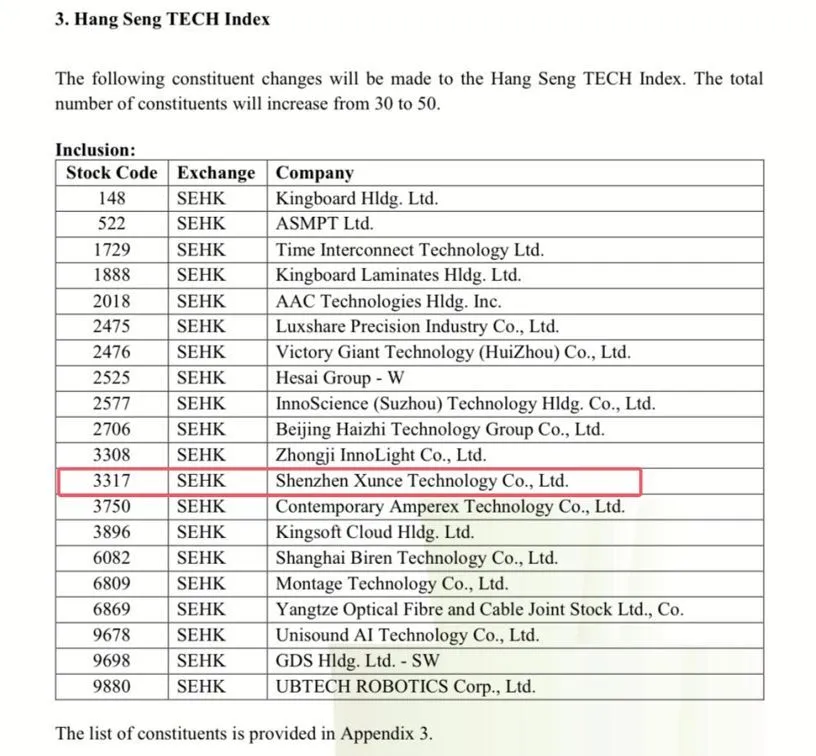
HONG KONG, Nov 20, 2026 - (ACN Newswire via SeaPRwire.com) - On November 20, Xunce (3317.HK) announced that it will be included as a constituent of the Hang Seng TECH Index, with effect from 7 December 2026.The inclusion of the Company as a constituent of the Hang Seng TECH Index represents recognition from capital markets of the Group’s overall strength, in particular its technological attributes and revenue growth potential, and will help to further broaden the Company’s investor base, enhance the liquidity and investment value of its H Shares, and strengthen its brand influence.The market anticipates that, following its inclusion in the index, the company is likely to continue attracting passive fund allocations, thereby laying a solid capital foundation for its future business expansion.Focusing on AI Data Infrastructure, Xunce Enters a Period of Rapid GrowthStarting with data governance in the asset management industry, Xunce has gradually expanded its capabilities to 11 high-barrier, high-value sectors, including finance, telecommunications, energy, high-end manufacturing, healthcare, robotics, and smart vehicles. The company has developed over 400 functional modules and refined three core technological advantages: millisecond- and second-level real-time response, 100% accurate data processing, and data tokenization. By bridging computing power with algorithms, Xuncetakes full responsibility for its clients’ business outcomes.Leveraging its differentiated competitive advantages, Xunce is not only replicating and implementing TokenOS across industries but also steadily advancing the global expansion of TokenOS while actively expanding its overseas operations. Since the beginning of this year, the company has partnered with a European digital service provider to drive the deployment of TokenOS in Europe; it has also established subsidiaries in Japan and Singapore and continues to increase its investment in the European and Southeast Asian markets.The company’s fundamentals are on a high-growth trajectory: revenue growth has been achieved for three consecutive years from 2023 to 2025; in the first half of 2026, revenue reached 967 million, a year-over-year increase of 389%, while net profit attributable to shareholders of 72.51 million, marked the company’s first profitable first half-year. The company’s ability to implement AI-to-B applications continues to be validated, and the Token business has emerged as a new growth engine.Building a Full-Funnel Closed-Loop AI-to-B Ecosystem: Significant Future Growth Potential Is EvidentAs China’s leading provider of real-time AI data infrastructure and analytics services, Xunce delivers integrated AI deployments to enterprise clients through its full-funnel product and service ecosystem—"computing power + data + Token + models + applications"—continuously creating strategic and business value.Specifically, the underlying AIDP transforms raw, dispersed data resources into high-quality data assets; TokenOS refines enterprise private data into high-quality scenario-based Tokens, addressing "data usability"; TokenCloud provides model training, deployment, and computing power support; and the top-level TokenRouters are responsible for matching and routing model capabilities with scenario-based Tokens. Through layer-by-layer synergy, these components form a complete, end-to-end closed loop from data to applications.In terms of development strategy, Xunce has established a "four-stage transition" strategic evolution path for its AI data infrastructure: starting with data governance (1.0), progressing through the tokenization transition (2.0), advancing toward a global token exchange platform (3.0), and accelerating the training and large-scale deployment of enterprise-level small models (4.0) to complete the "last mile" of AI implementation, demonstrating significant future growth potential.Passive inflows are expected, and the investment value is gaining further recognitionBeyond strong fundamentals, the investment value has gained further recognition. The Hang Seng TECH Index has been revised to introduce a two-stream selection mechanism based on "market value"and "sales growth", and the number of constituent stocks will be expanded from 30 to 50. Such revision has further enhanced the representativeness, inclusiveness and investability of the index. It has transformed the index from one focusing on internet platforms into a core benchmark covering the full spectrum of technology assets, including artificial intelligence, advanced hardware, robotics and automation, cloud computing and cutting-edge technologies.Following its inclusion as a constituent of the Hang Seng TECH Index, Xunce is expected to continue attracting passive fund allocations, further broadening its investor base and enhancing the liquidity and investment value of its H-shares.A report by GF Securities noted that as of September of this year, the assets under management of products passively tracking the Hang Seng Tech Index totaled approximately $37.1 billion. Based on simulated weightings, the allocation requirements for the 20 newly added constituents amount to $3.71 billion, equivalent to approximately HK$29.1 billion.So far this year, the company has been included in the Hang Seng Composite Index and the Stock Connect program, drawing increased attention from southbound capital; it has also been included in the HKEX Tech 100 Index, attracting passive fund allocations, and has thus benefited from multiple positive factors in terms of capital inflows.This inclusion as a constituent of the Hang Seng TECH Index marks not only a new starting point for Xunce to connect with a broader capital platform but is also expected to create a synergistic effect among passive fund allocation, liquidity, and brand influence. As demand for passive fund allocation grows, Xunce is poised to establish a virtuous cycle between business expansion and capital operations, continuously unlocking long-term value in the AI data infrastructure sector.Media contactBrand Name: XunceContact Person: Marketing TeamEmail: ir@xuncetech.com Tele: 0755-86667876Website: http://www.xuncetech.com/ Copyright 2026 ACN Newswire via SeaPRwire.com. All rights reserved. www.acnnewswire.com
More
China Risun (01907.HK)’s Xiangfu New Energy Successfully Energizes and Commences Operation of No.4 Graphitization Furnace Unit of Its 200,000 tpa Integrated Lithium Battery Anode Material Project ACN Newswire

China Risun (01907.HK)’s Xiangfu New Energy Successfully Energizes and Commences Operation of No.4 Graphitization Furnace Unit of Its 200,000 tpa Integrated Lithium Battery Anode Material Project

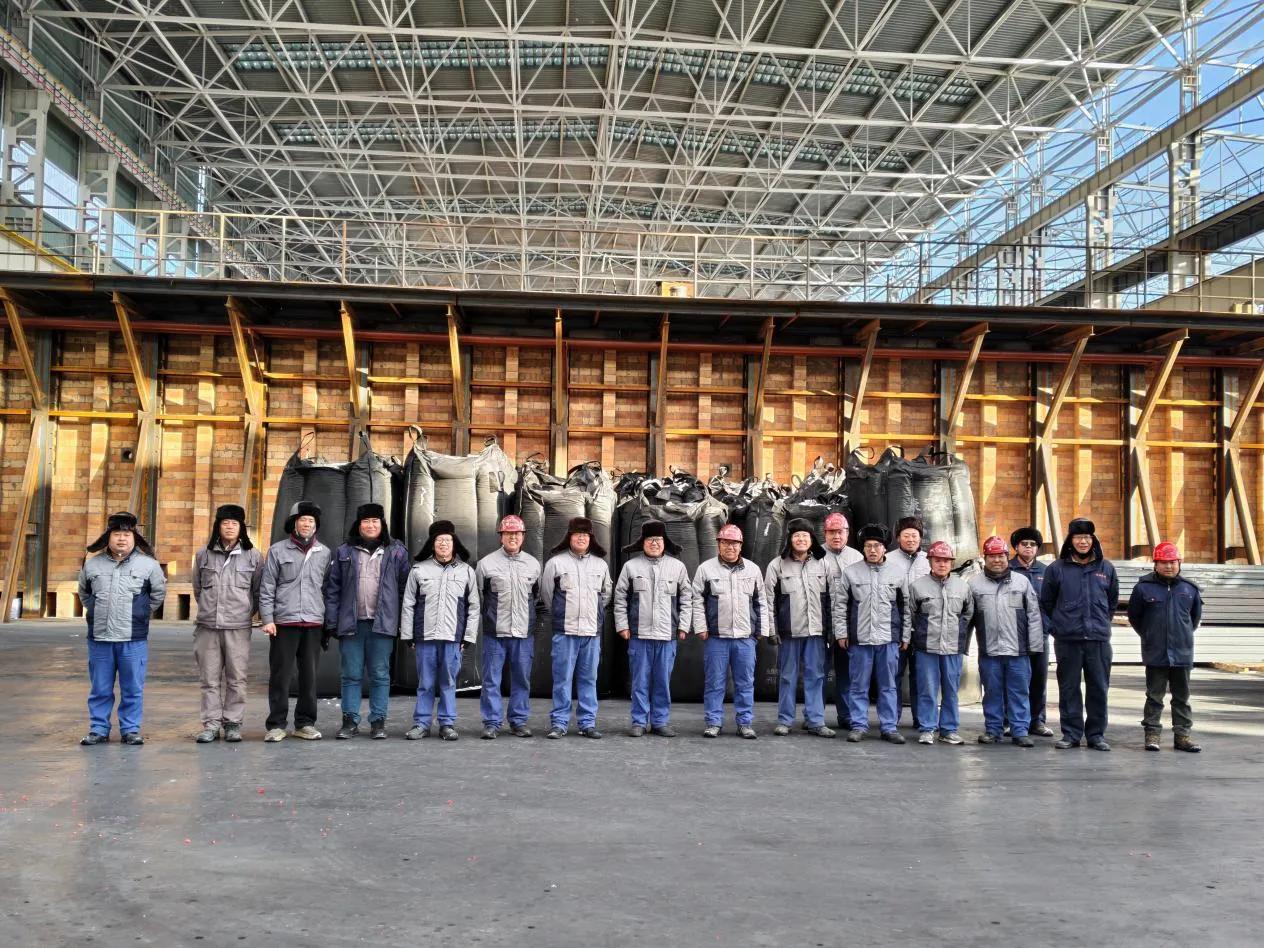
HONG KONG, November 20, 2026 - (ACN Newswire via SeaPRwire.com) - 16 November, The No. 4 graphitization furnace unit of the 200,000 tonnes-per-annum integrated lithium battery anode material project of Xiangfu New Energy was successfully energized and commenced operation, marking a major milestone in project development and a further expansion of production capacity.Xiangfu New Energy is an indirect non-wholly-owned subsidiary of China Risun Group Limited ("China Risun" or the "Group"). Previously, Risun Group Limited, a wholly-owned subsidiary of China Risun, proposed to make a capital injection of RMB506.94 million in cash into Xiangfu New Energy. Upon completion of the transaction, Tianjin Binhai Energy & Development Co., Ltd. ("Binhai Energy"), an indirect non-wholly-owned subsidiary of the Group, and Risun Group Limited will hold approximately 51.5% and 18.64% equity interests in Xiangfu New Energy, respectively. On November 19, 2026, the Group convened an extraordinary general meeting to approve and confirm the Capital Injection Agreement and the supplemental agreement in relation to the connected transaction, with all three ordinary resolutions set out in the circular duly passed by way of poll.As the Group's core operating platform for lithium battery anode materials under Binhai Energy, Xiangfu New Energy focuses on the production, research and development of lithium battery anode materials across the entire industrial value chain, supported by integrated green power projects featuring source-grid-load-storage systems. The Company principally engages in the production of artificial graphite anode materials, with operations covering the complete production process, including upstream raw material processing, graphitization heat treatment and downstream coating of finished products. Its products are widely used in power batteries, energy storage batteries and consumer batteries.Since the commencement of construction, work on the graphitization furnace units has been subject to a demanding schedule and a complex, multi-stage construction process, encompassing civil engineering works, furnace lining construction, electrical system installation, equipment installation and commissioning. Faced with challenges including stringent equipment installation precision requirements and extensive cross-disciplinary coordination, various departments of the Company worked closely with construction contractors to advance the project. Construction personnel remained committed on-site, closely monitoring every detail of the works and systematically overcoming commissioning challenges. Through around-the-clock efforts to accelerate progress while maintaining strict standards for construction quality and workplace safety, the Company successfully ensured the timely energization and commissioning of the No. 4 furnace unit.Graphitization is a core process in the production of anode materials, and the commissioning and operation of graphitization furnace units directly determine the release of finished anode material production capacity. The successful energization and commencement of operation of the No. 4 furnace unit represents an important milestone in the project development process. It effectively expands the Company's graphitization capacity, enhances its overall production and supply capabilities, and plays a significant role in stabilizing product output and ensuring reliable fulfilment of customer orders.Building on this achievement, the Company will continue to ensure the stable operation of commissioned furnace units while strengthening production management, operational maintenance, process optimisation and safety control to steadily unlock existing capacity. At the same time, it will accelerate the construction of the remaining project facilities, coordinate equipment commissioning, personnel deployment and process refinement, and facilitate the phased commissioning of additional production units.Looking ahead, Xiangfu New Energy will remain focused on its strategic development objectives by continuously improving its end-to-end production system, expanding industrial scale, refining anode material manufacturing technologies, and attracting and cultivating professional technical and production talent. The Company will continue advancing towards its goal of becoming an innovative and industry-leading new energy enterprise. Copyright 2026 ACN Newswire via SeaPRwire.com. All rights reserved. www.acnnewswire.com
More

Garuda Indonesia to Offer More Choice, Flexibility and Value With New Ticket Options in 2027 ACN Newswire

Garuda Indonesia to Offer More Choice, Flexibility and Value With New Ticket Options in 2027

JAKARTA, Nov 20, 2026 - (ACN Newswire via SeaPRwire.com) - Garuda Indonesia is set to launch a wider range of ticket options in the first quarter of 2027, giving travellers more choice, greater flexibility and competitive price points tailored to their individual travel needs. The new offering marks a key milestone in the airline’s customer-focused transformation, making its full-service experience more accessible to a broader range of travellers.Under the new structure, passengers will be able to choose from several ticket products, each offering a different combination of benefits, including baggage allowance, seat selection, flexibility to change travel plans and other travel privileges.For domestic Economy Class, the new products will include Standard, Smart and Flex, while international Economy Class will offer an additional Saver option. Business Class passengers will have a choice of Business and Business Flex.Each category is designed to accommodate different travel priorities, allowing passengers to choose the combination of benefits and flexibility that best suits their needs and preferences.The new offering will also make it easier for customers to compare ticket options and understand what is included before making a booking. Previously, certain fare choices were dependent on booking-class availability, particularly during peak travel periods. Under the new structure, Garuda Indonesia aims to make its ticket categories more consistently available, giving travellers clearer choices across different price points.Garuda Indonesia Director of Transformation Neil Raymond Mills said the initiative reflects the airline’s commitment to making its ongoing transformation more meaningful to customers, beyond improvements to its business fundamentals.“Every journey is different, and so are our customers’ priorities. Some value greater flexibility, while others are looking for the right combination of services at a competitive price point. By recognising these differences, we can make the Garuda Indonesia experience more relevant and accessible to a wider range of travellers, while maintaining the distinctive service that defines our airline,” Neil said.The expanded ticket offering is scheduled to launch in the first quarter of 2027, with the new product structure developed in accordance with the prevailing aviation regulatory framework.The initiative is also expected to strengthen the airline’s competitiveness while contributing to a healthier and more sustainable aviation industry.“For us, the success of this initiative goes beyond introducing new ticket products. It is about ensuring that customers have a clear understanding of what they are choosing and can enjoy a seamless experience across every touchpoint, from booking to boarding. This is an important part of how we are translating our transformation into tangible improvements in the way we serve our customers,” Neil concluded.For more information, please visit: https://www.garuda-indonesia.com/id/en/garuda-indonesia-experience/on-ground/fare-choicesMedia Contact:corpcomm@garuda-indonesia.com Copyright 2026 ACN Newswire via SeaPRwire.com. All rights reserved. www.acnnewswire.com
More

Who Would Have Thought a Delicious Drink You Can Chew Could Take a Thai Brand Around the World? ACN Newswire

Who Would Have Thought a Delicious Drink You Can Chew Could Take a Thai Brand Around the World?

BANGKOK, THAILAND, Nov 20, 2026 - (ACN Newswire via SeaPRwire.com) - A great drink begins with great taste. But when that drink also brings an element of fun to every sip, it becomes something more memorable. This is the idea behind Mogu Mogu, a Thai-born beverage that combines distinctive fruit flavors with generous chunks of chewy nata de coco, creating an experience that can be both sipped and chewed.Behind the brand is Sappe Public Company Limited (SAPPE), a Thai beverage innovator with a passion for developing delicious and distinctive flavors. Drawing on its expertise in beverage formulation, SAPPE created Mogu Mogu in 2001, pioneering the concept of the Snackable Drink, which the company identifies as the world's first innovation of its kind.From its beginnings in Thailand, Mogu Mogu has grown into one of SAPPE's flagship brands and played a significant role in the company's international expansion. Today, SAPPE's products reach consumers in more than 100 countries worldwide through over one million points of sale.Great Taste Comes First, with a Playful TwistAt the heart of Mogu Mogu is SAPPE's expertise in creating beverages with delicious, distinctive, and memorable flavors. This has long been one of the company's key strengths in product innovation.SAPPE places strong emphasis on developing unique formulations and flavor profiles that stand out from the very first taste. This expertise has enabled Mogu Mogu to offer a diverse range of fruit flavors, each with its own distinctive character.But SAPPE wanted to create more than a delicious drink. It saw an opportunity to introduce an entirely new experience by incorporating generous chunks of nata de coco into the beverage.The result was a combination of delicious fruit flavors and a satisfying chewy texture, bringing refreshment and enjoyment together in a single bottle. This distinctive experience became the defining characteristic that sets Mogu Mogu apart from conventional beverages.Even the name Mogu Mogu evokes the playful experience of chewing, reflecting the enjoyment the brand aims to deliver.When Great Taste and Fun Cross BordersCreating a delicious and distinctive beverage is only the beginning. Encouraging consumers from different countries to try something unfamiliar and choose it again is one of the greatest challenges in building a global brand.For Mogu Mogu, its distinctive flavors, combined with the playful and unexpected experience of chewing, have become powerful strengths. Consumers can discover what makes the product different from their very first sip.Originating in Thailand, Mogu Mogu expanded into international markets and became one of SAPPE's key brands. The company continues to develop flavors and products that respond to different consumer preferences across markets while working closely with business partners to expand distribution.Mogu Mogu's journey reflects the philosophy of SAPPE, which began as a small beverage company in Thailand but believed from the outset that innovation was the key to differentiation and competitive opportunity.Rather than following existing conventions, SAPPE set out to create something genuinely new, focusing on the value it could deliver to consumers through exceptional taste and distinctive drinking experiences. This commitment helped transform a Thai innovation into a recognizable brand in international markets.More Than a Chewy Drink, a Brand Built on ExperienceMore than two decades after its launch, Mogu Mogu continues to maintain its distinctive identity by combining delicious fruit flavors with the playful experience of chewing generous chunks of nata de coco. The brand also continues to develop new products and flavors in response to evolving consumer preferences.For SAPPE, the story of Mogu Mogu demonstrates that successful innovation is not driven by novelty alone. It begins with quality and great taste that consumers genuinely enjoy, combined with creativity that delivers a differentiated experience.The novelty of a drink you can chew may inspire consumers to try Mogu Mogu for the first time. But it is the memorable taste that gives them a reason to come back for more.About SAPPESappe Public Company Limited (SAPPE) is a leading Thai beverage innovator and the creator of the world's first Snackable Drink through its iconic global brand, Mogu Mogu. With products reaching consumers in over 100 countries across Asia, Europe, the Middle East, and beyond, SAPPE is committed to creating innovative beverages that respond to evolving consumer lifestyles.SAPPE's diverse portfolio includes Mogu Mogu, the pioneering fruit juice drink with chewy nata de coco; Sappe Aloe Vera, a refreshing fruit juice drink featuring large aloe vera pieces; and Sappe Beauti, a functional beverage line focused on health and wellness.Headquartered in Bangkok and listed on the Stock Exchange of Thailand (SET: SAPPE), the company is driven by innovation, deep consumer insights, and a commitment to sustainability. Guided by its mission, "We better people's lives through our innovative spirit," SAPPE continues to bring distinctive beverage experiences to consumers worldwide.For more information, visit www.sappe.com.Facebook: https://www.facebook.com/sappeplaygroundInstagram: https://www.instagram.com/mogumogu_global/Line: https://shop.line.me/@sappeonlineShopee: https://shopee.co.th/sappe.officialEmail: corpcom@sappe.comSappe PCL [SET: SAPPE, SAPPE/F, SAPPE-R] https://www.sappe.com/en/ Copyright 2026 ACN Newswire via SeaPRwire.com. All rights reserved. www.acnnewswire.com
More

ASEAN’s Rice Yield Gap Is Real. The Spending Isn’t Aimed at It. ACN Newswire

ASEAN’s Rice Yield Gap Is Real. The Spending Isn’t Aimed at It.

HONG KONG, Nov 20, 2026 - (ACN Newswire via SeaPRwire.com) - Rice yields across Southeast Asia sit near half of tested potential, while 2026 budgets keep paying for area, stocks and cheap rice.Indonesia's rice output rose 13.29% in 2025, to 34.69 million tonnes. Very little of that came from yield.The country harvested 11.32 million hectares of paddy, against 10.05 million a year earlier. That is 12.6% more land. Set the two changes side by side and output per hectare moved about 0.6%. Take the land gain out of the total and roughly 5% of the increase survives.So the biggest rice producer in the region did what the region has done for a decade: it found the extra tonnes in more fields, not in fuller ones. That choice has a price. Land that can be flooded and drained is finite, and Indonesia is already pulling back from the cheapest way to get it, which was clearing forest.The rest of this piece is about the other variable, the one that could double the harvest without moving a fence: yield per hectare.Where the extra rice actually came fromThe official numbers make the split easy to see. Indonesia's statistics agency put 2025 paddy output at 34.69 million tonnes, up 4.07 million from 30.62 million. Harvested area went from 10.05 million hectares to 11.32 million.Multiply the old yield by the new area and the land accounts for 3.87 million of those 4.07 million tonnes. That is 95% of the gain. Yield supplied the remaining 0.2 million tonnes, or about 5%.Indonesia20242025ChangeHarvested paddy area10.05 million ha11.32 million ha+12.6%Paddy output30.62 million t34.69 million t+13.29%Output per hectare, same basisindex 100index 100.6+0.6%Tonnes from area—3.87 million t95% of the gainTonnes from yield—0.2 million t5% of the gainSource: ANTARA, citing Statistics Indonesia and the agriculture ministry, January 2026.The stock numbers moved in step with the area numbers. State logistics agency Bulog bought 4.11 million tonnes of paddy from farmers by October 2026, past its full-year target of 4 million. The national reserve peaked near 5.4 million tonnes, the highest since independence, and stood at 5.25 million on 30 July.A reserve of that size is a real achievement. It is also a purchase order. At the floor price of Rp6,500 a kilogram, buying 4.11 million tonnes put public money into farmers' hands without asking any of them to grow more per hectare.Half a harvest, on ISEAS's own estimateThe number that frames the whole argument comes from a Singapore think tank, not from a statistical office. A FULCRUM commentary published by ISEAS in May 2026 states that rice yields in the region are only about half of what they can be.If that holds, the region could double its rice on the same land. Nothing in that claim requires a new variety from a laboratory. Vietnam already farms at 6 tonnes per hectare, roughly double what the regional average implies, on the same tropical soils and under the same monsoon.ISEAS lists three routes to close the gap: shared agricultural technology platforms, supportive policy, and digital precision agriculture. All three are delivered farm by farm, field by field. None of them arrives as a shipment a state logistics agency can book.That is why the gap survives. A reserve can be ordered in a single procurement. A yield gain has to be earned on several million smallholdings, each deciding separately whether the extra fertiliser is worth the money this season.The estimate is an estimate. It comes from a policy commentary, not from a measured census of every plot, and it carries the credibility of the institution rather than the precision of a survey. What makes it usable is the direction and the size: every serious appraisal of the region's rice sector puts the gap in the tens of percent, not in the low single digits.One average hides two farms. An irrigated field with a reliable pump and a rainfed field that waits for the monsoon do not share a ceiling, and the same seed, fertiliser and labour produce different harvests on them. Any single regional figure blends the two, which is why a district that looks close to its potential and a district that is far from it can report the same number of tonnes.That matters for policy because the two farms need different things. The irrigated field needs better management of water it already has. The rainfed field needs water it does not have, or a shorter-season variety that can finish before the rain stops. The first is a service business. The second is capital investment, and capital does not arrive farm by farm.What a full hectare requiresYield is not one decision. It is four, and each one is local.Water has to arrive on time and leave when it should, which on a delta field means levelling and drainage rather than rainfall. Plants have to be spaced so that each one has room to tiller, which is why seeding rates matter more than seed quality. Nutrients have to arrive when the plant can use them, not when the subsidy is distributed. Pests have to be caught before they spread, which needs scouting rather than calendar spraying.None of these can be shipped as a product. A bag of urea can be sold to any farmer in any province. Levelling, drainage, seed rate and scouting depend on the slope, soil and water source of the plot in front of you, so they arrive as a service, delivered by someone who has to be there.The Vietnamese programmes show what the service does when it reaches the field. In Vinh Long, drone spraying cut pesticide and fertiliser use by 20% to 30%, and some models raised yields by 15% to 20%. Ca Mau has registered nearly 55,000 hectares across 20 communes under the one-million-hectare scheme, with pilots of 100 to 500 hectares and at least 20 trained local pilots per site.Read the last clause again. The binding constraint in that pilot is not the drone. It is the twenty people who can fly it, keep the records and read the map. Machinery moves faster than trained operators do, and that is why service programmes spread at the speed of training.The instruments are built for shortageLook at what the region actually operates, and the shape of the problem becomes clear. Almost every regional instrument is a stock, a price, or an emergency line. Almost none of them is a yield programme.The ASEAN Plus Three Emergency Rice Reserve holds 787,000 tonnes of earmarked rice. Member states contribute 87,000 tonnes, or 11%. The three northeast Asian partners contribute 700,000 tonnes, or 89%.In 2024 the reserve's Tier 3 mechanism released 5,622 tonnes. That is 0.71% of the stock.APTERR, the regional rice reserveValueEarmarked reserve787,000 tContributed by ASEAN members87,000 t (11%)Contributed by Plus Three partners700,000 t (89%)Released under Tier 3 in 20245,622 t (0.71%)As a share of Indonesia's national reserve (5.25 million t)15%Source: ASEAN Secretariat, AMAF statement, 29 April 2026; release data compiled from APTERR reporting.Read the table in one direction and the reserve looks large. Read it in the other and a regional pool of 787,000 tonnes is worth 15% of what one member state holds on its own. Nine tenths of the pool is pledged by countries that are not in the region, so every activation is also a diplomatic request.The ministers' statement from April 2026 shows where the attention goes. Facing higher energy and freight costs and tighter input supply, the ASEAN Ministers on Agriculture and Forestry agreed to five measures: activate the full reserve machinery, widen the reserve from rice to edible oils, sharpen production and price monitoring through the regional food security information system, share national fertiliser and feed stocks and demand forecasts, and promote precision farming and biofertiliser with development bank guarantees behind procurement.Four of the five are about visibility and emergency stock. The fifth, precision farming, is the only one that touches yield, and it arrived in the statement without a tonnage, a budget, or a target area.Three budgets, one variableFollow the money in the three largest markets and the pattern repeats. The instruments are large, they are well funded, and they act on price, stock and area.In Indonesia the food security budget went from Rp139.4 trillion in 2025 to Rp210.4 trillion in 2026, a rise of 45.5%. The state sets a paddy floor of Rp6,500 a kilogram and buys at it regardless of quality. The self-sufficiency ratio went from 87.14% in 2024 to 110.25% in 2025, on the area expansion described above.In the Philippines the instrument is a consumer price. The agriculture department's rice programme sells at PHP20 a kilogram to 15 million families, about 60 million people. At 6 million tonnes a year, that is roughly PHP120 billion of subsidy, and the tariff schedule on imports runs between 15% and 35%, adjusted in steps of five percentage points for every five percent move in the reference price.In Vietnam the instrument is a field programme. The one-million-hectare low-emission rice scheme has 1,000,000 hectares as its target, and a Canada-funded project attached to it expects 48,200 direct beneficiaries and 748,000 tonnes of avoided carbon dioxide by 2030.InstrumentWho runs itSizeWhat it movesPaddy floor price and procurementIndonesia, Bulog4.11 million t bought at Rp6,500/kgFarm income, stockFood security budgetIndonesiaRp210.4 trillion, +45.5%Inputs, irrigation, machineryCheap rice for poor householdsPhilippines6 million t a year, PHP120 billionConsumer priceRice tariff bandPhilippines15% to 35%Import priceLow-emission rice schemeVietnam1,000,000 ha targetYield, cost, emissionsEmergency reserveAPTERR787,000 tShortageSources: ANTARA, August 2026; PIA, January 2026; Bureau of Customs, 2025; Vietnam.vn, 2026.Only one row in that table moves yield. It covers one million hectares in one country, and even there the reported gains come from demonstration models rather than from the whole enrolled area.The asymmetry is not a failure of will. Cheap rice for 60 million people is a political promise that has to be kept every week. A yield programme pays out over three or four seasons, through cooperatives, extension workers and machinery rings, and its results are visible only after the harvest. Budgets follow the weekly promise.A floor price that pays the same for every tonneThere is a second reason the yield line stays flat, and it sits inside the price.Bulog buys paddy at Rp6,500 a kilogram without grading for quality, according to the official account of the policy. A flat price at the farmgate pays the same for a well-managed crop and a poorly managed one. When management cannot change the price, it can only change volume, and the cheapest way to add volume is usually more land or more nitrogen.The Philippine retail programme pulls from the other end. A PHP20 kilogram for 60 million people sets an expectation that rice will be cheap, which is a promise about the shelf, not about the field.Both instruments settle a market at a chosen number. Neither pays for the tonne that is not there. A farmer who could add half a tonne per hectare has no buyer for that half tonne before it exists, so the investment has to be financed on a hope about next season's price.The counter-example is already running. Vietnam's low-emission scheme pays for a labelled product, with traceability and measured emissions attached, and buyers in Japan, Australia, Singapore and Malaysia have taken cargoes under that label. The premium is small and the volume is small, but the direction matters: the payment is attached to a measured difference, not to a flat floor.What the published numbers disagree onIndonesia's 2026 rice crop has three official-looking numbers in circulation: 31.3 million tonnes, 34.77 million tonnes, and 38.6 million tonnes. The spread between the highest and the lowest is 23.3%.Part of that is calendar. One figure is a harvest estimate for the calendar year, another is a forecast for the 2026/2027 marketing year that starts mid-year. Part of it is the consumption base: one set of figures implies national use of 15.4 million tonnes, another implies 31.1 million tonnes, a difference of a factor of two in the denominator.When the numerator and the denominator can both move that much, a self-sufficiency ratio is a statement about a chosen pair of numbers. It is not a statement about how much rice is in the field.That matters for anyone who wants to sell a yield gain. A service that promises more tonnes per hectare needs a baseline that both sides accept, and the region does not yet have one at national level. Plot-level measurement is easier than national reconciliation, which is one more reason the commercial layer is being built at the cooperative rather than at the ministry.The weather is the honest counter-argument to everything above. If a dry year cuts the crop, output falls whether or not anybody invested in yield, and the yield story gets buried under a climate story. The April 2026 ministerial statement itself points at energy costs, freight and input supply rather than at agronomy.Both things can be true. A cost shock and a technology gap can hit the same harvest. What separates them is the response: a cost shock is answered with stocks, subsidies and price floors, and those are exactly the instruments the region has built. A technology gap is answered with a service delivered to a farm, and that is the instrument the region has not built at scale.The unit that can be soldHere is where the arithmetic becomes commercial. Indonesia fixes a paddy floor of Rp6,500 a kilogram, which the agriculture ministry describes as about US$0.36. One tonne is therefore worth about $360, and the buyer is the state, at a published price, before the season starts.A yield gain can be priced against that. A 20% lift on Vietnam's 6 tonnes per hectare is 1.2 tonnes, worth about $430 a hectare at the Indonesian floor. Whether a service can be delivered for less than that is the only question a supplier has to answer. It is a question with a number attached, which is more than can be said for a bag of urea.This is why the interesting work in the region is not in seed sales. It is in metering. Vinh Long's rice programme runs an AI-based system for measuring, reporting and verification, built to record fertiliser use, water use and emissions plot by plot. Drone operators log flight paths, application rates and dates. Cooperatives hold the records. Once a hectare has a verifiable baseline and a verifiable harvest, a payment can be attached to the difference.Three payers are already visible. The state pays through procurement at a fixed floor. Carbon finance pays for measured reductions, which is what the Canada-funded project's 748,000 tonnes are for. Buyers with a brand claim pay for traceability, which is what the low-emission label is for.Selling a bag of fertiliser needs no measurement. Selling a tonne needs one, and the measurement is the part that has been missing.What would change the number by 2030Three markers will show whether the region moved the variable or only talked about it.The first is Indonesian area. If harvested area expands again in 2027 while output per hectare stays flat, the model has not changed, and the forest-clearing pullback will be the binding constraint rather than a choice.The second is the share of enrolled area that meets the full standard in Vietnam's scheme. Registration is cheap; compliance is not. A programme that reports enrolled hectares and compliant hectares separately is telling the truth, and the gap between the two is the real adoption rate.The third is the reserve. If APTERR's stock keeps growing while its drawdown stays near 0.71%, the region is buying insurance against a shortage it is not preventing.One test arrives with the next harvest. The 2026/2027 season runs into higher input costs and a drier pattern in parts of the region. If output falls while area holds, yield did the damage. If area falls and output holds, yield carried the load. Either result answers the question the budgets have been avoiding.LimitationsThe "half of potential" figure is an ISEAS estimate from a policy commentary, not a measured statistic; other appraisals of the regional gap differ in method and level.Indonesia's 2026 production is published on at least three perimeters that do not reconcile, so year-on-year comparisons in this piece use the 2024 and 2025 series only.SourcesISEAS FULCRUM: Heeding the call for collective resilience in regional food security — commentary, 1 May 2026.ASEAN Secretariat: AMAF Statement on Safeguarding Food Security and Agricultural Supply Chains Amid Global Uncertainties — adopted 29 April 2026.ANTARA: Indonesia confident on food security outlook as farm output rises — 10 August 2026.ANTARA: Indonesia food self-sufficiency ratio and 2025 paddy output — January 2026, citing Statistics Indonesia and the Ministry of Agriculture.Shangbao Indonesia: Bulog procures 4.11 million tonnes, reserve peaks near 5.4 million — 9 October 2026.Philippine Information Agency: Higher budget for agriculture means long-term food security — 8 January 2026.Bureau of Customs, Philippines: Customs Memorandum Circular 260-2025, rice tariff schedule — 2025.Vietnam.vn: Ca Mau registers nearly 55,000 hectares for the one-million-hectare rice scheme — 2026.Vietnam.vn: Vinh Long puts drones and an AI verification platform into rice production — 2026.Tuoi Tre News: Canada-funded project targets 48,200 beneficiaries in Vietnam's low-emission rice sector — 28 October 2026. Copyright 2026 ACN Newswire via SeaPRwire.com. All rights reserved. www.acnnewswire.com
More

Airwheel Unveils Smart Cabin Luxury Hand 20 inch Carry On Airport Boarding Ai Wheel Suitcase for Every Kind of Traveler Luggage ACN Newswire

Airwheel Unveils Smart Cabin Luxury Hand 20 inch Carry On Airport Boarding Ai Wheel Suitcase for Every Kind of Traveler Luggage

BRUSSELS, BELGIUM, Nov 20, 2026 - (ACN Newswire via SeaPRwire.com) - As air travel, cross-city journeys and business trips become increasingly common, moving through airports, railway stations and large exhibition centers often involves considerable walking and frequent transfers. For travelers carrying luggage, these journeys can be physically demanding. This has created new opportunities for innovation in the traditional luggage industry.The smart riding cabin suitcase is one response to this evolving travel landscape. By integrating an electric drive system and a rideable structure into conventional luggage, it combines everyday storage with short-distance personal mobility. Rather than simply being pulled from one destination to another, a suitcase can also become an intelligent travel companion that helps users move more conveniently in suitable environments.With more than 600 global patents, Airwheel has been exploring the intersection of smart mobility and traditional luggage. Through ongoing development in power systems, mechanical engineering and intelligent control, the brand continues to advance the design and functionality of smart riding suitcases.1. What Is a Smart Riding Luxury Suitcase? Airwheel's Journey Begins with SE3 Scooter SuitcaseWhat makes a smart riding electric suitcase different from conventional luggage?A traditional suitcase relies on wheels and a telescopic handle for manual pulling. A smart riding suitcase retains the essential function of luggage storage while adding an electric drive system and a riding mechanism. When the riding structure is deployed, users can ride the suitcase for short-distance transportation. When riding is not required, the mechanism can be folded away, allowing the suitcase to return to its conventional towing mode.This combination expands the role of luggage from a passive carrier of personal belongings into a mobility product with additional functionality.Integrating an electric drive system and a riding mechanism into a compact suitcase is a complex engineering challenge. Designers must balance motor performance, structural stability, storage capacity and ease of operation. The riding components must deploy smoothly and lock securely, while remaining compact enough to be stored when not in use.Airwheel began exploring this product category with its SE3 smart riding suitcase. The early SE3 brought together an electric drive system, a retractable riding handle, electronic braking and smartphone app control, demonstrating how personal mobility technology could be integrated into a traditional luggage format.The SE3 marked an important step in Airwheel's development of smart riding luggage. Since then, the company has continued to refine its riding mechanisms, drive systems and user interfaces, gradually building a product portfolio for adults and children, including both 20 inch suitcase and larger checked-luggage models.2. Advancing the Technology: Making Smart Features Practical for Everyday TravelThe value of a smart suitcase goes beyond adding an electric riding function to traditional luggage. Its development is ultimately about making that function more practical, intuitive and adaptable to real travel situations.From Manual Deployment to One-Touch Electric ExtensionThe riding mechanism is one of the defining features of a smart riding suitcase.In earlier designs, users needed to manually extend the riding handle and complete the locking process before riding. As the product range evolved, Airwheel introduced automatic locking mechanisms to simplify operation.The Airwheel SE3SXD Ai Suitcase flagship model takes this development further with an electric dual-extension system.With a one-touch operation, the motorized front wheel and riding handle can extend and lock into position. After riding, users can activate the retraction function to fold the components back into the suitcase. This allows the product to switch between riding and conventional luggage modes more conveniently.The progression from manual deployment to automatic locking and then electric dual extension reflects Airwheel's ongoing work to improve mechanical integration and the overall user experience.Smart App Control and Apple Find My SupportSmart interaction is another important part of Airwheel's product development.Selected premium models are equipped with a dedicated mobile app, allowing users to access product information and use model-specific functions. Depending on the model, these may include speed adjustment, lighting settings, remote control and cruise control.Selected models, including the SE3SL+ Boarding Airport Suitcase, SE3SX Cabin Suitcase and SE3SXD Ai Luxury Suitcase, also support Apple's Find My network, providing an additional way to help locate a suitcase.By combining mechanical innovation with connected features, Airwheel is bringing the interaction capabilities of smart hardware into the traditional luggage category.Removable 73.26Wh Battery for Greater Travel FlexibilityBattery design is a key consideration for any electric suitcase, particularly when the product is intended for air travel.Selected Airwheel 20-inch adult smart riding suitcase models use a removable 73.26Wh lithium-ion battery. The modular battery design allows the battery to be detached from the suitcase, giving travelers greater flexibility when managing the product in accordance with airline requirements.Airwheel's 20-inch models are designed around the dimensions commonly associated with cabin-size luggage, while the 24-inch SE3T Ai Wheel is a larger checked-luggage model. For checked luggage, the battery must be removed and handled according to the applicable airline's procedures.3. What Should Travelers Know Before Choosing a Smart Riding Suitcase?Beyond design and technology, practical questions such as riding range, speed, load capacity and suitable environments are important when evaluating a smart riding suitcase.How Far Can an Airwheel Smart Riding Suitcase Travel on One Charge?According to Airwheel's product specifications, most adult models offer an estimated riding range of approximately 8 kilometers on a full charge. The larger 24-inch SE3T has an estimated range of approximately 6 kilometers.These figures are intended for short-distance mobility, such as moving through airport terminals, railway stations, exhibition centers and hotel environments.Actual range may vary depending on rider weight, surface conditions, ambient temperature, riding speed and usage habits. Low temperatures and heavier loads, for example, may reduce the distance achievable on a single charge.How Fast Can Different Models Travel?Airwheel offers different speed configurations across its product range to accommodate different product designs and user requirements.SE3S and SE3T: Maximum speed of up to 13 km/h.SE3miniT: Maximum speed of up to 8 km/h.SE3SL, SE3SL+, SE3SX and SE3SXD: Maximum speed of up to 9.9 km/h.SQ3: Maximum speed of up to 5 km/h.SQ3S: Maximum speed of up to 6.5 km/h.The children's models use lower speed configurations. Regardless of the model, riders should adjust their speed to pedestrian traffic, surrounding conditions and local venue regulations.What Is the Maximum Riding Load?Riding load refers to the maximum rider weight supported by the suitcase when used in riding mode. It is different from the amount of luggage the suitcase can carry internally.According to Airwheel's specifications, the maximum riding loads vary by model:SE3S, SE3T and SE3miniT: Up to 110 kg.SE3SL, SE3SL+, SE3SX and SE3SXD: Up to 95 kg.SQ3 and SQ3S: Up to 40 kg.Travelers should check the specifications of their chosen model and follow the corresponding product instructions.Where Is a Smart Riding Suitcase Best Used?Airwheel smart riding suitcases are designed primarily for short-distance travel on flat, paved surfaces, where riding is permitted.Potential use cases include:Moving through large airport terminals.Short-distance transfers in railway stations and transport hubs.Hotel and business travel environments.Large exhibition and convention centers.Other paved areas where electric riding devices are permitted.When riding is unsuitable or not permitted, users can retract the riding mechanism and move the suitcase in conventional towing mode.Steep slopes, grass, gravel, stairs and wet or slippery surfaces are not recommended for riding. Airwheel models use an electronic braking system with a buffered braking process rather than an emergency-stop function. Riders should maintain a controlled speed, remain aware of their surroundings and follow the product's safety instructions.4. A Diverse Product Portfolio for Different Travel NeedsThrough continued research and product development, Airwheel has established a product portfolio that includes 20-inch adult cabin-size models, a 24-inch checked-luggage model and smart riding suitcases for children.20 Inch Adult Smart Cabin SuitcasesThe 20-inch range is a central part of Airwheel's smart riding suitcase portfolio. These models are designed for travel scenarios such as airports, railway stations, business trips and exhibition centers.The Airwheel SE3SXD Ai Luxury Suitcase represents the flagship direction of the range. It features an electric dual-extension system that allows users to deploy or retract the riding components with one-touch operation. It also supports a dedicated mobile app and Apple Find My, with a maximum riding speed of 9.9 km/h.The SE3SX features an electric retractable front-wheel design, app connectivity and Apple Find My support. Its maximum riding speed is also 9.9 km/h.The SE3SL and SE3SL+ offer alternative configurations for different user preferences. The SE3miniT adopts a lightweight, non-retractable front-wheel structure designed for flat surfaces, while the SE3S offers a maximum riding speed of up to 13 km/h.Together, these models provide different combinations of riding performance, mechanical design and smart functionality.24 Inch Smart Checked SuitcaseFor travelers who need more storage capacity, the Airwheel SE3T offers a larger 24-inch format.The model provides 48 liters of storage capacity and features a 250W motor, a maximum riding speed of 13 km/h and a maximum riding load of 110 kg.By combining a larger luggage compartment with short-distance electric mobility, the SE3T offers another option for business trips and longer journeys. As a checked-luggage model, its removable battery must be handled in accordance with airline requirements.Smart Riding Suitcases for ChildrenAirwheel also extends the smart riding suitcase concept to family travel through its SQ3 and SQ3S children's models.The SQ3 is designed for children aged 3–6, while the SQ3S is designed for children aged 5–8. Both feature lower-speed configurations and incorporate features such as Bluetooth audio and lighting to create a more engaging travel experience.With products for adults and children, Airwheel continues to explore a wider range of applications for smart riding luggage.5. Global Presence: Bringing Smart Mobility Innovation to International MarketsFounded in 2004, Airwheel follows the brand philosophy of "Free Intelligent Life " The company focuses on the research, development and innovation of smart mobility products, bringing electric drive technology, intelligent control and industrial design into everyday transportation and travel products.Its technology development covers areas including motion control, electric drive systems, intelligent sensing and structural engineering. According to Airwheel's published company information, the brand has accumulated more than 600 global patents, including over 180 patents directly related to smart luggage.Airwheel products are available in 68 countries and regions, supported by a global retail network of more than 4,600 retail terminals.The brand has also received recognition in international design and innovation programs, including the US-based IDEA and MUSE awards, IDA, the French Design Awards and the Berlin Design Award, among others. These recognitions reflect Airwheel's continued exploration of product design, structural innovation and smart mobility experiences.For an international brand, expanding into new markets involves more than increasing product availability. It also requires an understanding of different consumer expectations, airline transportation policies and public-space regulations. Airwheel continues to develop and refine its products with the needs of different markets and travel environments in mind.6. From Smart Luggage to the Future of TravelThe evolution of luggage—from handheld cases to wheeled suitcases and telescopic-handle designs—has continually changed the way people carry their belongings.Smart riding suitcases represent another step in this evolution by expanding what traditional luggage can do.For Airwheel, innovation is not simply about adding more features. It is about applying technology to practical travel challenges and developing products that respond to the way people move through the world.As travel habits and mobility technologies continue to evolve, Airwheel will keep exploring new possibilities for intelligent hardware in travel and everyday life.A suitcase can be more than a way to carry belongings. It can become an intelligent companion that connects technology with the journey ahead. This is the direction Airwheel continues to explore.About AirwheelAirwheel is a smart mobility brand founded in 2004, dedicated to the research and development of intelligent mobility products. By integrating electric drive technology, intelligent control systems and innovative industrial design, Airwheel develops products that bring new functionality to modern travel and everyday transportation.Its portfolio includes smart riding suitcases and other intelligent electric mobility products. With a presence in 68 countries and regions, Airwheel continues to advance its work in motion control, electric drive systems, intelligent sensing and product engineering, with the aim of making travel and mobility more convenient through smart technology.Media ContactCompany: AirwheelContact: Media TeamEmail: Jonas@airwheel.net Website: https://www.airwheel.net Copyright 2026 ACN Newswire via SeaPRwire.com. All rights reserved. www.acnnewswire.com
More
Global Scams Remain Widespread: Nearly Two in Three Adults Worldwide Report Scam Encounters, 9% Lost Money ACN Newswire

Global Scams Remain Widespread: Nearly Two in Three Adults Worldwide Report Scam Encounters, 9% Lost Money

THE HAGUE, NETHERLANDS, Nov 20, 2026 - (ACN Newswire via SeaPRwire.com) - The Global Anti-Scam Alliance (GASA), in collaboration with Outseer, today released the Global State of Scams 2026 report. Based on a survey of 58,900 adults across 42 markets, the report examines how often people encounter scams, how they respond, and the financial and emotional impact on those affected.In the past 12 months, 64% of adults worldwide encountered a scam and 9% lost money. Shopping, investment, and unexpected money scams were among the types people most often interacted with. In Africa, 21% of adults lost money to a scam, more than double the global rate.The research also highlights the emotional toll of scams. Among people who lost money, 69% reported a significant or moderate impact on their mental wellbeing, 20% reported increased tension at home, and 16% said they could not pay for essentials such as rent or groceries. Among those who did not report the scam to an organization, the most common reason was uncertainty about where to report it.Nearly seven in ten adults (69%) said they were confident they could recognize a scam. Still, 55% of those who encountered one interacted with it, and 26% of those who interacted lost money. When asked why the scam worked, one in three people who lost money said the situation seemed convincing and realistic.Jorij Abraham, Managing Director of GASA, said:"Nearly two thirds of adults worldwide encountered a scam in the past year and 9% lost money. One of the major challenges we have is that nearly seven in ten adults feel confident they can recognize a scam and we know the higher the level of confidence, the higher the likelihood of being scammed."For the people affected, the impact can be significant. It can mean struggling to pay bills, feeling anxious about what might happen next, or finding it hard to tell their family. We need to do more to stop scams before people lose money and make it easier for those affected to get help."Chris Willis, Chief Marketing Officer of Outseer, added:"The fact that 57% of victims discovered the scam themselves shows too much of the burden still falls on consumers. Scam signals are rarely obvious in isolation, but organizations across the ecosystem must connect intelligence to identify risk earlier."Financial institutions play an especially critical role, with an opportunity to intervene before financial loss occurs. Encouragingly, consumers want them to act: 71% support banks blocking suspected high-value scam transactions without permission. The challenge for banks now is identifying scam risk accurately enough to act decisively against scams."The Global State of Scams 2026 report highlights how quickly scams can lead to financial loss. One in five scams was completed within a day of first contact, and 51% of those who lost money said it had happened more than once. The findings point to the need to detect and disrupt scams earlier and give people clearer ways to report what happened and get help.Download the full Global State of Scams 2026 report at here.About GASAThe Global Anti-Scam Alliance (GASA) is a nonprofit organization working to protect consumers worldwide from scams. It brings together policymakers, law enforcement, consumer protection agencies, nonprofits, financial institutions, telecommunications providers, online platforms, and cybersecurity organizations to share knowledge and develop ways to prevent scams. Learn more.About OutseerOutseer helps financial institutions around the world protect customers from fraud and scams. Its end-to-end capabilities help disrupt phishing and impersonation threats, detect customer manipulation, prevent scam payments, and identify mule-related activity.Outseer's All-Cause Fraud Prevention™ platform combines behavioral intelligence, transactional and contextual signals with enterprise-grade decisioning. This AI-powered approach helps banks identify risks that traditional fraud controls may miss, enabling earlier detection, more targeted intervention and stronger customer protection without unnecessary friction.Trusted by thousands of clients in more than 50 countries, including hundreds of the world's largest financial institutions, Outseer safeguards more than 450 million accounts and 120 billion transactions annually. Learn more.For media inquiries, interviews, or access to the full dataset, please contact:Metje van der MeerMarketing Directormetje.vandermeer@gasa.orgSOURCE: Global Anti-Scam Alliance Copyright 2026 ACN Newswire via SeaPRwire.com. All rights reserved. www.acnnewswire.com
More
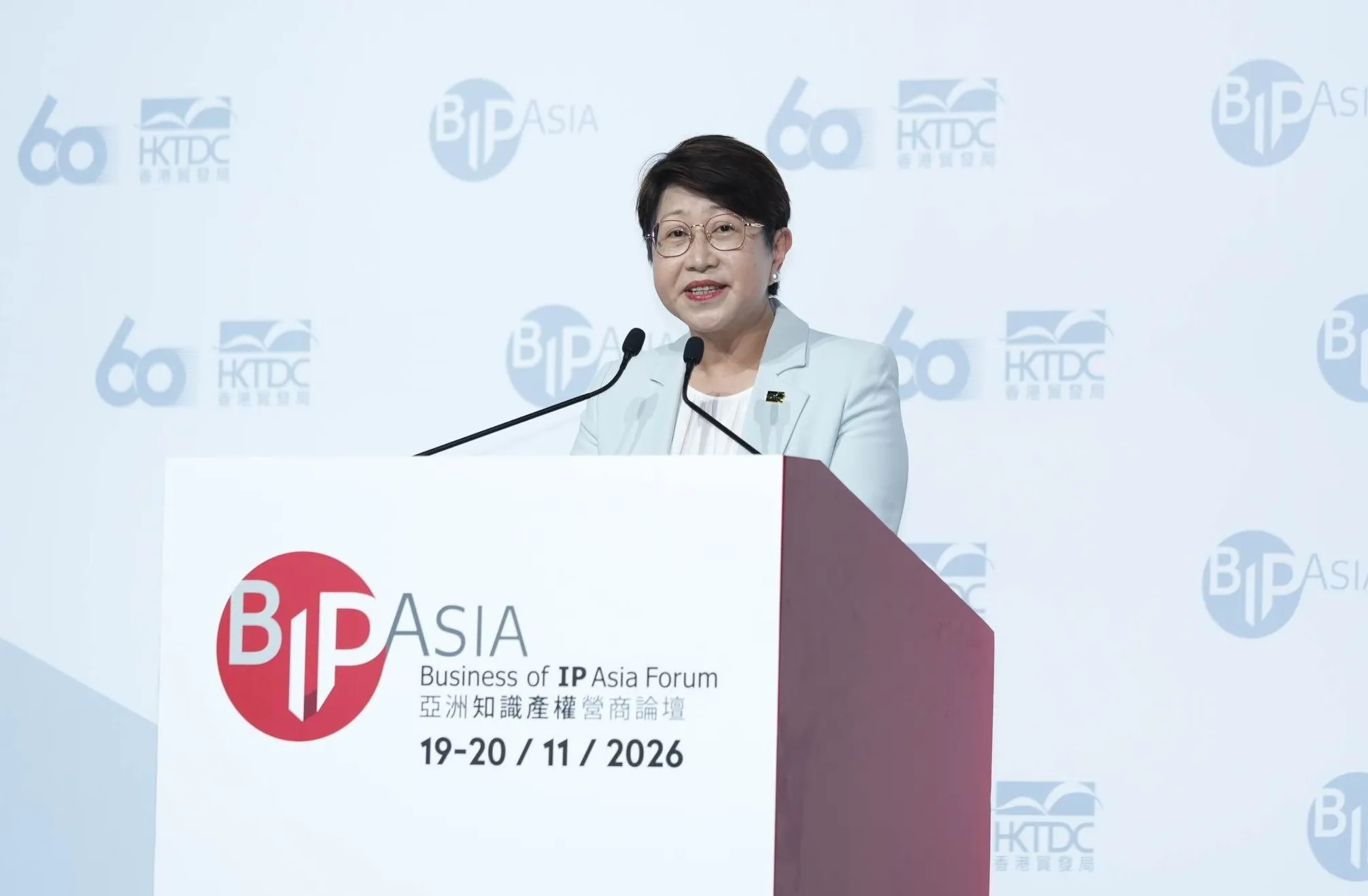
BIP Asia Forum and Entrepreneur Day open today ACN Newswire

BIP Asia Forum and Entrepreneur Day open today

HONG KONG, November 19, 2026 - (ACN Newswire via SeaPRwire.com) - The 16th Business of IP Asia Forum (BIP Asia Forum), jointly organised by the Hong Kong Trade Development Council (HKTDC) and the Hong Kong Special Administrative Region (HKSAR) Government, and the 18th Entrepreneur Day (E-day), organised by the HKTDC, open today at the Hong Kong Convention and Exhibition Centre. The two annual flagship events feature over 220 speakers and bring together over 440 start-ups, innovation projects and start-up support services. Through forums, seminars, business matching and networking activities, they explore key topics such as intellectual property (IP) financing, artificial intelligence (AI), innovative technology, entrepreneurial development and market expansion, promoting the commercialisation of innovation and cross-sector collaboration, and further strengthening Hong Kong’s role as a platform connecting innovation, capital and markets.The 16th BIP Asia Forum, jointly organised by the HKTDC and the HKSAR Government, officially opens todaySophia Chong, Executive Director of the HKTDC; Paul Chan, Financial Secretary of the HKSAR Government; Jiang Tong, Deputy Head of the Patent Office of the China National Intellectual Property Administration; Wang Zhicheng, Director General of the Copyright Department of the Publicity Department of the CPC Central Committee; and Dr Changyu Shen, Deputy Director General of the World Intellectual Property Organization, attended the opening session of the BIP Asia Forum this morning and delivered remarks.Sophia Chong, Executive Director of the HKTDC, delivers the welcome remarksSophia Chong, Executive Director of the HKTDC, said in her welcome remarks: “Hong Kong published its first Five-Year Plan two months ago in September, laying out a development blueprint for the next five years, aligning with and contributing to China’s Five-Year Plan priorities. In this inaugural plan, we reiterated our commitment to boosting our city’s standing as a regional IP Trading Centre and International Innovation and Technology Hub. And we at the HKTDC will be proactively supporting these efforts – not just to help Hong Kong thrive, but to help you all take that next step in growing your business. That is why we are gathering leading voices from across the IP and innovation ecosystems – policymakers, business leaders, innovators, investors and professionals – at this event to give you a platform to build and strengthen connections, exchange knowledge and foster impactful partnerships.”Ms Chong added: “And just next door, our anchor start-up event Entrepreneur Day extends that journey into entrepreneurship and scale-up, connecting start-ups and innovation projects with investors, business partners and the wider innovation ecosystem. Together with DesignInspire, these concurrent events offer an even broader window into Hong Kong’s innovation, entrepreneurship and creative economy.”Paul Chan, Financial Secretary of the HKSAR Government, delivers the opening remarksPaul Chan, Financial Secretary of the HKSAR Government, said in his opening remarks: “The National 15th Five-Year Plan supports Hong Kong in deepening its development as a regional IP trading centre. Our own First Five-Year Plan sets out how, including by bringing finance and IP closer together, and by making it less costly, and easier, to hold and trade IP here. Hong Kong's particular role is to connect. Last year, a patent granted in Hong Kong helped to back a securitisation listed in Shenzhen, the first time IP from outside the Mainland has been used in this way. It was small, but it showed that an idea protected on one side of the boundary can raise capital on the other. The traffic can run both ways. We also want Mainland enterprises to use Hong Kong to take their IP to the world.”Mr Chan added: “Our shared task is to make them easier to see, to finance and to trade, and to keep our rules fit for an age of AI, so that a good idea born anywhere in Asia can travel the world and prove its worth.”Leveraging Hong Kong’s IP hub advantages to accelerate innovation commercialisation and global collaborationThe theme of the BIP Asia Forum is “Powering Commercial Success Through IP and Innovation”, echoing the national strategy of promoting technological innovation and developing new quality productive forces. It explores how IP and innovation can drive competitive advantages and create long-term value. The Plenary Session I held this morning was titled “From Sandbox to Scale: Unlocking the Next Phase of IP Financing”, discussing the next stage of IP financing development in Hong Kong and consolidating Hong Kong’s advantages as a Regional IP Trading and Financing Hub connecting the Chinese Mainland and global markets. Anita Ou, Managing Director, Head of Enterprise Banking, Commercial Banking, the Hongkong and Shanghai Banking Corporation Limited said: “Intellectual property financing can serve as an enabler of Hong Kong’s long-term market development. It can support the growth of local innovative industries and Chinese Mainland enterprises with global ambitions to monetise their IP via Hong Kong, as well as help traditional businesses invest in technology, product design and automated production processes as they transform for the future. The successful outcomes of the IP Financing Sandbox have also given the banking industry valuable experience in unlocking financing based on IP with appropriate risk management. To build on this progress, we look forward to closer collaboration across the IP financing ecosystem to encourage wider adoption and further strengthen Hong Kong’s growing role as an IP financing and trading hub”Hong Kong is actively developing into an International Innovation and Technology Hub and a Regional IP Trading Centre. This year, the Forum introduces the Tech Chapter series, focusing on technology transfer, IP investment, commercialisation of innovation achievements, and entrepreneurial development. The Tech Chapter kicked off with the Plenary Session II, titled “Reinventing Sports: Unlocking IP Value Inside and Beyond the Stadium”, echoing the World Intellectual Property Organization (WIPO) World Intellectual Property Day 2026 theme “IP and Sports: Ready, Set, Innovate”. Drawing on perspectives from technology innovation, commercial operations and athlete brand management, speakers examined how IP powers the transformation of the sports industry. They discussed how intangible assets can be leveraged as strategic commercial capital to unlock sustainable value and growth beyond competition. Filipe Trigo Gonçalves, Chairman of Asia Partner, who introduces the FIFA Museum to Hong Kong, said: “We use Hong Kong as our platform, and then to reach the rest of the world. We opened the FIFA store in Hong Kong, and then we moved into other markets. This is the easiest way, because Hong Kong is very dynamic, very international and very secure as a place to build these kinds of concepts and be successful in the different regions in Asia.”Other sessions of the Tech Chapter will also explore how IP can foster innovation cooperation, industrial upgrading, and market expansion, echoing Hong Kong's broader agenda of promoting innovation and technology development and intellectual property trading.This year marks the debut of the Tech Chapter, kicking off with the Plenary Session II, “Reinventing Sports: Unlocking IP Value Inside and Beyond the Stadium”. Speakers explore how intellectual property can drive innovation and growth in the sports industry, drawing on perspectives from technology innovation, business operations and athlete brand managementTo help enterprises seize global development opportunities, the session “IP Protection & Global Commerce in the Greater Bay Area: Emerging Industry Breakthroughs and Commercial Success Driven by Institutional Innovation”, co-organised by the Guangdong Administration for Market Regulation (Guangdong Intellectual Property Administration) and the Forum, was held today to examine IP system innovation in the Greater Bay Area, transformation of technological achievements, financial empowerment, and how deeper integration of IP, innovative technology, and capital markets can accelerate the cultivation of new industries, new business forms, new business models, and high-quality enterprise development. The “IP Go-Global Business Matching Session” also returned this year, providing one-on-one business matching for Chinese Mainland enterprises pursuing international expansion. The session connected participants with Hong Kong IP professionals and experts to strengthen global IP deployment, enhance risk management capabilities and support cross-border business growth.Tomorrow, the Tech Chapter will feature several key sessions. Among them, the breakout session “Play Beyond Boundaries: IP Strategies in the World of Play” will invite Johnny Sze, CEO of Eastcolight (Hong Kong) Limited; Jessica Qian, Senior Director, Licensing Consumer Products, APAC & MENA, Hasbro; and Ivan Wong, Head of Consumer Products & Experiences, Asia, Moonbug Entertainment to share how enterprises can harness IP to foster innovation, deepen audience engagement and create new growth opportunities across markets and generations. Meanwhile, “IPHatch Asia - Reimagining IP Commercialisation: The Power of Entrepreneurship” will invite guests including Monica Hong, Investor at Betatron Venture Group to explore how start-ups and IP owners can accelerate technology transfer and bring innovations to market through strategic partnerships, unlocking new commercial opportunities and business value.Another breakout session is the WIPO-led panel discussion “Empowering Business Success: Practical Solutions for AI and IP Licensing”. This session will explore emerging opportunities and challenges brought by AI, copyright licensing, and digital business development. Opening remarks will be delivered by Dr Changyu Shen, Deputy Director General of WIPO, and David Wong, Director of Intellectual Property of the HKSAR Government. Featured speakers include Ignacio de Castro, Director of the WIPO Arbitration and Mediation Center, and Yuhong Zhou, Legal Director of Tencent Music Entertainment Group, who will share insights on how IP licensing and dispute resolution mechanisms can facilitate the responsible deployment of AI technologies and accelerate their commercial application.In their pursuit of market expansion and sustainable growth, local brands are increasingly transforming IP into a source of competitive differentiation. The breakout session “Hong Kong Brands Reimagined: The Power of Strategic IP” will focus on how Hong Kong brands can leverage IP to drive innovation, expand markets, and enhance long-term commercial value. The Forum has invited Adrian Cheung, Executive Director, General Counsel, Market Innovation and Development Director of the Garden Company Limited; Renee So, Director of Kung Wo Bean Curd Factory; and Kevin Kwong, Chief Business Officer of 9GAG and MemeStrategy Inc, to share their experiences and examine how enterprises can leverage IP strategies to strengthen market positioning and capture new development opportunities. Their signature products and merchandise will also be showcased in the Forum's exhibition area, illustrating how IP can foster brand upgrading and business development.In addition to a series of forum sessions exploring IP financing, innovation and technology development, and business growth strategies, this year’s Forum will facilitate connections between innovative solutions, investors, professional service providers and potential business partners through exhibitions and networking initiatives. The Innovation and IP Market will display innovative technologies and research achievements from the Chinese University of Hong Kong, the Hong Kong Baptist University, the Hong Kong Polytechnic University, the Education University of Hong Kong, and other Hong Kong research institutions, while bringing together IP, legal, and professional service organisations to promote the commercialisation and application of innovation achievements. New this year, the GoGlobal Connect Zone addresses the growing international needs of Chinese Mainland enterprises by providing one-stop access to legal, financial and corporate service providers, empowering businesses to expand globally through Hong Kong.E-day focuses on AI and global expansion to help start-ups explore worldwide business opportunitiesOrganised by the HKTDC, Entrepreneur Day is a flagship start-up event under the theme “Where Start-up Dreams Take Flight”, bringing together over 370 start-ups, innovation projects, and start-up support services from 13 countries and regions. The event covers four major areas: AI, deep technology, green and sustainable technology, and health technology. During the event, multiple seminars, start-up pitching sessions, and networking activities will be held, inviting business leaders and industry experts from around the world to share the latest technology trends and market insights, helping start-ups explore global business opportunities.The three thematic zones of E-Day include the Start-up and Innovation, University Spin-off, and Boosters. Among them, the Hong Kong Innovation Pavilion organised by the Digital Policy Office of the HKSAR Government showcases over 35 cutting-edge solutions from this year’s Hong Kong ICT Awards, covering smart mobility, digital entertainment, and smart living technologies. The pavilion hosted by the Home and Youth Affairs Bureau brings together over 50 start-ups supported by the Funding Scheme for Youth Entrepreneurship in the Guangdong-Hong Kong-Macao Greater Bay Area. The projects covered green technology, education technology, and biotechnology, addressing social needs such as sustainable development, talent cultivation, and healthcare through innovative technology solutions and demonstrating the innovative capabilities and development potential of young entrepreneurs in the Greater Bay Area. Members of the Alliance of Hong Kong Youth Innovation and Entrepreneurial Bases in the Greater Bay Area will also display entrepreneurship support services, allowing more people to understand the development prospects, policy support, and resource networks for entrepreneurship in the Greater Bay Area. In addition, the Asia Exhibition of Innovations and Inventions Hong Kong (AEII), co-organised by the Hong Kong Exporters’ Association and Palexpo, the organiser of the International Exhibition of Inventions Geneva, has gathered over 170 Asian innovation and invention projects this year, demonstrating the vitality and development potential of the region’s innovation and technology sector.At E-Day, the T-Chat session “Turning Sweat into Startups: The Next Wave of SportsTech Innovation” invites tech entrepreneurs with athletic backgrounds and industry representatives to explore how emerging technologies can drive innovation in the sports industry and open up new business models and market opportunitiesIn line with the growing trend of sports tech in recent years and echoing the sports IP theme of the BIP Asia Forum, E-Day has specially designated sports tech as one of its key topics this year, organising the T-Chat session “Turning Sweat into Startups: The Next Wave of SportsTech Innovation”. The session invited former athletes-turned-entrepreneurs and industry representatives to explore how technologies such as AI and data analytics can drive innovation in the sports industry and open up new business models and market opportunities. Alvina Chen, Founder and CEO of Feldspar, said: “What we are doing with AI coaching and intelligence is about supplementing what coaches already do. A professional team might traditionally need 10 coaches, data scientists and biomechanics experts. With AI, perhaps that team can now become two or three people. We can also establish accurate baselines for athletes, giving us much better insight into injury prevention. What we are doing is bridging the gap between laboratory testing and live training.”The E-Day seminar “The Rise of the One-Person Unicorn: How AI Is Creating the Next Generation of Global Entrepreneurs” explores how generative AI and AI agents are transforming entrepreneurial modelsAI applications are another key topic at this year's E-Day. Riding the wave of AI development, the seminar “The Rise of the One-Person Unicorn: How AI Is Creating the Next Generation of Global Entrepreneurs” explored how generative AI and AI agents are transforming entrepreneurial models. Judy Zhang, Executive Director of Pegasus Tech Ventures, said: "With the rapid advancement of artificial intelligence technology, the ‘one-person company’ entrepreneurial model has expanded from its previous focus on internet-based businesses to specialised fields such as financial technology, biotechnology, and physical AI. The advantage of small teams lies in their ability to focus on specific industries, transforming practical experience into market-oriented solutions rather than merely providing general information.” The “Build Your AI-Powered Team” Workshop focused on human-machine collaboration and enterprise application scenarios, exploring how to leverage AI to enhance operational efficiency and competitiveness.The Asia Exhibition of Innovations and Inventions Hong Kong (AEII) showcases over 170 Asian innovation and invention projects, demonstrating the vibrancy and development potential of Asia's innovation and technology ecosystemIn addition to innovative technology topics, E-Day also emphasises cultivating an entrepreneurial mindset and spirit of enterprise. The special forum “Building Beyond Your First Business: Lessons from Hong Kong’s Serial Entrepreneurs”, co-organised with OCBC Hong Kong, invites several local serial entrepreneurs to share their entrepreneurial journeys, to explore how entrepreneurs can seize opportunities, respond to challenges in a rapidly changing market environment, and build on their experience to launch new ventures.E-Day also promotes regional cooperation and market expansion through various activities. The GBA Tripartite Roundtable: “Empowering GBA Startups to Expand into ASEAN with Hong Kong as a Super-connector and Super Value-adder” explored development opportunities in the ASEAN market and how Hong Kong can assist Greater Bay Area start-ups in expanding into overseas markets. In addition, the “2026 Jiangsu-Hong Kong Technology and Innovation Cooperation Matchmaking Conference” promoted exchanges and cooperation between Hong Kong universities, research institutions, and Jiangsu enterprises, driving technology cooperation and the commercialisation of innovation achievements.This year, E-Day introduces the SME Tech Clinic, matching SMEs with suitable start-ups and technology solutions to accelerate business upgrading and transformationStart-up Express International connects the global start-up ecosystemThis year, the ten winning start-ups participating in Start-up Express International come from the Chinese Mainland, Germany, Indonesia, Korea, and other regions, focusing on areas such as AI, green technology, and health technology. Several of the winning start-ups are participating in E-Day, where they will showcase their innovative solutions and entrepreneurial achievements through exhibitions and sharing sessions. They will also connect with Start-up Express participants and professional judges to exchange entrepreneurial experiences and explore development opportunities in Hong Kong and the Greater Bay Area. Since its launch in 2022, Start-up Express International has been helping non-Hong Kong start-ups establish business connections and expand into the Greater Bay Area and international markets, promoting exchanges between local and global start-ups. It complements Hong Kong's active efforts to leverage its advantages as an international innovation and technology hub and strengthen connections across the global entrepreneurial ecosystem.In addition, DesignInspire will be held from 18 to 21 November at the Hong Kong Convention and Exhibition Centre, concurrently with the BIP Asia Forum and E-Day, bringing together local and international design elites to present wonderful design experiences for the industry and the public. The three events held concurrently cover creative design, intellectual property, and entrepreneurial development, promoting cross-sector exchanges and cooperation, and showcasing Hong Kong's complete innovation ecosystem from creativity and innovation to market application.Photo Download: https://bit.ly/48s76WU*Disclaimer: The Government of the Hong Kong Special Administrative Region provides funding support to the project only, and does not otherwise take part in the project. Any opinions, findings, conclusions or recommendations expressed in these materials/events (or by members of the project team) are those of the project organisers only and do not reflect the views of the Government of the Hong Kong Special Administrative Region, the Culture, Sports and Tourism Bureau, the Cultural and Creative Industries Development Agency, the CreateSmart Initiative Secretariat or the CreateSmart Initiative Vetting Committee.Websites: Business of IP Asia Forum: https://bipasia.hktdc.com/en/ Entrepreneur Day: https://www.hktdc.com/event/eday/enStart-up Express International: https://portal.hktdc.com/startupexpress/en/s/start-up-express-internationalMedia EnquiriesFor enquiries, please contact:Pandagon Limited:Fraser LiTel: (852) 6083 5623Email: pandagon.limited@gmail.comLisa FongTel: (852) 6903 3855Email: pandagon.limited@gmail.comHKTDC's Communication & Public Affairs Department:Stanley SoTel: (852) 2584 4049Email: stanley.hp.so@hktdc.orgJane CheungTel: (852) 2584 4137Email: jane.mh.cheung@hktdc.orgWinnie KanTel: (852) 2584 4055Email: winnie.wy.kan@hktdc.orgHKTDC Media Room: http://mediaroom.hktdc.com/enAbout HKTDCThe Hong Kong Trade Development Council (HKTDC) celebrates its 60th anniversary this year. The HKTDC is a statutory body established in 1966 to promote, assist and develop Hong Kong's trade. With over 50 offices globally, including 13 in the Chinese Mainland, the HKTDC promotes Hong Kong as a two-way global investment and business hub. The HKTDC organises international exhibitions, conferences and business missions to create business opportunities for companies, particularly small and medium-sized enterprises (SMEs), in the mainland and international markets. The HKTDC also provides up-to-date market insights and product information via research reports and digital news channels. For more information, please visit: www.hktdc.com/aboutus. Copyright 2026 ACN Newswire via SeaPRwire.com. All rights reserved. www.acnnewswire.com
More
AI Labs leverages Google’s Gemini AI to bring market analysis into its Chatbot ACN Newswire

AI Labs leverages Google’s Gemini AI to bring market analysis into its Chatbot

SINGAPORE, Nov 19, 2026 - (ACN Newswire via SeaPRwire.com) - AI Labs chatbot, AIV, combines crypto and equity market analysis with trading strategies and risk assessments, as it reports about 700,000 active users, daily trading volumes of US$50-100M a day, and total value locked (TVL) of $80-100M across its platform.AI Labs is using Google's Gemini artificial intelligence technology to power its AIV Chatbot, enabling users to explore cryptocurrency and equity markets through conversational analysis, trading scenarios and investment risk assessments.The chatbot goes beyond conventional price summaries by incorporating technical indicators, business fundamentals, institutional sentiment and market catalysts. It can also outline potential entry and exit levels, evaluate alternative trading strategies and identify risks that could undermine an investment thesis."Our aim is to help users understand not just a market view, but the reasoning and risks behind it," said Ryan Chi, founder and chief executive officer of AI Labs. "AIV brings those elements into a conversation, so users can explore different scenarios rather than rely on a standalone buy or sell signal."Examples provided by the company demonstrate the chatbot's capabilities across multiple assets. A Bitcoin query generates a seven-day trading scenario incorporating technical support levels, ETF flows and downside risks. An Nvidia analysis combines technical indicators with growth prospects, valuation and earnings volatility, while a Solana example explores long-short strategies and liquidation risks."The important distinction is between generating a trading idea and explaining the assumptions and risks behind it," said Terry Tan, an advisor to AI Labs. "AI-powered tools should support independent judgment by helping users understand both opportunities and potential downside scenarios."The company says it is continuing to onboard new users and is committed to making every reasonable effort to sustain the high levels of trading activity at US$50-100M daily as it expands its AI-powered financial services.Media ContactCompany: AI LabsContact: Media TeamWebsite: https://ai-labs.live/ Copyright 2026 ACN Newswire via SeaPRwire.com. All rights reserved. www.acnnewswire.com
More
Forum unites Hong Kong Business Associations from global markets to explore new opportunities ACN Newswire

Forum unites Hong Kong Business Associations from global markets to explore new opportunities

HONG KONG, November 19, 2026 - (ACN Newswire via SeaPRwire.com) - 18 November 2026, The 27th Hong Kong Forum, jointly organised by the Hong Kong Trade Development Council (HKTDC) and the Federation of Hong Kong Business Associations Worldwide, brought together over 300 business leaders and representatives of Hong Kong business associations from 29 countries and regions for first-hand insights into Hong Kong’s latest developments and emerging opportunities. As part of the HKTDC’s efforts to promote Hong Kong’s strengths to the international business community, the annual forum was held from 17 to 18 November at the Hong Kong Convention and Exhibition Centre (HKCEC) and connected Hong Kong’s global network of business friends with prominent leaders of leading Hong Kong enterprises and policy experts, complemented by networking activities and local study tours showcasing the city’s transformation.The 27th Hong Kong Forum, jointly organised by the Hong Kong Trade Development Council (HKTDC) and the Federation of Hong Kong Business Associations Worldwide, was held over two consecutive days at the Hong Kong Convention and Exhibition Centre (HKCEC)Through keynote speeches and thematic discussions, participants gained insights into China’s 15th Five-Year Plan, Hong Kong’s first-ever Five-Year Plan and the HKSAR Government’s Policy Address, with speakers explaining their implications and highlighting new opportunities for global businesses. China’s 15th Five-Year Plan reaffirms the strategic role of the Guangdong-Hong Kong-Macao Greater Bay Area as a key engine for developing new quality productive forces. Tailored to local conditions and focused on the city’s unique strengths, Hong Kong’s first Five-Year Plan aims to better align with the national plan. Discussions explored how international businesses can capitalise on these developments through Hong Kong’s strengths in finance, trade, innovation and technology, and professional services.The forum attracted representatives of Hong Kong business associations and business leaders from 29 countries and regions around the worldLeveraging Hong Kong's advantages to foster global business connectionsWelcome remarks by Margaret Wong, Chairperson of the Federation of Hong Kong Business Associations WorldwideMargaret Wong, Chairperson of the Federation of Hong Kong Business Associations Worldwide, said in her welcome remarks: “In today's rapidly changing business environment, the value of our Federation network is greater than ever. Bringing together members from different countries and regions, our network provides valuable market insights, trusted connections and a strong platform for business exchange.” Opening remarks by Sophia Chong, Executive Director of the HKTDCSophia Chong, Executive Director of the HKTDC, said in her opening remarks that, “Hong Kong released its first Five-Year Plan, setting out a clear and focused course of action guided by growth and innovation. Priorities include consolidating and enhancing Hong Kong’s competitive edge, deepening connectivity with the Guangdong-Hong Kong-Macao Greater Bay Area and fostering an international collaboration network. This and more are what make Hong Kong uniquely positioned to support Chinese Mainland’s high-quality development and international engagement, opening new opportunities for partnership.” Paul Chan, the Financial Secretary of the Hong Kong Special Administrative Region, attended the luncheon on the second day and delivered a keynote speech.Paul Chan, the Financial Secretary of the Hong Kong Special Administrative Region, attended the luncheon on the second day and delivered a keynote speech. He noted that Hong Kong is actively implementing its first Five-Year Plan to strengthen its strategic positioning as the nation’s “four centres and one hub” comprising an international financial centre, trade centre, shipping centre, innovation and technology centre, and an international hub for high-calibre talent. He highlighted Hong Kong’s unique role as the world’s largest offshore Renminbi business hub and emphasised the Northern Metropolis as a major engine of future growth, providing vast opportunities in innovation and technology, cross-boundary collaboration and talent development.Harnessing Hong Kong's strengths to drive innovation and industrial upgradingAs Hong Kong's role as a superconnector and super value-adder between the Chinese Mainland and international markets continues to grow, the city is well positioned to help businesses seize opportunities arising from China's 15th Five-Year Plan through its strengths as an international financial centre, trading hub, innovation and technology ecosystem, and professional services platform.At the plenary session held on the first day of the Forum, “Capitalising on the 15th Five-Year Plan via Hong Kong’s Multifaceted Enterprise Strengths”, Dr Hon Stephen Wong, Head, Chief Executive's Policy Unit, The Government of the Hong Kong Special Administrative Region, said that Hong Kong's first Five-Year Plan seeks to strengthen the city's role as a key link between national and international development by consolidating its traditional strengths while cultivating new growth drivers. As mainland enterprises expand globally and international supply chains become increasingly diversified, Hong Kong is well positioned to develop into a high-value-added supply chain services centre, providing not only trade and logistics support, but also integrated financial, treasury, insurance, legal and dispute resolution services.The session was followed by a panel discussion featuring Sabrina Fung, Group Managing Director, Fung Retailing Group; Paulo Pong, BBS, JP, Chairman of M+ Museum Board and Board Member of the West Kowloon Cultural District Authority; and Patrick Wong, CEO, Wing Tak (Shipping) Holdings Limited, Chairman, New Asian Travel & Marine Services Limited, and CEO, Tenacity Int’l Group Limited. In addition to Hong Kong's traditional strengths in finance, trade and professional services, speakers explored how the city can enhance its soft power and global influence through arts and culture, creative industries, and international cultural exchanges. Discussions highlighted how Hong Kong's unique blend of Eastern and Western cultures, world-class cultural infrastructure and diverse talent pool can further support businesses in building their brands, connecting with international markets and fostering cross-sector collaboration.Also held on the first day of the forum, the thematic session “Harnessing AI for Innovation: Transforming Industries in Hong Kong” featured a special address by Lillian Cheong, Under Secretary for Innovation, Technology and Industry, Government of the Hong Kong Special Administrative Region.The session brought together Justin Chan, Founding CEO, Gense Technologies; Dr Lai Lipeng, Co-founder and Chief Innovation Officer, XtalPi; and Paul Loo, Chief Operating Officer, Lalamove, who shared insights on how artificial intelligence is driving transformation and innovation across sectors including scientific research, healthcare technology and logistics, helping enterprises enhance competitiveness and unlock new growth opportunities. The speakers also examined how Hong Kong can leverage its strengths in talent, capital, research capabilities and international connectivity to accelerate the commercialisation and industrialisation of AI technologies, further reinforcing the city's position as a leading innovation and technology hub and a premier centre for artificial intelligence in Asia.Young entrepreneurs share innovation journeys and vision for a smarter futureOn the second day of the forum, the young executive session, “The Innovative Disruptors Shaping Our Tomorrow”, focused on how the new generation of innovation and technology entrepreneurs are leveraging emerging technologies to address market needs and drive industry transformation.At the plenary session, the panel discussion featuring Sabrina Fung (second from the left), Group Managing Director, Fung Retailing Group; Paulo Pong (second from the right), BBS, JP, Chairman of M+ Museum Board and Board Member of the West Kowloon Cultural District Authority; and Patrick Wong (first from the right), CEO, Wing Tak (Shipping) Holdings Limited, Chairman, New Asian Travel & Marine Services Limited, and CEO, Tenacity Int’l Group Limited.The session featured Sabrina Chu, Founder, PetWell HK Limited; Desmond Ho, CEO, Alpha AI Technology Limited; Jeff Li, Co-Founder & COO, Hay-koze Limited; and Deacon Wong, Co-founder & CEO, GABES Limited. The speakers explored innovative applications in areas such as smart cities, public safety, employee well-being and digital pet services. They also shared how they have leveraged Hong Kong's robust innovation and technology ecosystem and international connectivity to transform innovative ideas into globally competitive business solutions. In addition, they discussed the challenges encountered during their entrepreneurial journeys and how innovation can help create a smarter, more efficient and better-connected future.This year’s Forum introduced the Hong Kong Global NextGen Ambassador Programme, bringing together young representatives from Hong Kong business associations worldwide for an exchange session with Bernard Chan, Chairman of the Board of the West Kowloon Cultural District Authority.One of the highlights of this year's forum was the launch of the Hong Kong Global NextGen Ambassador Programme, which aims to strengthen ties between young members of Hong Kong business associations worldwide and Hong Kong, while nurturing the next generation of association leaders.The eight-day programme featured leadership exchanges, visits to enterprises and organisations, mentorship sessions and business networking events. Through these activities, participants gained first-hand insights into Hong Kong's latest economic and urban developments while building connections with local business leaders and young professional networks.This year, the programme brought together eight young representatives from eight Hong Kong business associations worldwide. The initiative seeks to deepen the younger generation's understanding of and connection with Hong Kong, while encouraging them to serve as ambassadors and bridges between Hong Kong and their respective markets, advocating Hong Kong’s unique advantages and opportunities to the wider business community.Delegates explore Hong Kong's innovation ecosystem and future developmentTo give participants a deeper understanding of Hong Kong's innovation and technology development, future city planning and major infrastructure projects, the organisers also arranged visits to Cyberport, the Kai Tak Sports Park, and the Northern Metropolis, enabling delegates to experience first-hand the city's vibrant momentum in innovation and development.The Hong Kong Forum is the annual flagship event of the Federation of Hong Kong Business Associations Worldwide. Founded in 2000, the Federation today has a network of 49 business associations with membership of approximately 11,000 business executives and professionals from 38 countries and regions.Forum website: https://hkforum.hktdc.com/conference/hkforum/enPhoto download: https://bit.ly/4iQ6rVeMedia enquiriesPlease contact the HKTDC’s Communications and Public Affairs Department:Johnny TsuiTel: (852) 2584 4395Email: johnny.cy.tsui@hktdc.orgHKTDC Media Room: http://mediaroom.hktdc.comAbout FHKBAWThe Federation of Hong Kong Business Associations Worldwide is a unique network of 49 Hong Kong Business Associations in 38 countries and regions with about 11,000 individual associates. These Hong Kong Business Associations were started by overseas traders, buyers and professionals, who have strong business links to Hong Kong in their respective countries, for the purpose of networking and exchanging business information and ideas. Each of these Associations has its own individual members who are top business people and SMEs in their home country. They are Hong Kong's closest allies and partners in the world market. With the help of the Hong Kong Trade Development Council (HKTDC), these Associations formed the Federation of Hong Kong Business Associations Worldwide in November 2000. The Federation aims to achieve synergy among the global network of Hong Kong Business Associations. It provides an effective base for member associations to network and exchange information, thereby generating business opportunities. Website: https://www.hkfederation.org.hk/aboutAbout HKTDCThe Hong Kong Trade Development Council (HKTDC) celebrates its 60th anniversary this year. The HKTDC is a statutory body established in 1966 to promote, assist and develop Hong Kong's trade. With over 50 offices globally, including 13 in the Chinese Mainland, the HKTDC promotes Hong Kong as a two-way global investment and business hub. The HKTDC organises international exhibitions, conferences and business missions to create business opportunities for companies, particularly small and medium-sized enterprises (SMEs), in the mainland and international markets. The HKTDC also provides up-to-date market insights and product information via research reports and digital news channels. For more information, please visit: www.hktdc.com/aboutus. Copyright 2026 ACN Newswire via SeaPRwire.com. All rights reserved. www.acnnewswire.com
More

TUNOVEX Global Music Inc. Launches Strategic Expansion in Ghana to Accelerate Global Promotion of African Music ACN Newswire

TUNOVEX Global Music Inc. Launches Strategic Expansion in Ghana to Accelerate Global Promotion of African Music

NEW YORK, Nov 19, 2026 - (ACN Newswire via SeaPRwire.com) - TUNOVEX Global Music Inc. has officially announced its strategic expansion into Ghana, marking a major milestone in the New York-based company's mission to connect regional music scenes with global audiences. Through this new market initiative, TUNOVEX is establishing a dedicated local promotional network to help Ghanaian labels, independent artists, and industry partners amplify Highlife, Hiplife, and Afrobeats tracks across international digital platforms—positioning Ghana as the company's strategic gateway into the broader African music market.Rooted in the diverse musical culture of New York, the company serves music labels, independent artists, and industry partners worldwide, offering professional exposure and promotional support. By integrating online distribution channels and digital promotional resources, TUNOVEX creates broader opportunities for musical works to be showcased, enabling content of various styles to reach audiences across diverse regions.As the global digital music market continues to expand, an increasing number of creators are looking to leverage the internet to amplify the impact of their work and secure more exposure for their original music. With a core mission of connecting musical works with a global audience, TUNOVEX Global Music Inc. focuses on music promotion, digital content dissemination, and cross-regional market collaboration, continuously exploring diverse development opportunities within the music industry.Corporate Mission and VisionDriven by the ongoing evolution of digital technology and internet platforms, the music industry is shifting from traditional record production and physical distribution toward digital platforms, online content dissemination, and multifaceted music promotion.TUNOVEX Global Music Inc. centers its operations on music promotion, while also encompassing music creation, professional production, copyright management, and digital content distribution. The company has established a comprehensive business ecosystem that spans music content development, the promotion of creative works, and online dissemination.By integrating a wide array of online distribution resources, the company provides music labels and independent artists with exposure, promotional campaign planning, and digital outreach support—helping diverse musical content reach broader audiences.Looking ahead, TUNOVEX aims to build a global digital music promotion network. By forging partnerships with music labels, creators, and industry organizations across various regions, the company seeks to provide musical works with greater international exposure, while continuously expanding its business scope and deepening international cooperation.Moving forward, TUNOVEX remains committed to further enhancing its service capabilities within the field of digital music promotion. Through innovative distribution methods and optimized promotional channels, the company is dedicated to helping musical works reach a broader audience. TUNOVEX aims to play a more active role in connecting music creators and music companies with listeners worldwide, thereby generating long-term value for the development of the music industry and for cultural exchange.Market Expansion in Ghana and Collaboration in African MusicAs the global music industry continues to evolve, the African music market has emerged as a significant arena for international cultural exchange and the dissemination of digital content.TUNOVEX Global Music Inc. has identified Ghana as a key focus for its international market expansion. The company intends to leverage the local music industry as an entry point to build a network for music promotion, fostering connections among local music enterprises, independent artists, and other industry partners.Ghana boasts a rich musical heritage, with genres such as Highlife, Hiplife, and Afrobeats enjoying strong cultural recognition both within Africa and on the international stage. Local creators are increasingly utilizing digital platforms and global distribution channels to bring their distinct, region-specific musical works to audiences in various countries and territories.By integrating its expertise in music promotion and digital distribution, TUNOVEX Global Music Inc. aims to actively participate in the development of the Ghanaian music market and create more diverse opportunities for local musical works to be showcased.The company's strategic focus for the Ghanaian market includes the following areas:Promotion of Local Ghanaian Music: Providing exposure, digital marketing, and online distribution support for local music companies, record labels, and independent artists.Building a Local Promotion Team: Gradually expanding a team of local music promoters and project collaborators to handle coordination, project organization, and day-to-day operational support for promotional activities.Expansion into the Broader African Market: Using Ghana as a strategic gateway to gain insights into the music market demands of Nigeria, Kenya, and other African regions, while exploring broader opportunities for music promotion and digital distribution.Through its operations in Ghana, TUNOVEX Global Music Inc. seeks to bridge the gap between African and international music industry resources. The company aims to provide local creators with enhanced digital promotion and cross-regional exposure, while simultaneously developing a music collaboration network that extends across a wider portion of the African continent.About TUNOVEX Global Music Inc.Headquartered in New York, TUNOVEX Global Music Inc. is an international digital music promotion and distribution company serving record labels, independent artists, and industry partners worldwide. By integrating global online distribution channels with targeted digital marketing, copyright management, and cross-regional outreach, TUNOVEX empowers creators of all genres to maximize their international exposure and connect with listeners across diverse global markets.Media ContactBrand: TUNOVEX Global Music Inc.Contact: media teamWebsite: https://www.tunovex.cc Copyright 2026 ACN Newswire via SeaPRwire.com. All rights reserved. www.acnnewswire.com
More
From Intelligent Dispatch to Smart Ports, Shenzhou Guangda Showcases New Logistics AI Applications at ALMAC in Hong Kong ACN Newswire

From Intelligent Dispatch to Smart Ports, Shenzhou Guangda Showcases New Logistics AI Applications at ALMAC in Hong Kong

Hong Kong, Nov 19, 2026 - (ACN Newswire via SeaPRwire.com) - The 16th Asian Logistics, Maritime and Aviation Conference (ALMAC), jointly organised by the Hong Kong Special Administrative Region Government and the Hong Kong Trade Development Council, took place in Hong Kong on 16 and 17 November 2026. This year’s conference was themed “Driving Inclusive Growth through Innovation and Sustainability”. Beijing Shenzhou Guangda Technology Co., Ltd. (“Shenzhou Guangda”) showcased its Intelligent Dispatch Agent, Intelligent Load Planning Agent and Smart Port Solution, demonstrating how AI can support road transport, air cargo load planning and cargo measurement at ports.How AI Supports Day-to-Day Operations Across Three Logistics ScenariosDuring the exhibition, Hong Kong Legislative Council members and representatives from the Office for Attracting Strategic Enterprises and the Hong Kong Trade Development Council visited Shenzhou Guangda’s booth to discuss AI applications in logistics and supply chains with the team. The booth also attracted logistics, shipping and supply chain professionals from multiple countries and regions, who stopped to learn about specific AI applications in transport dispatch, air cargo load planning and cargo measurement at ports.In road transport, dispatchers need to assign vehicles in response to changing orders and verify mileage and estimate costs using actual vehicle routes. Shenzhou Guangda’s Intelligent Dispatch Agent brings transport orders, vehicle resources, GPS tracks and operating costs into a unified analytical workflow. It supports mileage verification, transport capacity demand forecasting and transport cost estimation, providing a traceable basis for dispatch decisions and cost accounting.In air cargo load planning, loading arrangements must account for cargo characteristics, available space, payload limits and centre-of-gravity constraints. The Intelligent Load Planning Agent can generate load plans based on shipment orders and loading rules, and validate payload and centre of gravity, helping on-site personnel position cargo and improve the utilisation of available loading space.In port measurement operations, draft mark readings directly affect cargo weight calculations. Shenzhou Guangda’s Smart Port Solution combines AI visual recognition with a vessel measurement model to support automated draft mark recognition, vessel draft calculations, cargo weight calculations and checks for anomalous data, assisting port personnel in completing measurement operations.From Computing Infrastructure to Business Operations, How Shenzhou Guangda Delivers Enterprise AI ApplicationsThe three exhibits draw on Shenzhou Guangda’s accumulated capabilities in computing infrastructure development, industry application development and engineering delivery. The company can deploy computing servers, high-speed networks, distributed storage and other hardware, provide computing resource scheduling and optimisation services, and customise large AI models and enterprise AI agents around customers’ business workflows. During implementation and maintenance, the company draws on its in-house Shenxing Service Cloud, nationwide delivery network and team of FDE on-site delivery engineers to coordinate personnel and spare parts, support deployment across multiple sites and provide ongoing technical support after launch.As one of the typical application scenarios for Shenzhou Guangda’s enterprise AI solutions, logistics and supply chains demonstrate the company’s practical achievements in integrating AI technology with industry operations. Beyond logistics, the company’s business also spans utilities, advanced manufacturing, software and information technology services, and other industries. Addressing the specific business needs of customers across these industries, the company provides AI solutions covering the full process, from computing resource deployment and optimisation and large-model and AI agent development to on-site implementation, delivery and ongoing maintenance. At the Hong Kong exhibition, the company used logistics and supply chains as a representative application scenario to showcase the results of integrating enterprise AI technology with actual business operations, demonstrating its end-to-end AI implementation and delivery capabilities to potential industry partners across the Asia-Pacific region. Copyright 2026 ACN Newswire via SeaPRwire.com. All rights reserved. www.acnnewswire.com
More
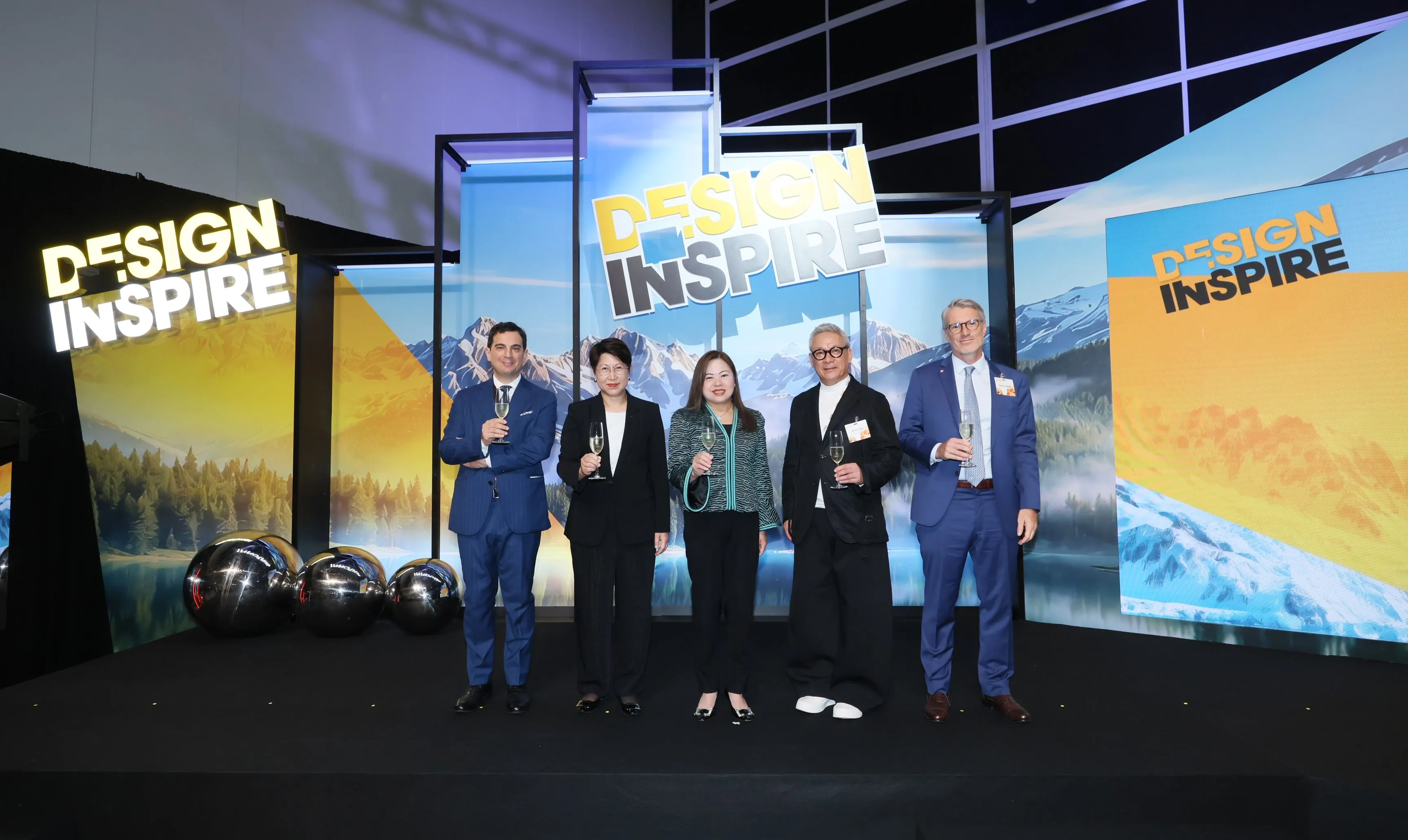
DesignInspire opens today with stunning installations ACN Newswire

DesignInspire opens today with stunning installations

HONG KONG, November 18, 2026 - (ACN Newswire via SeaPRwire.com) - Supported by the Cultural and Creative Industries Development Agency (CCIDA) as lead sponsor, organised by the Hong Kong Trade Development Council (HKTDC), and co-organised by the Hong Kong Design Centre (HKDC), DesignInspire 2026 opens today at the Hong Kong Convention and Exhibition Centre (HKCEC). The expo brings together top-tier international designers and brands, striving to forge an international exchange platform that bridges global creativity with boundless business opportunities. Starting tomorrow, the fair will be fully open to both the trade and the public, with free admission, for three consecutive days (19 to 21 November).Supported by the Cultural and Creative Industries Development Agency (CCIDA) as lead sponsor, organised by the HKTDC and co-organised by the Hong Kong Design Centre, DesignInspire runs for four consecutive days from 18 to 21 November at the Hong Kong Convention and Exhibition Centre, opening free of charge to trade professionals and the public starting tomorrowThis year’s DesignInspire is the most internationally diverse in the fair's history, bringing together more than 200 exhibitors from 17 countries and regions, including Hong Kong, the Chinese Mainland, Switzerland, Italy, France, Spain, Belgium, the Czech Republic and Thailand, presenting masterful works and projects by more than 320 internationally renowned designer brands. Under the theme “Wander & Wonder”, the exhibition encourages visitors to embark on a journey of exploration guided by curiosity, discovering boundless inspiration through the harmonious resonance and interactions across different cultures and creative disciplines. The event further showcases Hong Kong’s role as Asia’s hub for creative design and commercial exchange. DesignInspire offers a multifaceted suite of experiences. Through immersive thematic exhibitions, insightful forums, workshops and tailored business matching services, the fair demonstrates the close connections between creativity, lifestyle culture and commerce, driving the transformation of creative excellence into brand value and commercial opportunities, promoting the long-term development of the creative industries and consolidating Hong Kong's position as the East-meets-West centre for international cultural exchangeAsia’s premier design event, this year’s DesignInspire brings together over 200 exhibitors from 17 countries and regions, showcasing more than 320 internationally renowned designer brandsSophia Chong, Executive Director of the HKTDC, said: “The creative industries are important drivers of our city’s continued growth. With its unique East-meets-West strengths, robust creative ecosystem and diverse pool of talent, complemented by its standing as a leading business and trade centre, Hong Kong can accelerate the continued expansion of the global design ecosystem and its stakeholders.” Ms Chong added that the HKTDC will support the Government’s efforts in advancing the creative industries, enabling businesses to seize new opportunities through its trade platforms. Running concurrently at the HKCEC, DesignInspire, the Business of IP Asia Forum (BIP Asia Forum) and HKTDC Entrepreneur Day (E-Day) cover areas including creative design, intellectual property (IP) and entrepreneurship, fostering cross-industry exchange and collaboration while showcasing Hong Kong’s complete innovation ecosystem, from creativity to market application.ABITO/HK from Italy debuts, fusing Italian and Hong Kong aestheticsA major highlight this year is a globally acclaimed design showcase, “ABITO/HK”, produced and promoted by the Italian Ministry of Foreign Affairs and International Cooperation, which seamlessly weaves in Hong Kong design elements for the first time. The pavilion is supported by the CCIDA as lead sponsor, organised by the HKTDC and presented in collaboration with Salone del Mobile.Milano, in partnership with the Consulate General of Italy in Hong Kong and curated by the internationally renowned design studio Palomba Serafini Associati. The term “ABITO” has its roots in Italian, encompassing both “clothing” and “living”, reflecting the exhibition’s aim to analyse socio-cultural evolution through the lens of women’s lifestyles and contemporary designs across different eras.Produced and promoted by the Italian Ministry of Foreign Affairs and International Cooperation, the “ABITO/HK” exhibition makes its debut in Hong Kong, showcasing a cross-cultural dialogue between a century of classic Italian furniture and fashion, seamlessly infused with Hong Kong elementsArranged chronologically, the exhibition features precious archival pieces from illustrious brands such as Giorgio Armani, Gucci, Versace, Max Mara, Porro, Cassina, Kartell, B&B Italia and Memphis, alongside the archive from Quinto-Tinarelli Collection, paired with classic “Made in Italy” furniture. Marking its Hong Kong debut, ABITO/HK breaks new ground by incorporating Hong Kong elements. This section showcases a curated collection of furniture and boutique items by local design masters and emerging talents, including Alan Chan, Douglas Young, Elaine Yan Ling Ng, Freeman Lau, Henry Steiner, anothermountainman (Stanley Wong) and William Lim. It also features private collections such as vinyl record sleeves and neon signs, vividly reconstructing the evolution of lifestyle aesthetics in both Italy and Hong Kong over the decades."Cabinets of Wonders", inspired by a Swiss wooden chalet with a dynamic sense of breathing, ingeniously juxtaposes cross-disciplinary masterpieces such as top-tier Swiss watchmaking craftsmanship and traditional Hong Kong "Zan Script" typography, presenting a brilliant collision of Eastern and Western culturesGlobal design masters showcase cross-disciplinary craftsmanship and spectacular light artDesignInspire is dedicated to fostering multicultural convergence. The “Cabinets of Wonders”, this year curated by emerging artist Chilai Howard, draws inspiration from a dynamic Swiss wooden chalet imbued with a “sense of breathing”, constructing a profound spatial dialogue between the East and the West. The exhibition ingeniously juxtaposes cross-disciplinary masterpieces from Switzerland and Hong Kong. For example, it pairs the legendary Swiss brand Parmigiani Fleurier, a laureate of the Grand Prix d'Horlogerie de Genève (GPHG), with the kinetic mechanical installations of Hong Kong artist Joseph Chan, and combines the contemporary posters of Swiss letterpress master Dafi Kühne with the hand-painted signboards of Hong Kong’s “Real Script” calligraphy master Au Yeung Cheong. Through a diverse array of mediums – including mechanics, typography, ceramics and audiovisual interactions – the showcase presents a spectacular collision of design language, craftsmanship ethos and cultural perspectives from both locales.“House of Lumière” features more than 80 exquisite lighting creations, including signature pieces by André Fu, Atelier Elouz Paris and Davide GroppiJointly curated by lighting design master Tino Kwan and renowned interior designer CM Jao, the “House of Lumière” perfectly marries light art with spatial design. Gathering global design titans, it features more than 80 exquisite lighting creations. Visitors can explore signature pieces by renowned Asian designers Steve Leung, André Fu, Joe Cheng and Moorgen, alongside classic masterpieces from an international heavyweight lineup including Artemide, Atelier Elouz Paris, and Viabizzuno, bringing the world's most cutting-edge lighting solutions together under one roof.Step into immersive zones to reshape sensory dialoguesInternationally acclaimed Swiss design studio atelier oï, supported by Tribe22, presents the immersive multi-sensory installation “Breathing in Motion”. Ingeniously fusing Swiss precision craftsmanship with Eastern cultural imagery, the installation is anchored by the Oïphorique lighting collection, which gently expands and contracts in a breathing-like rhythm mirroring nature. Complemented by the infinite reflections of curved mirrored walls, it invites visitors to rediscover the subtle dialogue between body, space and inner perception amidst stillness and motion.Furthermore, the American Hardwood Export Council (AHEC), dedicated to promoting the aesthetics of sustainable timber, brings a grand-scale immersive zone titled “Forested Senses” this year. Masterfully utilising red oak veneer to craft a spatial structure named “Veneer Veils", the zone intertwines the creative works of several Hong Kong artists, including OrangeTerry, Chan Ka-kiu, and Yan Yung, evoking vivid sensory perceptions across touch, hearing and smell.Connecting with global buyers to enable market expansion for design brandsTo facilitate exchange and collaboration between the local and international cultural, creative and design sectors, and to unlock more opportunities for facilitating the industry’s development, DesignInspire has invited a wide array of industry professionals, local and overseas cultural institutions, cross-sector enterprises, large corporations, design service users and professional buyers to visit and network at the event. Through face-to-face discussions and business matching, DesignInspire actively fosters cross-regional and cross-disciplinary collaborations, driving the translation of creative achievements into tangible commercial prospects. The diverse backgrounds of this year's visiting buyers span multiple fields such as property development and management enterprises, F&B brands, and cultural and creative industry players. They include Thailand property developer Asset World Corporation (AWC), Indonesian developer Paramount Enterprise International, Vietnamese luxury real estate developer Son Kim Land, the Chinese Mainland F&B chain Tomacado, renowned Italian design gallery Rossana Orlandi Gallery, as well as technology conglomerate Hisense Group Holdings Co., Ltd., underscoring DesignInspire's vital role as an international design and business exchange platform.DesignInspire features the "DesignInspire Boutique" retail zone, offering visitors the opportunity to purchase unique designer and art-inspired products from around the world while exploring exceptional creative worksBeyond promoting cultural and design exchange, this year’s DesignInspire further amplifies its function as a trade platform. Dedicated price tags and exclusive QR codes have been added alongside exhibits in key pavilions, seamlessly bridging the physical exhibition experience with online procurement processes, assisting design brands in precisely connecting with potential buyers, facilitating tangible transactions and opening new business opportunities.Industry elites demonstrate collaboration and design soft power at forumsThis year’s “InnoTalks” series at DesignInspire gathers pioneers and industry experts from the design, marketing and related fields. The sessions focus on the application of innovative design technologies and industry development trends, providing visitors with practical, up-to-date market intelligence insights and networking opportunities. Representatives from international design studios such as Italian partners from ABITO/HK, atelier oï and international design brands like M77, will host thematic sharing sessions on 19 and 20 November, exchanging thought-provoking ideas on areas such as design innovation trends and the development of the creative industries. In addition, Bert Ng, Director of logistics company Hacis, Zohra Azi, Chief of Staff of the art logistics and warehousing company Eythos, and Suez Lui, Global Head of Operations at Art Basel, MCH Group Asia Limited, will provide in-depth analyses of professional logistics solutions for creative works, ensuring the safe global transit of precious art and design pieces. This session is particularly tailored for art and design practitioners as well as the organisers of art exhibitions and creative events.Furthermore, Chengdu Media Group will host the "Evolving Media, Empowering Culture" City Sharing Session, focusing on two core themes: cultural expansion overseas and the revitalisation of industrial heritage. By examining successful urban renewal cases and practical insights from the cultural and creative industries in the Chinese Mainland, the session will offer fresh perspectives for enterprises looking to leverage creativity to drive brand upgrading and enhance commercial value.In addition to attracting overseas design elites, several original Hong Kong brands and design studios will showcase their innovative breakthroughs at DesignInspire, spanning diverse fields such as smart technology, lifestyle aesthetics and social innovation. Among them, KnitWarm’s patented smart temperature-control textiles, UP2O’s smart running shoes with real-time air pollution sensing, and HASS Lab, which merges contemporary art with social welfare services, will comprehensively demonstrate the multifaceted soft power of local design. Group 31 of the Federation of Hong Kong Industries (FHKI) will provide intellectual property consultation services at the fair, offering professional support to creative talents looking to commercialise their concepts and driving the transformation of creative works into high-potential business projects.Two signature HKTDC events, BIP Asia and E-Day, will run concurrently with DesignInspire at the HKCEC from tomorrow (19 November) to 20 November, bringing local and international design elites together to present compelling design experiences to the industry and the public.DesignInspire DetailsDate:18-21 November 2026 (Wednesday to Saturday)Time:18 Nov 2026 (Wed) 2pm-7pm19-20 Nov 2026 (Thu to Fri) 9:30am-7:30pm21 Nov 2026 (Sat) 9:30am-7pmVenue:Hong Kong Convention and Exhibition Centre Hall 3D-EAdmission:Free admission with registrationWebsite:https://designinspire.hktdc.com/en/* The Cultural and Creative Industries Development Agency (CCIDA) is lead sponsor of the event.Photo download: https://bit.ly/3WDcQdJMedia enquiriesRaconteur:Betsy TseTel: (852) 9742 7338Email: betsytse@raconteur.hkMolisa LauTel: (852) 6187 7786Email: molisalau@raconteur.hkHKTDC’s Communications & Public Affairs Department:Katy WongTel: (852) 2584 4524Email: katy.ky.wong@hktdc.orgChristy LeeTel: (852) 2584 4369Email: christy.wn.lee@hktdc.orgHKTDC Newsroom: https://mediaroom.hktdc.com/enAbout HKTDCThe Hong Kong Trade Development Council (HKTDC) celebrates its 60th anniversary this year. The HKTDC is a statutory body established in 1966 to promote, assist and develop Hong Kong's trade. With over 50 offices globally, including 13 in the Chinese Mainland, the HKTDC promotes Hong Kong as a two-way global investment and business hub. The HKTDC organises international exhibitions, conferences and business missions to create business opportunities for companies, particularly small and medium-sized enterprises (SMEs), in the Chinese Mainland and international markets. The HKTDC also provides up-to-date market insights and product information via research reports and digital news channels. For more information, please visit: www.hktdc.com/aboutus.About Cultural and Creative Industries Development Agency (CCIDA)The Cultural and Creative Industries Development Agency (CCIDA), formerly known as Create Hong Kong (CreateHK) since 2009, was established in June 2024. CCIDA is a dedicated office under the Culture, Sports and Tourism Bureau of the Government of the Hong Kong Special Administrative Region (HKSAR Government) to provide one-stop services and support to the cultural and creative sectors with a mission to foster a conducive environment in Hong Kong to facilitate development of the arts, culture and creative sectors as industries. CCIDA’s strategic foci are nurturing talent and facilitating start-ups, exploring markets, promoting cross-sectoral and multi-disciplinary collaboration, promoting industrialisation of the arts, culture and creative sectors under the industry-oriented principle, and fostering a creative atmosphere in the community, thereby reinforcing Hong Kong as Asia’s creative capital and our positioning as the East-meets-West centre for international cultural exchange.Disclaimer: The Government of the Hong Kong Special Administrative Region provides funding support to the project only, and does not otherwise take part in the project. Any opinions, findings, conclusions or recommendations expressed in these materials/events (or by members of the project team) are those of the project organisers only and do not reflect the views of the Government of the Hong Kong Special Administrative Region, the Culture, Sports and Tourism Bureau, the Cultural and Creative Industries Development Agency, the CreateSmart Initiative Secretariat or the CreateSmart Initiative Vetting Committee.About Business of Design WeekBusiness of Design Week (BODW), Asia’s premier annual event on design, innovation and brands since 2002, is organised by Hong Kong Design Centre and gathers some of the world’s foremost design masters, brand leaders and entrepreneurs from Hong Kong as well as overseas, driving discourse on the value of design and innovation to inspire global audiences and explore new business opportunities. Copyright 2026 ACN Newswire via SeaPRwire.com. All rights reserved. www.acnnewswire.com
More
Leggett Dynamics Wins 2026 Automotive News PACE Pilot Award For Smart Brushless Motor ACN Newswire

Leggett Dynamics Wins 2026 Automotive News PACE Pilot Award For Smart Brushless Motor

DETROIT, MI, Nov 18, 2026 - (ACN Newswire via SeaPRwire.com) - Leggett Dynamics has won a 2026 Automotive News PACE Pilot Award for its Smart Brushless Motor. This next-generation motion system simplifies vehicle integration, improves performance and supports the industry's transition to software-defined vehicles (SDVs).Leggett Dynamics' Smart Brushless Motor streamlines motion-control architecture by operating with or without a seat-level electronic control unit (ECU). The system enables direct communication between the vehicle-level ECU and individual actuators, supporting more centralized and zonal vehicle architectures while reducing packaging size, weight and wiring complexity. It also improves noise, vibration and harshness (NVH), durability, and electromagnetic compatibility (EMC)."As automakers transition to software-defined vehicles, they are looking for solutions that reduce complexity without compromising performance," said Julien Rea, VP of Global Innovation and Engineering at Leggett Dynamics. "We're honored to receive the 2026 Automotive News PACE Pilot Award, and we believe this recognition reflects the potential of the Smart Brushless Motor to help shape the future of vehicle motion systems."About Leggett Dynamics' Smart Brushless MotorAs part of its Innovation Services, Leggett Dynamics developed the Smart Brushless Motor to address the automotive industry's shift toward software-defined vehicles and more centralized vehicle architectures. The solution supports simplified, scalable integration across multiple seat configurations and trim levels while reducing system complexity.Unlike conventional motion systems, the Smart Brushless Motor operates with or without a seat-level ECU, communicates directly between vehicle-level ECU and individual actuators, simplifies vehicle integration and enables software updates. The motor also reduces packaging size, weight and wiring complexity while improving NVH, durability and EMC performance.For vehicle occupants, these improvements translate into quieter operation, smoother seat adjustment, faster memory recall and a wider range of motion."For more than 30 years, the PACE program has recognized groundbreaking innovations that have helped transform the global automotive industry," said Chrissy Taylor, Senior Vice President, Editorial Operations, Automotive News. "This year's winners continue that tradition, delivering technologies and solutions that are advancing the industry and shaping the future of mobility."About the 2026 Automotive News PACE Pilot ProgramFor complete details of the Automotive News PACE Award, visit www.autonews.com/awards/pace. MEMA, the primary U.S. trade association representing and advocating for automotive component, system, and aftermarket parts manufacturers, is the exclusive sponsor of this recognition program.About Leggett DynamicsLeggett Dynamics is the brand representing the automotive businesses of Leggett & Platt, Incorporated. Under the Leggett Dynamics brand, these businesses deliver eMotion and Comfort solutions for automotive seating, liftgates, doors, sunroofs and more. Leggett Dynamics businesses operate globally, with a footprint spanning 28 locations across 12 countries and employing more than 6,200 people, with key locations in Detroit, Nuremberg and Shanghai. As a strategic partner to more than 100 customers worldwide, Leggett Dynamics offers a Comfort Systems Platform (massage, lumbar, bolster and suspension), Motion Systems Platform (motors, actuators and cables), Software & Integration Platform and Innovation Services, including advanced engineering co-development and human factors studies. Leggett Dynamics is a brand within Leggett & Platt, Inc., a wholly owned subsidiary of Somnigroup International Inc. (NYSE:SGI) and a manufacturer of residential, industrial and furniture products that has been engineering comfort for over 140 years across the places where people sleep, work, live and move.MEDIA CONTACTSGlobal & The Americas: Allison VincentDirector of Global Branding, Marketing & CommunicationsLeggett DynamicsEmail: allison.vincent@leggett.comPhone: +1 313.847.6331AP: Liwen TaoManager of AP Branding, Marketing & CommunicationsLeggett DynamicsEmail: liwen.tao@leggett.comEU: Katrin KemminerManager of EU Branding, Marketing & CommunicationsLeggett DynamicsEmail: katrin.kemminer@leggett.comPRESS KIT LINKSOURCE: Leggett DynamicsRelated Documents:AN_PACEpilot_LogoHorizontal_2026Innovation-NavyYellow Copyright 2026 ACN Newswire via SeaPRwire.com. All rights reserved. www.acnnewswire.com
More

China Risun Group (01907.HK) Rapidly Expands into New Energy, Establishing a Third Core Business Pillar

Hong Kong, Nov 18, 2026 - (ACN Newswire via SeaPRwire.com) - In June this year, China Risun Group Limited (01907.HK) completed the registration of the transfer of the controlling stake in Binhai Energy (000695.SZ). Following the acquisition, Risun’s dual-listed platform strategy of “the Hong Kong-listed platform driving overall development and the A-share platform focusing on new energy” was formally implemented. This marks a key milestone in the Group’s industrial layout built around three growth engines: coke, chemicals, and new energy, further strengthening its resilience against industry cycles.As the core platform underpinning Risun’s new energy strategy, Binhai Energy’s recently released third-quarter results provide strong earnings validation for this strategic initiative. Financial data show that Binhai Energy generated revenue of RMB 819 million in the first three quarters, representing a year-on-year increase of 119.20%, while third-quarter revenue rose 91.33% quarter-on-quarter. More importantly, as production capacity from its 200,000 tpa integrated anode material project continued to ramp up, both operating profit and net profit turned positive in the third quarter. These results demonstrate that Risun’s new energy segment has begun to achieve self-sustaining growth.Even more notably, capacity utilization remains in the early stages, leaving substantial room for future growth. According to the interim report, Binhai Energy is expected to complete construction of 300,000 tpa integrated anode material capacity by year-end, supported by a 580 MW integrated renewable energy project combining generation, grid, load and energy storage. Construction is also progressing rapidly on projects for 2,000 tpa silicon-carbon anode materials and 1,000 tpa porous carbon new materials. In addition, Binhai Energy and China Risun Group have jointly invested RMB 1 billion to establish Shangdu Risun New Energy, further expanding their integrated anode material and green power footprint and creating an additional platform for capacity growth. As production continues to ramp up and new material projects come on stream, the new energy segment is expected to deliver sustained earnings growth.The efficient translation of capacity expansion into financial performance is attributable to Risun’s deep industrial empowerment of its new energy operations. As a leading independent producer and supplier of coke globally, Risun has leveraged more than three decades of expertise in coal chemical operations and fully integrated its mature management system covering sales, logistics, production, procurement and R&D into its new energy business. Supported by the Group’s in-house production capabilities for key raw materials such as needle coke and coal tar pitch, the competitiveness of its new energy assets has been significantly enhanced, providing a solid foundation for future growth.To build sustainable competitive advantages, Risun has strategically allocated scarce integrated generation-grid-load-storage renewable energy resources to its new energy business. Leveraging its 580 MW integrated generation-grid-load-storage project in Ulanqab, Inner Mongolia, the Group’s 200,000 tpa integrated anode material project is expected to achieve a renewable electricity utilization ratio of more than 50%. According to industry experts, this closed-loop direct power supply model, characterized by self-generation and on-site consumption, is expected to significantly reduce the overall production cost of anode materials, creating a strong cost advantage. At the same time, the model aligns naturally with the stringent low-carbon supply chain requirements under the EU Carbon Border Adjustment Mechanism (CBAM), helping offset industry energy-consumption pressures while facilitating overseas market expansion. This reflects the Group’s long-term commitment to advancing global decarbonization objectives.For China Risun Group, the formal consolidation of its new energy business into the Group’s financial statements carries profound strategic significance. From a growth perspective, the new energy segment serves as a powerful new engine, driving strong expansion of the Group’s core businesses. From a risk management perspective, the business cycles of lithium-ion battery materials differ significantly from those of the coke and chemicals sectors. This diversified industrial portfolio can effectively mitigate earnings volatility arising from fluctuations in any single industry, enhancing the Group’s ability to navigate market cycles and supporting long-term sustainable development.From a capital markets perspective, the Risun ecosystem has established a distinctive A+H dual-platform structure. The Hong Kong-listed China Risun Group can communicate the long-term growth story of its new energy business to global investors, while A-share-listed Binhai Energy can efficiently execute capacity expansion plans within China’s domestic capital markets. As anode material shipments continue to increase and the Group’s proprietary next-generation silicon-carbon materials enter commercial production, the synergy between the red-chip platform and the A-share platform is expected to unlock the intrinsic value of its new energy assets. This will help China Risun Group realize its vision of becoming a world-leading energy and chemical enterprise while creating new avenues for long-term growth. Copyright 2026 ACN Newswire via SeaPRwire.com. All rights reserved. www.acnnewswire.com
More

Stop pricing facades last ACN Newswire

Stop pricing facades last

SELANGOR, Malaysia, Nov 18, 2026 - (ACN Newswire via SeaPRwire.com) - Walk past any construction site in the Klang Valley and you will see the concrete frame go up first. The glass and aluminium that wrap the building come much later. On many projects, that is also when the façade gets its first serious conversation. By then, most of the important decisions have already been made.I work in this trade, and I often see the results of this habit long after the ribbon has been cut. I believe it costs Malaysian buildings and their owners more than most people realise.Malaysia has strong sun, high humidity and rain that can arrive sideways in a storm. A façade here has to deal with all three, every day, for decades. A façade is the outer skin of a building. It is what keeps the rain out. It decides how much of the afternoon sun ends up inside, and so how hard the air-conditioning has to work. It has to move slightly as the building moves, stay sealed through years of storms, and be safe to clean and repair. When it is done well, nobody notices. When it is not, the owner lives with leaks, hot rooms and repair bills for a very long time.Yet the façade is often treated as a finishing package. The drawings are fixed, the budget is set, and the façade goes out to tender near the end, with price as the deciding factor. The specialist is then asked to make something work within limits that were drawn without them.I understand why this happens. Developers face real pressure on cost and time, and the façade is a large line in the budget. Trimming it late looks like a saving.Often, it is not. When a façade is built around a cheaper system that was never quite right for the building, the bill tends to arrive later. It comes as water stains on a ceiling after the first heavy monsoon, as glass that turns a meeting room into an oven by mid-afternoon, or as seals that give way years before they should. None of this appears in the tender price. All of it appears in the cost of owning the building.Our weather makes this matter more. Malaysia has strong sun, high humidity and rain that can arrive sideways in a storm. A façade here has to deal with all three, every day, for decades. Details that work well in a milder climate do not always hold up here, which is why local knowledge counts.Malaysia has skilled façade designers, fabricators and installers. We do not need to look overseas for every complex building. But skills only grow when they are used and trusted.What would help is simple. Bring the façade specialist in earlier. Not to take over the design, which belongs to the architect, but to sit at the table while there is still room to choose. At that stage, a small change in how a window is set, or in the type of glass used on the side that faces the afternoon sun, costs very little. The same change after construction has started can cost a great deal, or may no longer be possible at all.In practice, this need not be expensive or complicated. A few working sessions between the architect, the engineer and a façade specialist, held before the design is frozen, can settle most of the questions that later turn into disputes on site: how the façade meets the structure, where water goes if it gets in, and how the glass will be cleaned and replaced. These are not glamorous questions. They are the ones owners end up paying for when nobody asks them in time.Early involvement also helps the people who build. Façade work is done at height, often on tight schedules and in difficult weather. When the details are settled properly before anything reaches the site, installation is safer and the finish is better. The crews who do this work deserve that.There is a wider reason too. Malaysia has skilled façade designers, fabricators and installers. We do not need to look overseas for every complex building. But skills only grow when they are used and trusted. That happens when specialists are asked to help make real decisions, not just to quote the lowest number at the end. Every project where local specialists solve a difficult problem leaves the industry a little stronger for the next one.None of this needs new rules. It needs a change in habit. A developer can ask for façade advice at the design stage. An architect can invite a specialist to early workshops. A quantity surveyor can weigh the cost of a façade over twenty years, not only on the day the keys are handed over.The owners, and the people who live and work inside, will feel the difference long after the opening ceremony is forgotten.Yong Ming Soon is Executive Director of Hitti Aluminium Sdn. Bhd., a façade specialist based in Puchong, Selangor.About Hitti Aluminium Sdn. Bhd.Hitti Aluminium Sdn. Bhd. is a Malaysian specialist in architectural aluminium and glass, based in Puchong, Selangor. Established in 1999, the company designs, fabricates, supplies and installs curtain walls, windows, doors and cladding for commercial, residential, hospitality and industrial developments. It is a voting member of the Malaysia Facade Industry Association (PIFM).Media enquiries:MNAIR PR Consultancy Sdn. Bhd.Ameera HaniAssociate Director, Public Relations+6014 224 3296ameera@mnairpr.comNurjehan MohamedAssociate Director, Public Relations+6017 606 2029jehan@mnairpr.com Copyright 2026 ACN Newswire via SeaPRwire.com. All rights reserved. www.acnnewswire.com
More
Indonesia’s 350,000-Home Target Outruns Its Own Pipeline ACN Newswire

Indonesia’s 350,000-Home Target Outruns Its Own Pipeline

HONG KONG, Nov 18, 2026 - (ACN Newswire via SeaPRwire.com) - On 20 October 2026, BP Tapera reported 185,333 subsidised mortgages signed since the start of January, worth Rp23.09 trillion. That is 52.95% of the 350,000 units the government promised for the year.The arithmetic left over is not gentle. Indonesia needs 164,667 more signed mortgages before 31 December 2026. Spread across the 72 days from 21 October, that is 2,287 a day, or roughly 69,500 in a 30-day month.For comparison, the programme signed 185,333 units in the 293 days from 1 January to 20 October 2026. That is 632 a day, or about 19,250 a month. The fourth quarter has to run at 3.6 times the pace of the first three.BP Tapera has said it will try. In late September 2026 it set a working target of about 65,000 units a month for October, November and December. The agency also booked a mass signing of 71,000 mortgages for December 2026, the largest of four such events since September 2025.There is a second number in the same reporting period that gets quoted far less. On 29 September 2026, BP Tapera Commissioner Heru Pudyo Nugroho put the pending demand in the system at 48,679 units. Add those to the 160,070 already signed by that date and the total comes to 208,749 units, or 59.6% of the annual target.Both figures come from the agency that has to hit the target. One is a plan. The other is a count.The pipeline holds 48,679 buyers, not 189,930Read the two statements side by side and the shape of the year changes. If every buyer currently in the pipeline converts to a signed mortgage, Indonesia lands at 208,749 units in 2026. That is below the 278,868 the same agency reported for 2025, and 141,251 short of the target.The gap between the plan and the pipeline is the part that matters for anyone lending to developers, building in a satellite town, or budgeting for the subsidy. A financing target can be raised by a memo. A buyer with a verified income and a bankable developer cannot.Heru has been consistent about where the problem sits. At a press conference in Jakarta on 24 July 2026, he said demand is not the issue and that the difficulty is on the supply side. He listed cement, zinc roofing, floor tiles and steel rebar among materials that had started to climb that month, along with land permits tied to protected rice fields.The agency's own supply count backs him up. On 31 July 2026 it reported 21,077 subsidised units ready for purchase nationwide. That is less than a fifth of what the fourth quarter needs.Three counts that get quoted as oneThe confusion starts with vocabulary. Three different totals circulate, and each answers a different question.CountFigureAs ofWhat it actually measuresFLPP mortgages signed185,33320 October 2026Subsidised loans disbursed under the FLPP scheme in 2026Annual FLPP target350,0002026The number the government committed to financeProgramme houses completed324,21313 June 2026All schemes counted by the Government Communication Agency over two yearsMinistry physical target414,1842026Includes 400,000 home renovations under the BSPS programmeSource: ANTARA and ANTARA, compiled from BP Tapera and Bakom statementsThe two 2026 rows are not the same kind of object. One counts loans. The other counts roofs, and most of it is renovation money.The BSPS line is the clearest example. For 2026 the government allocated Rp8.59 trillion to renovate 400,000 uninhabitable homes, against 45,073 homes and Rp1.02 trillion in 2025. Each household gets Rp20 million, split into Rp2.5 million for labour and Rp17.5 million for materials. A renovated kitchen is real housing policy. It is not a new house, and it does not appear in the FLPP count.The completed-units figure has its own problem. The 324,213 total reported on 13 June 2026 covers two years of the current administration and every scheme it runs, including self-built homes and renovations. Nobody can reconstruct from that number how many new subsidised houses with a mortgage attached were finished. The agency does not publish that series.A run rate of 19,000 against a plan of 65,000The annual series shows how unusual the 2026 plan is. Take BP Tapera's own disbursement history, which the agency published in July 2026.YearFLPP units disbursedAverage per month2020109,2539,1042021178,72814,8942022226,00018,8332023229,00019,0832024200,30016,6922025278,86823,2392026 target350,00029,167Source: BP Tapera disbursement history, reported in July 2026; monthly averages calculated from the annual totalsThe best year on record delivered 23,239 units a month. The 2026 target requires 29,167 a month on average, and the fourth quarter requires 65,000. In the twelve months to December 2025, no single month came close to 30,000.That is why the December mass signing carries so much weight. BP Tapera has staged four of these events: 26,000 units in Bogor in September 2025, 50,030 in Serang in December 2025, 62,710 in Batang in July 2026, and 71,000 planned for Malang in December 2026. Each event pulls forward mortgages that were already in the pipeline. It compresses the signing date. It does not create a house.Two things can still move the 2026 number. One is the 48,679 pending applications clearing bank verification. The other is the ready stock of 21,077 units finding buyers. Even a perfect conversion of both lands the year below 230,000 units.The origination is concentrated as well. By 29 July 2026, BTN had signed 55,766 FLPP mortgages and BSN, the sharia state bank, had signed 28,282. Together that is 84,048 units, or 70.8% of the 118,756 disbursed nationally by that date. When two lenders carry seven loans in ten, a change in their underwriting appetite moves the national total further than any ministerial circular.The budget was written for 285,000 homesThe money tells a similar story. For 2026, BP Tapera started with a target of 285,000 units and Rp37.1 trillion in funds, of which Rp25.1 trillion came from the state budget line and the rest from principal repayments and opening balances. The target was later raised to 350,000.The disbursement value per unit has been stable. In 2026, Rp23.09 trillion financed 185,333 mortgages, an average of Rp124.6 million per house. In 2025, Rp33.66 trillion financed 270,985 units, an average of Rp124.2 million. The ticket size has barely moved.At that ticket, 350,000 units need about Rp43.6 trillion. The allocation reported in July 2026 was Rp40.1 trillion. The shortfall is roughly Rp3.5 trillion, or 8%.None of this means the programme is failing. It means the target was set above the funding line. A finance ministry that wants 350,000 units at a Rp124 million average has to write a bigger cheque or accept smaller loans.The price ceiling has not moved while costs haveThe unit economics sit under everything else. The subsidised price ceiling for a landed house was about Rp185 million in mid-2026. In some regencies developers quote Rp166 million, because the ceiling varies by zone.Building costs did not stay still. Indonesia's construction cost index rose 8.1% year on year in April 2026, against 0.8% a year earlier, according to BPS data reported by the Jakarta Post. In South OKU, a developers' association branch put material prices up 35% in June 2026, with natural materials such as sand, brick and coral up 30%.The developers have asked for relief twice. REI proposed a 5% to 7% increase, which would take the ceiling to about Rp212 million. Five associations, including Apersi, REI and Asprumnas, signed a letter asking for 12%. The government has not approved either request.Apersi's chairman, Deddy Indrasetiawan, described the position of small builders in July 2026 without much decoration. "It is not a collapse, but they have been squeezed to the edge," he said, adding that members are now working through land they already bought, some of which turned out to sit inside protected rice fields.Land zoning took a quarter out of supplyThat land problem is measurable. Apersi reported in July 2026 that subsidised housing supply in the first half of 2026 fell 24% year on year. It blamed three things: land availability, permits, and material prices.The land issue has a specific name. Indonesia protects paddy fields under the Sustainable Food Agricultural Land rules, known as LP2B, and a related designation for protected rice fields. Developers who bought land before those maps were finalised found their plots reclassified. Under the rules described by Apersi, a builder who wants to keep using that land must provide replacement land, in one account at three times the area.The worst overlap sits in West Java and Banten, particularly Tangerang regency, where industrial demand and protected farmland compete for the same flat ground. Apersi set up regional task forces to push its members' plots back into residential zoning.This is the part of the chain that a longer mortgage cannot fix. A 40-year loan helps a household buy a house. It does not produce a buildable plot inside commuting distance of a factory.Cheap money fixed the demand sideThe government has been thorough on the household side. The 2026 package includes:A down payment of 1%, which already includes insuranceA fixed rate of 5% for landed subsidised houses and 6% for flats, held for the full termTenors of up to 40 years, up from the previous 20Exemption from the acquisition duty and the building approval feeA relaxation of the credit information rules, so applicants with small arrears can still qualifySource: Ministry of Housing and Residential Areas, as reported in June and July 2026The instalment maths is the reason this package exists. On a Rp166 million house, a 40-year term cuts the monthly payment from about Rp1.058 million to about Rp773,000, a saving of Rp285,000. At the Danantara housing expo in August 2026, state banks quoted monthly payments of Rp700,000 to Rp800,000, a 1% down payment and a 2.75% teaser rate on 360,000 units priced between Rp120 million and Rp3 billion.Demand responded, then stalled. National house sales fell 25.7% year on year in the first quarter of 2026, according to Bank Indonesia's survey as reported by the Jakarta Post. Mortgage growth slowed to 5.1% in April 2026 from 8.7% a year earlier. Bad loans on mortgages rose to 3.2% from 3.0%.The portfolio quality is better than those figures suggest, and the difference is scope. BTN, the largest subsidised lender with 55,766 FLPP units disbursed to 29 July 2026, reported a subsidised mortgage bad loan ratio of about 1% in June 2026, against 2.7% for its consumer book as a whole. Subsidised loans are small, secured, and often paid by payroll deduction. They default less than the average mortgage.The gate that still stops applicants is verification, not price. In South Sulawesi, where developers had targeted 25,000 subsidised units for 2026, builders said in July 2026 that many applicants failed income checks, credit history checks at the financial information service, or the paperwork banks require. Informal workers fare worst. A relaxed rule on small arrears does not help a driver who cannot produce a payslip.Forty years of payments on a thirty-year land titleThe 40-year tenor has a legal wrinkle that rarely makes the press release. BTN director Hirwandi Gafar raised it in public in 2026: a building use right certificate, the SHGB that sits under most subsidised houses, runs for a maximum of 30 years, extendable by 20 and renewable after that.So the loan can outlive the title by a decade. For a house on freehold land the question does not arise. For a house on state land, the buyer is signing a 40-year payment plan against a document that needs renewal at year 30.Hirwandi also said the obvious thing that the marketing does not. A longer term lowers the instalment and raises the total interest. On a 40-year loan at 5%, the household pays roughly twice the interest it would pay over 20 years.That is a transfer, not a saving. It moves cost from the monthly budget to the lifetime budget, and it loads the risk onto the years when the borrower is past retirement age.Flats are 21 units out of 177,161The programme is also almost entirely horizontal. Of the 177,161 mortgages signed by 9 October 2026, 177,140 were landed houses and 21 were flats. At the end of September 2026 the split was 160,053 landed and 17 flats.Flats are the only form that works inside a city where land costs more than construction. Indonesia's own housing backlog, 9.6 million households according to the Jakarta Post in June 2026, sits largely in the metros, where a Rp185 million landed house is not buildable at scale.The government knows this. It has been discussing BUMN-owned flats, including the stalled Meikarta project in Bekasi, as a source of supply, with Danantara running due diligence on land legality and pricing. In September 2026 the housing ministry said it was preparing flat schemes for workers in industrial zones. Until those units reach a signing table, the vertical share stays a rounding error.What December will printThree prints will settle the argument, and all three land before the year ends.The monthly FLPP disbursement for October and November. Anything under 40,000 for the two months together makes 350,000 arithmetically impossible, whatever December delivers.The decision on the subsidised price ceiling. A 5% to 7% rise adds roughly Rp10 million to Rp13 million per unit and protects the builder's margin. A 12% rise restores it. A refusal keeps the ceiling and pushes more small developers out.The protected land maps. Apersi expected the zoning revision to be launched in August 2026. Its members' pipelines depend on how many plots move back into residential use.Against those three, the December mass signing is a scheduling event. It will produce a large number in one week. It will not answer whether Indonesia can finance 350,000 houses a year, because the agency's own pipeline says it cannot finance that many in 2026.The plain reading of the 2026 numbers is narrower and more useful than either the target or the press release. Indonesia will probably sign between 200,000 and 230,000 subsidised mortgages this year, short of the 278,868 reported for 2025, funded at about Rp124 million a house, with supply limited by zoning and margin rather than by demand.That forecast also explains why the 2025 record is a poor yardstick. Heru said in September 2026 that the 2025 total was lifted by buyers who carried over from 2024, when the quota ran out early. Strip that carry-over out and the 2026 run rate of 19,250 a month is not a collapse against last year. It is close to the 19,083 a month of 2023, a normal year with a smaller quota.The lesson for the next target is that a financing number set above the funding line and above the ready stock does not build anything. It only moves the shortfall into the following year.Data basisData as of 20 October 2026. Disbursement figures come from BP Tapera statements reported by ANTARA and Okezone, including the 185,333 units and Rp23.09 trillion for 1 January to 20 October 2026, and the 48,679 pending applications reported on 29 September 2026. Annual totals for 2020 to 2025 come from BP Tapera's own disbursement history published in July 2026. Price ceilings, developer requests and cost increases come from REI and Apersi statements reported between June and July 2026. Monthly averages, per-unit ticket sizes and the fourth-quarter requirement are calculated from those published totals, not from agency estimates. Bad loan ratios come from Bank Indonesia and BTN, and the two use different scopes.LimitationsThe 48,679 pending figure is a point-in-time count of applications in the system, and BP Tapera does not disclose how many clear bank verification each month. The 2026 allocation of Rp40.1 trillion was reported in July 2026 and may have been revised since; no later figure was published. Construction cost data is national, while developer margins vary by regency and are not disclosed.SourcesANTARA, mass signing of 71,000 subsidised homes planned for December, 26 October 2026RCTI+, BP Tapera strategy for the 350,000-unit target, 29 September 2026ANTARA, BP Tapera pushes FLPP disbursement to year end, September 2026ANTARA Foto, subsidised mortgage disbursement by 9 October 2026JournalArta, 2026 housing credit scheme, target and budget, 28 September 2026Jawawa, BTN on the 40-year tenor and land title limits, 2026VOI, subsidised housing supply down 24% in the first half, 22 July 2026Koran Manado, REI asks for a price ceiling increase, 29 June 2026The Jakarta Post, tougher road for the property sector, 30 June 2026Investortrust, Danantara housing expo, 30 August 2026About Global Infinity LabsGlobal Infinity Labs is an AI innovation company specializing in MCP data services. This article was prepared by our expert team using insights and data provided through our MCP platforms.Contact: support@globalinfinitylabs.com Copyright 2026 ACN Newswire via SeaPRwire.com. All rights reserved. www.acnnewswire.com
More

International Green Fuels Alliance launches three committees as Hong Kong bids to become a bunkering hub

Hong Kong, Nov 18, 2026 - (ACN Newswire via SeaPRwire.com) - 16 November 2026, The International Green Fuels Alliance (IGFA) convened its 2026 Second Council Meeting & Seminar in Hong Kong on Monday, one of a series of events under the 2026 World Maritime Merchants Forum (WMMF), where members reviewed the alliance's key decisions and debated what is still holding green marine fuels back.The meeting was co-hosted by the WMMF, IGFA and the International Forum for Clean Energy (IFCE), and organised by China Merchants Shipbuilding Industry Group Co., Limited (CMI) and CM Energy Tech Co., Ltd. (CM ENERGY). Member representatives came from energy production, storage and bunkering, port operations, shipping, standards and certification, trading platforms, finance and research — the core links of the value chain.Three committees, three bottlenecksThe alliance formally established three specialised committees covering green fuels infrastructure, standards and certification, and trading. Each is led by one of its council members: CM Energy Tech, China Power Complete Equipment Co., Ltd. (CPCEC) and IFCE.The three bodies map onto the links that decide whether green fuels can reach industrial scale — physical networks, rulebooks and market trading — and are designed to break the bottlenecks in hardware, rule alignment and market mechanisms, giving the industry an organisational anchor for its green transition.Mr. Zhimin Qian: from single projects to system-level deploymentMr. Zhimin Qian, former chairman of State Power Investment Corporation (SPIC), told the meeting that green fuels are a pillar of the global energy transition and the only route for international shipping and aviation to reach net zero. He set out four priorities for the alliance's next phase.First, the alliance should move from single-point projects to system-level deployment, focusing on key ports, priority routes and priority fuel types to accelerate green shipping corridors and bunkering pilot projects — closing the supply-and-demand loop first, then extending it into a network.Second, it should move from working in silos to mutual recognition of standards, aligning green standards between China and Europe and among Belt and Road countries.Third, it should shift from project-led work to mechanism-driven work, combining long-term offtake agreements, price discovery and a wider set of financial instruments, and exploring a dedicated fund that links green finance with carbon market innovation.Fourth, it should make full use of Hong Kong's role as a “super-connector”, drawing on the city's strengths in international shipping, finance, professional services and trading to build a comprehensive system covering pricing, trading, testing, certification, bunkering, settlement and clearing.Mr. Sichuan Wu: four structural gapsMr. Sichuan Wu, co-chairman of the IGFA Council and chairman of CMI, said the industry had moved past the exploratory question of whether green fuels exist and into a harder phase: whether capacity can be connected, whether standards can be mutually recognised, and whether a market can genuinely be built. Four structural problems stand in the way — mismatched supply and demand, production disconnected from offtake, standards barriers, and the absence of a trading platform.“The alliance's core value is to organise and drive the things that are uneconomic for any single company but indispensable to the industry as a whole,” Wu said.The alliance will push the drafting and certification of green fuel standards to prise open cross-border trade, build out infrastructure and green shipping corridors linking the Chinese mainland, Hong Kong, the Middle East and Europe, and support the development of a green fuel trading platform. All of it, he said, serves Hong Kong's goal of becoming an international green fuel bunkering and trading centre.Mr. Zhonghua Mei: procurement is no longer a choiceMr. Zhonghua Mei, executive chairman of the IGFA Council and chair of its infrastructure committee, said the combined pressure of FuelEU Maritime, the EU Emissions Trading System and the IMO's net-zero framework has turned green fuel procurement from an option into an obligation.The committee will map the state of, and the gaps in, facilities across production, storage, transport, bunkering and use; build an integrated standards system, layout plan and coordination mechanism; and drive cross-regional and cross-border bunkering projects so that the industry can move from pilot schemes to scale.Mr. Weipeng He: certification as a route to marketMr. Weipeng He, vice president of CPCEC and chair of the standards and certification committee, set out four priorities: tracking rule-making at the IMO and in the EU and forming expert working groups to issue technical guidance; exploring a book-and-claim mechanism suited to Hong Kong, with rules on the recognition, transfer and cancellation of green certificates and on mutual acceptance of certification results; helping green methanol, green ammonia and other fuels meet quality standards so that green production capacity can reach export markets; and using Hong Kong as a platform to take part in IMO rule discussions while working with China's standardisation authorities on international green fuel standards.Mr. Edmund Yeung Lui-ming: from a port of tonnage to a port of valueMr. Edmund Yeung Lui-ming, vice chairman of IFCE and chair of the trading committee, argued that Hong Kong must shift from a port measured in tonnage to a port that creates value, and that building a green marine fuel bunkering and trading centre rests on the word “centre”.Bunkering is the foundation of credibility, he said, while value-added services are the real competitive edge. Hong Kong should strengthen its credibility in international finance, shipping services, cross-border settlement, international certification and legal risk management, turning “green” into a tradable attribute recognised by shipowners, banks and insurers.The three committees later held parallel sessions on the outlook for global shipping decarbonisation rules and fuel pathways, the building of a sustainability certification system, and the positioning and formation conditions of a green fuel trading market in Hong Kong.Earlier the same day, the 10th Hong Kong Maritime Week and the 2026 World Maritime Merchants Forum opened in Hong Kong under the theme “Linking the World, Anchoring the Future”, calling for closer coordination of global shipping resources and for freedom of navigation and safe, unimpeded sea lanes.About IGFAIGFA was founded at the 2025 World Maritime Merchants Forum, registered in the Hong Kong SAR in April 2026, and held its first council meeting in Shenzhen in May 2026. IGFA is a non-profit, non-governmental international cooperative organization, established on a voluntary and equal-footing basis by enterprises engaged in the production, storage, transportation, bunkering, and application of green fuels—including green power, green hydrogen, green ammonia, green methanol, biodiesel, and sustainable aviation fuel (SAF) — as well as research institutes, certification bodies, investment institutions, and other relevant stakeholders. Copyright 2026 ACN Newswire via SeaPRwire.com. All rights reserved. www.acnnewswire.com
More