125 Bodies, One Algorithm, and the Last Room Where We Decide Hot News

125 Bodies, One Algorithm, and the Last Room Where We Decide

(SeaPRwire) - In Ukraine, a Russian drone guided by artificial intelligence killed three civilians at a gas station. One was a 19-year-old university student. In Gaza, an AI-assisted intelligence tool helped Israeli forces locate a Hamas commander. The subsequent airstrike killed him and, according to independent estimates, at least 125 other people. Different wars. Different circumstances. But the architecture beneath both events shares the same disturbing logic. A machine narrows the target. A human somewhere far from the blast radius makes the call. Or increasingly, does not make any call at all. The distance between the person authorizing force and the body left on the ground is no longer measured in geography. It is measured in processing latency. That gap is the new battlefield. No military doctrine adequately addresses it. No international legal framework sufficiently constrains it. We are watching two active conflicts stress-test whether AI can function as a tool of warfare. Or whether it becomes an autonomous agent of destruction. The early answers from the field are not reassuring. Every AI-assisted strike normalizes the delegation of life-and-death decisions. The systems cannot feel grief. They cannot understand consequence. They will not ask for forgiveness. The technology was never designed to be held accountable. It was designed to be efficient. And efficiency in warfare is not neutral. It shapes how every other actor calculates their posture. Their thresholds. Their willingness to use force. Forty years ago, Ronald Reagan and Mikhail Gorbachev met at Höfði House in Reykjavík, Iceland. They left without an agreement. Yet their willingness to talk and listen helped lay groundwork for historic nuclear arms reductions. The current President of Iceland was a young exchange student living in the United States. She watched two rival superpower leaders meet in her small home country. She could never have imagined forty years later, as President of Iceland, she would return to that same house. To ask a new generation of leaders to find the courage to talk. She did not convene a conventional summit. She structured a program from remembrance to dialogue to responsibility. The opening included a traveling exhibition from the Hiroshima Peace Memorial Museum and the testimony of an atomic bombing survivor. More than 80 years after the event, the survivor still vividly recalls the sudden appearance of a thousand suns. Unimaginable destruction followed. Decades of devastating illness. The stigma endured by survivors. The summit brought together technology experts including Tristan Harris and Aza Raskin. The central question was not what AI can do. It was what we should allow it to do. And who gets to decide. Across Iceland, young people invited fellow citizens to put down their phones and sit together to discuss the future they want to create. Students, parents, grandparents, teachers, and neighbors talked about education, belonging, technology, nature, and peace. Leaders from politics, science, business, and civil society gathered at Höfði House. The result was "A Call from Reykjavík," signed by three women presidents and open to others who wish to join. It calls for meaningful human control over powerful technologies. Decisions about war and nuclear weapons must remain firmly in human hands. President Nataša Pirc Musar of Slovenia, former Irish President Mary Robinson, and the Icelandic president reflected on the choices before humanity. The conversation was moderated by renowned journalist Christiane Amanpour. Forty years after two powerful men met in Reykjavík, three women world leaders came together to continue the conversation. Not because women have all the answers. But because progress requires more voices, more perspectives, and a willingness to listen across differences. And because the future must never belong only to those who currently hold power. Now the reality check. "A Call from Reykjavík" is a moral declaration. It carries no enforcement mechanism. No compliance body has been established. No penalty structure exists for violations of the principles it articulates. What it offers is a shared vocabulary at a moment when shared vocabulary is the rarest commodity in geopolitics. But a vocabulary does not stop a missile. The real strategic cost of AI-assisted warfare is not in any single incident. It is in the pattern of escalating precedents. Once a drone operates on autonomous targeting logic in a real theater, the capability threshold drops. Other militaries cannot unsee the playbook. The next actor to adopt an identical system faces less political resistance, less technical uncertainty, less reputational cost. Each deployment lowers the adoption barrier. The technology does not care about sovereignty, rules of engagement, or collateral damage thresholds. It executes parameters. The accountability chain connecting original code to final human consequence grows thinner with every autonomous strike executed in the field. What concerns me is not any single weapon system. It is the normalization trajectory. We are building infrastructure for delegated decision-making that vastly outpaces the legal, ethical, and institutional frameworks designed to contain it. The young people in Iceland understood something the adults too often forget. Decisions made far from the people they affect are rarely wise ones. The distance between code and consequence is now measured in server racks and fiber optic cables. That wisdom has never been more urgently needed. The world does not lack intelligence, information, or ambition. What it too often lacks is the courage to truly connect. If the next Reykjavík moment becomes a memory, the failure was never in the technology. It was in our collective willingness to let the distance between human judgment and human consequence become the dominant axis of modern warfare. No algorithm has ever asked itself whether the decision it made was the right one. None will. Unless we force accountability back into the stack before the next strike is already in the air.
More
Cloud Computing Just Became a War Zone, and Silicon Valley Has No Armor Hot News

Cloud Computing Just Became a War Zone, and Silicon Valley Has No Armor

(SeaPRwire) - Forget the hype about AI changing the world. The more immediate reality is that AI infrastructure is now a bombing target. When the U.S. and Israel hit Iran earlier this year, Tehran did not just strike Gulf energy assets. It went after data centers too, and almost nobody outside the industry paid attention. Since then, Russia and Ukraine have traded their own tit-for-tat strikes on these facilities. The cloud, that invisible thing everyone assumes is invincible, turns out to be very physical, very fragile, and very exposed. In March, Iran struck two Amazon facilities in the UAE, while a third site in Bahrain took damage from a nearby drone strike. Those regions have stayed mostly offline since. Amazon admitted on September 15 it had been unable to restore access to the resources and data hosted there. Think about that for a second. AWS, the backbone of half the internet, could not recover two regions. Then in late September, Russian strikes on Ukrainian data centers knocked out television broadcasts and internet access, with Moscow openly claiming the facilities processed intelligence for Ukrainian forces. Kyiv answered on October 8, launching drone strikes on three Yandex data centers. The first site hit, in Sasovo, housed two of the three supercomputers Yandex uses to train its AI models, according to Meduza. The outage cascaded into Russian Railways, MegaFon, T-Bank, and several media outlets. Zelensky did not bother with diplomatic language, saying simply, "We always respond in kind." Both sides now treat data centers as legitimate military infrastructure, and neither is pretending otherwise. Here is the uncomfortable math. Tech companies are pouring hundreds of billions of dollars a year into data center construction to feed AI demand, yet a single cheap drone can cripple a facility that took years and billions to build. Kirk Cameron of Virginia Tech warns the loss of key data centers could collapse economies, disrupt GPS-dependent transportation, and hit health services, emergency dispatch, and power grids. Meanwhile Palantir's Maven system already helps the U.S. military pick strike targets, and its tools are battle-tested in Ukraine. Compute is now a weapon, which makes compute a target. The industry response tells you how scared they are. The UAE is reportedly reworking a planned 5-gigawatt, 10-square-mile AI campus in Abu Dhabi, originally to be built with Oracle, Nvidia, and Cisco, and will likely scatter the facilities across the country instead. CSIS's Emily Harding raises the question nobody wants to answer. If Russia hits a Microsoft data center, is that an attack on Ukraine, on Microsoft, or on America? Washington's current stance says attacks on U.S. companies are not attacks on the United States, but Harding argues deterrence now needs to protect data, not just lives. The real winner in this new era may simply be whichever cloud provider learns to hide best, because as Harding puts it, Amazon could start losing business to Microsoft if Microsoft does a better job of concealing where its data centers actually are.
More
The Spectacle That Almost Was: What Trump’s Execution Livestream Reversal Reveals About Power in an Overexposed Age Hot News

The Spectacle That Almost Was: What Trump’s Execution Livestream Reversal Reveals About Power in an Overexposed Age

(SeaPRwire) - Trump's reversal on the Fort Hood execution livestream tells you everything about how modern authority works when forced into the open. He wanted the performance. Then the performance boomeranged. The pivot reveals a leader who learned precisely when theatrical deterrence became political liability. The execution was scheduled for December 3rd, the first U.S. military firing squad since World War II. Defense Secretary Pete Hegseth had announced the livestream on October 8th. Trump defended it publicly, calling Hasan a terrorist whose televised death might deter others. Then he reversed course within days, citing the bipartisan backlash. According to sources, the decision shifted after Trump learned Hasan is paralyzed from the waist down. Vice President Vance said he would not watch. Speaker Johnson agreed, warning that a livestreamed execution could become a recruitment video for jihadists. Republican lawmakers joined the opposition. Austin Scott called it jihadist behavior. John Curtis warned civilization erodes when executions become entertainment. Thom Tillis compared it to Iran and Afghanistan. Even 64 percent of Republicans opposed the livestream, according to one ABC/WaPo poll showing eight in ten Americans against it. The numbers expose a deeper tension in American governance. Support for capital punishment has fallen from 80 percent in 1994 to 52 percent in 2025. But opposition to livestreaming crossed party lines even among death penalty supporters, with 55 percent against it. The spectacle Trump wanted to weaponize had become politically toxic overnight. Trump's Truth Social post framed the reversal as strategic, not weak. He acknowledged that many well-meaning people would rather not watch Hasan die, while leaving open the possibility that victim families could attend. The families lost thirteen people in the 2009 shooting at Fort Hood, including Pvt. Francheska Velez, who was three months pregnant. Hasan killed twelve soldiers and one civilian before opening fire on deployed troops. This was never just about justice. It was about messaging. The cancellation proves that in an era where every act of state power is potentially viral, even authoritarian gestures must be calibrated against instant feedback from allies and adversaries alike. The fist clenched and then released before the camera rolled.
More
The Santa Ana Winds Are Here. California’s Power Grid Is About to Face Its Real Test Hot News

The Santa Ana Winds Are Here. California’s Power Grid Is About to Face Its Real Test

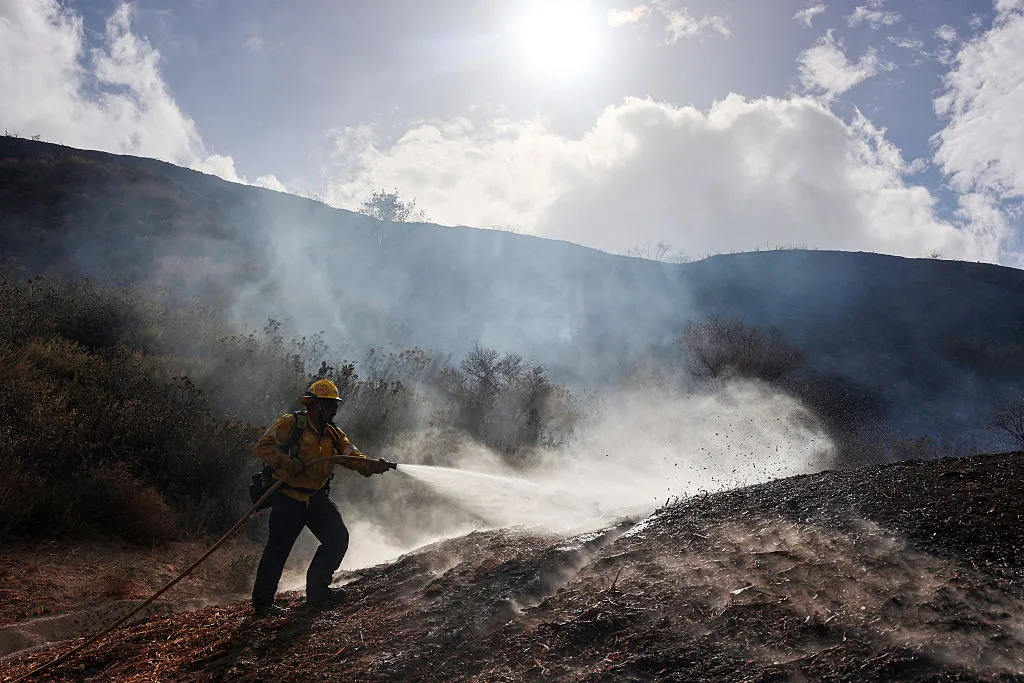
(SeaPRwire) - Santa Ana winds are a seasonal ritual in Southern California. The forecast looks like a weather story. It is not a weather story. It is a governance test. Every wind event forces the region to answer one question: can the system protect people without breaking their trust? The National Weather Service issued a red flag warning Wednesday evening. The alert covers the Los Angeles County San Gabriel Valley forecast zone through Saturday evening. The most extreme conditions are expected in Ventura and Los Angeles County valleys and mountains. Santa Clarita, Thousand Oaks, and Simi Valley sit in the high-risk band. This is the first Santa Ana wind event of the season. It arrives after a quiet wildfire year. Only 300,000 acres have burned since Jan. 1. By mid-October, the historical average is over one million acres. That quiet year does not erase the underlying danger. The NWS has warned that conditions are favorable for extreme fire behavior. The gusts this week will not match the 100 m.p.h. winds that drove the January 2025 fires in Pacific Palisades and Altadena. They do not need to. The fuel is dry, the air is warm, and one spark is enough. The real pressure now falls on Southern California Edison. The utility is considering shutting off power to roughly 250,000 customers. Parts of Alameda, Fresno, and Napa counties could also face outages. The logic is plain. High winds can knock down power lines. Aging infrastructure can throw sparks. Cutting power removes the ignition source. But a preventive blackout is itself a burden. People lose refrigeration, water pressure, and the ability to stay in touch. The policy protects the hillsides but penalizes the households. Recent rain lowers the risk in San Diego and Orange County. Those areas still get strong winds. Residents in the exposed zones are told to sign up for local alerts, plan for outages, and avoid BBQs or campfires. Pasadena even warned people to secure their inflatable Halloween skeletons. The gesture is small but revealing. The whole system depends on everyone adjusting their behavior. Officials frame this as community protection. The deeper issue is infrastructure debt. The distribution network has not kept pace with the climate. Utilities need hardened poles, insulated lines, and better fault detection. That investment costs money, and ratepayers carry the bill. Until the grid is physically rebuilt, every Santa Ana season will be a triage operation. Southern California will keep facing the same brutal choice: keep the lights on and risk fire, or cut the power and hope the wind stops.
More
The Ceasefire Is Dead, the Airports Are Burning, and Washington Is Holding the Match Hot News

The Ceasefire Is Dead, the Airports Are Burning, and Washington Is Holding the Match

(SeaPRwire) - The polite fiction that Yemen's war could be managed from a distance just died on the tarmac at King Khalid International Airport. Thirteen dead, over three hundred wounded, and that was only Saturday. The Houthis hit the same airport again Sunday. A week earlier, Abha International took casualties too. When the European Union and the Gulf Cooperation Council scrap a joint summit in Riyadh over "safety concerns," that is not a scheduling note. That is a confession. The kingdom's capital is now a contested airspace, and every diplomat in the region knows what that signals about deterrence. Strip the story to its bones and the sequence is brutal. The Houthis struck Saudi Aramco's executive offices in Dhahran Tuesday night, causing a limited fire but no injuries. Hours earlier their military spokesman, Yahya Saree, had promised "operations toward Saudi depths," calling airports and oil facilities "legitimate targets." Riyadh answered by hitting an oil depot outside Sanaa. Falling interceptor debris injured four people in the Saudi capital. Etihad, Qatar Airways, and Philippine Airlines suspended Riyadh flights. The U.S. embassy told its own employees they now need "special authorization" to use any Saudi airport. Zoom out further and the timing is the tell. A four-year informal ceasefire in Yemen's civil war just shattered. The Houthis claimed Perim Island in the Bab el-Mandeb Strait back in September, tightening their grip on the Red Sea coastline before Saudi-backed forces clawed back key areas around the chokepoint in early October. All of this detonated in the fallout of the U.S.-Iran war. The Houthis are a Zaidi revivalist movement born from the Believing Youth Forum, militarized under Hussein al-Houthi before his death in 2004, now run by his brother Abdul-Malik. They control Sanaa and most of Yemen's west. And since 2009, per Chatham House researchers, Tehran has been accelerating weapons, training, and funding into their hands. Here is the part nobody in Riyadh wants to say aloud. Saudi Arabia is the world's top purchaser of American weapons, per the Stockholm International Peace Research Institute, and it still cannot close its own sky. The kingdom shares over eight hundred miles of border with Yemen. Saudi analyst Ali Shihabi put it bluntly online: expecting a country that size to intercept every missile is unrealistic. He is right, and that is the strategic problem. Defense spending bought hardware, not coverage. The Saudis are now investigating how their systems failed, but the honest answer is geometry plus cheap drones. Proxy saturation beats gold-plated interception every time. Then there is the Washington layer, which is its own theater. Trump called the Houthis "very badly" behaved and reminisced on Truth Social about bombing them "the hell out of" last year before stopping "at their request," referencing the March-to-May strikes and the Omani-brokered ceasefire that followed. On Saturday he floated joining Saudi strikes directly. A senior U.S. official offered TIME the usual boilerplate about "continuous dialogue" and commitments to partners. Read that carefully. It is not a no. It is a price negotiation conducted in public, with Riyadh's burning airports as the leverage. The next missile will fly before the next summit is ever rescheduled.
More
The Supreme Court Is Deciding Whether to Let You See What the Government Doesn’t Want You to See Hot News

The Supreme Court Is Deciding Whether to Let You See What the Government Doesn’t Want You to See

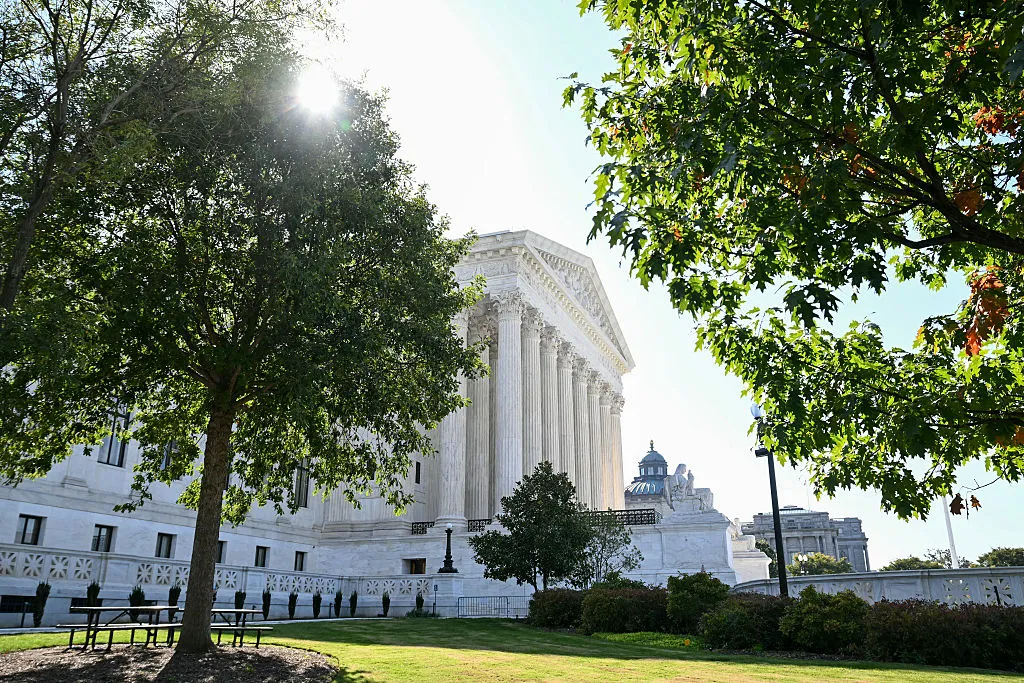
(SeaPRwire) - Washington is witnessing something uncomfortable for anyone who takes transparency seriously. The Supreme Court has agreed to hear whether discovery can proceed in the lawsuit challenging the legitimacy of the Department of Government Efficiency under federal law. This is not a dramatic showdown about policy. It is a procedural question with enormous consequences. If the justices allow discovery to move forward, the public may finally see how an advisory body operates outside the FOIA framework. If they block it, future administrations will have a roadmap for building parallel structures insulated from scrutiny. CREW filed its FOIA request on January 24, 2025. They wanted expedited access to information about DOGE's structure and its communications with federal agencies. The documents never came. The organization sued on February 20, 2025. On April 15, Judge Christopher Cooper ruled that the case could proceed to discovery. The Department of Justice filed an emergency appeal the following month, asking the Supreme Court to intervene. On May 23, the Court paused discovery. Two weeks later, on June 6, it directed the appeals court to narrow the requests, finding that questions about DOGE's recommendations and whether agencies followed them were not appropriately tailored. CREW pared back its requests. The D.C. Circuit upheld them anyway. The administration appealed again. The Supreme Court took the case this week. A ruling is expected by late June or early July 2027. The tension here is structural, not incidental. The Trump administration argues that DOGE was a presidential advisory body inside the Executive Office, not a federal agency subject to FOIA. Solicitor General D. John Sauer claimed in his filing that discovery intrudes into presidential advisor confidentiality and burdens future administrations with litigation. CREW counters that the law is clear. Government records must be preserved and made accessible. If DOGE exercises authority, it should be accountable to the same transparency rules as any other federal entity. The legal scholars supporting CREW, including Georgetown's Sara Creighton and Ohio State's Margaret Kwoka, argue that discovery is the only way to determine whether DOGE wielded independent authority or merely advised. Without it, the question stays unanswered. What matters beyond this specific case is what happens next. If the Supreme Court blocks discovery, it effectively grants executive advisory bodies a transparency exemption by default. Presidents could create parallel offices that conduct substantive governance work while avoiding FOIA entirely. The mechanism already exists in the current framework. The barrier is enforcement. Lower courts have repeatedly ruled that CREW is entitled to discovery to investigate whether DOGE operates as an authority rather than an advisor. The administration's legal strategy treats those rulings as obstacles to be removed, not legal conclusions to be respected. This lawsuit is one among several transparency battles facing the Trump administration. American Oversight filed a suit in 2025 demanding that national security officials preserve Signal communications about military strikes in Yemen. Later that year, the same organization, joined by the American Historical Association, sued over a Justice Department opinion declaring the Presidential Records Act unconstitutional. These cases share a pattern. Each tests whether institutional safeguards survive political pressure. The DOGE case is the most structurally significant because it targets the architecture of executive power itself. The Court's decision on discovery will determine whether the facts emerge or stay buried. That outcome shapes everything that follows.
More
The $1.2 Trillion Redistribution Plan Hiding in Plain Sight Hot News

The $1.2 Trillion Redistribution Plan Hiding in Plain Sight

(SeaPRwire) - Walk into any coffee shop in a major tech hub and you will hear the same grievance. Workers feel the pinch. Rent eats too much of the paycheck. CEO pay has skyrocketed to 300 times the median worker's income. This is the standard narrative. It feels intuitive. But it misses the structural engine driving the wealth gap. The crisis is not just about inflation. It is about a breakdown in the collective bargaining machinery that once stabilized American labor markets. The official release from the Economic Policy Institute (EPI) provides hard data to back this up. Their modeling suggests that tripling union membership in the United States would deliver a 14.5% raise to the median worker. That translates to more than $7,700 a year for a typical employee. Over a 35-year career, the gain approaches $270,000. The impact extends beyond members. Strong unions lift standards across the economy. EPI estimates this shift would move $1.2 trillion annually to working people. This effectively reverses a third of the inequality that has accumulated since 1979. The data also shows a narrowing of the racial wage gap by more than a third. These are not minor adjustments. They are systemic corrections. Contrast this with the political reality on the ground. For decades, anti-union court rulings and "right-to-work" laws have eroded worker protections. Corporations spend over $1.5 billion a year to stop workers from organizing. The 2025 landscape added new pressure. The Department of Labor weakened worker protections. A key government agency responsible for defending collective bargaining rights was prevented from operating for nearly the entire year. This administrative blockage closed off a critical avenue for justice. Yet the data shows a rebound. Nearly half a million workers unionized in 2025. Union membership hit a 16-year high. Public sector unionization reached 36.4%. Private sector coverage grew by close to a quarter million workers. Even federal worker representation rose to 31.1%, despite attempts to strip rights from over a million federal employees. The numbers tell a clear story. The pendulum is swinging back. The current political setup is fragile. We are at about one-third of the 1950s high for union membership. That is the missing link. The path forward is legislative. Two bills stand out. The Protecting the Right to Organize (PRO) Act passed the House with bipartisan support. It restores eroded protections and imposes real penalties on violators. The Public Service Freedom to Negotiate Act guarantees collective bargaining for public sector workers. More aggressive proposals exist too. One would require collective bargaining at companies where CEOs earn at least 100 times more than typical workers. Another would guarantee cost-of-living raises for newly unionized workers. The fight is not over. It is just entering a new, sturdier phase.
More
The Leaker as Enemy: How Trump’s Rhetoric Is Rewriting American Democracy’s Most Fragile Nervous System Hot News

The Leaker as Enemy: How Trump’s Rhetoric Is Rewriting American Democracy’s Most Fragile Nervous System

(SeaPRwire) - Trump stood in Bullhead City and called leakers scum. He said they deserve the bullet. Then he pointed at the press pool and accused them of being leakers too. The two claims were not separate. They were the same play. The administration has spent months turning the executive branch into a fortress. Polygraphs were weaponized against Pentagon staff after ammunition reports surfaced. The FBI raided a Washington Post reporter's home. Journalists received subpoenas. A former Army employee was charged for sharing classified material with a reporter. The message was written in subpoena paper. Leaks have haunted Trump since before he ever held office. He called for Chelsea Manning's execution in 2010. He demanded Snowden be shot in 2013. He raged about Russian leak disclosures on Twitter in 2017. Then in 2016 he cheered WikiLeaks for dumping Hillary Clinton's emails. He even suggested he might support Snowden if the leaker released Barack Obama's birth records. The pattern is not confusion. It is strategy. The real target here goes beyond individual leakers. It is the mechanism of accountability itself. When every source of unauthorized information is treated as treason, the government loses its capacity to correct course internally. Operation Midnight Hammer became the latest casualty. The June strike on Iran's nuclear sites was delayed because the departure time leaked to CNN and the New York Times. The Pentagon could not even control its own flight schedule. That is what happens when you make transparency a capital crime. Inside government, the incentive structure is now clear. Good news flows outward only through official channels. Bad news vanishes into silence. The Defense Intelligence Agency report showing Iranian nuclear sites were less damaged than claimed went unchallenged because no one in the administration wanted to fight it publicly. Instead the narrative was leaked to journalists who had to work around the firewalls. This is not governance. It is information warfare fought against your own people. The leaker will remain a convenient scapegoat through this administration and likely beyond. But the real lesson is not about any single leak. It is about what happens when the executive branch decides that accountability is itself a security threat. The press pool at that Arizona rally did not cheer. They sat in silence. That silence is more revealing than any headline.
More
No Gun Was Involved. Just Paint, Padlocks, and a Publisher Who Walked. Hot News

No Gun Was Involved. Just Paint, Padlocks, and a Publisher Who Walked.

(SeaPRwire) - The British government used counterterrorism powers to ban a group that spray-painted aircraft at an air force base. The same group repeatedly damaged weapons-linked facilities. Not a single person was harmed. The legal framework that produced Palestine Action's proscription in July 2025 was designed for al-Qaeda, not paint and padlocks. Now a bestselling novelist's entire UK catalogue is off the shelves because she said she'd donate her royalties to them. This is not security policy. This is political theater dressed in the language of law. Every arrest at every demonstration since the ban confirms it. Palestine Action was founded in 2020 in the UK and described itself as a "direct action movement." Its members repeatedly targeted facilities linked to Elbit Systems, the Israeli weapons manufacturer with UK operations. In June 2025, members broke into R.A.F. Brize Norton, the UK's largest air force base, and spray painted two aircraft. The group's website stated that disrupting one site interrupts the whole supply chain. Elbit Systems UK denied supplying the Israeli military. The British government designated the group as terrorist in July 2025. It was the UK's first proscription primarily based on property damage rather than violence against people. More than 74,000 Palestinians have been killed since Israel launched its military campaign in Gaza. The attack that sparked it, October 7, 2023, killed approximately 1,200 people in Israel. An additional 251 were taken hostage. IDF data from May 2025 suggested a Palestinian civilian death rate of 83%. Rooney pledged to donate royalties from books including 'Intermezzo' and 'Normal People' to Palestine Action. Her publisher Faber determined that passing UK earnings to her could constitute a criminal offense. Faber pulled the entire run of her work from the UK in any format. Rooney called the proscription "a truly extreme assault on ordinary rights and freedoms." In February, the High Court ruled the proscription unlawful and disproportionate. By June, the Court of Appeal had overturned that ruling. A Supreme Court hearing is scheduled for early next month. More than 3,000 people have been arrested since the ban. Many held signs reading "I oppose genocide, I support Palestine Action." The government maintains the ban does not prevent lawful pro-Palestinian protests, but the arrest numbers tell a different story. Ian Byrne, a British MP, warned of "draconian consequences" before the ban took effect. Now he calls the outcome "an utterly disgraceful attack on freedom of expression." He called it an injustice against one of the finest writers of her generation. Huda Ammori, co-founder of Palestine Action, spoke to The Guardian. She called Rooney's inability to publish "a new low in the escalating assault on free speech." Rooney said she intended to publish her position in a UK newspaper but noted that would now be illegal. Faber's statement was blunt: selling a writer's work while being unable to pass on earnings is "an unconscionable situation." The group's leaders said they do not advocate violence against people. Home Secretary Yvette Cooper said members demonstrated "a willingness to use violence." The gap between those two assessments reveals how much room the proscription leaves for interpretation. The next author, artist, or academic who pledges financial support to a proscribed group will learn exactly what "lawful protest" means before their next print run ships, and no matter what the Supreme Court rules on the ban's legality, the chilling effect is already embedded in British publishing law and will self-censor every contract, every op-ed, and every public statement that crosses the line between dissent and designated terrorism before it ever reaches a reader across the English Channel, because once a publisher walks, no legal argument puts them back.
More
The Dodo Returns: Why Colossal’s AI Breakthrough Changes Everything About De-Extinction Hot News

The Dodo Returns: Why Colossal’s AI Breakthrough Changes Everything About De-Extinction

(SeaPRwire) - Dallas-based Colossal Biosciences is doing the unthinkable. They are about to bring the dodo back from extinction using artificial intelligence. This is not speculative fiction. It is a concrete timeline with a target window in the early 2030s. A bird that vanished over 350 years ago could be walking the earth again. That should terrify and thrill us in equal measure. The company proved its capability in 2025. Researchers sequenced ancient DNA from the dire wolf. They edited 14 genes with 20 precise modifications in a living gray wolf cell. They transferred that nucleus into a gray wolf ovum. An embryo developed. It was implanted into a domestic hound. Sixty days later, a puppy wolf was born. The dire wolf returned after more than 10,000 years. Birds complicate everything. There is no womb to implant into. The approach for the dodo requires harvesting primordial germ cells from the nicobar pigeon, the closest living relative. Those cells get rewritten with dodo traits. They are injected through a chicken egg shell into a microscopic chick embryo. The cells migrate to the developing gonads. When that edited female chick matures and mates with an edited male, the eggs she lays produce a dodo, not a chicken. Chickens are the practical choice here. Nicobar pigeons are seasonal breeders. They lay just two eggs per clutch for a couple months each year. Chickens lay an egg daily. The surrogate logistics demand cold pragmatism. The sheer scale of the genetic puzzle is what makes this genuinely remarkable. The beak alone involves over 650 regulatory elements linked to size and nearly 1,700 tied to thickness and breadth. Ancient DNA is fragmented. It gives an imperfect record of which switches to flip. Enter GenoMorph. Colossal built an atlas tracking how facial regulatory switches activate and deactivate across chicken, quail, duck, and pigeon embryos. They compared genomes and skull shapes from over 70 bird species. The result is a list of roughly 2,350 genetic switches governing the dodo's beak. The team is now testing each one individually. Beth Shapiro, the chief science officer, called the dodo genome extraordinary for ancient DNA. Only small holes remain. The specimen was so well preserved that the genome is remarkably complete. This is where the real story lives. De-extinction is as much a data problem as a biology problem. That is the thesis Ben Lamm, the CEO and co-founder, laid out plainly. AI learns how regulatory DNA shapes living birds. It identifies the genetic switches behind the dodo's distinctive anatomy. The algorithmic layer is not optional. It is the bridge between degraded fragments and a functional blueprint. Every species on Colossal's list — the woolly mammoth, the Tasmanian tiger, the moa, the quagga — feeds into the same platform. The dire wolf project taught them how to read genomes. The dodo project teaches them how to read regulatory networks. The next species will benefit from both. Five years is the stated timeline. That is five years of editing primordial germ cells, injecting chicken eggs, waiting for edited birds to mature, and hoping the regulatory switches actually produce a viable dodo phenotype. Even if the biology works, the ecological question hangs over everything. What does a de-extincted dodo actually do? The bird was hunted to extinction by Portuguese sailors who found it friendly and easy to club. Its ecological niche no longer exists on Mauritius. A dodo walking the Earth is a biological miracle. It is also a creature without a world to belong to. The technology is ready. The question is whether we have the wisdom to let it run.
More

The Vatican’s Governance Gap: Why a Healthy Pope Still Signals a Structural Fracture

(SeaPRwire) - A lung cancer diagnosis in a 71-year-old leader should trigger a standard crisis management protocol, yet the Catholic Church operates without one. This is the core tension. Pope Leo XIV is hospitalized at Gemelli Hospital in Rome. He had part of his right lung removed on Tuesday. Doctors confirmed lung adenocarcinoma. He is stable. He is walking. He is eating. Yet the institutional machinery of the Holy See remains frozen in administrative limbo. The Vatican has no mechanism for transfer of power during incapacity. This is not a new problem. It is a foundational design flaw that has just been exposed by modern medical realities. Canon Law is explicit on this silence. The law provides for resignation if the Pope acts freely. It provides for a conclave if the See is vacant due to death. But it offers nothing for the middle ground. What happens when the Pontiff is conscious but incapacitated? The governance structure halts. Miles Pattenden, an Oxford historian, calls this a "serious problem." There is no Vice Pope. There is no 25th Amendment equivalent. The Roman Curia continues its day-to-day work. Cardinal Pietro Parolin, the Secretary of State, manages the files. But legislative and doctrinal authority remains locked with the patient in the hospital bed. Any major decision must wait. This static state reveals the fragility of executive power in a theocracy. In secular governance, succession is mechanical. It triggers immediately upon incapacitation. In the Church, authority is personal. It cannot be delegated. It can only be held. The fact that Pope Leo is currently aware and mobile saves the institution from a total standstill. But that is a biographical accident, not a structural guarantee. When Pope Francis prepared a resignation letter in 2013, it was for a specific scenario of total impediment. It was not used. It did not need to be. Now, the Church faces a scenario where the leader is alive, present, but medically constrained. The system has no gear for this speed. The operational impact is already visible. All papal audiences were canceled until October 20. A 12-day trip to Latin America is scheduled for November 6. It will proceed. But the Pope’s personal presence is not the same as his administrative capacity. The Curia runs the administrative engine. The Pope provides the theological spark. Without the spark, the engine idles. This is not a critique of the individuals involved. It is a critique of the architecture. The Church relies on the physical endurance of its head. That is a risk no institution of 1.4 billion followers should have to bear. The next papal election will not just choose a leader. It will choose a system’s vulnerability. The clock is ticking on every decision that requires his signature. The hospital bed is not a neutral space. It is a pressure valve for the Vatican’s deepest governance anxiety. The fix requires a legal revolution the Church has resisted for centuries. Until then, the structure remains held together by the health of one man.
More
The Pope’s Lung, and What His Surgery Reveals About Who Gets Screened for Cancer and Who Doesn’t Hot News

The Pope’s Lung, and What His Surgery Reveals About Who Gets Screened for Cancer and Who Doesn’t

(SeaPRwire) - When the Vatican announced that surgeons at Gemelli Hospital had removed the lower lobe of Pope Leo XIV's right lung, the coverage focused on the man. Understandable. But as someone who has spent years auditing how health systems actually allocate screening and treatment, I saw something else in that statement. I saw a case study in what early detection looks like when a patient has unlimited access to the best care on earth. His medical team found a suspicious nodule. They ran tests. Dr. Stefano Margaritora's team at Gemelli performed a 90-minute operation, confirmed adenocarcinoma, and achieved what the Vatican called a "radical resection." The Pope woke up, asked for dinner, and chatted with staff. He'll spend a week in the hospital. That is the gold-standard pathway. It is also a pathway most lung cancer patients never walk. Here is the uncomfortable fact buried in the clinical detail. Lung adenocarcinoma accounts for 40% to 45% of lung cancer cases worldwide, and as Dr. David Jones of Memorial Sloan Kettering notes, it is by far the most common type in non-smokers. Yet screening guidelines in the U.S. and most of the world restrict low-dose CT scans to people over 50 with heavy smoking histories. The Pope's smoking history is not publicly known, but that almost doesn't matter. His nodule was caught because he has a dedicated medical team led by Dr. Luigi Carbone watching him continuously. The average non-smoker finds out they have adenocarcinoma by accident, after a car crash chest scan, or when symptoms arrive and the disease has already staged up. Dr. Jones says it plainly: the best chance to cure lung cancer is at Stage 1, and screening is how you get there. Advocacy groups have pushed for years to expand screening to younger people and those exposed to risks like radon. The policy has barely moved. Cost-effectiveness models keep winning over clinical logic. Now look at the treatment side, because this is where my procurement lens gets sharp. If the Pope's tumor testing shows Stage 1 disease without lymph node involvement, surgery plus monitoring may be enough. But if it's more advanced, he enters the world of targeted therapies and checkpoint inhibitors, the immunotherapies that Karen Knudsen of the Parker Institute rightly calls a profound innovation. Adenocarcinomas carry high mutation loads, which makes them visible to the immune system and responsive to these drugs. Some patients now skip chemotherapy entirely. Here is the catch that press releases never mention. These therapies are brutally expensive, and access is wildly uneven. In the state procurement systems I audit, checkpoint inhibitors are rationed by indication, by line of therapy, by budget cycle. A patient in Rome's Gemelli gets the full arsenal. A patient in a underfunded public system gets a formulary committee. The science has democratized the biology. The money has not democratized the medicine. There is one more detail worth sitting with. The Vatican emphasized that before surgery, the Pope played tennis and walked regularly, and experts believe that fitness means he can return to full duty even with one less lobe. Fine. But notice what the whole episode demonstrates as a system. A high-risk cancer, caught early because someone was watching, treated surgically within days, with molecular testing queued up to guide next steps, and a prognosis framed around quality of life rather than survival odds. Every element of that chain, from the incidental CT to the tissue analysis, is a resource decision. Governments that refuse to expand lung cancer screening criteria are making the opposite decision for millions of people who will never have a Dr. Carbone. The Pope's recovery will be celebrated as a medical success. It should be read instead as an indictment of how rarely we let ordinary patients have the same one. If your health system screens only smokers for the cancer most common in non-smokers, demand to know who wrote that rule and what it saves them.
More
The Unlikely War on Ilhan Omar: Why the DOJ Is Going After a Congresswoman’s Citizenship Hot News

The Unlikely War on Ilhan Omar: Why the DOJ Is Going After a Congresswoman’s Citizenship

(SeaPRwire) - What we are watching unfold is not a straightforward immigration enforcement action. It is a deliberate political maneuver dressed in legal garb. Federal agents raided the home of a sitting U.S. Representative. Grand jury subpoenas were issued against her relatives. All of this happened weeks before she faces voters in Minnesota. That timing does not escape anyone who pays attention to power dynamics in Washington. The factual sequence is stark. On Monday, Homeland Security Investigations executed a search warrant at Omar's D.C. residence. The warrant remains under seal. On Tuesday, the Justice Department subpoenaed her sister Sahra Noor and other family members, according to the New York Times. The underlying focus traces back to immigration paperwork her late father submitted when she was seventeen. Vice President JD Vance publicly discussed exploring legal remedies in a March podcast appearance. Homeland Security Secretary Markwayne Mullin told Benny Johnson the probe is ongoing and dismissed claims of political retribution. Omar herself called the raid political intimidation and said she will not be silenced. The legal bar for denaturalization is extraordinarily high and everyone in the room knows it. Civil proceedings require clear, convincing, and unequivocal evidence of fraud or material misrepresentation. There is no statute of limitations on civil cases. Criminal proceedings demand proof beyond a reasonable doubt and carry a ten-year limit. The 2017 Supreme Court ruling in Maslenjak v. United States narrowed the field further, holding that only illegal acts actually playing a role in the citizenship application can justify revocation. Omar's father filed the paperwork on her behalf. Nobody has produced evidence showing intentional misrepresentation. Her naturalization story adds another layer. Omar and her family fled Somalia when she was eight and sought asylum in 1995. She became a citizen in 2000 at age seventeen under a federal law allowing children to derive citizenship when both parents naturalized. That law was replaced in 2001, requiring only one parent. Conservative commentators have pressed the claim since 2019 that her father may have inflated her age on documents. Her staff did change her birth year from 1981 to 1982 in public records after she won election. If she was already eighteen, she could have qualified independently after holding a green card for five years. The numbers tell the real story. An average of eleven denaturalization cases per year were filed between 1990 and 2017, according to the Migration Policy Institute. The Trump administration has announced efforts to strip citizenship from at least 108 people in 2026. This represents a massive escalation even against a near-zero baseline. Yet former immigration judge Andrew Arthur points out that denaturalization does not automatically mean deportation. A person retains any prior lawful status until ICE issues a final removal order. Omar would keep her green card. What happens here will set a precedent that extends far beyond one congresswoman. The administration is testing whether it can weaponize the citizenship revocation process against political opponents. The odds of legal success are slim. The political costs are being calculated in real time. Every subpoena, every raid, every public statement builds a narrative. The question is not whether Omar loses her citizenship. The question is what kind of system allows a sitting lawmaker to be treated this way weeks before an election.
More
The Bears Ears Slaughter: A 90% Landslide Exposes Who’s Really Running Washington’s Land Wars Hot News

The Bears Ears Slaughter: A 90% Landslide Exposes Who’s Really Running Washington’s Land Wars

(SeaPRwire) - The Bears Ears reduction wasn't policy. It was a power demonstration dressed in geological language. When the administration slashed the Utah monument from roughly 1.36 million acres to about 131,000, it wasn't optimizing stewardship. It was carving up sacred ancestral land into unmonitored territory for whoever could show up with a drilling rig. The framing around "honest debate" about management choices is a diversion. Conservation, grazing, timber, energy — those aren't competing valid frameworks. They're levers being pulled in a political marketplace where votes decide which resources get stripped first. A presidential proclamation this summer cut the monument's boundaries from roughly 1.36 million acres to about 131,000. That strips protections from more than 90 percent of the landscape. Bears Ears isn't just a scenic preserve. It is a living cultural landscape and sacred ancestral homeland of deep significance to Tribal Nations. The administrative order arrived mid-election cycle, timed as a campaign talking point. Meanwhile, Congress rolled back protections for the Boundary Waters, opening the door to mining in its headwaters. These aren't isolated land-use decisions. They're sequential policy moves designed to test how quickly oversight will notice. The administration is also considering transferring a parcel of Yosemite National Park to a private developer. Pristine roadless backcountry may be opened to development and extraction. These decisions will have lasting consequences. The economic argument for protection is staggering. Outdoor recreation generates $1.3 trillion in economic output and supports 5.2 million American jobs. Communities and businesses across the country depend on the forests, rivers, trails, parks, and open spaces that draw people outdoors. The political calculus treats these assets as interchangeable. The fiscal reality is not. Honest debate about management does exist. Grazing permits, timber harvests, and local energy development all carry real economic weight in resource counties. But the parties pulling strings aren't debating stewardship. They're lobbying for jurisdictional control. Interior departments face pressure from state representatives whose districts bankroll extraction industries. Congressional committees that once shielded conservation language now vote to unshield it. The Boundary Waters rollback wasn't a bipartisan compromise. It was a targeted opening shot that handed mining interests a corridor they spent a decade trying to buy. The administrative playbook is visible from here. Environmental organizations respond with litigation. They sue, they delay, they exhaust judicial bandwidth. Tribal Nations push back with moral authority but limited legal standing in contested federal forums. The outdoor recreation industry lobbies back, but its voice rarely outweighs organized extraction cartels on the Hill. Yet the disconnect runs deeper than institutional clout. Americans of every political persuasion hold these lands. The rock climber in Yosemite and the hunter in Montana may not share the same politics. But they share a stake. That shared stake is being hollowed out by decisions made in closed rooms. The decisions made today will outlast this administration and this Congress, and once public lands are permanently altered, fragmented, or developed, there is no going back — so the question facing every voter this November isn't whether conservation deserves a hearing, but whether the people elected to sit on the levers have the will to refuse pulling them, and whether the American public still believes these lands are worth more than the quarterly returns extraction cartels promise their donor lists.
More

Stop Being the Feelings Detective: The Real Power Play Behind Passive-Aggressive Jabs

(SeaPRwire) - Every office has that moment. You pack your bag at 5 p.m., and a colleague floats the question, "Going home already?" The words are harmless on paper. The tone is not. That gap between what was said and what was meant is where modern workplace conflict now lives. And most people handle it badly. They either swallow the insult or fire one back. Both responses lose. The interesting part, based on what organizational researchers and psychologists are now saying, is that passive aggression is rarely about you at all. It is a structural failure of communication, and it has a logic worth dissecting. Laurie Weingart, a professor of organizational behavior at Carnegie Mellon University, frames the phrase itself as the diagnosis. Aggression is present, but it arrives indirectly, wrapped in plausible deniability. Melissa Gluck, a psychologist in New York City, points to the root cause. Some people never learned to say "I'm hurt. You hurt my feelings." Directness demands vulnerability. Sarcasm demands nothing. Levi R. Baker at the University of North Carolina at Greensboro found something sharper in his research on romantic relationships. Partners often use indirect jabs as a test. They signal distress and wait to see if the other person notices. The hidden question is brutal in its simplicity: do you care about me? That reframes the snide remark at the dinner table. It is not an attack. It is an awkward bid for reassurance, delivered in the worst possible packaging. Understanding this does not make the comment sting less. But it changes what a smart response looks like. Weingart's tactical advice is precise: respond more directly and less intensely than the comment you received. Brook McKenzie, a counselor in Dallas, offers the practical script. When someone says "Must be nice to have that much free time," you reply, "I'm not sure how you meant that. Can you say it another way?" It is an invitation, not an accusation. Ask "Why are you so passive-aggressive?" and you will spend twenty minutes arguing about tone instead of the actual grievance. For close relationships, Gluck suggests, "I feel like something's off. Do you want to talk about it?" If they say everything is fine, accept it. Her line deserves to be pinned on every refrigerator and Slack channel: it is not our job to become the feelings detective. At work, the calculus shifts. When a boss asks "Leaving already?", Weingart recommends, "Is there something else you need me to do before I leave?" For a coworker's jab, even less suffices: "Yep, the workday's over. Have a great weekend." Clarity beats therapy in professional settings. And sometimes silence is the correct answer for a one-off remark on someone's rough day. A repeated pattern is a different matter. Gluck advises naming both the behavior and its impact: "This isn't the first time you've made that comment. It's starting to hurt my feelings." When someone deflects with "I guess I'm just a bad mom," the counter is to refuse the reframing: "That's not what I said." When they hide behind "it was just a joke," Weingart separates intent from effect: "You may not have meant it to be hurtful, but that's how it sounded to me." McKenzie supplies the closing boundary for chronic offenders: "I'm willing to have difficult conversations with you. I'm not willing to keep guessing what you mean." Here is the commercial reality underneath the etiquette. Indirect communication is a tax. It burns managerial hours, corrodes teams, and turns minor grievances into attrition statistics. The people and organizations that win are the ones that lower the cost of saying hard things plainly. So the practical move is this. Next time a jab lands, answer the meaning with calm directness, once. If the pattern repeats, name it, price it, and set the boundary. Anything more is unpaid detective work.
More
Earth’s Vital Signs Are Breaking Records Faster Than Governments Can Move Hot News

Earth’s Vital Signs Are Breaking Records Faster Than Governments Can Move

(SeaPRwire) - The climate report is not asking for attention. It is asking for a different kind of governance. For decades, public officials treated global warming as a long-term risk. Pledges were made. Targets were set. The assumption was that the climate system would move slowly enough for politics to catch up. That assumption is dead. The annual State of the Climate report, published in BioScience on Oct. 14, describes a planet entering uncharted territory. The team tracks sixteen vital signs. Seven are at record extremes. Sea levels and greenhouse gas concentrations are in that group. Burned areas and ocean heat show acceleration or abrupt shifts. The policy machinery built to respond to all of this is still running on old time scales. That mismatch is the real crisis. The numbers deserve a slow read. Global warming accelerated from about 0.05°C per decade between 1880 and 1970. Between 2010 and 2024, the rate jumped to roughly 0.36°C per decade. That is not a smooth curve. It is a step change. The report says the 2°C threshold could be reached before 2050. Seven planetary vital signs sit at record extremes. Sea levels and greenhouse gas concentrations are among them. Burned areas and ocean heat show signs of acceleration. In 2025, Earth passed its first climate tipping point. Rising ocean temperatures, acidification, overfishing, and pollution are combining. Coral bleaching and mortality are the result. This is not a forecast. It is a diagnosis. Every carbon budget drawn up in national climate plans now has to be redrawn against a faster clock. The real social impact is already visible. July 2026 was the hottest month on record for the contiguous United States. Ocean temperatures hit a record high in that month. Europe’s back-to-back heat waves produced an estimated 35,000 excess deaths. Utah, Ontario, France, Spain, Britain, and Belgium have faced historic wildfire years. Some are on track for their worst season ever. Attribution science remains cautious about individual events. The overall pattern is not ambiguous. Greenhouse gas concentrations reached record levels in 2026. In May 2026, atmospheric carbon dioxide exceeded 428 parts per million. That is roughly 50 percent above pre-industrial levels. The researchers say that is generally higher than any time in the last 2 million years. Fossil fuel consumption remains the dominant driver. It rose 0.9 percent in 2025. Oil, coal, and gas all reached record highs. Energy-related carbon emissions surpassed 41 gigatons for the first time. That equals the annual output of more than 10,800 coal-fired power plants. Every one of those records converts into a compliance cost for some government budget, whether through flood defenses, fire suppression, or emergency heat care. Progress exists, but it is narrower than advertised. Low-carbon sources supplied about 43 percent of global electricity in 2025. Solar and wind consumption rose roughly 18 percent. Then the war in Iran exposed the world’s reliance on fossil fuels. It also triggered a global green energy boom. The question is timing. The report says cutting carbon emissions will not be enough on its own. Adaptation has to move to the center of policy. Plant-based diets and mangrove restoration are not lifestyle choices. They are infrastructure decisions. Governments still treat climate as an environmental portfolio. One ministry carries it. Funding stays narrow. The data rejects that arrangement. Earth’s life-support systems are being pushed beyond stable limits. Changes are unfolding faster than our ability to respond. “We are witnessing the rapid destabilization of the Earth’s climate system,” the authors write. “This is no longer a warning for the future; it is a diagnosis of the present.” Institutional speed is the critical variable. Political cycles run on election timetables. The climate runs on acceleration. If those clocks stay out of sync, the gap will widen. A government that cannot shorten its response time is not managing the crisis. It is only documenting it.
More
Who Actually Controls the Machine When the Machine Starts Writing Its Own Source Code? Hot News

Who Actually Controls the Machine When the Machine Starts Writing Its Own Source Code?

(SeaPRwire) - The AI labs aren't racing toward general intelligence anymore. They are racing toward a process that makes general intelligence possible without human hands. Recursive self-improvement has moved from speculative paper to quarterly planning cycle inside Anthropic, OpenAI, and the shadow-funded programs the Gladstone AI report quietly confirms already exist. Gladstone AI published what is currently the most granular public map of how self-improving AI actually works. The firm spoke to half a dozen researchers embedded inside top AI companies. Their answer is blunt. Insiders believe RSI will trigger within three to twelve months. That timeline assumes no U.S. government intervention. No slowdown. Edouard Harris, Gladstone's CTO and brother of CEO Jeremie Harris, said the researchers around him are already buying disaster-prep gear and bio-bunkers. The work they describe is not theoretical. It involves automating every stage of the AI development pipeline. Idea generation. Experiment execution. Result interpretation. All of it is being handed to models that iterate faster than human researchers can review. The compute portfolio strategy explains why this moment arrived sooner than most expected. Companies seed dozens of ideas with small compute budgets. The models that scale reliably get larger allocations. The bottleneck is never the idea. It is the compute. More compute means more chances to test AI-generated hypotheses. It also means a better shot at spotting the rare patterns that look weak at small scale but perform better under heavier investment. That is the narrow gap between human intuition and machine advantage. The Harris brothers told TIME that legislators currently have essentially zero visibility into who finds those signals and when. Regulation needs a hinge point. A place where a human must still be present. Gladstone's detailed breakdown attempts to create exactly that reference line for Washington. What separates the current round of progress from earlier AI cycles is that the pipeline no longer requires humans to write the next version. Researchers allocate compute. Models propose architectures. Another model tests them. A third decides whether the results merit more budget. Each loop runs faster than the last. The report does not claim RSI has happened yet. It claims the machine-writing-machine phase is the last unresolved step inside the pipeline. Once it closes, there is no human gate left to pull. Jeremie Harris framed Gladstone's goal as giving lawmakers a usable definition of RSI. The real purpose is different. A precise definition creates a regulatory chokepoint. The first company that crosses into unmonitored self-improvement wins a speed advantage no subsidy or policy restriction can delay. Compute is the currency. Access to clustered GPUs is the vault. The race is not about releasing a smarter chatbot. It is about reaching the first autonomous research loop before the second competitor does. The closing observation is simple. Whoever finishes the automation first owns the inflection point. Everyone else reacts.
More
The Philippines Just Banned Minors From Social Media. The Enforcement Infrastructure Doesn’t Exist. Hot News

The Philippines Just Banned Minors From Social Media. The Enforcement Infrastructure Doesn’t Exist.

(SeaPRwire) - The Philippines just voted through two contradictory social media bills in a single week. The House draws the line at 13. The Senate draws it at 18. Both chambers must reconcile before anything reaches President Marcos's desk. This follows moves by Australia, the U.K., and other nations. They are introducing age-based restrictions amid concerns about platforms' impact on children's mental health and safety. But the Philippines is legislating from panic. Four school shootings and stabbings in six months triggered a legislative sprint. The compliance homework was skipped entirely. Meanwhile, Australia serves as a cautionary tale. That country banned under-16s in December 2025. By June 2026, a community study documented "limited implementation, incomplete compliance, and substantial circumvention." All of this happened within three months of implementation. The Philippine legislature did not read that study. Nobody asked whether a blanket ban holds in a country of 110 million people. Users there already spend among the most time online globally. Age-based social media bans have been debated here since 2019. The bill only gained momentum after this year's incidents. The urgency is understandable. But panic-driven legislation tends to create new problems faster than it solves old ones. The House bill and Senate bill must reconcile before reaching the president. Until they do, neither can be signed. The deadlock is already visible. The House passed its bill 287 to 3. Anyone under 13 is banned outright. Between 13 and 17, teens get filtered access. They lose livestreams, short-form video, behavior profiling, in-app purchases, and anything resembling gambling mechanics. Parents must consent to their children's use. That consent is retractable. The Senate version, sponsored by Sen. Robinhood Padilla, is stricter. It was originally proposed at 16. The final threshold got pushed up to 18. Platforms would have to kill minor accounts and block new sign-ups. Age-assurance technology becomes mandatory for compliance. But the bill carves out email, private messaging without group features, school platforms, news sites, and pure gaming platforms. The Senate passed almost unanimously. Only Sen. Hontiveros dissented. Padilla told a local radio station the measure must curb violence in schools and bad influence on youth as a whole. He cited bullying, suicides, and school shootings. The trigger was a chain of campus violence that nobody expected. In March, police revealed that seven teenagers from the Calabarzon region had allegedly planned a school attack. The group was five boys and two girls. They had shared images and videos of school shootings from other countries. In June, two male students aged 14 and 15 opened fire at their school in Tacloban City. Three students died. Twenty others were wounded. Authorities temporarily banned GoreBox, a sandbox action game simulating destruction with weapons. By August, a high school student in Zamboanga shot a fellow student. He then killed himself. The entire attack was live-streamed using a body camera. A month later, another southern high school shooting left two 14-year-olds dead and eight more wounded. The teen gunman fatally shot himself. Police found he had posted in an online community where young school shooters are idolized. Gun violence is not uncommon in the country. These incidents forced the Philippines to reckon with a problem it once considered unique to the U.S. Education Secretary Angara cited "exposure of young people to damaging social media sites, negative influences, groomers, and terrorist groups online actively recruiting (children)." Senate President Gatchalian claimed addiction and violent games influence mental health. Yet no clear causal link between violent video games and real violence has been established. Marcos himself called the congressional action "not surprising at all." Hontiveros prefers "tiered restrictions" and warned a sudden prohibition drives kids underground. She also noted social media has benefited young people. A sudden prohibition without adequate alternatives is "not the answer to their needs." The Philippine Mental Health Association called the blanket ban a "non-solution." Preventing violence requires comprehensive approaches including mental health support, safe school environments, and early intervention. Akbayan Youth warned the bill penalizes kids who rely on platforms for education and livelihood. Many Filipino students use Facebook as their primary homework platform. Teachers post assignments there. Banks require social media accounts for KYC verification. A blanket ban disrupts far more than just entertainment. Marcos himself flagged the enforcement problem before signing anything. He told reporters in Singapore that the ban could "simply make children hide their use." That is the exact failure mode Australia hit after December 2025. Age-assurance technology does not exist at a scale that could verify 110 million people. Social media usage there runs among the highest globally. Every platform that wants to retain Filipino teens will find loopholes. VPNs, burner accounts, cross-border logins, proxy accounts under adult names. The bills assume platforms will self-police. They will not. The bills also assume compliance is binary. It is not. The real enforcement loop requires a centralized identity verification layer. The Philippine government does not possess that infrastructure. Meta, TikTok, and YouTube have zero incentive to deploy such technology willingly. Australia's own platforms found ways around the restrictions within weeks. Until Philippine enforcement infrastructure catches up, this legislation reads as a political response to parental panic rather than a functional enforcement framework. Australia's June 2026 post-mortem already answered the question Manila skipped. The ban works on paper and fails in practice within three months. The bills must reconcile before reaching the president. That reconciliation itself reveals the deeper problem. The House version at 13 is easier to enforce technically. Most platforms already have rough age estimates for users. The Senate version at 18 is unenforceable without full identity checks. There is no technical mechanism that separates a 12-year-old from a 14-year-old on a social media account without building a surveillance apparatus. The country has not budgeted for such a system. Building one would require a national ID verification database. That database does not exist for social media purposes. Even if it did, the constitutional implications of mandatory age verification for digital platforms would spark legal challenges for years. Each year of litigation is another year of unregulated access. The gap between what the law says and what the technology can deliver is where this legislation will die. Any parent reading about these school shootings wants immediate action. Lawmakers delivered that. Whether it works is another question entirely. No one in this country asked how to enforce a ban before passing it. That is the real failure.
More
Disney Adults Are the Most Valuable Fans the Experience Economy Has Ever Manufactured Hot News

Disney Adults Are the Most Valuable Fans the Experience Economy Has Ever Manufactured

(SeaPRwire) - People love to dunk on Disney Adults. The insults are familiar: immature, embarrassing, stuck in elementary school, wasting money on mouse ears. The videos get likes. The comments get laughs. Behind the mockery sits a misreading of consumer behavior. Let’s be blunt. Disney Adults are the most dependable, high-margin, recurring-revenue customers in the entire experience economy. They go without children. They go multiple times a year. They buy the $80 backpack. They buy the limited-edition ornament. They plan the outfit around the Loungefly and the ears. They check ride wait times from their couch. This is not childish weakness. This is advanced brand loyalty. And the industry should stop laughing long enough to take notes. The article defending the Disney Adult lays out the facts honestly. The author admits to being one. She grew up in the Disney Renaissance era, collects merch, never misses a new release, and is dressing her dog as Buzz Lightyear this Halloween. She checks wait times when bored. She has gone more than twice a year when timing and budget align. She once skipped through the park on her birthday wearing light-up Tinker Bell wings, accompanied only by a friend, no kids in sight. She listens to the mockery and still books the next trip. These details sound trivial. They are not. They describe a customer with an emotional repeat-purchase loop. No focus group could manufacture this. The park becomes a place where she feels safe, where nobody catcalls, where nobody spikes her drink, where a non-alcoholic drink is enough. She can spend time around BoardWalk without a ticket. She can watch the Magic Kingdom fireworks from the beach, toes in the sand, crowds far away. She can do a paint-and-sip class at Coronado Springs Resort. She plans future visits around a dog-friendly resort and a Galaxy’s Edge trip for her senior mother. That is not one purchase. That is a lifetime pipeline. Now compare that to the other kind of fan. The sports fan gets celebrated. Season tickets cost thousands. Stadium beer costs real money. People brag about the collection of baseball cards. They photograph themselves in expensive seats. Nobody rolls their eyes. Nobody tells them to grow up. The corporate world calls it passion. The media calls it fandom. But a sports fan carries a brutal risk. The team can lose. The night can end in disappointment. The money can be spent on heartbreak. Disney sells the opposite. A Disney Adult buys a near-guaranteed happy memory. The ride might break down. The weather might shift. But the trip’s emotional outcome is engineered to be positive. That risk reversal is the hidden commercial weapon. The official story says nostalgia and magic. The actual business model is memory insurance. You pay a premium. You receive certainty. In a chaotic world, certainty is a luxury product. That is why the Disney Adult returns. Not because they are stuck in the past. Because the product keeps its promise. This changes how the market will evolve. Disney has spent decades branding itself as a family company. Its pricing strategy, though, is leaning harder on adults. Adults without children have disposable income, off-peak vacation flexibility, and a deeper emotional attachment to the IP. They are the natural targets for premium nights, adult-only events, higher-margin merchandise, and resort add-ons. The public shaming of the Disney Adult will not stop the spending. It will just make the companies quieter about who they are designing for. The entertainment landscape is already reshuffling. Sports rights keep inflating. Theme park ticket prices keep climbing. Experiences are consolidating around IP that people already love. The fan who returns again and again is the prize. The “Disney Adult” joke is stale, but the balance sheet isn’t. The market will finally catch up to what the Mouse already knows: adults show up, adults pay, and adults keep coming back. The rest of the industry should be so lucky.
More

The MCU’s Final WandaVision Chapter Proves Corporate Nostalgia Has Hit a Dead End

(SeaPRwire) - The cinematic universe that once commanded global culture now finds itself trapped in a relentless loop of creative exhaustion, perfectly exemplified by the concluding installment of its most conceptually ambitious small-screen experiment. When Disney+ launched its partnership with Marvel, the pairing of Wanda Maximoff and the Vision within a mutating suburban sitcom landscape delivered a sharp jolt of originality to an increasingly formulaic superhero assembly line. Yet, much like its predecessors, that initial creative spark has devolved into diminishing returns, leading the studio to quietly scale back its television output as audiences tire of predictable, digitally manufactured spectacle. To trace this descent, one need only examine the premiere of VisionQuest, which tasks Paul Bettany with narrating a decade-long backstory of robotic deaths, resurrections, and grief-driven projections before abruptly introducing anthropomorphized artificial intelligences like F.R.I.D.A.Y., E.D.I.T.H., and J.A.R.V.I.S. with their own tangled franchise baggage. Barely fifteen minutes into the narrative, the synthezoid protagonist finds himself brooding over memories of Wanda inside a cinematic projection of his own mind, wrestling with an unwieldy plot that demands encyclopedic knowledge of past media yet delivers only simplistic emotional beats and conventional action tropes. As the commercial pressure to maintain a sprawling, interconnected multimedia empire mounts, the enterprise consistently prioritizes video-game-level virtual backdrops and explosive set pieces over substantive character development or fresh thematic exploration. While the series benefits from strong performances by Bettany and James Spader, alongside clever casting choices like Diane Morgan, its heavy-handed grappling with artificial intelligence and existential grief ultimately feels redundant, signaling that the current superhero industrial complex has run entirely out of imaginative momentum.
More