Three CTOs Walk Into a Dinner — and Accidentally Confess Retail’s AI Identity Crisis Hot News

Three CTOs Walk Into a Dinner — and Accidentally Confess Retail’s AI Identity Crisis

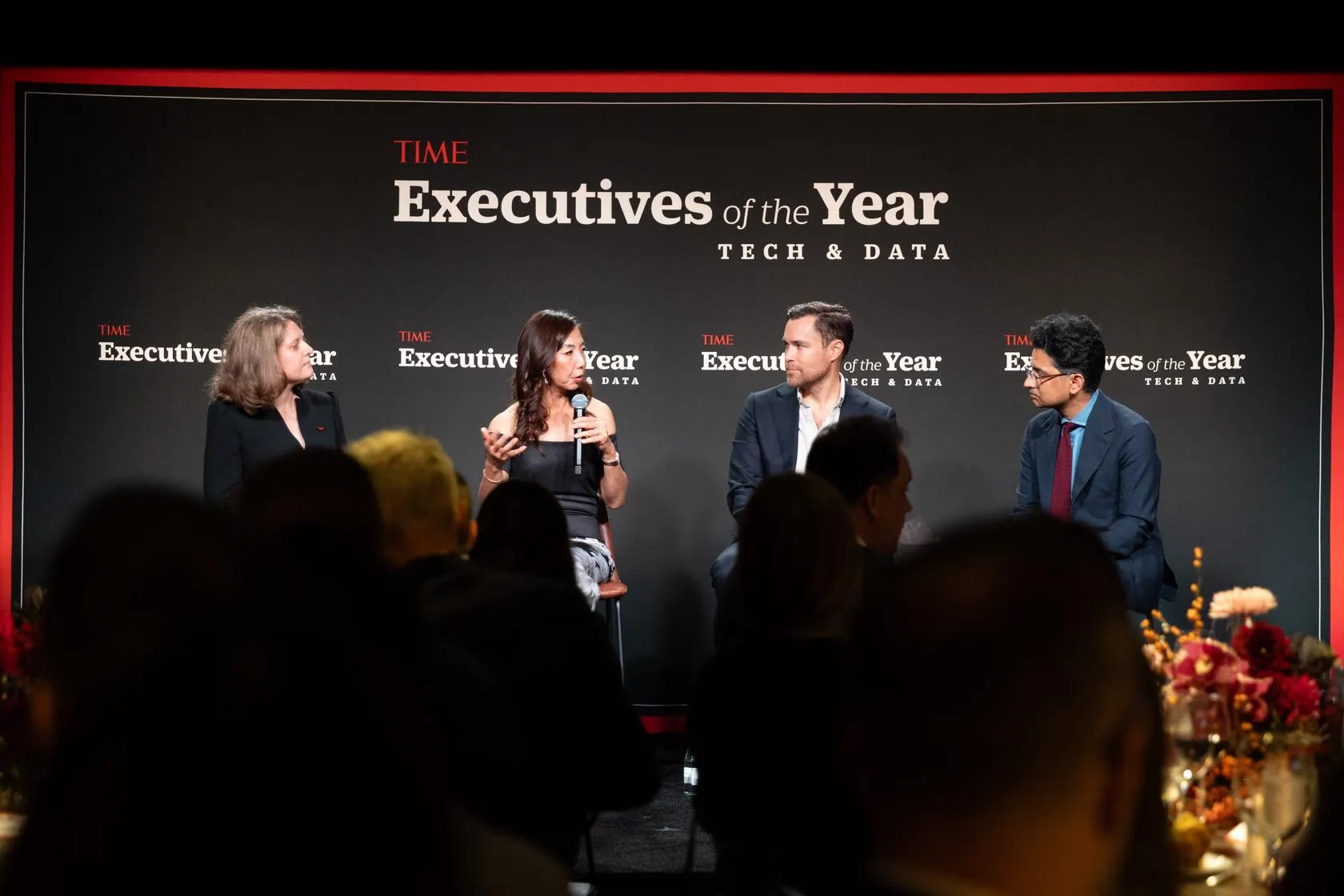
(SeaPRwire) - Here's the contradiction nobody at TIME's Executives of the Year Impact Dinner said out loud on Tuesday night in New York: every CTO on that panel insists AI exists to serve the customer, yet every example they gave is really about labor, cost, and organizational survival. Franziska Bell of The Home Depot, Fiona Tan of Wayfair, and Sam Dozor of Rokt gathered to discuss how technology has shifted how their companies operate. The framing was consumer experience. The subtext was something colder. When the person selling you hammers and the person selling you sofas both reach for AI at the same moment, the question stops being "what does the shopper want" and becomes "what can we no longer afford to do with humans alone." That anxiety hung over the room, wrapped in polite language about journeys and resonance. The facts, stripped of the dinner's warm lighting, are these. Bell described her discipline as "always being grounded in the consumer experience" — the art of the possible, she called it. Her flagship proof is Magic Apron, an AI-empowered home improvement expert now deployed across 2,000 U.S. stores. It locates items in the aisle, answers how-to questions, and interprets images customers upload. Bell's method is friction-hunting: find where the customer stumbles, then sand it down with software. Notably, she refused the full-automation fantasy. "I'm a huge believer in human-AI teams," she said. "That's really where the magic happens." Tan's account at Wayfair was more diagnostic. "A lot of times people don't know what they're looking for, they can't describe it," she admitted — a quiet confession that search bars have failed the furniture business. Her remedy is a curated "journey that will resonate." On talent, she wants adaptability in young hires, paired deliberately with older employees who hold institutional memory. Dozor, whose company sponsored the evening, was the most evangelical. "The time is here. The time is now, and all of us need to live it." Rokt's internal evidence: engineers writing product specs, designers writing code — AI dissolving job boundaries. His company, he said, has "chosen to live six months from now." Now follow the commercial loop to its end-game. Magic Apron is not a chatbot; it is margin defense against the expertise gap — decades of retiring tradespeople whose knowledge walked out the door, now approximated in 2,000 stores by software that never asks for a raise. Wayfair's resonance engine is a bet that whoever solves "I know it when I see it" owns the highest-intent moment in home retail, a category where discovery failure kills baskets. And Rokt's boundary-blurring workforce is the tell: the real product AI is reshaping first isn't the customer interface, it's the org chart. The endgame is a retail stack where the front-end conversation is AI-mediated, the back-end roles are fluid, and the human employees who remain are the ones Bell described — collaborators, not operators. Companies that treat this as a tooling upgrade will license their futures from vendors; companies that treat it as capability building, the way these three described Tuesday night, will own theirs.
More
The Fraternity House as a Hostile Takeover: Why Cornell’s Fracture is a Governance Failure Hot News

The Fraternity House as a Hostile Takeover: Why Cornell’s Fracture is a Governance Failure

(SeaPRwire) - The ban is not an apology. It is a firewall. Cornell University has halted all fraternity parties for the remainder of the academic year. President Michael I. Kotlikoff announced this measure in a letter to the campus community. The move follows a civil lawsuit filed by Jane Doe. She alleges sexual assault by members of the Chi Phi fraternity. The incident occurred in 2024. The university’s response was widely criticized. Students and staff protested on campus. They chanted "Ban the frats!" Kotlikoff responded by removing the social license. He prioritized safety over tradition. The public narrative focuses on student safety. This is the surface layer. Look deeper. The core issue is institutional governance. The university failed to contain a liability risk. The fraternity system operated as an unregulated enclave. It existed outside the full scope of institutional accountability. The lawsuit forced the hand of the administration. They could no longer treat these houses as autonomous cultural hubs. The ban strips the social power from these organizations. It neutralizes the venue for potential violations. This is a reactive containment strategy. It treats the symptom, not the disease. The university is now inviting external scrutiny. Sally Yates, a former acting U.S. Attorney General, will lead an independent review. This is a significant signal. It moves the investigation beyond internal HR channels. Kotlikoff also mandated cooperation with New York State Police. Survivors who pursue criminal charges will be interviewed by state investigators. The university will provide comprehensive investigative summaries. This shifts the jurisdictional dynamic. It acknowledges that internal resolution mechanisms failed. The "zero tolerance" policy for social events adds a legal layer. Any violation triggers immediate emergency suspension. The cost of non-compliance is now existential for the organizations involved. The industry implication is clear. Higher education institutions cannot outsource their social infrastructure. If they allow parallel governance structures, they assume the liability. The fraternity model was a private club system. It relied on the university’s brand for legitimacy. It evaded the university’s direct oversight in practice. By banning the parties, Cornell is reclaiming operational control. It is asserting that safety is a core function, not an optional one. The next step is structural. The "thorough review" of fraternity life is the real test. If the review fails to dismantle the unchecked social dynamics, the ban will be a temporary reprieve. Governance must be total. Or it is decorative.
More
A24’s Crystal Lake Proves the Horror IP Adaptation Model Is Terminally Broken Hot News

A24’s Crystal Lake Proves the Horror IP Adaptation Model Is Terminally Broken

(SeaPRwire) - Crystal Lake proves that the horror franchise adaptation machine doesn't just churn out mediocre content—it produces expensive evidence that the model itself is broken. Peacock's eight-episode series spent four years in development limbo before premiering October 15, only to become the clearest example yet of what happens when streamers treat a B-list slasher IP as though it had blockbuster franchise potential. The original 1980 Sean S. Cunningham film operated on a shoestring budget and skeletal narrative. Expanding that framework into a prestige television event isn't adaptation. It's delusion with a green light. The production history alone tells a story of institutional dysfunction. Bryan Fuller, the showrunner who had successfully reinvented the Silence of the Lambs franchise through Hannibal, departed over creative differences with A24. Brad Caleb Kane—whose prior credits include Lodge 49, Tokyo Vice, and It: Welcome to Derry—took over in 2024. Four years of production. One showrunner departure. A legacy IP with limited narrative fuel. The numbers aren't subtle about where the commercial logic breaks down before a single episode airs. The casting of Linda Cardellini as Pamela Voorhees is the show's one genuine commercial asset, yet the surrounding narrative architecture squanders it. The series centers a single mother's grief and rage against a backdrop of 1970s Crystal Lake, New Jersey. Pam cooks at Camp Crystal Lake by day and enrolls her physically disabled son Jason there to keep him close. Two neglectful counselors, Claudette and Barry, sneak off while he's supposed to be supervised. Grace, an empathetic fellow outcast and Jason's only friend, stumbles upon the couple and freezes. By the time Pam realizes something is wrong, Jason has vanished. The franchise already explored this emotional core effectively in around ten minutes of screen time. Stretching it into eight episodes means padding with encounter groups, hippie subplots, and a suburban nightmare flashback that fills runtime the premise never earned. Now compare the commercial calculus. A24 brought aesthetic credibility but not narrative depth. The retro-VHS flourishes are well-executed. The snake-in-the-cabin callbacks and trap-door endings are dutiful remixes. But the streaming business model demands retention across eight episodes, not the visceral, one-shot thrills that made the 1980 original effective for its hormone-addled teen audience. Crystal Lake generates clutter without momentum. It invokes themes of small-town racism, fear of difference, and corporate cruelty, yet rarely goes deeper than acknowledging they exist. The most intriguing plot twist arrives in the flashback episode and is abandoned before it can land. Grace, the show's other potential emotional anchor, fades in the final third. The timing is the most damning variable. Crystal Lake premiered months after Jane Schoenbrun's Teenage Sex and Death at Camp Miasma, which directly examined the same Friday the 13th DNA—camp sexuality, youth violence, adolescent terror—with intellectual rigor and comedic bite. Streamers don't compete on content alone. They compete on cultural relevance. Crystal Lake arrived looking dated before it even arrived, a formulaic adaptation stepping into a space already occupied by something sharper, funnier, and more self-aware. The pattern repeats across I Know What You Did Last Summer, The Purge, and Scream: extend a thin premise across multiple episodes, lean on franchise nostalgia, and watch engagement metrics flatten before the finale even airs. Every major streamer still developing a legacy horror franchise adaptation is one showrunner departure away from Crystal Lake's postmortem.
More
Kimberly Guilfoyle Exiled to Athens: Trump’s Latest Political Casualty Hot News

Kimberly Guilfoyle Exiled to Athens: Trump’s Latest Political Casualty

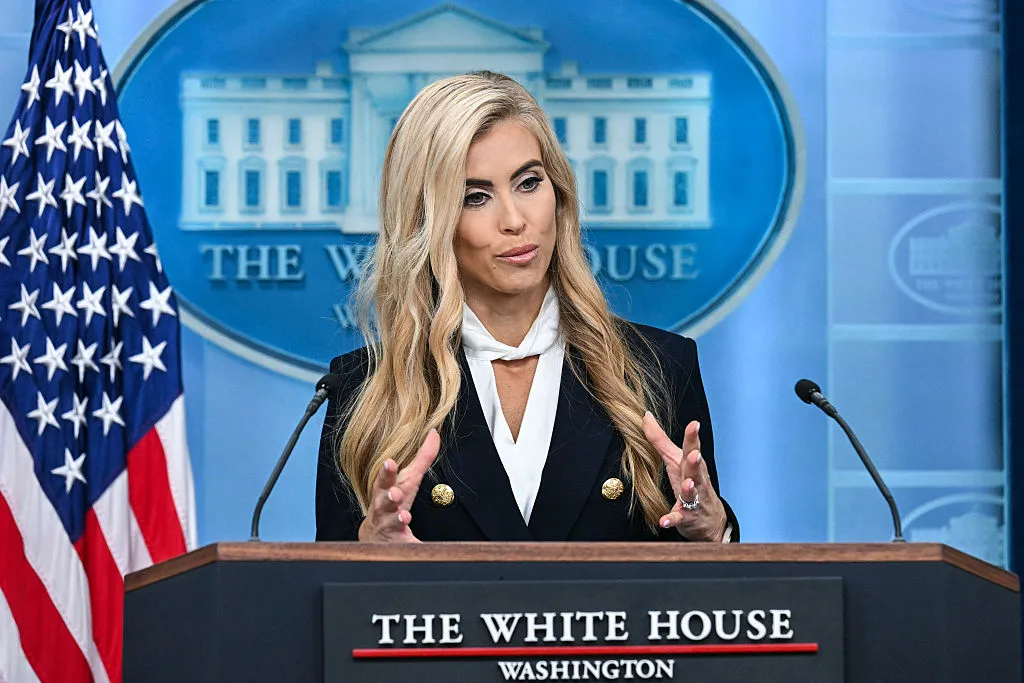
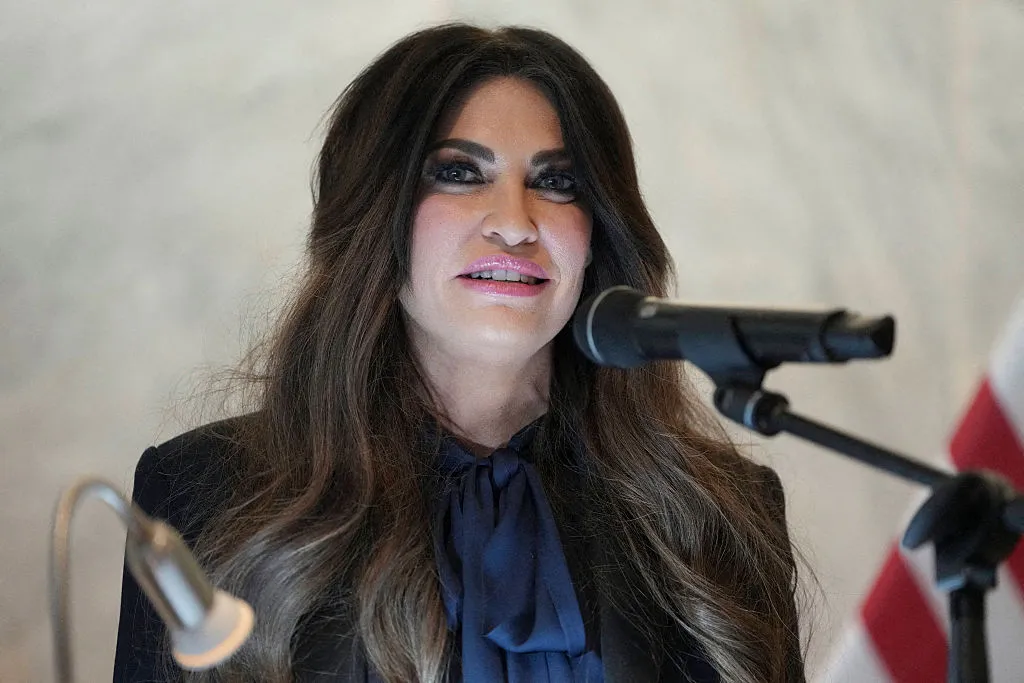
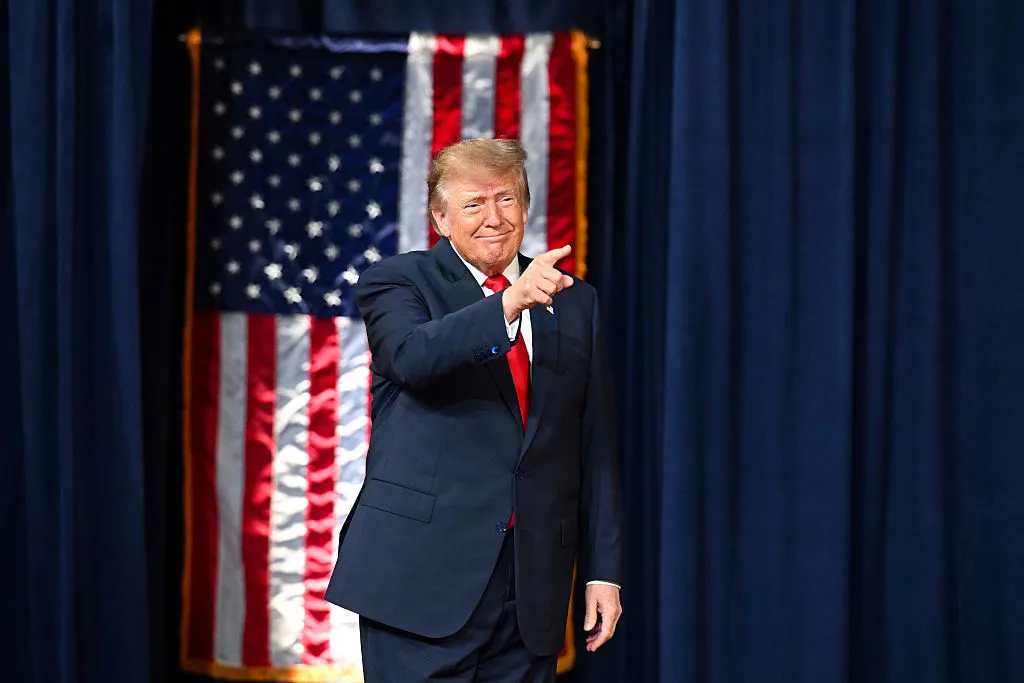
(SeaPRwire) - Washington just handed us another reminder. A brand-new press secretary shows up for her first briefing and immediately drops a resignation announcement about someone nobody particularly liked anyway. Katie Zacharia walked into the Brady Briefing Room on Tuesday and essentially fired an ambassador before most Americans could spell her last name. The whole thing played out in fewer than two sentences. We have asked Ambassador Guilfoyle to resign. She has been a wonderful asset. We wish her well. That was it. Twenty-five seconds of political theater that exposed exactly how disposable loyalty has become in this administration. The facts are not complicated but they are deeply revealing. President Donald Trump formally requested Kimberly Guilfoyle hand in her resignation as Ambassador to Greece. This came less than twenty-four hours after Trump publicly stated he was considering dismissing her. The trigger was a single allegation. Guilfoyle reportedly asked a political donor to pay a $100,000 personal American Express bill. That is not a security breach. That is not a policy failure. That is simply bad optics in an environment where every negative headline becomes ammunition for opponents who are already sharpening their knives. Guilfoyle arrives at this post carrying baggage that goes far beyond a credit card tab. She is a former prosecutor and television personality who once engaged to Donald Trump Jr. before calling off the engagement last year. Months later, the Senate confirmed her as the United States' top representative to Greece. She also happens to be the ex-wife of California Governor Gavin Newsom, a widely recognized 2028 Democratic presidential contender. Her reputation in Athens revolves around hard partying and living large as Trump's personal emissary to the region. This combination makes her both useful and vulnerable in equal measure. The timing of this forced departure tells you everything about how the machinery works inside this White House. A new press secretary needs wins on day one. Announcing the departure of a controversial appointee delivers exactly that kind of victory lap. Meanwhile, Trump gets to distance himself from negative press without appearing to coddle anyone. The administration's calculus is straightforward. A diplomatic post in Greece is a comfortable exile. It removes a headache without creating a martyr. Nobody in the MAGA movement will mourn the loss of a figure whose primary qualification seemed to be proximity rather than policy expertise. Newsom's path to the 2028 nomination just received an unexpected assist. Each scandal surrounding Trump's inner circle reinforces the narrative that he surrounds himself with flawed characters. Guilfoyle's rapid expulsion from the diplomatic corps feeds directly into that storyline. It gives Democratic operatives another exhibit for their casebook. The fact that Trump announced this consideration publicly before demanding the formal resignation suggests the whole sequence was orchestrated rather than reactive. Kimberly Guilfoyle's ambassadorship ends not with a bang but with a terse press briefing statement and a one-way ticket to Athens she never wanted. The lesson for anyone watching closely. In the Trump world, loyalty has a shelf life and that shelf life keeps getting shorter every year.
More
130 Million Names Erased: How India’s Voter Roll “Cleanup” Became the Quietest Coup in Democratic History Hot News

130 Million Names Erased: How India’s Voter Roll “Cleanup” Became the Quietest Coup in Democratic History

(SeaPRwire) - Democracies rarely die in dramatic fashion anymore. They get audited to death. What is unfolding in India is not a coup with tanks or a suspended constitution. It is something colder. A paperwork purge, executed by bureaucrats, blessed by judges, and enforced by 20,000 police officers in the capital’s streets. The Special Intensive Revision, sold to the public as routine hygiene for electoral rolls, has struck 130 million Indians from the voter lists. That figure exceeds half the eligible electorate of an American midterm. When a state removes people on that scale and calls it cleaning, the detergent is the point. Opposition leaders, lawyers, and journalists were among more than 7,000 detained in New Delhi. Internet access was suspended. Barricades went up around Jantar Mantar, the traditional protest ground. The demand of the protesters was simple. The resignation of the chief election commissioner, and the rollback of the SIR. The state’s answer was detention. The mechanics deserve cold examination. In the summer of 2025, ahead of state legislature elections, the Election Commission announced revisions and demanded that existing voters prove citizenship and eligibility using documents from a select list. Civil society groups challenged the exercise before the Supreme Court that June. Their argument was precise. Indian election law permits revision in specific constituencies with reasons recorded in writing. It does not grant power to force millions already on the rolls to re-prove themselves. The document list was exclusionary by design, because access to government paperwork in India tracks caste, class, and gender. The Court delayed for months. It haggled over whether Aadhaar, the national digital identity, would count. Meanwhile the exclusions compounded. In West Bengal, a state the BJP had never won, nine million people, roughly 12 percent of the electorate, vanished from the rolls. Then came the tell. The Supreme Court, still refusing to rule on legality, built tribunals staffed by judicial officers to hear appeals. Petitioners warned these would take years, perhaps decades. The bench essentially replied that excluded voters could sit out the election and be restored later. West Bengal voted on the new rolls. The BJP won. And when appeals were actually decided, around 90 percent of excluded voters were put back. Nine out of ten removals were wrongful. Read that number again. An error rate approaching total failure, and the Court still concluded the data showed no “systemic disenfranchisement.” When the final judgment arrived in the summer of 2026, it upheld everything. It affirmed the Commission’s wide discretion and rejected the argument that treating every elector as presumptively ineligible was disproportionate. The legal scholar Vasudev Devadasan described the result plainly. A permanent class of disenfranchised persons, locked out of political life. The gap between official language and operational reality is where the story lives. The Commission insisted the SIR was not a citizenship determination. Yet the new BJP government in West Bengal threatened to strip welfare benefits from the excluded. Passport renewals were denied to people struck from the rolls. In 2020, the National Register of Citizens was shelved after mass protests, precisely because forcing everyone to prove citizenship invited mass exclusion. The SIR achieved the same architecture through a side entrance, minus the controversy of a standalone register. The patterns that emerged were not random noise. Exclusions clustered among the vulnerable, the marginalized, and religious minorities, especially Muslims. Algorithms flagged voters holding valid documents over “logical discrepancies,” like an arbitrary age gap between parent and child, judged by criteria that shifted state to state. In some neighborhoods, pre-filled objection forms were submitted in bulk targeting Muslim names, exploiting a legal provision letting third parties challenge any voter. And when prominent Delhi residents found themselves omitted, the Commission built a VIP portal to restore them. A two-tier system, formalized. Fast restoration for the connected, tribunal queues for the poor. The machinery lesson travels far beyond India. Control the roll, and you control the electorate before a single vote is cast. No ballot stuffing required, no counting fraud needed. Just a revision, a document list, an algorithm, and a court unwilling to say no. The party apparatus that masters this does not need to win arguments. It only needs to decide who gets to participate in them. As the investigative work of journalist Ritika Chopra began to surface against this backdrop, the apparatus responded the way such apparatuses do, with barricades and detentions. Watch the next revision cycle closely, because the model is now proven, portable, and immunized.
More
The Stage Is Empty, The Money Isn’t: Why America’s Candidates Are Ditching Debates For Viral Kills Hot News

The Stage Is Empty, The Money Isn’t: Why America’s Candidates Are Ditching Debates For Viral Kills

(SeaPRwire) - Candidates are not preparing for debates anymore. They are preparing for clips. On Thursday night, three Senate races became object lessons in this shift. Jon Ossoff called his Georgia opponent a bigot. Abdul El-Sayed dismissed his Michigan rival as weak and cowardly. Troy Jackson accused Susan Collins of war profiteering. None of it was policy. Every sentence was engineered for the feed. Republicans fired back in kind. Strategists celebrated. This was never about governing. It was about dominance. The numbers tell the same story. In more than half of the races for Governor and Senate, the two major-party candidates are not expected to hold any debates before Election Day. The Cook Political Report rates five races for Governor as true toss-ups. Three of those — Georgia, Nevada, and Ohio — will likely not hold a single debate. The same logic applies to two of the hardest-fought Senate races: Texas and Ohio. The Brookings Institution has tracked this decline for twenty-five years. Back in 2000, the top five most competitive Senate races featured a combined seventeen debates. By 2018, that number had collapsed to single digits. The arc is not bending toward conversation. It is bending toward silence. Texas illustrates the machinery at work. Democrat James Talarico has spent months trying to bait Republican Ken Paxton onto a stage, even suggesting Fox News as a venue. Paxton refuses. Trump inserted himself into the fray, mocking Talarico at a San Antonio rally, questioning whether the Democrat was secretly vegan and physically unable to endure barbecue. He then demanded Paxton debate, posting that Talarico was missing in action. Talarico seized the opening immediately. This was never a policy exchange. It was a proxy war played out through social media while the actual opponent stayed home. Meanwhile, that Texas Senate race has already absorbed more than four hundred and twenty-five million dollars in political advertising. A savvy ad buyer put it plainly: that is more than four times the cost of the final season of Game of Thrones. The calculation driving debate avoidance is brutally rational. No one really wins a debate. Someone loses, and the loss is the story. Darlene Graham learned this last August when she stumbled through her first debate appearance, openly admitting she was not well informed on national security. The audience gasped. Her late brother Lindsey Graham's entire political identity was built on foreign policy. A single stumble became a career wound. That is the risk. For Republicans running in already safe seats, the calculus is even simpler. Tommy Tuberville in Alabama has flatly refused to debate Doug Jones, arguing the evening would be about differences of opinion rather than governing. Amy Acton in Ohio is rejecting Vivek Ramaswamy on principle, refusing to platform what she calls a chronic liar. Neither side is wrong about the math. They are just operating on different sides of it. The strategic logic is undeniable. Debate avoidance is the natural end state of a system where voters consume information in thirty-second clips rather than two-hour programs. Why risk unscripted exposure when you can control every frame? Why face a live opponent when your message can be packaged, polished, and amplified through partisan media networks without a single question from a journalist? The traditional debate format assumed that authenticity would win out. That assumption died somewhere between 2016 and now. The next election cycle will look less like a contest of ideas and more like a series of manufactured moments. Twentytwenty-eight is shaping up to feature crowded and noisy fights in both parties, which means candidates will have even more reason to sidestep televised debates entirely. The undercard comparison from 2024 already taught them what happens when you share a stage with people who do not want to be there. The real debate in American politics is no longer happening on a stage in Cleveland. It is happening in the edit bay, the ad server, and the algorithm that decides what millions of voters never see.
More
The Cognitive Blind Spot That Nearly Cost a Doctor His Daughter Hot News

The Cognitive Blind Spot That Nearly Cost a Doctor His Daughter

(SeaPRwire) - Even doctors get blindsided by their own minds. Raj Panjabi spent his career treating heart failure. He knew the signs. He listened to lungs. He read X-rays. And still, he missed the one that mattered most—his own daughter's. That is the real horror of normalcy bias. It does not care about your credentials. It does not care how many patients you have treated or how many pathologies you can diagnose in your sleep. It whispers that nothing will change. That everything is fine because it has always been fine. And it works with terrifying precision on the people who should know better. Look at the timeline Panjabi reconstructs. At 18 months, Karuna's weight dropped below the 97th percentile. The pediatrician recommended action but not alarm. They tried a nutritionist. PediaSure. Formula supplements. She stopped eating almost entirely. She grew irritable. She slept more. By September 2019, daycare called—she refused to play. She lay on a mat in the corner. Labored breathing appeared. The pediatrician diagnosed pneumonia. Five days of antibiotics produced nothing. The swelling came next—eyes puffy, fluid around the lids. And yet the birthday party happened. Parents flew in from North Carolina. Candles were lit. Cake was cut. Normalcy bias did its work one more time. Then came the X-ray. Her heart was more than double the normal size. Lungs filled with fluid. Heart failure. A parvovirus B19 infection had attacked her heart cells. Genetic testing revealed an unknown variant. Boston Children's Hospital became their entire world. The pediatric ICU. Sleepless nights. A breathing tube. Sobs that shook a father's chest. What makes this case structurally significant is what Panjabi calls the "moment of liminality"—that threshold between what was and what must become. Crises like this do not arrive with shock. They accumulate. Early signals are ambiguous. Mobilization lags. Normalcy bias fills the gap until the ground gives way all at once. The family stabilized by December. Four years later, Karuna's ultrasound looked normal. She had come off every medication. Yet when Panjabi asked if she was okay for good, the cardiologist smiled and said, "We still don't know." No certainty. Ever. And perhaps that is the only honest position. This is not a story about medical failure. It is a story about the architecture of human perception under uncertainty. We protect ourselves from dread by assuming continuity. That protection becomes a liability when continuity is exactly what is breaking.
More
The $366 Million Insurance Policy: How Musk Bought Back Washington Hot News

The $366 Million Insurance Policy: How Musk Bought Back Washington

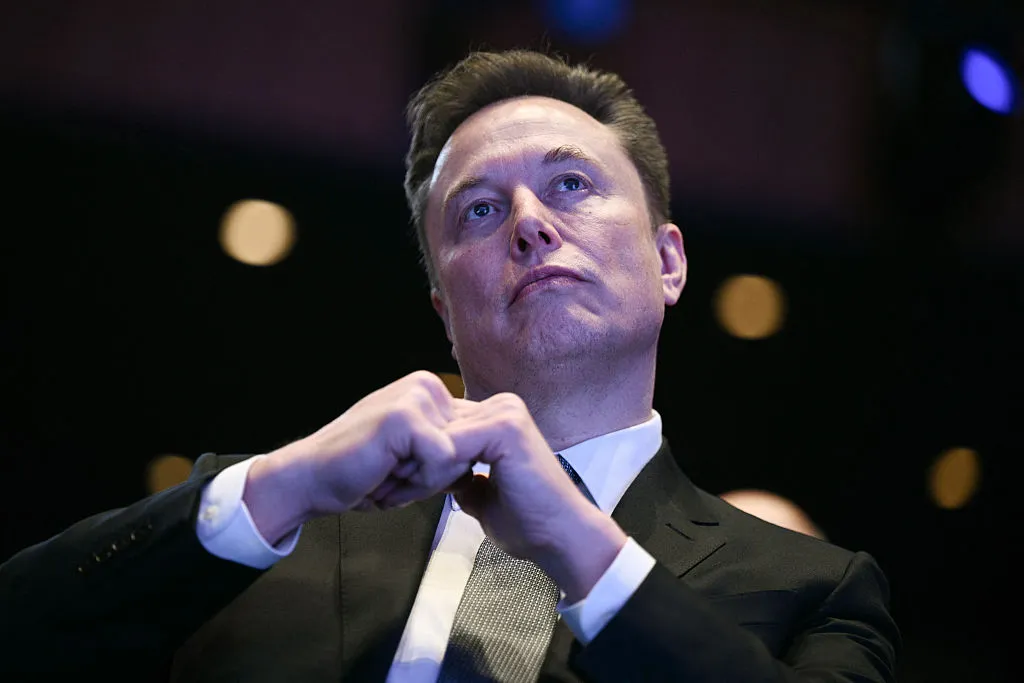
(SeaPRwire) - Political spending in America stopped being about persuasion a long time ago. It is about inventory. Donors stockpile legislators the way warehouses stockpile goods, and nobody understands inventory management better than a man who builds factories. Elon Musk told the world in May of last year that he planned "a lot less" political spending going forward. That statement had a shelf life of roughly two months. By July, the money was moving again, and the disclosures now landing ahead of the Thursday super PAC filing deadline show a donor who did not merely return to the game. He bought the table. The lesson here is not that Musk changed his mind. It is that his earlier retreat was never ideological. It was a pricing pause. The numbers deserve a slow reading. For the 2026 cycle, which opened in January 2025, Musk has spent $366 million. More than $276 million of that flowed to Republican groups and his own super PAC since July alone. The centerpiece is $158 million to the Senate Leadership Fund, the vehicle tasked with holding the GOP's Senate majority. That single transfer ranks among the largest known political donations in American history. Another $20 million went to the Congressional Leadership Fund, aligned with Speaker Mike Johnson's effort to keep the House. His America PAC absorbed over $76 million to run turnout operations across seven battleground states and nearly three dozen House races. Then come the side bets: $10 million to Lone Star Liberty PAC backing Ken Paxton's Senate run in Texas, $10 million to the Republican Governors Association, $2 million to the Republican Attorneys General Association. The Times also reported additional money routed through groups that do not disclose donors at all. Now set this against the biography of the donor. In 2015, Musk gave $5,000 to Hillary Clinton and $5,000 to the Democratic Congressional Campaign Committee, while publicly saying he wanted to get involved in politics "as little as possible." By 2017 his giving leaned Republican at a ratio of nearly seven to one. In 2022 he bought Twitter, reinstated Trump, renamed it X. In 2024 he built America PAC, flirted with a legally questionable $1 million voter giveaway, and spent over $250 million electing Trump. Then came the DOGE tenure, the mass federal layoffs, the lawsuits, and the public rupture with the President in May 2025, when Musk announced he had "done enough" and even threatened to primary lawmakers who backed Trump's spending bill. He floated supporting Thomas Massie, a vocal Trump critic. Massie lost his primary anyway. Every one of these twists reads like volatility. The spending ledger reads like continuity. The gap between the public theater and the private checkbook is where the real story lives. America PAC's spokesman Andrew Romeo framed the money as giving Republicans "a fighting chance to defy history." That is the manifesto version. The financing version is colder. House Democrats have already called for probes into Musk's government contracts, worth tens of billions of dollars, and into his DOGE operations. Maggie Haberman reported that Democrats privately told her they intend to subpoena Musk if they gain the power to do so. Musk counters that roughly 90 percent of SpaceX revenue this year is commercial, with government revenue under 5 percent in the final quarter. Maybe so. But a subpoena does not care about your revenue mix. It cares about documents, testimony, and news cycles. A Republican House is not a political preference for Musk. It is a litigation shield, and $276 million is the premium. Watch what this does to the party apparatus itself. When one donor writes a $158 million check to a single Senate super PAC, the party's institutional memory migrates into that donor's calendar. Candidates in seven battleground states now run on infrastructure Musk paid for, messaging Musk funded, turnout lists Musk's PAC compiled. The GOP spent decades worrying about capture by donor networks. It has now been captured by a donor individual, one who threatened to build a third party barely a year ago and was rewarded not with exile but with deeper integration. Parties that outsource their ground game to a single financier do not get it back. The midterms will not decide whether Musk owns a piece of Congress. They will only reveal the interest rate he is charging for it.
More

The Raid on Rep. Omar: A Tactical Misfire or the Next Constitutional Crisis?

(SeaPRwire) - Federal agents kicked down the door of a sitting Representative’s home. This is not a procedural formality. It is a violent rupture in the norm. The optics are catastrophic for the executive branch. We saw federal agents in the Washington, D.C. area executing a warrant. The target was Rep. Ilhan Omar. The timing is three weeks before the midterm elections. This is not a random administrative audit. It is a calculated political strike. The message is clear. If you oppose us, the law will come for you. The precedent set here is dangerous. It erodes the separation between political conflict and criminal prosecution. The public sees a predator. The victims see a trap. The official story is tight. Homeland Security Investigations acted on a judicial warrant. The Department of Justice called it part of an ongoing federal criminal investigation. No further details were released. Reuters reported a source claimed the probe involved alleged immigration fraud. Specifically, it focused on Omar’s immigration paperwork. Her late father filled out the forms when she was a child. This claim is unverified. It sits in the shadow of uncertainty. We do not know if the evidence is solid. We do not know if the legal basis is strong. The administration holds the deck. They control the narrative. They release only what they choose to show. Behind the scenes, the maneuvering is intense. Democrats are reacting with full force. Gov. Tim Walz called it an abuse of power. House Minority Leader Hakeem Jeffries labeled it "deeply disturbing." He co-signed a statement with Rep. Katherine Clark and Rep. Pete Aguilar. They frame it as weaponization of the government. The White House is not hiding. Border Tsar Tom Homan told Fox News last month that Omar is the subject of a criminal investigation. He declined to offer details. This admission precedes the raid. It suggests the operation has been in motion for weeks. The intelligence is likely shared among agencies. The coordination points to high-level approval. This is not a rogue local operation. The political cost is asymmetric. Republicans may claim they are enforcing the law. They may argue that even elected officials must answer to federal authorities. This argument has limited appeal. The public associates law enforcement with protection, not political retribution. The raid amplifies Omar’s grievance. She has long accused Trump of a "weird" obsession. She claims his hateful rhetoric drives death threats. The January syringe incident supports her narrative. A man sprayed her with apple cider vinegar. He was sentenced to 14 months in prison. The raid feeds the idea that political attacks lead to physical harm. It validates the fear. It mobilizes the base. The midterms are the ultimate battlefield. Less than 30 days remain. The raid will dominate the news cycle. It simplifies the vote. It is no longer about healthcare or the economy. It is about safety. It is about whether the government is on your side or against you. Republicans are grappled to maintain control. This event creates a negative narrative they cannot easily wash off. The "violent mass deportation machine" language sticks. It frames the opposition as brutal and unchecked. The electorate will judge based on this image. The strategy risks alienating moderate voters. They may see a party losing control of its own instruments. The pendulum swings toward the challengers. Expect a court battle to decide the legality of the search. The outcome will define the next decade.
More

The Diesel Trap: How Trump’s Energy Pivot Fractures the Western Sanctions Bloc

(SeaPRwire) - The silence from the White House is deafening because the contradiction is absolute. A president who signed a sweeping Russia sanctions bill just three weeks ago is now shaking hands with the same regime to lower diesel prices. This is not nuanced statecraft. It is a desperate pivot that tears the fabric of the post-2022 consensus. The decision to import 300,000 tons of Russian diesel undermines the core logic of sanctions. You cannot claim to starve a war machine while simultaneously refueling it. The market sees this. The legislative branch sees this. Even the most ardent supporters of the administration are scratching their heads. The signal sent to Moscow is not deterrence. It is validation. The official narrative frames this move as a necessary stabilizer for global energy markets. Treasury Secretary Scott Bessent insists the administration is using existing legal authorities. He argues that no current bill, including the recent Lindsey Graham measure, prohibits these specific transactions. This is a narrow, technical defense. It relies on the idea that the law is a loophole to be exploited rather than a mandate to be respected. The administration prioritizes immediate price relief for American farmers over long-term geopolitical stability. They are trading diplomatic leverage for short-term economic comfort. The result is a policy that feels reactive and disjointed. It lacks strategic coherence. The geopolitical subtext reveals a shattered coalition. In Europe, the backlash is visceral. Swedish Prime Minister Ulf Kristersson called it a regrettable move. Estonia’s Prime Minister Kristen Michal labeled it a big miscalculation. Kaja Kallas, the EU’s foreign policy chief, warned that easing diesel sanctions provides Moscow with more revenues to wage war. Meanwhile, Ukrainian President Volodymyr Zelensky called the deal a gift to Putin. He noted that Russian strikes on energy facilities continued immediately after Trump announced an energy cease-fire. The disconnect between Washington’s optimism and the reality on the ground is stark. Allies are watching the US undermine the very architecture they helped build. Congress is moving to counter this executive overreach. A bipartisan group of senators and representatives has drafted the Ronald Reagan Peace Through Strength Act. This bill aims to block any purchases of Russian oil. It signals that the legislative branch is waking up to the security risks. Senator Thom Tillis warned that trusting Putin puts American lives at risk. He specifically cited the danger to forward-deployed personnel. The political pendulum is swinging hard back toward containment. The administration’s bet that economic pressure would be too painful to reverse is failing. The Western sanctions bloc is fracturing from within. The cost of this energy deal will not just be paid in dollars. It will be paid in credibility. And credibility, once lost, is nearly impossible to recover.
More

The Rural Revolt No One Is Talking About: Why Trump’s Farm Belt Is Cracking

(SeaPRwire) - Donald Trump promised rural America economic sovereignty. Instead, he has handed farmers a pincer movement of policy contradictions that no amount of White House photo ops can paper over. The president stood beside tractors in Wisconsin in June 2026. Two months later, Oklahoma farmer Brent Rendel told reporters something remarkable: dissatisfaction among his peers was no longer whispered. It was loud. For the first time in modern memory, the GOP's most reliable voting bloc was openly questioning whether loyalty paid off. The data tells a brutal story. Trump won 69 percent of the rural vote in 2024. By August, an AP-KFF poll showed 57 percent of rural voters disapproving of his handling of the economy. Among rural Republicans, 27 percent disapproved, and that same group was substantially less likely to say they were certain to vote in November. A separate Reuters/Ipsos poll from June put Trump's rural approval at just 50 percent, with only 31 percent approving of his economic management. Three-quarters of rural voters described their local cost of living as fair or poor. Ground beef hit $6.92 a pound by August 2026, up from $5.58 two years earlier. Cattle inventory had fallen to a 75-year low. Trump's 90-day suspension of tariffs on 300,000 metric tons of imported beef was supposed to cut prices by 25 percent. It did not. An American Farm Bureau Federation analysis of 41 grocery stores across 22 states found ground beef prices flat or higher after the policy took effect on September 1. Texas Agriculture Commissioner Sid Miller, an eighth-generation rancher, said plainly: no rancher was happy. Calves brought $300 to $500 less per head. Packers and processors captured the gains. Here lies the central contradiction. The White House, through spokesperson Olivia Wales, insisted Trump had repeatedly affirmed his support for farmers and pointed to tax cuts, deregulation, and energy abundance as the foundation of economic trajectory. Yet every major policy lever pulled since the campaign has undercut rural livelihoods simultaneously. Trump expanded low-tariff beef imports to ease grocery bills, a move that depressed cattle prices without moving consumer costs. The Iran war triggered a global energy crisis that sent diesel and fertilizer prices spiraling. Retaliatory tariffs struck American agricultural exports, with Canada remaining Montana's largest export market in 2025. ICE raids on meatpacking plants in Kansas, Oklahoma, and Texas further disrupted the supply chain, creating a perverse outcome where cattle backed up at farms while meat shelves remained thin. Derrell Peel of Oklahoma State University captured the sentiment succinctly: cattle producers felt Trump was willing to throw them under the bus for lower beef prices before the election, and no political action had moved the needle. Civiqs polling showed Trump's approval declining in ten major beef-producing states between August and September 2026. The Democrats have noticed. Schumer and Klobuchar unveiled the Strategic Fertilizer Reserve Act with endorsements from the National Farmers Union and New York Farm Bureau, positioning themselves as the alternative for a constituency that feels crushed from all sides. Democratic candidates are polling competitively in Texas, Iowa, and Kansas. Miller warned that Republicans could lose statewide races in Texas because of tariffs, diesel costs, and fertilizer prices, describing the cumulative damage as death from a thousand cuts. Trump's original campaign pledge was to keep the United States out of foreign wars and focus on domestic prosperity. Farmers say the economic consequences of his current policy mix are now reaching their daily operations. The rural vote is not flipping wholesale, but even a modest erosion in turnout or enthusiasm among Trump's 69 percent could reshape midterm outcomes in ways the White House has yet to reckon with. The pendulum does not need to swing far. It simply needs to move.
More
The Ambassador as Salesman: How a Foreign Policy Post Became a Pay-to-Play Brochure Hot News

The Ambassador as Salesman: How a Foreign Policy Post Became a Pay-to-Play Brochure

(SeaPRwire) - The American diplomatic corps is supposed to operate on one currency. Credibility. What just unraveled in Athens suggests a different ledger has been running quietly, with access as the minted commodity. Kimberly Guilfoyle was sworn in as ambassador to Greece in September 2025. The Wall Street Journal started publishing its series on September 25. Within days the picture was unmistakable. She promoted Aktor Group, a Greek construction firm, across Balkan capitals. She had the company's lobbyist, Christos Marafatsos, in diplomatic meetings. She pushed governments from Bulgaria to Albania toward that same contractor. She also allegedly told Greek officials the United States could influence political changes elsewhere. The Greek energy minister reportedly balked. The Greek government denied it would ever be tolerated. Her lawyer called the messages fake. The text messages showed something else entirely. She asked Trump donor Eric Deters to wire $100,000 to clear an American Express bill. She promised up to a million dollars if she delivered access to the Trump Administration. She asked him to stop creating a paper trail. He did not pay. The State Department inspector general is looking into it. Three days after the Deters story broke, the Journal reported she flaunted luxury trips. An audio recording captured her acknowledging a private flight to the January 2026 World Economic Forum with Aktor Group CEO Alexandros Exarchou. She also mentioned plans to travel with a Greek shipping magnate who would cover accommodations. The embassy said she followed ethics guidelines. That defense collapses under its own weight when the guideline itself appears to have been used as cover. Marco Rubio's reaction tells you everything about where the real fault lines run. He walked into a Europe visit boasting about achievements and came home dodging questions. On October 8 he started by refusing to call the reports gospel. Vice President J.D. Vance was colder. He said he dislikes selling access to high-level officials. He added that people should suffer consequences if something bad happened. Trump offered the sharpest dismissal of all. Too bad, he told reporters. She was always very nice. The president of the United States reduced an ambassador to a sentiment. Democrats moved quickly. Gregory Meeks called the reports deeply concerning and demanded removal. Robert Garcia demanded financial and communications records. Even John Barrasso called the reports very troubling. This is not just a personnel problem. It is a governance problem dressed as gossip. The midterms make it lethal for the party in power. Every allegation becomes ammunition. Every denial becomes proof of a cover-up. The structural rot here is simpler than the headlines suggest. An ambassador does not need a lobbyist to attend her meetings. She needs someone to keep the messaging clean when foreign interests start knocking. Guilfoyle did not need to ask a donor to pay a credit card bill to prove the model works. The request itself proved it. Access is already for sale. She just forgot to pretend otherwise.
More
The Algorithm Doesn’t Know Your Nose Wrinkles: Why Dating Apps Can’t Replace a Friend With a Good Eye Hot News

The Algorithm Doesn’t Know Your Nose Wrinkles: Why Dating Apps Can’t Replace a Friend With a Good Eye

(SeaPRwire) - The dating app industry built a multi-billion-dollar business on one core promise: that a stranger selected by software is somehow a better bet than the people already inside your social circle. A recent first-person account published in TIME quietly dismantles that promise. The writer started hosting monthly house parties last year, casually paired up two friends who got along well, and watched three dates emerge from those gatherings. No code, no swiping, no subscription tier. Just a host who said, "You two should go out sometime." The anecdote lands because it exposes the anxiety at the heart of consumer dating tech. Users are exhausted. They swipe through profiles assembled from a handful of photographs and prompts, knowing almost nothing about the person behind them. Meanwhile, the people best positioned to judge compatibility, their actual friends, have been written out of the process entirely. That is not an accident of design. It is the business model. The facts in the piece are simple but revealing. When one of the writer's friends called after a date to ask about the other person, the writer could answer every concern. That kind of verification is structurally impossible on an app, where the match exists outside any shared community. Trauma and relationship therapist Blythe Landry puts it plainly in the article: long-term friends know every nuance of who we are, from history and trauma narratives to the way our nose wrinkles when we laugh. Digital mechanisms capture factual data only. Landry's own story makes the case harder to dismiss. Years before her best friend died of cancer in 2021, Landry introduced her to the love of her life, her one and only setup, sparked by noticing the two ordered tea the exact same way. Both friends protested, insisting they had nothing in common. Weeks later, they were living together. No matching algorithm was ever going to catch that moment. The piece also acknowledges the flip side: friends know our blind spots and limitations, and they will say the uncomfortable thing an app never will, such as flagging that a date might not be financially compatible. Follow the commercial loop and the endgame becomes clear. Dating platforms monetize the search, not the outcome. A user who finds a partner through a friend deletes the app; a user stuck in an endless swipe loop upgrades to premium. So the product is optimized to keep the romantic life detached from community, exactly the dynamic the TIME writer identifies as the source of the loneliness. Matchmaking among friends threatens that loop because it costs nothing, carries built-in accountability, and actually terminates the customer's need for the service. The industry's structural response has been to make organic meeting harder, absorbing the spaces where friends of friends might connect. The counter-move the article proposes is almost aggressively analog: bring back house parties, casual dinners, planned drinks, low-pressure rooms where nobody has to announce they are looking. The writer admits three successful matches are not scientific evidence. Fine. But when a therapist's single setup outperforms a decade of swiping for both participants, the signal is hard to ignore. The platforms will not fix this, because the fix is their churn. If you want out of the loop, the actionable move is unglamorous: host something, and tell two people they should go out sometime.
More
The Reform Illusion: Why Mental Health Systems Keep Funding the Wrong Solution Hot News

The Reform Illusion: Why Mental Health Systems Keep Funding the Wrong Solution

(SeaPRwire) - Governments worldwide have spent two decades saying the right things about mental health reform. They announce community-based care as the goal. They publish white papers. They hold summits. Yet the money tells a different story, one that no press release will ever acknowledge. The structural problem is brutally simple. Around the world, nearly half of all public mental health funding stays locked inside large psychiatric institutions. At the same time, community-based services remain chronically underfunded. The World Health Organization's Mental Health Atlas confirms that about half of all admissions to these facilities happen against a person's will. These individuals enter stripped of basic autonomy. They cannot choose what to wear or when to eat. They live behind closed doors for months or decades, completely severed from the outside world. Sri Lanka offers a working counter-example that every health minister should be studying. Over the past twenty years, guided by their national mental health policies, they replaced an asylum-based model with a decentralized network. Mental health care now flows through inpatient and outpatient units embedded in general hospitals, outreach clinics, intermediate rehabilitation units, and child mental health clinics spread across districts. This was not achieved overnight. It required sustained policy commitment and deliberate resource redirection. The central tension lies in how we measure success. Deinstitutionalization has become a numbers game measured in bed reduction. Policymakers celebrate closing wards while simultaneously defunding the very services those patients need. But creating conditions for independent living demands far more than empty buildings. It requires housing, community mental health care, peer support, employment pathways, legal assistance, and family support systems. No one should face discharge without continuity of care in place. The WHO has responded with practical guidance specifically designed to help health leaders navigate this transition. They recognize that every country enters from a different position. Resources, laws, service systems, and community networks vary enormously. Implementers must identify feasible, high-impact actions appropriate to their own context rather than importing someone else's template. Advancing deinstitutionalization is achievable across all income levels. Countries worldwide are proving this. But it requires a cultural shift, not a budget adjustment. People with lived experience must serve as partners throughout the entire transition, not invited participants at the closing ceremony. The reform fails when institutions remain the default funding destination while communities bear the rhetorical promise.
More
The President’s New Map: Renaming Oceans, Alienating Allies, and the Geography of Ego Hot News

The President’s New Map: Renaming Oceans, Alienating Allies, and the Geography of Ego

(SeaPRwire) - A president treating the world's oceans like property he can rebrand is not a novelty. It is a strategy. The announcement from Clarksville that Trump floated renaming either the Atlantic or the Pacific Ocean into something like "Ocean of the Americas" must be read not as presidential whimsy but as a calculated signal about how far an American executive believes his authority extends beyond American borders. The official record is plain. Trump holds executive authority to direct U.S. geographic naming authorities to adopt different names for federal government use. That directive makes those names standard across federal agencies. Other countries are not required to follow suit. Private mapping services such as Google Maps and Apple Maps have, however, previously changed their official labels for certain geographic features for U.S. users in accordance with Trump's orders. The reality is that a federal label change does not rewrite international hydrography. It rewrites the map shown inside an American browser. The geopolitical subtext is less polite. The Gulf of Mexico renaming in January 2025 triggered a dispute with Mexico, which argued the U.S. had no authority to rename the entire body of water since part of it lies within Mexico's jurisdiction. Mexico later sued Google over its use of "Gulf of America" for U.S. users. The Lake Ontario renaming in August came amid an escalating U.S.-Canada tariff war and drew a direct rebuke from Canadian Prime Minister Mark Carney, who said Canadians would call it Lake Ontario then, now and always. Both cases follow the same pattern. A domestic executive order collides with international territorial reality. The resulting friction is absorbed by private platforms and foreign governments, not by legal doctrine. What this reveals about the administration's approach to geography is straightforward. Domestic political branding takes priority over diplomatic precision. The renaming cycle has moved from gulf to lake to state, with New Mexico floated as "New America" last month and the Strait of Hormuz briefly floated as the "Trump Strait" in September. The president told a crowd he could say the stupidest things and still receive raucous applause. That is not ignorance of consequence. That is a calculated trade. The political return inside the United States is immediate and visible. The diplomatic cost is deferred, dispersed, and largely borne by allies and trading partners who have no seat at the naming table. The broader pattern is a form of administrative nationalism. Names carry jurisdictional weight. When a major power unilaterally renames a body of water or a strait that serves global shipping, it tests how far informal pressure can go before formal objection hardens into law. Mexico's lawsuit against Google is one signal. Canada's outright rejection of "Lake America" is another. The Strait of Hormuz comment entered a conflict zone where U.S. and Israeli operations against Iran have already intensified the waterway's strategic tension. Renaming it after a sitting president risks converting a symbolic gesture into a diplomatic provocation at a chokepoint where miscalculation matters. The pendulum is already shifting. Every unilateral rename increases the catalog of grievances that partner governments can cite in broader negotiations. Tariff disputes, trade deals, and security cooperation all carry implicit leverage points. Geographic branding is among them. The United States gains a short-term messaging asset. Allies and neighbors gain a long list of reasons to question whether Washington treats shared infrastructure and shared seas as cooperative commons or as extensions of domestic political theater. The conclusion is not abstract. The geopolitical landscape rewards predictable authority, not performative sovereignty. A president who treats the Atlantic and Pacific as renameable assets is testing the boundary between domestic executive power and international legal order. The boundary has not moved. The friction around it has only grown louder.
More
Kate Spade’s Turnaround Gambit: Can Nostalgia Actually Sell to a Generation That Mocks Irony? Hot News

Kate Spade’s Turnaround Gambit: Can Nostalgia Actually Sell to a Generation That Mocks Irony?

(SeaPRwire) - Eva Erdmann doesn't just want to sell handbags to Gen Z. She wants them to believe they discovered a secret treasure. That's the real game here. Kate Spade launched in 1993 with six handbag designs. It was a small New York company. The founder sold it to Neiman Marcus in 2006. Then Liz Claiborne bought it. Tapestry closed the acquisition for $2.4 billion in 2017. The original designer, who had changed her name to Kate Valentine in 2016 to separate personal and professional worlds, died in 2018. The brand's revenue has been declining for multiple quarters since then. It needed someone who understood how to rebuild emotional connection from scratch. That someone is Erdmann, who came from L'Oréal where she served as global president of Urban Decay. Her strategy is straightforward and slightly dangerous. She's not rebranding. She's leaning into the '90s. The brand was everywhere back then. You couldn't walk a city street without seeing one of those bright, playful handbags. Erdmann built her first career around exactly that kind of cultural reach. Urban Decay took an edgy beauty niche and made it mainstream through personality-driven campaigns. The move now feels familiar. But Gen Z isn't the audience that grew up with Kate Spade. They're the audience that grew up with irony, thrift-store vintage, and a deep suspicion of anything that smells corporate. Heritage marketing to that crowd is a tightrope walk. She knows it. That's why the execution matters more than the plan. The campaigns feature Ice Spice, Tyla, Laufey, and Charli D'Amelio. The product touches are specific, almost fidget-toy-level: a bagel-shaped bag charm, a Metro Card wallet, animal-shaped bags. These aren't fashion statements. They're conversation starters designed for the scroll. The brand is building a wall of consumer letters in its office. Thousands arrive monthly. Not requests for discounts. Stories about first jobs, graduations, engagement gifts. That's the asset Erdmann is actually mining. She says Gen Z is the most influential generation in history. Her data probably supports that claim. But influence doesn't equal conversion. The harder question is whether emotional attachment to a '90s aesthetic can sustain revenue growth when the brand itself has been fading for years. Tapestry paid $2.4 billion for this. They didn't buy the products. They bought the story. Whether the story holds will depend on one thing. Can a brand built on feminine optimism feel genuine to consumers who grew up weaponizing cynicism? Erdmann is betting yes. The market will tell us in the next few quarters.
More

A Ceasefire Nobody Signed: Trump’s Diesel Diplomacy Is a Midterm Patch Job, Not a Peace Deal

(SeaPRwire) - Here is a strange way to end a war. The President of the United States announces an "ENERGY CEASEFIRE" on Truth Social, in all caps, with a warning. "Do not break it!" Hours later, the president of Ukraine tells Axios the ceasefire "was news for me." Russian strikes on Ukrainian energy infrastructure continued that same Sunday. This is not a minor diplomatic hiccup. This is a head of state declaring a bilateral agreement that one party never agreed to. And it is not the first time. Trump made an essentially identical claim on September 14. Both sides kept bombing each other's refineries and power grids in the days after. The pattern matters more than the post. The sequence deserves a slow read. On October 9, Trump announced that Russia had agreed to supply global markets with more than 4.8 million tons of diesel. The first tranche is over 300,000 tons. Then 500,000 tons in November. Then 1 million tons "immediately thereafter," with another 3 million tons to follow, depending on the condition of Russia's refineries. On October 10, he blamed Zelensky personally for the diesel shortage and suggested Ukraine "get a new leader who can make a deal." On Sunday, the phantom ceasefire arrived. The Treasury Department, meanwhile, issued a temporary license allowing Russian diesel transactions through April 7, 2027. That license creates a legal problem nobody at the White House has answered. A 2022 law, passed with unanimous Senate support, bans Russian energy imports outright. Lifting it requires the President to certify that Russia has agreed to withdraw forces and end hostilities under terms accepted by Ukraine. Nothing close to that has happened. Zelensky wrote on X that Ukraine "supports the ceasefire," but confirmed Russian strikes were ongoing. European leaders spent Sunday publicly rallying behind Zelensky, not behind the deal. Trump also repeated his advice that Ukraine can "do what you want" to Russia, just "don't hit refineries." The sanctions architecture built since 2022 is being traded for tanker loads. Now look at why the clock is ticking. Midterm elections land on November 3. A Pew survey released October 8 found 74% of U.S. adults very concerned about gasoline and energy prices, up from 43% in January. A separate report showed 84% of registered voters calling the economy very important to their vote. Diesel averaged $6.28 a gallon as of October 11, per AAA, down slightly from the $6.53 peak on September 22, but it sat near $3.67 a year ago, before the war with Iran. Kansas, a farming state hammered by diesel costs, has turned into a genuine battleground. The administration's response has been a stack of emergency measures. On October 2, Trump pushed the Group of Seven to release 100 million barrels of oil and fuel products, starting with "substantial" diesel. On October 5, he signed an executive order temporarily letting anyone pump tax-free red-dyed diesel, normally reserved for farm and construction equipment. The Russian diesel deal is the third and biggest of these moves. Each one targets the same pressure point: prices at the pump before voters walk into booths. Each one also avoids the actual cause, which is the U.S. war with Iran and the blockaded Strait of Hormuz, a channel that carried one-fifth of the world's oil before February. The arithmetic is brutal. Americans burn about 2.94 million barrels of diesel per day for transportation, per the Energy Information Administration. That equals roughly 394,102 metric tons, more than the entire first Russian tranche meant for both U.S. and global markets combined. Olena Lennon of the University of New Haven calls the amounts "minuscule." Michael Noel of Texas Tech says the Hormuz shutdown is "simply too significant" for these shipments to matter, and dismisses the recent deals as "Band-Aids." Jeff Colgan of Brown questions whether Putin's understanding matches Trump's description at all, and doubts any price effect lands before November. Noel's closing line stings: taxpayers are "footing the bill for these wars in another way." When a ceasefire exists only on one man's social feed and a sanctions waiver outlives the diplomacy it was sold with, the next unilateral announcement is already being drafted.
More

The Prescription Pad Isn’t the Problem — The Grocery Store Is

(SeaPRwire) - You can prescribe a medication in thirty seconds. You cannot prescribe a grocery bag. That asymmetry is the entire problem hiding inside the Food Is Medicine movement, and it is being papered over with language that sounds clinical but does not function as one. The American Heart Association has spent years positioning nutrition as one of Life's Essential 8 for heart health. The 2026 Dietary Guidance reinforces fundamentals that have barely shifted in decades: more fruits and vegetables, better proteins, whole grains, less sodium, less processed food, less added sugar. None of this is new. What is new is the framing. The Department of Health and Human Services has launched a Food is Medicine initiative to coordinate federal efforts and build a roadmap for integrating nutrition into health care. HHS and the Department of Education announced in 2026 that U.S. medical schools must deliver at least 40 hours of nutrition education. These are policy instruments. They look like medicine. But a prescription pad cannot solve what the food supply chain broke. The author of the AHA's 2025 high blood pressure guideline, who is also a preventive cardiologist, says the data supporting a low-sodium diet are compelling enough to act on. Yet every day in clinical practice, recommending a low-sodium diet to patients does not get them to adopt it. That is not a knowledge gap. That is an infrastructure gap dressed up as a behavioral one. The policy text reads like a clinical protocol. AHA's Health Care by Food initiative launched with Rockefeller Foundation support. It is funding research on how to make healthy food programs in health care systems accessible, affordable, and scalable. The language is deliberately pharmaceutical. Accessible. Affordable. Scalable. Those are the exact words used when a drug moves from trial to distribution. The evidence base is starting to look legitimate. A recent randomized clinical trial involved 206 adults with heart failure in the Navajo Nation. A meal program reduced the likelihood of hospitalization or emergency department visits within 90 days by about 30%. That is not a wellness seminar. That is a clinical outcome. But the policy document also admits what it cannot yet say: which approaches work, for whom, and at what cost. Those are not rhetorical questions. They are unfunded research questions masquerading as implementation plans. The 40-hour nutrition education mandate for medical schools is a compliance line item, not a transformation. A doctor who has never calculated a sodium budget for a hypertensive patient will not suddenly do it because a curriculum line appears on a transcript. The AHA identifies eating better as one of the eight key factors for improving heart health, but the mechanism for delivering that advice into a patient's kitchen is entirely absent from the policy text. The initiative funds research on scalability. It does not fund the scalable thing itself. The industry response is where the evidence thins out fast. Nearly 1 in 7 U.S. households struggled with having enough food to eat at some point in 2024. That is the latest USDA data. Healthy foods cost more. A salad with processed meat, cheese, and dressing can exceed sodium thresholds that make it nutritionally indistinguishable from a processed meal. Nearly seven in 10 adults exceed the recommended daily sodium intake of 2,300 milligrams. These are not awareness problems. They are structural problems baked into food pricing, processing, and distribution. The North Karelia project offers a template, but it required decades of coordinated public campaigns, food manufacturer reformulation, and school system changes. Coronary heart disease mortality in eastern Finland fell by more than 80% among working-age adults over several decades. That is not a policy you write in a memo. That is a population-level infrastructure overhaul. The motor vehicle safety analogy in the AHA report is telling. The U.S. did not reduce car crash deaths by urging people to drive more carefully. It built seatbelts, air bags, safer roads, and enforcement. The motor-vehicle death rate fell by 90% per mile traveled between 1925 and 1997, despite a tenfold increase in miles driven. Nobody is building seatbelts for the American diet. The Food Is Medicine initiative is the seatbelt campaign. It has the funding. It has the evidence. What it does not have is the infrastructure to deliver. The policy language talks about accessibility and scalability. The reality is that a patient who cannot afford vegetables cannot be prescribed them any more than a patient without health insurance can be prescribed a drug that costs $200 a month. The food environment itself has to change. Manufacturers have to reformulate. Retailers have to reprice. Schools have to reformulate their menus. None of that is in the HHS roadmap. The clinical pipeline access question is the one nobody in this press release answers directly. The AHA's 2026 Heart Disease and Stroke Statistics report confirms what we already knew: poor-quality diet is one of the most common risk factors for heart disease. The data are compelling enough that the American Heart Association and the American College of Cardiology issued a 2025 high blood pressure guideline reinforcing low-sodium diets. But a preventive cardiologist who co-authored that guideline also writes, almost in passing, that simply recommending a low-sodium diet to patients every day does not get them to adopt it. That admission is the policy gap. If the clinical pipeline is a drug, the delivery mechanism is a supermarket, a farm subsidy, a school lunch program, a food manufacturer's formulation standards. None of those are regulated like pharmaceuticals. The Food is Medicine initiative coordinates federal efforts. That is a coordination layer. It is not a supply chain. It is not a manufacturing base. It is not a reimbursement code. The North Karealia project worked because Finland changed what was in the factories, what was on the shelves, and what was served in schools. The U.S. approach is to teach doctors about nutrition and hope the food environment catches up. That is not a clinical pipeline. That is a wish with a research grant. The prescription pad will never close the gap. The grocery store will. What the HHS initiative needs to fund is not another trial on whether meals reduce hospitalization. It needs to fund the distribution infrastructure that makes those meals available to the nearly 1 in 7 households already struggling to feed themselves. The evidence is sufficient. The delivery mechanism is not. Until those two things meet, Food Is Medicine remains a concept with a clinical trial footprint and no supply chain backbone.
More
“We May” Means Yes: Trump’s Yemen Hedge Is Already Collapsing Hot News

“We May” Means Yes: Trump’s Yemen Hedge Is Already Collapsing

(SeaPRwire) - Trump's "We may" is not a policy. It is a dodge that exposes the absence of strategy. The White House spent weeks insisting it had no plans to enter Yemen. Then a missile struck the complex housing Terminals 3 and 4 of King Khalid International Airport. Twelve people died. More than 300 were wounded. GACA suspended operations. FlightAware logged 400 cancellations. The U.S. Embassy told Americans to avoid the airport. Suddenly Washington is "looking at it." That is not decisiveness. That is policy being written by missiles, not by national interest. Look at the official text of Saturday's exchange. Trump told reporters on the South Lawn he had "just found out" about the attack. He said "We move very quickly." He said nothing about the dead. He said nothing about the Algerian and Moroccan women killed at Abha. He said nothing about the Sudanese man who died at KKIA on Wednesday, or the three Saudis killed Thursday, one of them a pilot. The victims of the past week include nationals of Algeria, Bangladesh, Egypt, Jordan, Morocco, Pakistan, the Philippines, Sudan, the United States, and a heavy share of Saudis. Trump did not name any of them. The public posture is that America is a bystander weighing options. The private posture is different. Crown Prince Mohammed bin Salman called Trump in September to demand action. The Houthis had just captured Mokha and Perim Island. They were squeezing the Bab el-Mandeb Strait. With Hormuz already disrupted by the U.S. war with Iran, Riyadh wanted Washington inside the fight. Now measure that against the real intentions. The Houthis have declared Saudi airspace an open military operations zone. They warned international airlines and passengers to stay away. They told oil facility workers to evacuate. The Saudi coalition promises the attacks "will not go unpunished," but the punishment phase has lasted for years. Houthi strategy is built on airport strikes. Abha was hit the same way in 2019. Human Rights Watch called it an apparent war crime. That did not stop the current wave. In July, the Saudi-backed government bombed Sanaa International Airport and claimed it was blocking an Iranian plane. The Houthis answered with a naval blockade threat. Now they hold the initiative on land and in the air. The Saudis say they retook Mokha and Perim. Nobody has verified it. Control remains disputed. The Houthis also did not immediately claim Saturday's strike. That silence is calculated. It keeps Washington guessing whether the next attack is already inbound. Here is the grim arithmetic. Sixty-nine percent of Americans told AP-NORC the war with Iran was not worth fighting. That poll landed Oct. 1, days before the Saudi offensive began. Trump promised no strikes on Iran before the Nov. 3 midterms. That pledge does not cover Yemen. It was drafted with a loophole, and the Houthis keep firing through it. Each missile that lands on a civilian terminal makes the hedge harder to hold. The pendulum is not swinging toward a grand intervention. It is swinging toward a deniable and slower version of the same war. "We may" is not a commitment. It is a hedge against blowback. But hedges crack under fire. The next attack will not ask for permission.
More
The State Ran Out of Needles — So It Reached for the Rifle: What America’s Firing Squad Revival Really Confesses Hot News

The State Ran Out of Needles — So It Reached for the Rifle: What America’s Firing Squad Revival Really Confesses

(SeaPRwire) - When a government cannot reliably kill its prisoners with chemicals, it does not stop killing them. It reaches for older tools. That is the quiet, uncomfortable confession buried inside America's return to the firing squad. Tennessee is the latest pressure point. The failed execution of Christa Pike, the state's second botched lethal injection this year, pushed Senate Majority Leader Jack Johnson onto local radio to demand something "far more reliable and predictable." Rep. Tim Burchett told WVLT the state needs methods with "very little room for mistakes." House Speaker Cameron Sexton went further, telling the AP that no method is off the table. Read those statements carefully. Not one of them questions the punishment itself. The entire debate is about engineering tolerances. The machine must work; the morality of the machine is presumed settled. That framing deserves scrutiny, because it converts a profound question of state power into a procurement problem. The official facts tell a story of practical failure cascading into policy revival. Between 1976 and 2024, exactly three Americans died by firing squad, all in Utah. The method was a museum piece. Then the supply chain broke. Hospira stopped manufacturing sodium thiopental in 2011, gutting the original three-drug protocol that Oklahoma pioneered in 1977. States improvised. Most settled on single-drug pentobarbital, which Columbia anesthesiologist Richard Levy bluntly calls "flawed and problematic" — it induces unconsciousness poorly and may not reliably stop breathing. Pike reportedly complained her arms were burning before her execution was aborted. The political response has been swift and bipartisan in direction if not in rhetoric. South Carolina executed three people by firing squad last year after its own 2024 lethal injection failure, doubling the national half-century tally in months. Idaho enacted a law this year making the firing squad its primary method, the only state to do so. And President Trump approved Nidal Hasan's execution by military firing squad, scheduled for December 3 at Fort Hood, with a livestream announced by Defense Secretary Pete Hegseth. Now set those facts against their real social meaning. Five states — Idaho, Mississippi, Oklahoma, South Carolina, and Utah — currently permit firing squads, mostly as fallbacks or inmate options. But the menu architecture matters more than the headcount. Robin Maher of the Death Penalty Information Center told TIME that at least one South Carolina inmate chose the firing squad largely because officials gave incomplete answers about electrocution and lethal injection. Think about what that reveals. A condemned person is not choosing the most humane death. He is choosing the only death he can get information about. Transparency failure, not deliberation, is driving "choice." Meanwhile the procedural details Austin Sarat describes — a hood, a target pinned over the heart, three to five rifles, one loaded with a blank so no shooter knows he killed — are elaborate rituals designed to diffuse responsibility, not to serve the prisoner. The blank round is for the executioners' conscience. The livestream, in Hasan's case, is for the audience. Neither is for the man in the chair. The governance structure underneath all this is simple and bleak. Capital punishment in America now survives on redundancy: when one method fails in court or in the chamber, another waits in the statute books. Each botched injection does not weaken the death penalty; it legislatively strengthens its alternatives. States that cannot source drugs do not abolish — they regress, reaching backward to bullets and chairs while calling it modernization. The realistic trajectory is not a national reckoning over whether the state should kill, but a patchwork of escalation, where reliability arguments quietly displace humane ones. Watch the legislatures that convene after the next failed injection. The bill will already be drafted.
More