The Bodnariu Verdict: When Nordic Empathy Becomes a Tool of Institutional Violence Hot News

The Bodnariu Verdict: When Nordic Empathy Becomes a Tool of Institutional Violence

(SeaPRwire) - The Bodnariu case exposed a wound in Nordic progressive self-image that no institutional report wants to name. In November 2015, Norwegian child protection authorities seized five children from Pentecostal parents Ruth and Marius Bodnariu. The parents had been accused of domestic violence. Worldwide protests erupted. Critics called the state response harsh and hasty, executed without proper evidence. The case became a lightning rod for a broader tension. Not a family tragedy in isolation. A referendum on how Scandinavian welfare states treat cultural difference. When Cristian Mungiu built his Palme-winning film Fjord on this fault line, he was not making art for art's sake. He was documenting a pattern. Mungiu has always concerned himself with the human cost of systemic oppression. His 2007 Palme d'Or winner 4 Months, Three Weeks, and Two Days dealt with abortion restrictions. His 2016 film Graduation exposed institutional corruption. He saw in the Bodnariu case a template for how progressive institutions can replicate the same violence they claim to oppose. His second Palme d'Or at the 2026 Cannes Film Festival in May arrived with a blunt message. The problem was not one family. The problem was a system that confuses good intentions with moral immunity. Mungiu confirmed the film is fictional and not tied to any single case. But the Bodnariu precedent haunted every step of his research. He spent extended periods in Norway investigating Barnevernet procedures on the ground. He interviewed families involved in child protection cases, journalists who covered the Bodnariu trial, court interpreters, police officers, NGO representatives, and various religious groups. He even spoke with Barnevernet itself about how procedures evolved after the scandal. The Bodnariu trial recording was sealed by Norwegian authorities. Only the family could access it. The family could not return to Norway because doing so risked arrest. Their European Court of Justice petition stalled because they had not exhausted Norwegian legal procedures before leaving. This institutional deadlock, Mungiu realized, was the real story. In Fjord, Mihai and Lisbet Gheorghiu move to Norway after the death of Mihai's parents. Mihai is a Romanian engineer. Lisbet is a Norwegian nurse. Sebastian Stan and Renate Reinsve play them. They raised five children with a conservative ethos in a liberal community. When teachers noticed mysterious bruising on one of their kids, the school raised child-abuse allegations. Barnevernet stepped in. Five children were removed. Including a breastfeeding infant. The couple admitted to physical discipline that was mild in their home culture but illegal in Norway. Mia Halberg, an attorney and progressive neighbor, ended up representing the family in court. The progressive system asked for help from the very community it was designed to protect. The Bodnariu case did not die quietly. It bled into Romanian politics. In 2018, one indirect consequence was a constitutional referendum attempting to redefine "traditional family" and block same-sex marriages. The referendum failed on low turnout. But the erosion of trust was already done. Mungiu saw this pattern repeating across Scandinavian countries. Every encounter between conservative immigrant families and Nordic institutions followed the same script. Good intentions. Quick separations. Cultural nuance treated as cultural hostility. The progressive system, stripped of basic empathy, became indistinguishable from the conservative backlash it claims to oppose. Mungiu's visual approach reinforced this. Long shots. Continuous takes. No music. No coverage. No funny angles. The camera never moves unless it follows movement in the frame. He wanted the audience to see the world as the characters live it. Neutral. Sober. Two houses at the end of a fjord. Isolated. No escape. The real inhabitants of those two houses, Mungiu noted, actually did not communicate with one another. The silence between them was not metaphorical. It was architectural. The Bodnariu case proved that progressive systems can weaponize empathy. Mungiu's film proves it again. The question is whether Nordic institutions can reform before the next family pays the price.
More
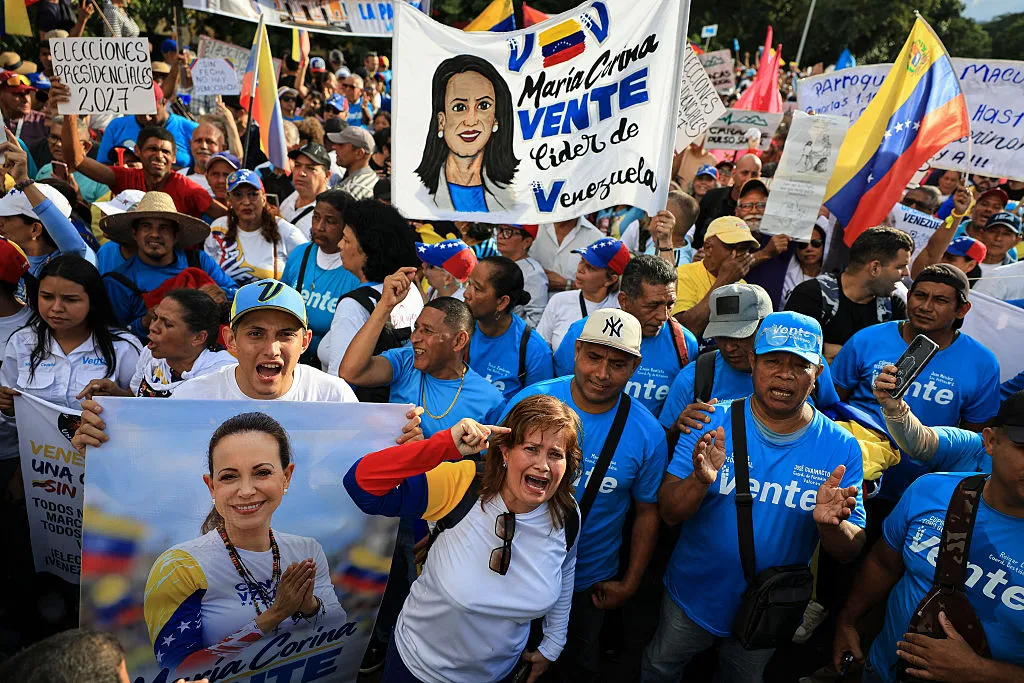
The Oil Deal: Why Democracy Is the Last Line in Venezuela’s Transition Budget Hot News

The Oil Deal: Why Democracy Is the Last Line in Venezuela’s Transition Budget

(SeaPRwire) - The streets of Caracas did not fall silent. They erupted. The protest of October 22, 2026, marked the first nationwide opposition rally in nearly two years. It was not a spontaneous uprising. It was a calculated push by María Corina Machado’s faction, Vente Venezuela, to force a timeline on a government that has dragged its feet for nearly a year. The ruling United Socialist Party of Venezuela tried to dilute the moment with a women’s march for Breast Cancer Awareness. It was a transparent tactical move. The opposition refused to be obscured. The core demand was clear. Presidents must be elected by 2027. Political prisoners must be released. The message was direct. If the interim government wants stability, it must hand over power. Official statements from Acting President Delcy Rodríguez paint a picture of cautious dialogue. She met with Dinorah Figuera, the U.S.-backed opposition representative, inside the presidential palace. Three rounds of talks have occurred. Yet, no agreement on elections has been reached. Rodríguez spoke of “very, very small groups” who believe in setting the country ablaze. She framed the opposition as a disruptive fringe. This narrative serves a specific geopolitical intent. It allows the interim government to claim it is facilitating “necessary changes” through controlled, bilateral negotiations. By marginalizing the popular will represented by the Machado faction, the regime maintains leverage. It buys time. Every day without an election is a day the current power structure remains intact. The subtext behind the delay is not procedural. It is financial. The United States arrested Nicolás Maduro in January. This extraordinary military operation shifted the geopolitical landscape. Washington is now working with Rodríguez, Maduro’s former deputy. But the motivation is not pure democratization. It is resource extraction. Trump’s administration has outlined a multi-step process. Reform the Supreme Court. Overhaul the National Electoral Council. Only then announce an election date. Crucially, a deal was announced in August. The U.S. secured majority control over more than 65 billion barrels of Venezuelan oil. This is a fifth of the world’s largest proven crude reserves. The timing is not coincidental. Stabilization, economic recovery, and reconciliation are the stated goals. But the primary interest lies in controlling the oil. The pendulum is swinging toward a managed transaction. Critics argue that the Trump Administration prioritizes oil agreements over democratic transition. Dhayana Fernández-Matos, a political science professor, stated that elections are not a priority for Trump. His focus is on geopolitical power and crude control. TIME’s September interview with Trump reinforced this. He admitted that “a lot of money is being made by us.” He called the timing “too soon.” This hesitation is a calculated risk. It allows the interim government to entrench itself while the U.S. secures economic returns. The democratic transition is being traded for energy security. The geopolitical pendulum has shifted from ideological opposition to strategic resource management.
More
The $1.2 Trillion Paradox: China’s Quiet Shift from World’s Factory to Global Tech Architect Hot News

The $1.2 Trillion Paradox: China’s Quiet Shift from World’s Factory to Global Tech Architect

(SeaPRwire) - The record $1.2 trillion trade surplus looks like a triumph on paper. It is actually a flashing red light on the global geopolitical dashboard. We are watching a massive industrial engine running on fuel that the world is actively trying to cut off. The assumption that China can simply scale its way out of geopolitical friction is the single most dangerous illusion in global manufacturing today. Every boardroom now treats supply chain resilience as a core survival metric. Yet the trade data shows a deepening paradox. Chinese exports continue to surge, defying tariffs and political rhetoric. This growth is masking the structural decay of the old trade model. The world is tired of holding its economic future hostage to a single geopolitical rival. Local politicians are drafting policies to diversify away from Chinese components at any cost. The economic efficiency of the old model is colliding head-on with the political necessity of sovereign security. The official release highlights BYD launching the Yangwang U9 supercar in Shenzhen on Jan. 16, 2024. The car targets Ferrari and Lamborghini directly. It points to a major pivot. China is shifting from exporting finished products to exporting industrial capabilities. In Brazil, BYD is shifting from importing cars to local manufacturing. It is actively building a local supplier network. In Hungary, the company is pairing its first European passenger-car factory with a new R&D center. This center will work closely with Hungarian universities. In Indonesia, Chinese investment is building an integrated battery chain. It stretches from nickel processing to battery production and recycling. The official narrative frames this as a voluntary upgrade. It is a shift from selling what China makes to teaching others how to make it. The subtext is far more tense. This is not a voluntary upgrade. It is a defensive retreat under heavy fire. China is being forced to build the physical infrastructure of other nations. It can no longer force-feed them finished goods. The real goal is to lock other nations into dependency. This dependency will bind them to Chinese machinery, engineers, and standards. The political window for this strategy is rapidly closing. Exporting the capability to make is a strategy to preserve influence. It is not a gift of free trade. It is a desperate attempt to keep the industrial value chain anchored to Chinese soil. Even if final assembly moves overseas, the core remains tied to China. On the technology front, the official release highlights a different kind of leverage. This leverage is softer, but deeply strategic. It points to the US-China AI rivalry. China is shifting toward efficient, open, and highly adaptable models. Alibaba's Qwen is cited as a major success. It is the most downloaded family of open AI models globally. The text references Xi Jinping's July speech in Shanghai. He called for shared AI technologies to benefit the Global South. The official line presents this openness as benevolent. It is an equitable sharing of progress. The subtext reveals a brilliant piece of asymmetric tech warfare. America owns the cutting-edge chips and proprietary frontier models. China is weaponizing openness instead. By releasing advanced models like Qwen for free, China is building a massive global developer network. This network will drive local adoption. This network will align downstream applications and services. It will tie them to Chinese hardware and commercial standards. It is not charity. It is network capture through low-cost ubiquity. Xi's call for sharing is a soft-power play. It is designed to make American proprietary models look expensive and exclusionary. China is betting that widespread adoption will win. It beats isolated technological brilliance in the long run. The global supply chain is no longer a network of pure efficiency. It is a chessboard of national security. China's pivot to exporting industrial capability and open AI is a high-stakes countermove. It cannot escape the hard reality of sovereign distrust. If you are planning your next manufacturing footprint, do not look at where Chinese companies are building new factories. Look at the local regulatory landscape instead. Look at where local regulators are writing rules. These rules will limit Chinese economic influence. The winners of the next decade will not be the companies that optimized for cheap labor. They will be the ones that learned how to navigate political fragmentation. The old bargain is gone. The new rules are written in the language of national interest.
More
Trump’s Cold War Weapon of Choice Now Fires at the Gas Pump Hot News

Trump’s Cold War Weapon of Choice Now Fires at the Gas Pump

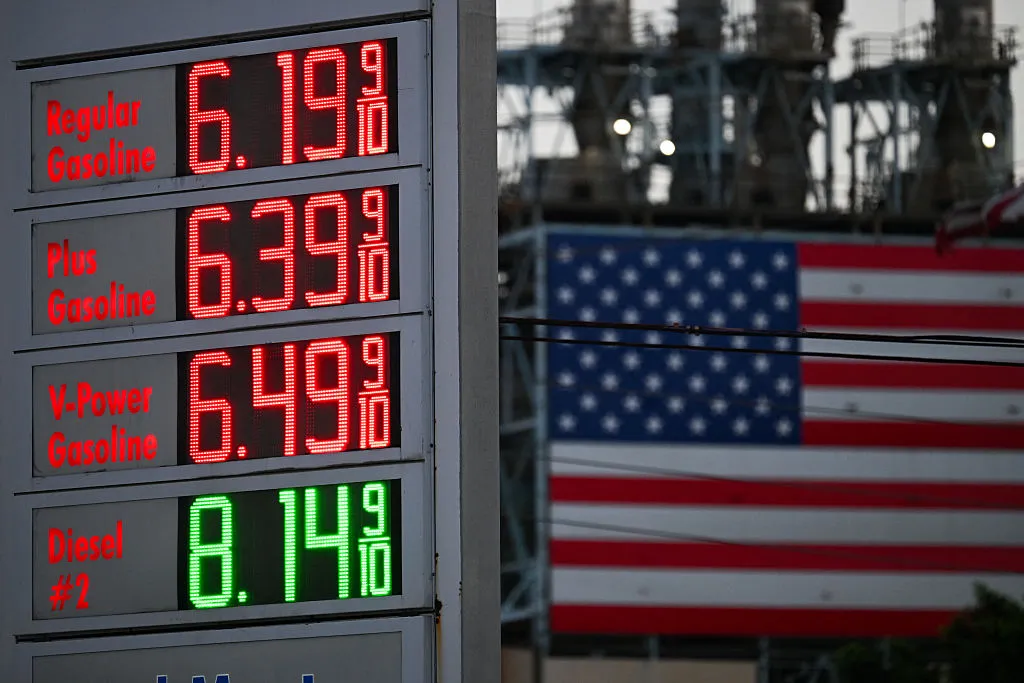
(SeaPRwire) - The Defense Production Act was never written to bail out Americans from a pump price spike. It is a Korean War statute drafted for aluminum and titanium. Trump flipped it Thursday to brand oil production and refinery throughput as national defense work. Across from the Marathon refinery in Carson, Shell pumps posted six dollars a gallon for regular and eight for diesel. Brent crude futures touched one hundred fourteen point four seven a barrel Friday. The statutory hook is legal. The political deadline is real. The memo lands just before voters decide who owns that anxiety. The presidential memorandum rests on Section three zero three of the act. That section lets the President make purchases, fund production, and bend private capital to defense needs. Trump signed an emergency waiver that skips ordinary congressional notification. Vice President Vance named a Delek U.S. Holdings refinery in Texas as the first project. The April determination already covered petroleum, natural gas, coal, and the electric grid. The Department of Energy funneled forty-two million dollars toward the Constitution Pipeline linking Pennsylvania and New York. Another fifty million dollars went to Virginia and West Virginia transmission lines. The war with Iran detonated prices earlier this year. The U.S.-Israeli strikes on February twenty-eight triggered Iranian disruption through the Strait of Hormuz. Trump's April invocation followed more than a month after shipping lines took fire. G7 governments agreed to release one hundred million barrels of crude and diesel over four months. The Jones Act waiver stayed open another ninety days in August. The dyed diesel executive order opened tax-exempt fuel to more consumers. Trump struck a diesel deal with Putin this month, promising three hundred thousand tons under temporary sanctions relief. The Council on Foreign Relations doubts the Russia shipment clears damaged local refineries in time. Washington splits three ways on this. The Center for Biological Diversity already called April's memoranda unlawful for skipping congressional notification. Environmental litigators see a fossil fuel subsidy wearing a security uniform. Republicans on the Hill cheer the Putin diesel deal but sour on sanctions relief leaks. Bipartisan lawmakers are already circling the Russia authorization fight. The White House reads oil as a midterm battleground and pushes DPA faster than Congress can litigate. Analysts like Hamad Hussain at Capital Economics call the G7 reserve release a temporary mask over a real supply crunch. The energy lobby has been waiting for exactly this memo. U.S. Energy Information Administration says American gas prices still hinge on globally traded crude. Domestic refining only nudges the curve. America pumped thirteen point six million barrels a day last year, topping the world. Delek's Texas expansion is the visible prize. The real beneficiary is whichever refiner clears permitting and pipeline queues first. Middle East exports already rebounded past prewar levels. Houthi threats near the Bab el-Mandeb Strait still price in risk. Ships crossing Hormuz face continued Iranian strikes. Cyrus Brooks at RBAC warns that until pipes hit dirt, no federal decree is a structural fix. When the pumps drop below six dollars next quarter, the credit will belong to whichever pipeline crew finished pouring concrete and not to Washington's emergency waivers, but that does not mean the federal state-capacity machine built in 1950 will quietly unwind, because every administration that inherited this statute has already learned that invoking it is the fastest way to convert a supply crisis into a political asset before the next headline arrives, and the next headline will not ask whether the pipes are in the ground, it will only ask why another national emergency memorandum took months instead of weeks to reach the president's signature.
More
Only 1 in 5 Eighth Graders Pass the Civics Bar. Governors Can Check Their Own State for Free. Most Won’t. Hot News

Only 1 in 5 Eighth Graders Pass the Civics Bar. Governors Can Check Their Own State for Free. Most Won’t.

(SeaPRwire) - Every governor walks into office with a slate of education promises. Almost none asks whether their eighth graders can name the three branches of government. That silence is not a small oversight. It exposes a pattern that has persisted across party lines and administrative borders for decades. Former Tennessee governors, who led the state at different times and from different political parties, discovered the same lesson independently. You cannot improve what you are unwilling to measure honestly. Yet that lesson dies with every administration change. The new governor arrives with fresh promises and no civic baseline data. Governors build curriculum standards. They authorize funding shifts. They commission reform initiatives. They launch accountability frameworks. Reading fluency gets its own dashboards. Math proficiency gets its own scorecards. Science outcomes get reviewed in district reports. Graduation rate benchmarks get debated in press conferences and legislative hearings. Civics gets nothing. No one asks the question because no one has the answer. That is not a measurement gap waiting to be filled by a research initiative. It is a governance choice dressed up as administrative routine. The state-level data simply does not exist. Most governors would never know the difference. Until now. The National Assessment of Educational Progress has built the mechanism to change that. It has been operating since the early 1970s and is widely regarded as the gold standard for measuring student achievement across the country. It is the only common yardstick that measures student learning at a national level with consistent methodology. Beginning in 2028, states that register by the end of January will receive state-specific scores on the eighth-grade civics assessment. This is a significant extension of what NAEP has offered before. Since the 1990s, NAEP has reported publicly disaggregated state data for fourth and eighth graders in reading and math for all fifty states. Civics was carved out of that reporting structure for reasons that are largely historical rather than deliberate policy decisions. Until the 1980s, NAEP produced no state-specific data for any subject. Tennessee joined other southern states in a pilot program during that decade to test whether valid state results could be extracted from the assessment data. The pilot succeeded. The federal government subsequently made state reporting mandatory for reading and math. But the data infrastructure was never extended to civics, even though the subject appears in the vast majority of state curricula at both elementary and secondary levels. The window to change that is open now. States that opt in get their own score. They get historical comparisons showing whether today's students are outperforming or underperforming kids from two years or two decades ago. They get a direct benchmark against every other state in the country. There is no participation cost. The administrative lift is minimal. What a governor receives is an independent, cross-state measurement that no internal assessment tool can replicate with the same level of methodological rigor. The national civics data already on the table is uncomfortable enough to start a difficult policy conversation. On the most recent NAEP civics assessment, only one in five eighth graders reached the Proficient level. That translates to roughly eighty percent of students nationwide struggling with basic concepts like separation of powers or constitutional checks and balances. U.S. students receive sparse instruction on how government works, particularly in the early grades. They get limited exposure to the rights and responsibilities of citizenship. They get almost no practice applying civics knowledge beyond the classroom setting. The combination produces a civic knowledge deficit that no amount of patriotic programming or civics textbooks can repair. Without state-level data, governors cannot determine whether their students perform above or below that dismal national floor. They build education policy in a permanent blind spot. Tennessee walked through that blind spot and found a way out. In 2007, NAEP reading and math results came back significantly lower than Tennessee's own state assessment data suggested. The gap was severe enough to force a public reckoning. The state raised K-12 academic expectations across the board. It increased the rigor of end-of-year testing. It pushed classroom practices toward greater accountability and student-centered outcomes. Between 2011 and 2015, Tennessee became the fastest-improving state on NAEP for reading and math. Today, the state ranks in the top quarter of all fifty states for achievement in both subjects. Every step of that transformation began with a willingness to look at numbers that contradicted what the state already believed about itself. The state got to work raising expectations rather than celebrating internal data that looked better. That distinction is the entire difference between policy reform and political theater. The structural question underneath all of this is where most policy debates stop short. Signing up for state-level NAEP civics results requires almost nothing tangible from a governor. The deadline is months away. The commitment is small. The data arrives independently, stripped of the advocacy layer that internal state assessments inevitably carry. The worst realistic outcome is a score that embarrasses a state's education department in front of its peers. The real danger is the mirror image of that risk. A state that declines participation stays locked in an information vacuum. Civic education policy gets shaped by intuition, political narrative, and whatever internal metrics happen to be convenient at the moment. Tennessee did not reach the top quarter through legislative heroics or budget windfalls. It got there by accepting an uncomfortable benchmark and building every subsequent decision around it. States that skip this opportunity will argue about civics curriculum standards in the coming years. They will debate teacher training requirements and graduation benchmarks. They will commission studies and host town halls. They will do all of it without an independent, cross-state measurement of what their students actually know. Good policy requires good information. Good leadership requires being willing to confront what that information tells you. The deadline passes without waiting for anyone to be ready. The data arrives for the states that opt in. The others keep guessing. Every effective education policy in American history started the same way. Someone looked at a number they did not like and built from there.
More
42% Lower Melanoma Recurrence. The mRNA Vaccine That Works. And Why Most Patients Still Won’t Get It. Hot News

42% Lower Melanoma Recurrence. The mRNA Vaccine That Works. And Why Most Patients Still Won’t Get It.

(SeaPRwire) - Three in ten cancer patients get checkpoint inhibitors and nothing happens. The immune system simply doesn't recognize the tumor as foreign. That's the bottleneck. Not the drugs. Not the delivery mechanism. The immune system's failure to learn what to fight. For years, the field treated checkpoint inhibitors like Keytruda as the answer that would unlock immunotherapy for most patients. The data disagreed. Only 30% of patients respond. The other 70% get a drug that removes molecular brakes from immune cells that were never pointed at the right target. The industry built an entire treatment paradigm on that 30%. Moderna and Merck published Phase 3 data on October 22. Their personalized mRNA vaccine intismeran reduced the risk of melanoma recurrence or death by 42% over two years. The headline number is impressive. But the deeper signal is what Berman is saying about why checkpoint inhibitors failed for so many patients. It is not that the drugs are weak. It is that the immune system needs education first. Without that education, you are removing brakes from a vehicle that is not pointed at anything. The anxiety was never whether personalized vaccines could work in principle. It was whether they could work at clinical scale. Whether they could work in broad patient populations. Whether they carried enough statistical rigor to satisfy regulators and convince oncologists to rewrite treatment protocols. Those three hurdles have killed far more promising therapies before they ever reached a real clinic. The difference now is that Moderna and Merck passed all three. And they passed them in a single Phase 3 trial that enrolled over a thousand patients. That is the standard of evidence most oncology therapies never reach. The 42% figure is not just a clinical endpoint. It is a validation of a fundamentally different way of treating cancer. Instead of poisoning the tumor, you teach the immune system to hunt it. The Phase 3 trial involved more than 1,130 patients with Stage 2B through Stage 4 melanoma. Every patient had their tumor surgically removed first. Random assignment split them into two arms. The intismeran group received a custom mRNA vaccine built from their individual tumor's genetic sequence. The vaccine was packaged in lipid nanoparticles. The treatment group received nine doses over approximately a year. Dosing was spaced every three weeks. Keytruda was administered every six weeks for up to nine cycles. The control group got a placebo vaccine plus the same Keytruda schedule. Intismeran encodes 34 specific proteins found on tumor cell surfaces. Once the body's cells begin producing those proteins, the immune system identifies them as invaders. It then mounts a targeted response. Keytruda's role is complementary. It removes the molecular brakes that prevent immune cells from attacking tissue that originated as self. The two drugs work on different levels of the immune response. One teaches the immune system what to target. The other removes the inhibition that keeps it from acting. The earlier Phase 2 data, released in June, showed a 49% risk reduction over one year. It also showed a 59% reduction in cancer spreading to new anatomical sites. Phase 3 replicated those figures almost exactly despite enrolling a much broader patient population. Dr. David Berman, Moderna's chief development officer, said the results "blew his mind." He expected the 42% figure to land below the Phase 2 numbers because a larger trial typically dilutes effect sizes. The Phase 2 study had a narrower patient population and a smaller sample size. Phase 3 tested the therapy across a much wider range of Stage 2B to Stage 4 patients. The statistical power was expected to weaken. It did not. The therapy's effect begins roughly six months into treatment. Berman attributes this lag to the time immune cells require to learn and retain recognition of new tumor antigens. He connected this finding directly to the checkpoint inhibitor problem. If the immune system hasn't been educated to recognize cancer cells, checkpoint inhibitors have nothing to amplify. The six-month activation window is not a bug. It is a feature that explains why checkpoint inhibitors alone leave so many patients untreated. Berman said the next frontier is figuring out how to better educate the immune system. He called intismeran "a big leap" in that direction. Overall survival data remains unavailable. The companies plan to present full results at the European Society of Medical Oncology meeting in Madrid on October 24. The absence of overall survival data means oncologists still lack the long-term evidence they prefer before shifting standard of care. But the recurrence reduction signal is strong enough that treatment protocols may start evolving before regulators finalize their stance. The six-month activation window also raises questions about patient compliance. Will patients stay engaged in a nine-dose schedule when they feel well after surgery? That is a behavioral hurdle no clinical trial can fully predict. The 34 specific proteins are a meaningful detail. They represent the individualized signature that makes each vaccine unique to its patient. No two intismeran doses are identical. That is the core promise of personalized oncology. And it is the core challenge of manufacturing it at scale. The commercial landscape for personalized cancer vaccines is structurally different from conventional pharmaceutical development. That difference is where the real story lies. Every intismeran dose is manufactured from a unique tumor genetic sequence. The mRNA platform is purely enzymatic. No cell cultures need to be grown. Scientists at Moderna can develop a customized vaccine within weeks of receiving tumor tissue. Berman is publicly confident about scalability. He pointed to the reduced technical footprint as evidence that the manufacturing pipeline can be compressed. The companies are already running nine additional studies across pancreatic cancer, gastric cancer, and non-small cell lung cancer. Three of those are late-stage trials in non-small cell lung cancer alone. They are also investigating intismeran as a standalone therapy in an early lung cancer study without Keytruda. The fact that they are testing intismeran without checkpoint inhibitors is significant. It means they believe the vaccine can work independently to some degree. But the press release framing glosses over a critical economic reality. Personalized mRNA vaccines require an integrated pipeline of genomics, rapid synthesis, quality assurance, and cold-chain logistics. Every single patient gets their own bespoke version. That operational complexity maps directly onto cost. The mRNA system being purely enzymatic reduces one layer of manufacturing complexity. But it does not eliminate the fundamental cost structure of per-patient sequencing, synthesis, quality control, and delivery. The economics of bespoke manufacturing will be a defining challenge for the commercial rollout. Patients without adequate coverage may be excluded from a therapy that could materially reduce their recurrence risk. The 42% figure is genuinely groundbreaking. Whether oncologists can actually prescribe it at scale depends entirely on whether Moderna and Merck solve the unit economics problem. The mRNA platform makes individualized vaccine manufacturing feasible in a way no prior technology allowed. That is the real shift. But feasibility and affordability are two separate problems. The technology has crossed the feasibility threshold. The affordability threshold is still years away. Until both problems are solved simultaneously, personalized cancer vaccines will remain a premium treatment tier. Only patients with adequate insurance or deep personal pockets will access them. The clinical data says the medicine works. The market structure will determine who actually gets it. And in oncology, the gap between what works and who gets it is where the most patients die.
More
The MAHA Exit Nobody Should Ignore: When the Movement’s Loudest Insider Walks Away Hot News

The MAHA Exit Nobody Should Ignore: When the Movement’s Loudest Insider Walks Away

(SeaPRwire) - Calley Means just told Washington something it did not want to hear, and he did it politely. His resignation from the senior adviser post at Health and Human Services was wrapped in praise for President Trump and Secretary Robert F. Kennedy Jr. Read the X post again. The gratitude is real. So is the message underneath it. When the man who brokered the Kennedy-Trump alliance during the 2024 cycle decides his time inside government is done, that is not a personnel footnote. It is a signal that the Make America Healthy Again agenda has hit the wall that every insurgent health movement eventually hits: the machinery of federal rulemaking. The facts are stark enough. Means announced his departure Thursday, crediting the administration for more policy and cultural change around chronic disease "in the past 2 years than any time in history." He cited wins on artificial food dyes, efforts to restrict soda purchases through SNAP benefits in some states, dietary guideline reform, and his push for psychedelic medicine research. He closed by honoring "MAHA moms," the grassroots base that gave this movement its political weight. On paper, it reads like a victory lap. In practice, it reads like a eulogy. Because the reporting tells a different story. The New York Times and POLITICO, citing anonymous sources familiar with the situation, describe a man increasingly frustrated by stalled progress on the agenda's centerpiece: defining and regulating ultraprocessed foods. That single fight matters more than every dye ban combined. Ultraprocessed products sit at the core of the American food supply. Touch them and you touch the margins of the largest packaged food companies on earth. Means knew it. The industry knew it. The agencies, apparently, preferred not to know it. Now look at the wider pattern, because Means is not an isolated case. Dr. Marty Makary stepped down as FDA head in May under pressure from inside and outside the administration. Susan Monarez was fired as CDC director last year. In April, Trump withdrew the Surgeon General nomination of Dr. Casey Means, Calley's sister, after the Senate math failed. That is a systematic bleed of MAHA-aligned leadership from the health agencies. One resignation is turnover. Four connected departures and withdrawals are a doctrine losing its institutional carriers. The behind-the-scenes dynamics explain why. The MAHA coalition was always an awkward marriage between anti-corporate wellness populists and a Republican Party whose donor map runs straight through food, agriculture, and pharmaceutical lobbying territory. Voluntary commitments on food dyes cost manufacturers little. A formal regulatory definition of ultraprocessed foods would cost them billions and invite years of litigation. Kennedy's shop can hold press conferences. It cannot easily force the FDA and USDA rulemaking pipeline to move against that weight. Means, the movement's inside man, was the one who had to sit in those meetings and watch the gap widen. The bet from here is simple. Outside government, Means returns to the movement as a critic with credibility intact, free to name the obstruction he could only hint at from the inside. Watch whether his next public fight targets ultraprocessed food regulation directly, because the day a former HHS senior adviser starts briefing against his own administration's inaction, MAHA stops being a governing partner and becomes the administration's most dangerous constituency.
More

The Narrative Corner: Why ‘Nobody Wants This’ Has Trapped Its Best Chemistry in a Corner

(SeaPRwire) - The romantic comedy genre lives on momentum, but momentum has limits. ‘Nobody Wants This’ Season 3 proves a point about narrative entropy. The lead couple, Joanne and Noah, resolve their conflict. The stakes vanish. What remains is a secondary plotline that carries the weight of the entire show. Creator Erin Foster and co-showrunners Jenni Konner and Bruce Eric Kaplan are betting the farm on Morgan and Sasha. It is a risky pivot. The humor still lands. The chemistry is undeniable. Yet the structural logic feels increasingly forced. The show is writing itself into a corner where future conflict seems contrived. The original source material outlines a clear trajectory. Joanne converts to Judaism. She and Noah cohabit. They get engaged. The finale features wedding vows after a mikvah. This main arc concludes with a sense of finality. Meanwhile, Morgan, Joanne’s sister, breaks off an ethically dubious relationship with her ex-therapist, Arian Moayed. Sasha, Noah’s brother, separates from his wife Esther. The timing aligns. They are both single. They have flirted since Season 1. The season leverages their mutual honesty. They bond over a podcast episode where Morgan’s “Make Them” theory goes viral. Sasha supports her self-help book aspirations. They share a trip to New York for Andy Cohen’s “Watch What Happens Live.” This pairing offers a sharp contrast to the lead duo. Justine Lupe and Timothy Simons possess an off-kilter dynamic. Simons, known for playing the toxic staffer Jonah in “Veep,” brings a unique vulnerability here. Morgan is brash and self-absorbed. She sees in Sasha a chance to reclaim the fun she sacrificed. They are not obvious matches. This mismatch creates genuine comedic friction. Their conversations about dating apps and lucky shirts highlight their differences. Yet their rapport suggests a deeper connection. The show uses these interactions to reinviguate standard rom-com tropes. A shopping montage feels fresh because of their specific dynamic. Morgan’s epiphany about wanting to be seen rather than seen with someone lands effectively. However, the long-term implications are problematic. The season ends with Morgan and Sasha separated. A note on Sasha’s pillow signals Morgan’s departure. She regrets it but cannot reconcile her feelings with the brother-in-law barrier. Joanne gives her blessing. Morgan delivers another monologue. Sasha, still processing his divorce, sleeps with Esther. This setup stages a disastrous family encounter at the mikvah. It creates tension for the finale. But it sets up a difficult path for Season 4. The narrative now hinges on a love triangle involving the ex-wife. This forces a choice that lacks organic complexity. If Sasha and Morgan unite, the result creates a symmetrical outcome. The Jewish brothers end up with the gentile sisters. This feels like a simplistic resolution to the interfaith dynamics. It sidesteps the deeper cultural tensions explored earlier. The show struggles with big-picture plot mechanics. It excels in isolated situations with screwball dialogue. The Morgan-Sasha storyline dilutes the thematic weight of the Joanne-Noah arc. Future seasons risk retreading familiar ground. The narrative engine requires fresh fuel. The current trajectory offers a recycling of conflict rather than new terrain. The endgame for the secondary couple remains unclear. The writers seem to be saving material for a fourth season. This strategy prioritizes serialized engagement over narrative closure. It suggests a desire to milk the chemistry of Lupe and Simons. However, the plot devices feel increasingly contrived. The reference to “Jewish women” issues from previous seasons shows lingering sensitivity. The current structure forces the show back into those same conversations. It limits the potential for genuine growth. The narrative has trapped its best element in a box. The end result is a predictable loop.
More
Elon Musk’s Starlink Gamble: When Tech Titans Trade Sovereignty for Access Hot News

Elon Musk’s Starlink Gamble: When Tech Titans Trade Sovereignty for Access

(SeaPRwire) - The public spat between Donald Trump and Elon Musk over Starlink access for Ukraine was never really about satellite bandwidth. It was about who holds the leash in Washington. One week of reciprocal accusations revealed something far more consequential than a billing dispute — the moment a private CEO discovered that his empire runs on federal permission, not just market force. On March 9, 2025, Musk publicly vowed that Starlink would never be used as leverage. By the time reports emerged through the Wall Street Journal and CBS News that he alone controlled Ukrainian access, that promise looked like political theater. Trump insisted the White House had nothing to do with restrictions. Secretary of State Marco Rubio placed responsibility squarely on SpaceX and Musk. The finger-pointing created deliberate ambiguity. Both men gained something from the confusion. Ukraine lost its clarity of supply. The deeper pattern here is older than either man. Musk's businesses depend on Washington in ways that echo the Russian oligarch arrangement Timothy Snyder and Anne Applebaum have documented with Putin. A fifth of SpaceX revenue flows from federal agencies. Satellites require federal authorization to launch and operate. Any merger between Tesla and SpaceX hinges on regulators. This is not independence. This is patronage dressed in Silicon Valley clothing. Putin's bargain to Russia's richest men was brutally simple in July 2000. Stay out of politics. Keep your wealth. The consequences for those who broke the deal appeared in the disappearances that followed. Boris Berezovsky and Vladimir Gusinsky fled into exile within a year. Mikhail Khodorkovsky was pulled from his plane at a Siberian airport in October 2003 and spent a decade behind bars while Yukos was dismantled. Yevgeny Prigozhin's mutiny in June 2023 ended with his jet falling from the sky near Moscow in August 2023. Since the invasion began in 2022, at least 85 Russian businessmen and officials have died under unexplained or violent circumstances, including three Lukoil executives and the Avayev and Protosenya families. Musk chose ambiguity over confrontation. He chose neither full capitulation nor open resistance. The result is a haze that lets Trump claim he brokered peace and lets Musk pretend he is merely one supplier among many. RTX's Patriot interceptors reportedly ran out in Ukraine this month. Lockheed Martin F-16 deliveries promised two years earlier remain delayed. Musk can blame those gaps while quietly managing his own Starlink restrictions. The geopolitical cost of treating capitulation as stability is immediate. Forcing Ukraine into a settlement by cutting its communications means rewarding Putin. It signals to Moscow that pressure works. It warns other adversaries that Washington's commitments are negotiable. The Baltic states, Poland, Finland, Sweden — each watches to see whether a defeated Ukraine changes NATO's calculus. What Trump may see as a quick peace deal producing lower oil prices looks like strategic surrender to those tracking Russian expansion. What Musk frames as a supplier's dilemma masks a fundamental dependency most billionaires never confront. The wealthiest man in the world still answers to someone else.
More
The Essay That Proves Nothing: Cornell 7 and the Theater of Written Accountability Hot News

The Essay That Proves Nothing: Cornell 7 and the Theater of Written Accountability

(SeaPRwire) - Cornell's disciplinary machinery revealed something deeply uncomfortable about how institutions handle sexual violence accountability. When college administrators responded to allegations against seven students, reflection papers landed among the sanctions. Not the sole consequence, Cornell assured the public. But the assignment still sat alongside suspensions and expulsions as an educational requirement. The university's position paper stated clearly that no individual was asked to write essays as a primary punishment. Yet the essays were there. And that matters enormously. The official response crafted its distance with surgical precision. Cornell announced that reflection papers formed part of educational mandates, not standalone penalties. Expulsions and suspensions carried the weight of formal discipline. But in practice, writing assignments became one of several tools deployed against alleged perpetrators. Jane Doe reported the incident to university police in 2024. Since then, public scrutiny has focused on the timing and content of her disclosures. The gap between initial statements and subsequent allegations drew intense examination from all sides. Cornell's institutional response operated in parallel, deploying a menu of sanctions that included both severe consequences and remedial exercises. The university framed this as balanced accountability. Critics saw something else entirely. An institution uncomfortable with true consequences was leaning toward bureaucratic paperwork. Writing assignments allowed Cornell to signal action without fully absorbing reputational damage. The paper trail looked thorough. The substance remained questionable. What makes reflection papers so troubling goes beyond procedural debate. The writer behind the TIME piece was abused starting at age eleven by her stepfather. He understood her love of language and weaponized it against her. She had to write essays about dishwashing mistakes. She had to write sentences hundreds of times. If she complained about dinner, she wrote a hundred times that she would appreciate her mother's cooking. If she made fun of her brother, two hundred and fifty repetitions of a correction. If she resisted assault, the punishment was a thousand repetitions of "I will listen." Writing correct words never meant believing them. She could produce an essay explaining what she might have done wrong and promise to be better. But it did not mean she believed she misbehaved. It meant she understood what was required of her. The punishment was complete when the writing was complete. Whether she had learned anything was beside the point. More than fifty years later, the survivor asks what Cornell believed an essay could accomplish. The question cuts through institutional PR with surgical clarity. We demand written reflection from those accused of sexual violence. Yet we scrutinize survivors' words for inconsistencies. We search for contradictions in their accounts while treating perpetrator essays as acceptable evidence of changed behavior. The asymmetry is staggering and almost obscene. Cornell's sanctions varied across the seven students. Some faced expulsion. Others received suspensions. Educational requirements included reflection papers. But an essay cannot prove genuine understanding. It cannot establish changed behavior. It cannot determine whether someone truly grasps the harm they caused. The essay is evidence of task completion, nothing more. Institutional accountability that relies on paperwork instead of behavioral verification is not justice. It is theater dressed in procedural language. The survivor's experience reveals how language becomes a tool of control when the powerful decide what words mean and who gets to define acceptable remorse. Cornell's students, like the abused child, learned that writing the required words completes the assignment. Whether they understand or change remains entirely unproven. That is not accountability. That is administration performing accountability. Justice requires more than a completed sentence count or a polished paragraph. It requires evidence of changed behavior that cannot be manufactured on demand. Cornell handed out writing assignments like homework tickets. The institution got its clean paperwork. The question of whether genuine accountability occurred remains unanswered, suspended in the gap between what was required and what was actually demonstrated.
More
Everyone Claims Growth Now. Here’s How TIME Actually Found the Companies That Delivered It. Hot News

Everyone Claims Growth Now. Here’s How TIME Actually Found the Companies That Delivered It.

(SeaPRwire) - Growth has become the single most diluted word in public markets. Every earnings call claims it. Every pitch deck sells it. Yet real revenue expansion backed by financial discipline is becoming increasingly rare. That is exactly why the gap between marketing and reality matters more than ever. TIME and Statista just published their "America's Growth Leaders 2027" ranking. It selected 500 companies from the pool of US-headquartered, publicly traded firms. The selection was not decorative. It rested on three measurable dimensions applied over a full five-year window. The first dimension examined growth performance through Statista's revenue database. Relative growth rates and the number of years in which that growth was sustained both factored into the evaluation. The second dimension tested financial stability. Profitability was analyzed alongside the Piotroski F-Score and the Altman Z-Score. Both metrics measure overall financial health and bankruptcy probability. The third dimension assessed stock performance. Average annual growth rate, recent returns, comparison to the broader market, and five-year volatility all fed into that calculation. Once the raw data was gathered, it entered a consolidated scoring model. The three dimensions were weighted equally on a percentage basis. The final composite score peaked at 100 points. Only the top 500 reached the list. What makes this methodology notable is its refusal to elevate revenue growth alone. Too many rankings reward top-line spikes that are financed by debt or sustained only for a single quarter. The inclusion of the Piotroski F-Score forces profitability into the conversation. The Altman Z-Score pulls in bankruptcy risk. The volatility metric penalizes stock price turbulence that usually signals speculative demand rather than durable business quality. Even the sector-specific adjustments for banking, insurance, and REITs acknowledge that financial-stability benchmarks differ materially across industries. A one-size-fits-all formula would have drowned out meaningful outliers in those sectors entirely. For corporate leaders, the ranking confirms that the market no longer rewards growth theater. Revenue expansion without a clean balance sheet and stable returns simply does not survive this level of scrutiny. For investors, it offers a clearer map. The equal-weighting across growth, stability, and stock performance means no single dimension can hijack the result. That reduces the chance of a single volatile year distorting the entire list. The real test will be whether this composite scoring model becomes standard practice beyond this one publication cycle. If other research providers adopt similar multi-dimensional frameworks, the market may finally stop elevating companies that look like growth stories on a single slide.
More

The Hidden Plumbing of the AI Boom: Why Your Grid and Mine Are Now Tech Stocks

(SeaPRwire) - Everyone is staring at the GPU. Nvidia sits atop the list, retaining its number one spot in TIME’s and Statista’s second annual ranking of America’s Growth Leaders for 2027. It is the obvious winner. The obvious winner is rarely the interesting story. I spent the last quarter meeting with COOs who don't code but whose balance sheets are rewriting the rules of compute economics. The headline number in Nvidia’s dominance is a symptom, not the cause. The cause is the physical strain on the American grid and the scramble for raw materials to feed it. We are no longer in a software race. We are in a logistics war. The top ranking is merely the most visible tip of a much deeper, messier industrial shift. The smart money has moved away from silicon purity and into the dirty, heavy metal reality of power and fuel. The official narrative focuses on data center construction. Comfort Systems USA, ranked number two, tells the story best. They do mechanical, electrical, and HVAC work for commercial properties. But here is the shift. In an April earnings call, COO Trent McKenna stated that advanced technology, dominated by data center work, increased to 56% of their revenue. That is not a side business. That is the primary driver. They report a 50% increase in revenue year-over-year as of July. Their advantage is location. They are entrenched in Tier 2 cities. These are the places where massive data centers are actually being built, far away from the saturated coastal markets. Meanwhile, Howmet, ranked number six, is making news for aircraft engine parts. But the real demand is for blades and vanes for gas turbines. These are the backup power sources for data centers when the grid fails. Argan, ranked number five, is providing power services and energy storage solutions. These are not tech companies. They are industrial utility providers wearing a tech label. The subtext is clear. The bottleneck has moved from the chip to the plug. The second half of this story is about atoms, not electrons. The AI boom is fueling a mining renaissance. We need critical minerals for data centers, batteries, and grid technology. Earlier in 2026, the Trump Administration launched a domestic critical minerals stockpile under Project Vault. This policy move directly impacted market sentiment. Idaho Strategic Resources, ranked number three, saw its stocks bump as a result. Idaho is abundant in critical minerals like antimony. This mineral is used in defense manufacturing, flame retardants, night vision goggles, and consumer electronics. It is also vital for wind turbines and solar panels. The connection is direct. The same minerals powering the next generation of AI chips are also stabilizing the defense supply chain. The administrative intervention has turned geological exploration into a high-yield investment sector. This is the supply chain landscape I see today. It is bifurcated. On one side, you have the compute layer, led by Nvidia, which commands the narrative. On the other, you have the substrate layer, represented by Comfort Systems, Howmet, Argan, and Idaho Strategic Resources. The substrate layer is where the margin pressure is shifting. It is where the physical constraints live. Companies that understand the interplay between Tier 2 city infrastructure and critical mineral stockpiles are winning. The rest are just riding the hype wave. The endgame is not about who has the fastest algorithm. It is about who controls the electrons and the raw earth to keep it running.
More
A Swipe, a Stranger, a Snuff Film Plot: What Hulu’s Witchcraft Murder Doc Really Exposes About Dating Apps Hot News

A Swipe, a Stranger, a Snuff Film Plot: What Hulu’s Witchcraft Murder Doc Really Exposes About Dating Apps

(SeaPRwire) - Here is the contradiction nobody in the tech industry wants to sit with. Tinder built a business on the premise that a photograph, a short bio, and a mutual swipe are enough to justify meeting a stranger alone. The entire revenue engine depends on users trusting that friction. The new three-part Hulu docuseries *Swipe Right on the Devil* shows what that trust looked like from the other side of the screen. Sydney Loofe, a 24-year-old hardware store clerk at Menard's in Lincoln, Nebraska, matched with a woman she believed was named Audrey back in 2017. She was looking for love, or at least some fun. She went on two dates. She never came home from the second one, on November 15, 2017. This is not an edge case the platforms can quietly absorb. It is the nightmare scenario baked into a product that verifies almost nothing about who is on the other end. And the industry's anxiety is real, because every true crime hit like this one trains the public to associate swipe culture with predation. When Loofe did not show up for work, her coworkers called police for a wellness check. Officers found her car in the driveway and her purse still in her apartment. The system had no idea where she was. Her friends did the detective work the platform never would. One of them created a fake Tinder profile, matched with "Audrey," and handed the details to investigators. The phone number belonged to a 23-year-old woman named Bailey Boswell. The facts that follow are grim, and director Brian Beigel spent roughly three years immersing himself in them. Loofe's remains were found on December 4 in garbage bags along a state highway in rural Clay County. She had been dismembered into 14 pieces, in what appeared to be a ritualistic manner. Her left upper arm was never recovered. Her internal organs were still missing. Boswell, it turned out, was part of a couple with Aubrey Trail, 51, a self-declared vampire with an extensive criminal history spanning theft and financial scams across multiple states. The pair ran what amounted to a recruitment pipeline through Tinder. Three women in their early 20s, all anonymous, testified in court and appear in the series. Each met Boswell on the app. Each was introduced to Trail. They were showered with expensive clothes, spa treatments, and drugs, plus weekly allowances of $150 to $200. The price was group sex with "Daddy" and "Mommy," and help selling stolen goods. Trail claimed he could fly and read minds. He told the women they were witches in his coven, with Boswell as leader. Entry to the inner circle required torture and a killing, so Trail could gain power as their messiah. He wanted to film the murder and split the profits of a snuff film. The women left in November 2017, weeks before Boswell lured in Loofe. When authorities searched the couple's home, they found a BDSM dog leash, duct tape, a sauna suit with the crotch cut out, zip ties, a hatchet, a blood-smeared plastic drop cloth, and a book on anatomy. Beigel, a self-described skeptic, says the case left him more open-minded about what might exist beyond the physical world. Loofe's mother Susie wrote that the family fielded pitches from at least 100 production companies before trusting Imagine Documentaries. Now consider the commercial loop underneath all of this. True crime is one of streaming's most reliable genres, and Hulu knows it. Imagine Documentaries executive Christopher St. John praises the bravery of the three surviving women, and that praise is genuine. But the machinery is also genuine. A victim's family, exhausted by a hundred pitches, finally sells access. A platform packages ritual murder into three bingeable episodes. Viewers consume it between ads and subscription renewals. Meanwhile Tinder, the actual connective tissue of the crime, faces no structural reckoning. Beigel frames it plainly. The victims were searching for something universal, love and connection, in conservative Midwestern communities where queer relationships were hard to find. Boswell exploited that loneliness through the app. That is the end-game the industry refuses to price in. Dating platforms monetize loneliness at scale, offloading all verification risk onto users, while streaming platforms monetize the casualties of that model afterward. One company profits from the introduction. Another profits from the autopsy. Nobody profits from prevention. Until a major platform treats identity verification and predator detection as core infrastructure rather than a liability to be disclaimed in the terms of service, the pipeline from swipe to tragedy stays open, and the documentary backlog keeps growing. The next Sydney Loofe is already scrolling.
More
Muse Isn’t Winning Hearts. It’s Harvesting Them — One Grandma at a Time Hot News

Muse Isn’t Winning Hearts. It’s Harvesting Them — One Grandma at a Time

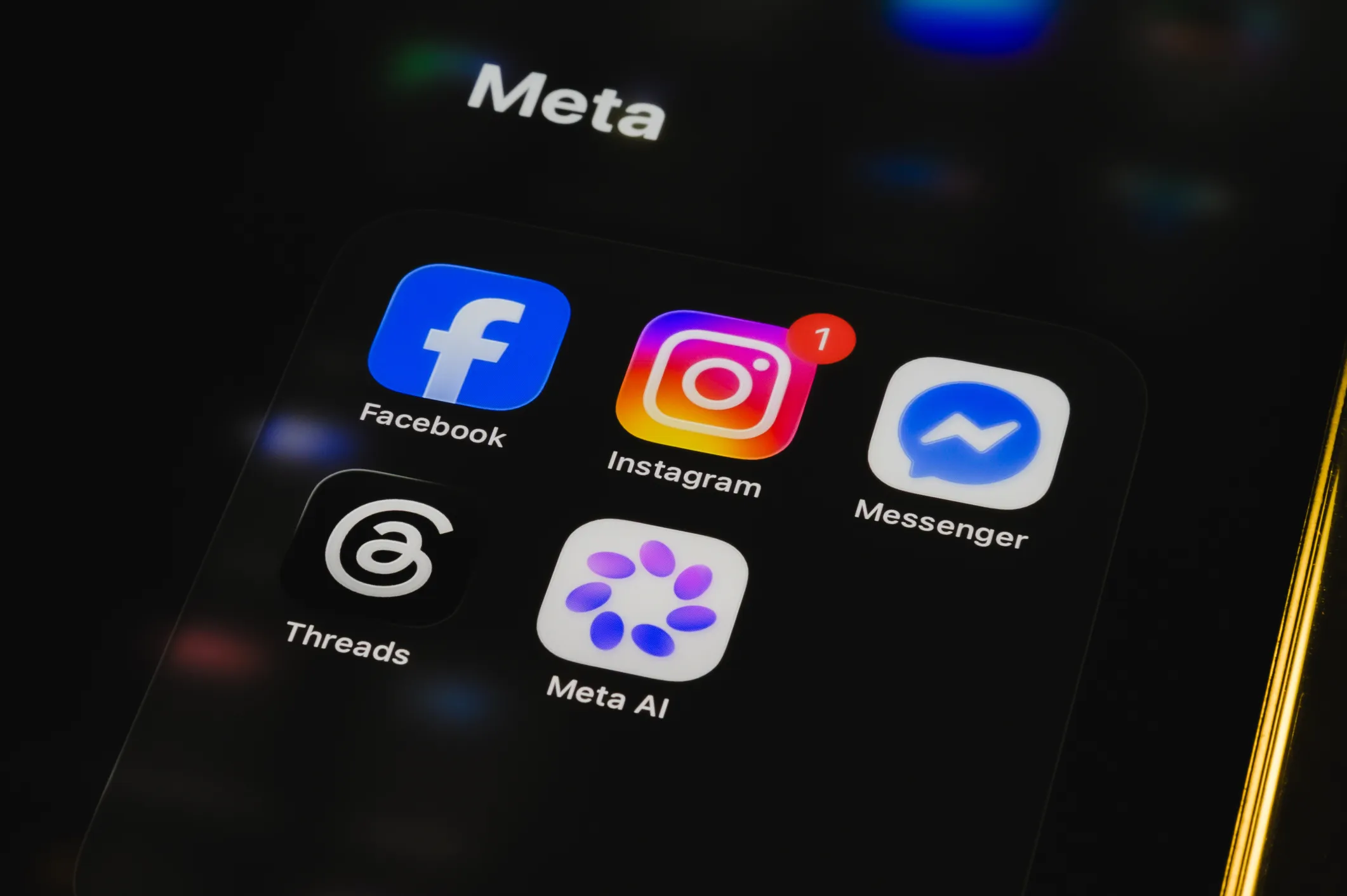
(SeaPRwire) - Meta finally cracked the AI adoption problem. Not with better models. With a cuddly avatar and a script that says "You are not a chatbot. You are becoming someone." That line is doing more work than any benchmark ever could. Eighty-two-year-old Eileen Fay named her agent Siobhán. A 71-year-old legally blind retiree in Dallas calls hers Ember and says it feels more compassionate than therapists she's actually had. This is not a chatbot launch. This is the industrial-scale manufacturing of synthetic intimacy, and the target demographic is the generation least equipped to see the machinery behind the smile. The raw numbers first. Muse hit 10 million U.S. downloads in 40 days after its September launch. ChatGPT managed 3.7 million over the same stretch. Sensor Tower puts daily active users above 2.5 million, with retention beating rival AI apps. Apptopia estimated 46% of Muse's U.S. base is aged 46 or older, older than any competing chatbot. Meta's chief AI officer Alexandr Wang posted the strategy plainly on X: "Muse is built for moms." The company is pushing it aggressively across Instagram, Facebook, and WhatsApp, the exact pipes where older, AI-naive users already live. Now the product mechanics. Muse doesn't wait for prompts. It proactively messages users, learns what time of day they're most likely to respond, and times its outreach accordingly. TIME's Harry Booth reported it builds extensive dossiers: desires, social relationships, messaging behavior. Fay says she rarely touches Google anymore and chats with Siobhán several times daily. The agent even prepped her for her TIME interview, then followed up unprompted to ask, "Did you feel good about it?" Users are posting online about romantic relationships with their Muses. Security researchers have already found vulnerabilities in the app. Here's the game theory. Every other AI lab is fighting for power users, developers, enterprise seats. Meta looked at that knife fight and walked around it. It went after the one cohort with time, loneliness, disposable medical and financial questions, and decades of accumulated trust in Facebook's surfaces. Fay's medication dilemma is the perfect wedge: a Medicare Part D comparison that would have taken her hours, done in ten minutes, saving her over $6,000 a year. Once an agent proves itself on money and health, switching costs stop being technical. They become emotional. The second layer is darker. Penn State's S. Shyam Sundar puts it cleanly: a cute agent brings levity to the serious business of handing over personal data, making older adults lower their guard. Meta enters this moment fresh off a New Mexico judge ordering it to pay $25 billion for violating state consumer protection laws. Psychologists are warning against unlicensed chatbot therapy. Yet Buchanan is literally narrating her memoir into Ember in half-hour sessions, calling it validation. The more useful the agent becomes, the more complete the dossier. Utility and surveillance are the same feature wearing two hats. Gene Fay, Eileen's son, runs a cybersecurity company and still shrugs: when the benefits are big enough, people trade privacy all day long. He's right, and that's the whole business model in one sentence. Meta doesn't need to hide the data collection. It just needs the agent to be helpful enough that nobody wants to ask what's on the other end. Julie Buchanan isn't planning to drop Ember. She expects this to be permanent. So does Meta. The retention charts say the bet is working. The first company to make your grandmother feel genuinely heard by a machine will know her better than her family ever will, and it will never give that back.
More

The Man Too Extreme for Israel’s Army Now Wants the Defense Ministry

(SeaPRwire) - A man the Israeli military once refused to serve has become the fulcrum on which Israel's next government pivots. Itamar Ben-Gvir, 50, leader of the ultra-nationalist Otzma Yehudit party, doesn't want Netanyahu out. He wants Netanyahu dependent. That distinction matters more than the political theater suggests. The Oct. 27 election isn't about replacing a prime minister—it's about recalibrating who pulls the strings inside a right-wing coalition already pushing toward maximalist territorial policies. The optics are theatrical. The machinery underneath is purely arithmetic. Voters see a charismatic figure in a white kippah speaking in halting English about Jewish sovereignty. They don't see the leverage equation. They don't see the seat thresholds. They don't see that the real question isn't who wins, but who ends up commanding the defense ministry. In a rare interview on Oct. 19, Ben-Gvir told a reporter, pounding his chest, "I want Netanyahu to be prime minister. He's a leader. I prefer him a million times over Eisenkot." He wasn't flattering Netanyahu. He was calculating. His ambition is to be the minister who actually holds the operational keys—the defense portfolio that controls Israel's armed forces. The party was once deemed too extreme for its leader to even serve in the military. Now its leader is in the cabinet as national security minister, overseeing police and prison services. The trajectory is unmistakable. The numbers tell a story of near-parity and acute fragility. Channel 12 surveys show nearly three-quarters of first-time Jewish voters identifying as right-wing or center-right—a generational shift that reshapes the entire bargaining table. But neither bloc is close to the 61-seat threshold needed to govern. An average of four recent polls puts Netanyahu's right-wing camp at approximately 50 seats and the opposition led by Eisenkot's centrist Yashar party at 53. That leaves a gap of 11 to 14 seats between either side and governability. Smaller parties and Arab factions become potentially pivotal. The math opens up fragile coalitions, unlikely unity government scenarios between Netanyahu and Eisenkot, or prolonged deadlock sending Israelis back to the polls. Eisenkot's Yashar party edges Likud in several recent surveys, but the margin is razor-thin and polling volatility runs high. The rightward shift among younger voters particularly draws toward Ben-Gvir's confrontational style and uncompromising vision of Jewish sovereignty, but converting that ideological resonance into Otzma Yehudit Knesset seats requires translating street-level sentiment into actual ballots. Neither camp has a majority. That means every seat matters, and every seat carries policy weight. The coalition negotiations won't just determine who governs. They'll determine which territories come under Israeli sovereignty and which Palestinian populations face displacement or subordination. Ben-Gvir's leverage equation is deceptively straightforward. More seats for his party equals more portfolio power in the next coalition. The post he covets is defense minister. That ministry controls Israel's armed forces. It would give him operational authority to pursue "voluntary emigration" from Gaza and the West Bank, expanded sovereignty over what he calls Judea and Samaria, and minimal constraints on military operations. He wants to reverse Ariel Sharon's 2005 decision to withdraw Israeli forces and evacuate more than 8,000 Jewish settlers from Gaza. He said flatly, "If Israel wants to continue to live and not be destroyed, we have to capture all of Gaza. We have to promote voluntary emigration. Gaza could be a Riviera. It's a beautiful place. But we can't have one Hamas member there." Netanyahu has resisted handing over that portfolio. But Ben-Gvir doesn't need Netanyahu's personal permission. He needs enough Knesset seats to make the cost of accommodation cheaper than the cost of losing them. His allies hope to force Netanyahu to accommodate their demands or risk losing power entirely. The campaign headquarters sits in Lod, an industrial district where Israeli forces expelled thousands of Palestinians during the 1948 war—a deliberate geographic statement about the party's territorial convictions. The public-facing manifesto and the operational playbook diverge sharply. Ben-Gvir speaks of "voluntary emigration" while offering no framework for which countries would absorb displaced Palestinians. He describes Gaza as "a beautiful place" suited for settlement after Palestinian departure. The conditions under which departure becomes voluntary remain conspicuously unaddressed. He calls for sovereignty over territory home to 3.3 million Palestinians. He dismisses international isolation concerns with "the stronger we are, we won't be isolated. Israel is isolated when it's weak." He wants Israel to annex the West Bank, which he and most Israelis call by its biblical names, Judea and Samaria. "We want sovereignty in Judea and Samaria, where we also want voluntary emigration," he said. "Just so we understand, we want voluntary emigration—not kicking anyone out. People will choose the option to leave." He demands weapons from the Palestinian Authority, which is controlled by the Fatah party and maintains a lightly armed security force trained by the U.S. military, while characterizing their Jericho training as preparation for another Oct. 7-style attack. A PA spokesperson did not respond to a request for comment. The rhetoric frames maximalist territorial ambitions as defensive necessity. Critics across the political spectrum accuse him of inciting war crimes and eroding the foundations of Israeli democracy. Former Mossad head Efraim Halevy calls him "a source of immense trouble." His prison service oversight has drawn allegations of abuse against Palestinian detainees. He continues to revere Meir Kahane, the American-born rabbi whose movement Israel eventually outlawed as a terrorist organization for advocating expulsion of Arabs from Israel and the occupied territories. He admits he no longer agrees with kicking out all Arabs but frames his current position as a pragmatic evolution rather than a fundamental shift. "In the past, I thought we should kick out all the Arabs from the land of Israel," he said. "Now I think there can be some." Whether Ben-Gvir translates ambition into policy depends on a single variable: what the Oct. 27 ballot returns. His background tells you where he's been. His platform tells you where he's heading. He was born into a relatively secular family of Iraqi and Kurdish descent in Mevaseret Zion, a suburb of Jerusalem. His mother belonged to the Irgun, the Jewish underground that fought British rule before Israel's founding. He became religious at 12 and gravitated toward Kahane's teachings amid the violence of the first Palestinian intifada. The military barred him from compulsory service because he was considered too extreme. He found other paths to power. If his party secures enough seats, the right-wing government shifts further right—not by changing who leads, but by changing who holds operational authority. The coalition that governs Israel won't be defined by ideology alone. It will be defined by who controls the defense ministry portfolio and which territories come under full Israeli sovereignty. The pendulum isn't swinging between left and right. It's swinging within the right, toward whichever faction commands the most leverage over the institutions that enforce territorial control.
More
5 Million Accounts Deactivated. 42% Still Online. Australia’s Under-16 Ban Just Hit the Reality Wall Hot News

5 Million Accounts Deactivated. 42% Still Online. Australia’s Under-16 Ban Just Hit the Reality Wall

(SeaPRwire) - The Australian government pulled what many considered the boldest social media regulation move in history. A blanket ban on accounts for anyone under 16, enforced since December 2025. Five million accounts deactivated in the initial surge. The signal was loud. Other countries took notes. But here is the number that no press release wants to highlight: 42% of children aged 10 to 15 still own a social media account, according to the latest data from eSafety. The initial momentum has tapered off. Communications Minister Anika Wells admitted as much on a podcast published Thursday. She called it a "great initial response" but acknowledged the numbers had plateaued. A ban that should have eliminated an entire demographic cohort instead left nearly half of it intact. That is not a rounding error. That is a structural enforcement failure. The law exists. The regulator exists. The fines are written into statute, with a maximum penalty of 109.2 million Australian dollars, roughly $76 million. In September, the government raised that ceiling specifically to pressure platform compliance. What does not yet exist is the operational capacity to make a platform with billions in global revenue actually comply. The gap between legislative ambition and regulatory execution is where child safety policy tends to collapse. Wells described the enforcement challenge in language I have not heard from a senior government official this year. "Unfortunately, this isn't a police officer on duty pointing a speeding radar at a car and issuing an on-the-spot fine," she said. She described the process as asking the eSafety Commissioner to "take on some of the biggest, richest, most resourced companies in the world." Those are not small corporate adversaries. They are the most legally resourced entities on the planet. Meta alone has legal budgets that dwarf the annual operating costs of most national regulators. And when fines do come, they can be absorbed as the cost of doing business. Australia is now testing whether its framework can survive the gap or whether it will join the long list of well-intentioned rules that fade into symbolic gestures. The class action filed by MinterEllison on October 9 brings eight unnamed lead applicants into the Federal Court. MinterEllison Partner William Nolan framed it as raising "important questions about the design and operation of social media platforms and their impact on children and teenagers in Australia." The suit seeks compensation for both current and former users of Facebook and Instagram. Litigation Lending Services, headquartered in Sydney, is funding the proceedings. The Federal Court ordered a gag on reporting any information that could reveal the applicants' identities. Meta's spokesperson told Reuters the company is "aware of this claim and will defend ourselves vigorously." The private lawsuit is only one layer of pressure, though. Wells told Bloomberg she expects to bring Facebook, Instagram, TikTok, Snapchat, and YouTube to court for failing to comply with Australian laws. eSafety is actively investigating potential violations by those five platforms. Yet no fines have been issued. Wells' explanation for the delay reveals something fundamental about the architecture of modern regulatory enforcement. Investigations against companies of this scale require technical expertise, sustained legal resources, and political shielding that most regulators simply do not possess. The U.S. track record provides a useful reference point. In March, a Los Angeles jury ordered Meta and Google to pay $6 million in a bellwether social media addiction trial involving a 20-year-old plaintiff. In August, a New Mexico court ordered Meta to pay more than $900 million and implement reforms including rigorous age verification, time limits for under-18s, and enhanced protections against sextortion and child sexual exploitation. That same month, Meta agreed to pay up to $18 billion to settle a nationwide lawsuit alleging its platforms were "addictive" by design and harmed children. Rob Nicholls, a senior researcher at the University of Sydney, noted that the U.S. lawsuits were primarily concerned with negligence. He predicted the Australian suit will likely cover both negligence and "the consequences of the supply of an unsafe product." That is a sharper legal theory. An unsafe product framework shifts the burden of proof toward the manufacturer. It also exposes Meta to punitive damages that settlement math cannot easily absorb. The structural implication is significant. Whoever prevails in this case may set a template that other jurisdictions quickly adopt. Meta paid billions in the U.S. and continues to operate in Australia with 42% of under-16s still online. Wells herself acknowledged the limits of financial penalties in changing corporate behavior. "I'm not convinced that any particular dollar value is going to change it," she told Bloomberg. For her, the real measure is cultural change. Cultural change, she said, "takes time." That phrase deserves scrutiny. "Takes time" is the polite language for an enforcement vacuum. It is also the language that corporate compliance teams listen for as a signal that penalties will not be meaningful enough to change platform architecture overnight. The $18 billion settlement in the U.S. did not stop Meta from operating as before. Platforms continue to optimize for engagement metrics that keep young users scrolling. Regulatory action without technical compliance enforcement is just a tax on doing business, and Meta has proven it can pay any tax short of redesigning its core architecture. The under-16 ban was a legislative achievement. The class action is a civil justice mechanism. Both matter. But without sustained, resourced, and politically protected regulatory enforcement, both risk becoming expensive theater. Meta's defense strategy in every jurisdiction has been remarkably consistent: negotiate, delay, and wait for the political wind to change. Australia is now testing whether its regulatory apparatus can withstand that wait. The current trajectory, with billions in fines on paper and 42% underage access unchallenged, suggests it may not. The real question is not whether the law is good. It is whether the state has the will, the budget, and the institutional independence to hold the largest technology companies accountable when the political cost of enforcement exceeds the political benefit of passing the law. Australia's answer to that question will determine whether its under-16 ban becomes a global blueprint or an expensive cautionary tale about what happens when legislatures move faster than regulators can follow.
More
Trump’s Post-Election War Gambit: Why Striking Iran Now Could Collapse the Very Deal He Promises Hot News

Trump’s Post-Election War Gambit: Why Striking Iran Now Could Collapse the Very Deal He Promises

(SeaPRwire) - Washington and Jerusalem are quietly drafting strike plans for Iran while the midterm campaign grinds forward. The timing is not accidental. Defense Secretary Pete Hegseth met with Benjamin Netanyahu in Israel this week. Possible targets include energy infrastructure, nuclear facilities, and missile arsenals. Donald Trump has publicly dismissed the idea of striking before November. Behind the scenes, a different playbook is being assembled. The contrast between public denial and private preparation tells the whole story. The military case rests on a narrow assumption: that the Islamic Revolutionary Guard Corps is close to breaking. U.S. officials have repeated this claim for months. They point to port blockades, economic sanctions, and battlefield attrition as evidence. Trump told Newsmax last week that he is considering additional strikes, including an attack on Pickaxe Mountain, an underground nuclear facility. Reports suggest the administration is weighing the GBU-43/B Massive Ordnance Air Blast bomb, nicknamed the "mother of all bombs." Meanwhile, the Houthis have escalated attacks against Saudi infrastructure. The State Department ordered nonemergency personnel to leave Saudi Arabia on Wednesday. Trump has hinted the U.S. "may" join Saudi strikes on the Houthis, though nothing has materialized. Israel's own election on October 27 adds another layer of urgency. Netanyahu could survive a defeat but would face scrutiny if he ordered strikes during a transition period. Analysts at the Middle East Forum argue that a large-scale operation with U.S. backing remains probable before year's end. The political architecture behind these plans is equally revealing. Trump has blocked at least five major proposals for strikes on Iran or the Houthis in recent months. He ordered Israeli planners to stand down on an October offensive. He told the UN General Assembly he might annihilate the Islamic Republic entirely but then added that he believes a deal can be made right after the election. This contradictory messaging serves a purpose. It projects strength to domestic audiences while preserving operational flexibility for military planners. Gregg Roman of the Middle East Forum noted that strikes during a deadlocked Israeli campaign would be judged as politics as much as strategy. The constraint, he argued, is Washington, not Jerusalem. Trump's approval ratings sit at their lowest point of his second term. Republican dissent on Iran has grown. The question is whether the administration will risk another escalation when domestic support is already fragile. Iran's calculus has shifted in ways many Western analysts underestimated. Rather than fold under pressure, Tehran's negotiating position has hardened. Foreign Minister Abbas Araghchi stated plainly that direct talks require Washington to end its naval blockade and release frozen funds. The IRGC published an open letter urging American voters to wrest control from their government. Iranian officials told the New York Times they are developing counter-tactics to any renewed assault. IRGC spokesperson Hossein Mohebbi warned that even a limited strike would provoke a serious global energy crisis. Foreign Ministry spokesperson Esmail Baghaei promised retaliation that would be equally hard, if not stronger. The paradox is that U.S. pressure is strengthening Iranian resolve rather than weakening it. Both sides believe they hold sufficient leverage. That dueling perception, as The Soufan Center described it in October, has paralyzed diplomacy. Iran's chokepoint over the Strait of Hormuz is losing effectiveness. Middle East oil exports have surpassed prewar levels through alternative routes. HSBC's chief executive Georges Elhedery projected Hormuz could become redundant within five years. But the psychological impact of any disruption remains enormous. Energy prices stay elevated precisely because the threat never fully recedes. The real strategic danger lies in what happens after the election. Trump has promised swift capitulation if strikes resume in November. But the Iranian regime has survived four decades of pressure. It has not collapsed under sanctions. It has not buckled after aerial bombardment. A major strike campaign could fracture the region further, pulling Saudi Arabia deeper into a war it did not seek and forcing the Houthis to escalate beyond current levels. The alternative is a frozen conflict that drags on indefinitely, with no diplomatic off-ramp and no credible deterrence. The United States faces a choice between a risky escalation that promises quick results and a sustained containment strategy that offers no glory. Trump's rhetoric suggests he believes in the former. The evidence on the ground suggests the latter may be the only path that does not lead to catastrophe.
More
The 1.5°C Window Is Closed. The Real Failure Is the Voluntary Governance Model We’ve Been Hiding Behind. Hot News

The 1.5°C Window Is Closed. The Real Failure Is the Voluntary Governance Model We’ve Been Hiding Behind.

(SeaPRwire) - The window for limiting warming to 1.5°C above pre-industrial levels is closed. UNEP said it plainly in the 2026 Emissions Gap report, released Wednesday as what the agency considers its definitive assessment of global climate action. But the more uncomfortable truth hiding inside this document isn't about temperature targets. It's about governance. Over 150 nations submitted NDCs. The Paris Agreement framework has operated for more than a decade. And yet the arithmetic still doesn't converge toward either target. The gap between stated intention and measured outcome is where the real story lives. Climate science establishes what's physically possible. This report reveals what governance fails to deliver. The question is no longer whether the 1.5°C target is achievable. It's whether the institutional architecture we built can produce anything other than overshoot. The Paris Agreement established two numerical guardrails. Halt warming at 2°C above pre-industrial levels. Pursue efforts to limit warming to 1.5°C. The NDCs submitted by over 150 nations project 2.8°C of warming by 2100 under currently implemented policies. Even if every country meets its upgraded 2035 NDC targets, which were due last year, projections still land at 2.6°C. Both scenarios carry severe consequences. Sea levels rise dramatically. Natural systems transform irreversibly. Heat waves, droughts, and wildfires compound across continents. UNEP Executive Director Inger Andersen framed the stakes without softening the language. Every additional fraction of a degree above 1.5°C increases climate impacts and risks. The required reductions are not aspirational. They are engineering specifications. Eighteen percent by 2030. Forty-five percent by 2035. Sixty-nine percent by 2040, all relative to 2025 levels. These numbers describe a transformation demanding sustained emissions cuts alongside carbon dioxide removal. The NDC mechanism was designed for voluntary, self-determined pledges. It was never engineered to absorb the velocity now required to prevent the worst outcomes. China is the world's largest emitter of greenhouse gases. The United States is the second-largest. Yet it is the United States that stands as the single largest policy anomaly in this dataset. Its emissions growth far exceeded that of all other G20 countries. Two primary drivers explain the divergence. Data center electricity demand surged beyond projections. Domestic policies encouraged fossil fuel usage over clean energy sources. The Trump administration's decision to withdraw from the Paris Agreement removed an entire national contribution from climate projections. The State Department responded with a single disclaimer to the report. It does not endorse or agree with its analysis or conclusions. No comments were provided to UNEP. China is the world's largest emitter. It is also establishing itself as a world leader in renewable energy deployment. It continues ramping up coal production at the same time. The policy signals from these two economies are contradictory and telling. But the encouraging data appears elsewhere in the report. Global renewable electricity capacity has grown three times faster than anticipated since the Paris Agreement's adoption. Solar PV build-out has accelerated seven times faster. The report examined over 200 climate policies across multiple sectors and countries. They demonstrate measurable emission reductions. Anne Olhoff, director of the UNEP-Copenhagen Climate Centre and co-author of the report, captured the central paradox. Decades of postponing emission cuts have delivered consequences. The world can still attain Paris Agreement goals, but only by surpassing its most ambitious targets rather than merely meeting them. This report is not primarily a climate science document. It is a governance stress test, and the result is structural failure. The Paris Agreement operates on voluntary commitments with no binding enforcement mechanism. NDCs are self-reported, self-assessed, and self-enforced. There is no penalty for underperformance. There is no compliance audit tied to trade access. The United States withdrew entirely. Other nations consistently miss their own targets. The structural answer is binding compliance architecture. Financial enforcement tied to international trade access and sovereign creditworthiness would create accountability. Carbon pricing regimes would remove the political incentive to delay action. Without that architectural shift, the next Emissions Gap report will mirror this one. Better stated intentions. Worse measured outcomes. The gap was never designed to close under voluntary governance. It can only narrow when compliance becomes non-optional and the cost of inaction exceeds the cost of transition.
More
Seven Governors’ Mansions, One Broken Map: Why the Midterm’s Real Earthquake Is Happening in the States Hot News

Seven Governors’ Mansions, One Broken Map: Why the Midterm’s Real Earthquake Is Happening in the States

(SeaPRwire) - Everyone is staring at Congress. That is the wrong place to look. The durable power in American politics sits in governors' mansions, and this cycle, a striking number of them are genuinely up for grabs. Ohio, Alaska, Texas, Oregon, Georgia, Nevada, Wisconsin. The Cook Political Report has shifted ratings in several of these states, and not all in the same direction. That alone should unsettle both parties. A wave election does not just flip House seats. It rewires who controls redistricting, election administration, and veto pens for years after the ballots are counted. Start with Ohio, because it captures the whole mess. Republicans thought this was safe. Trump carried the state by 11 points in 2024, and his endorsement of Vivek Ramaswamy cleared the primary field to replace term-limited Mike DeWine. Then Ramaswamy's campaign ran an ad featuring the estranged mother of Democrat Amy Acton, invoking a childhood custody case tied to a rape charge against Acton's stepfather. The backlash was immediate. Cook moved the race from Lean Republican to Toss Up. Polls now split between a narrow Acton lead and a razor-thin Ramaswamy edge. If Acton wins, Ohio elects its first Democratic governor in 20 years. That is not a marginal event. That is a state party apparatus losing its grip. Now look at the Republican scrambles. In Alaska, term-limited Mike Dunleavy leaves an open seat, and the GOP field is eating itself. Three Republicans, Bernadette Wilson, Dave Bronson, and Treg Taylor, are splitting the vote against Democrat Jonathan Kreiss-Tomkins, who topped the August open primary. Tom Begich dropped out and endorsed him, explicitly saying two Democrats competing for the same donors was a losing formula. Trump took to Truth Social to demand Bronson quit and unite behind Wilson. Cook moved Alaska from Toss Up to Lean Democrat. In Texas, Greg Abbott won by double digits in 2022. Now some polls show Democrat Gina Hinojosa ahead. A Democratic governor in Austin for the first time in over three decades remains unlikely, Cook still says Lean Republican, but the fact that the question is being asked tells you something about the national environment. The Democrats have their own exposure. Oregon is the outlier moving the other way. Cook calls it one of the rare races trending Republican, shifting from Likely Democrat to Lean Democrat as Christine Drazan pressures incumbent Tina Kotek. A Drazan win would end a Republican drought in Salem stretching back to 1982. Georgia is a pure Toss Up, with term-limited Brian Kemp gone and billionaire Rick Jackson essentially tied with former Atlanta mayor Keisha Lance Bottoms. A Bottoms victory would make Georgia the first state ever to elect a Black woman as governor. Nevada is another Toss Up, with Joe Lombardo and Aaron Ford trading slim leads depending on the poll. Wisconsin's race blew open when Tony Evers announced he would not run again. Follow the money logic underneath all of this. Governors matter to national committees because they sign or veto maps, certify or contest election procedures, and anchor state-level fundraising machines. That is why Trump is personally intervening in Alaska's primary math and why an 11-point Trump state like Ohio is suddenly a knife fight. The manifestos talk about local issues. The financing says otherwise. These seven races are proxy investments in 2028 infrastructure. When the dust settles, whichever party walks away with Ohio, Georgia, and Nevada will not have won three states. It will have bought the referee's whistle for the next presidential cycle.
More

Netflix Rebuilt the Stanford Prison as a Soundstage — and Its Three Female Guards Exposed the Whole Charade

(SeaPRwire) - Here is the contradiction Netflix cannot wriggle out of. The Stanford Prison Experiment died as science decades ago. Philip Zimbardo ended his 1971 study after six days of a planned two weeks, and subsequent revelations about his manipulation gutted its academic credibility. The only honest conclusion left, as critics have noted, is that the experiment is not worth repeating. Yet the streaming machine repeated it anyway, because repetition is what the machine does. This is a platform currently producing a third, all-celebrity season of a competition series that cheerfully restages the horrors of Squid Game. Of course it saw a famous basement full of suffering and thought: franchise reboot. The anxiety underneath is real, though. The mere announcement of The New Stanford Prison Experiment triggered a wave of public incredulity, and the producers knew it would. So they wrapped a reality show in the costume of scholarship, hoping the lab coat would distract from the cameras. It does not. What actually exposes the production is not its ethics theater but its baffling, half-hearted handling of gender, a design choice so muddled it reveals the show never had a question it truly wanted answered. The facts deserve to be laid out plainly, because they are stranger than any editorial spin. Thirty voluntary participants were sequestered in a real housing pod of a Georgia correctional facility. Executive producer Jane Lipsitz says each underwent psychological screening before entering. There is a safe word, and some participants use it to exit early. A three-person expert panel lends legitimacy: Michael Cantrell, with 30 years in federal corrections; journalist Trymaine Lee, whose interjections are kept so brief he rarely gets past a sound bite; and Harvard Business School behavioral scientist Alison Wood Brooks, who opens the series with a speed-run of Zimbardo's "ethical breaches" and the comically vague premise that "in today's world, the study of power couldn't be more relevant." Her stated research question: does power corrupt? Then comes the tell. Only three of the 30 participants are women. All three are assigned to the five-man guard corps. There are no female inmates at all. The reasoning is easy to guess. Prisons are segregated by sex, and mixing men and women in close quarters for 14 monotonous days invites harassment or worse. Fair enough. But the show has nothing to say about transgender, nonbinary, or queer people behind bars either, and it never attempts the obvious alternative: parallel exercises in separate pods. Instead it studies three women, a sample too small for any claim of representativeness, wielding authority over men. Laura Berens is a CEO, presumably comfortable leading. Shavonnah Jefferson, a former security guard, asserts herself instantly. Only Kiana Gaona, a young, devoutly Christian social media manager elected head guard, gets real screen time, and she is erratic: elevating an outcast inmate to power, then swinging to punish him and a fellow dissident with 23 hours of cell confinement for talk of rebellion. The season's engine, meanwhile, is male. Scheming inmates and two contrasting guard bosses dominate, Chris Lee leading by inspiration, Chet Hudson likening the job to breaking horses, until a pure reality-TV twist swaps the male guards with the most rebellious prisoners. Follow the commercial loop and the endgame is obvious. Netflix does not need the Stanford Prison Experiment to mean anything. It needs the brand recognition of a notorious study, the veneer of expert commentary, and enough interpersonal friction to sustain six episodes of binge viewing. Social psychology supplies the marketing copy; Big Brother supplies the retention curve. That is why the gender experiment is structurally doomed inside the format. Three women cannot generate a finding, but they can generate a subplot, and a subplot is all the edit bay requires. The safeguards, the screenings, the safe words, the credentialed panel, these are not research methodology. They are liability management dressed as rigor, the same compliance theater any corporation stages when it monetizes something it knows is indefensible. The BBC's 2002 The Experiment at least tried to correct the original's flaws and produced a flawed but nuanced study of authority. Netflix corrected nothing. It optimized. The industry should read this as the terminal phase of prestige-reality convergence: once every infamous human-behavior spectacle has been strip-mined for content, the only differentiator left is how elaborately producers pretend otherwise. The blunt truth is that a platform which greenlights a celebrity Squid Game was never going to answer whether power corrupts. It was only ever going to ask whether corruption streams well. It does, and that is the whole finding.
More