The Handcuffs Were Waiting Before the Fraud Charges Arrived
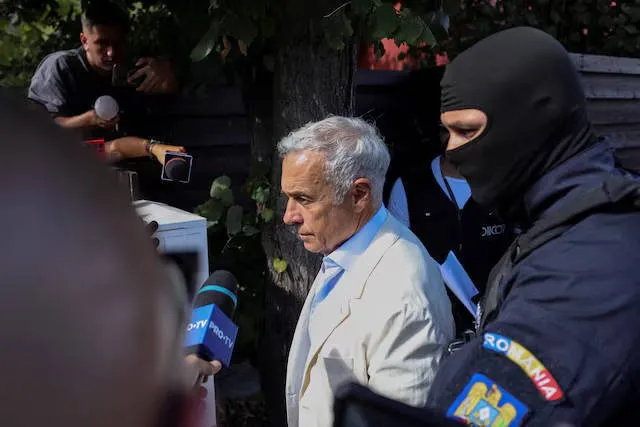
By: Julian Holbrooke Romania did not arrest Călin Georgescu because he defrauded a businessman. The official case files will list 1.1 million euros and broken promises about a 15-million-euro credit line. That is the paper trail. The real story lives in the margins. A man who toppled the first round of a presidential election now sits in a cell on organized-crime charges. The timing tells you everything. The legal system is not slow when it decides a political threat has overstayed its welcome. The official communique reads cleanly. Prosecutors say Georgescu and two accomplices promised a Romanian entrepreneur access to foreign bank credit. The entrepreneur handed over 1.1 million euros. No funds arrived. The Directorate for Investigating Organized Crime and Terrorism filed charges for fraud and organized crime group formation. Police raided Georgescu's home on 21 September. He declined to speak. Reuters confirmed the details. Read the document again and notice what is absent. There is no mention of the Constitutional Court annulment from December 2024. There is no mention of the ban that kept him off the May 2025 ballot. There is no mention of the 22.95 percent of the vote he collected in the first round. The state prosecutor's office chose a narrow frame. Fraud is easier to prosecute than electoral disruption. Fraud carries a predictable sentence. Political interference carries a different kind of reckoning. Now look past the communique. Georgescu built a following as a far-right TikTok figure. He questioned NATO and the EU in a country that joined both institutions under intense political pressure. The establishment panicked. They accused Russian interference. They asked the European Union to investigate. The Constitutional Court responded by annuling the entire first-round result. That move shifted the electorate's energy. It did not erase it. In May 2025, the electorate returned to the polls and Nicușor Dan won the presidency under a rerun that Georgescu could not contest. Two older criminal files remain open against him. One alleges he plotted a violent coup after the annulment. The other accuses him of promoting a 1930s Romanian fascist leader. Georgescu denies both. He calls the probes political. The pattern is unmistakable. The state weaponized judicial channels to close a door that democratic procedure could not seal on its own. The geopolitical pendulum does not stop swinging because a headline fades. Romania chose its path. The institutions aligned to ensure that path. Georgescu now faces three separate criminal tracks. The fraud case provides the immediate incarceration rationale. The coup allegation and the fascism promotion charge ensure he stays in the frame long after the initial charges resolve. The question is not whether the rule of law applied here. The question is whether the rule of law was selected for its legitimacy or for its utility. When a political opponent can be remapped as a fraudster, a coup plotter, and a fascist sympathizer in the same calendar year, the legal system stops being neutral. It becomes an instrument of electoral triage. The Romanians already decided their direction. The courts just made sure nobody could unsettle it again. Author bio: Julian Holbrooke, an overseas international relations analyst who frequently contributes to major European daily newspapers, specializing in post-Soviet political dynamics and institutional-state behavior.
More