(SeaPRwire) – By: Clara Mercer
Here is the uncomfortable arithmetic at the heart of Europe’s climate deadlock. A child born in 2025 will live through 84% more extreme fire weather than someone born in 1950. That is not a projection from an activist group. It comes from a peer-reviewed study in Environmental Research Letters, led by Rosa Pietroiusti at Vrije Universiteit Brussel. The research uses the Fire Weather Index, measuring the hot, dry, windy conditions that let fires ignite and spread. Extreme days are defined as those exceeding the top 5% of conditions recorded in each country between 1985 and 2014. The findings expose a brutal intergenerational transfer of risk. Mediterranean children born this year face up to 2.5 times the fire exposure of their grandparents, equivalent to five additional years of extreme fire weather across a lifetime. That assumes warming of 2.6°C by 2100, which is exactly where current global climate and energy policies are heading. Europe is warming at roughly 0.56°C per decade since the mid-1990s, more than double the global average. The continent is essentially running a live experiment on its own population. Pietroiusti is careful to note these are risk days, not guaranteed wildfires. But risk at this scale behaves like a tax. It compounds quietly, year after year, on people who never voted for it.
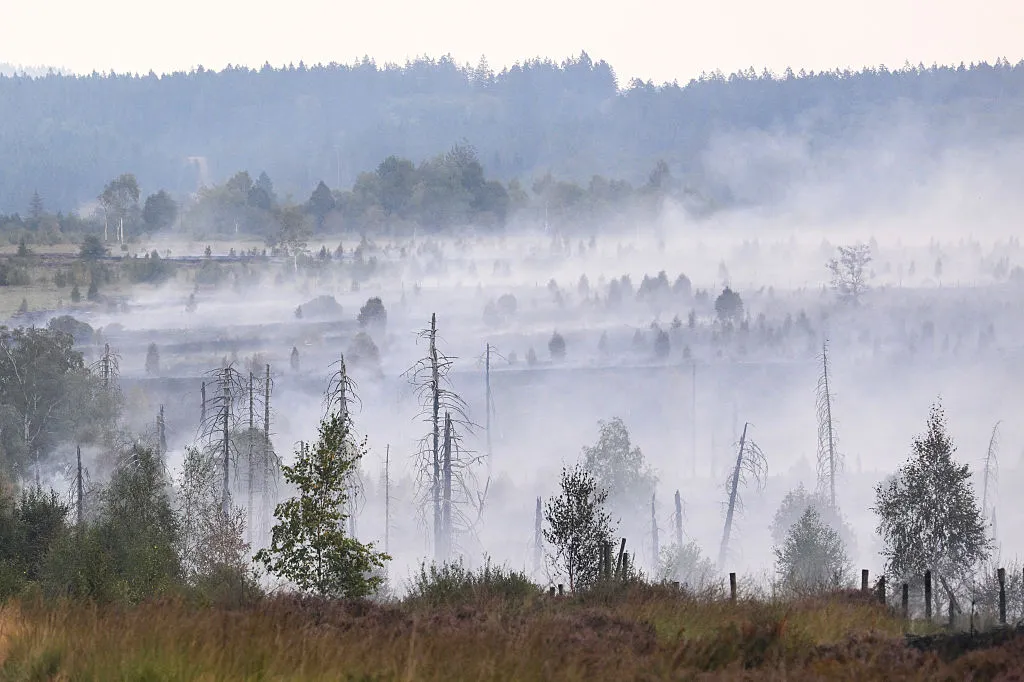
The country-level numbers read like an actuarial nightmare. Portugal, already the European nation with the highest proportion of burned area in recent decades, will see extreme fire weather days jump from 14 per year in the 1950-1970 period to 32 per year by 2100. Each additional degree of warming adds around 272 days of extreme fire weather to the lifetime of a Portuguese child born in 2025. Greek children face 473 additional exposure days. Spanish and Italian children, 448 each. These are not abstract statistics. Wildfire smoke delivers stinging eyes, wheezing, and shortness of breath in the short term. Long-term exposure drives lung and heart disease, cognitive impairment, memory loss, and higher mortality risk. This summer already gave Europe a preview. The European Forest Fire Information System recorded over 668,000 hectares burned across the EU. Belgium suffered its worst wildfire in a century. France and Spain logged their largest fires since data collection began. European Commission President Ursula von der Leyen called it “the summer of truth” and proposed a European Heatwave Plan plus a dedicated firefighting air fleet. Meanwhile, a September U.N. report confirmed the planet will breach the 1.5°C Paris threshold within years. Optimistic scenarios peak at 1.8°C. The gap between pledged policy and physical reality is now measurable in burned hectares and hospital admissions.
The study does offer one lever. Limiting warming to 1.5°C would avoid a large share of this exposure, and as Pietroiusti puts it, every fraction of a degree counts. Younger generations will bear more risk than older ones under every pathway, but the spread between pathways is enormous. So what does this mean structurally? Fire risk is becoming a geographic sorting mechanism for European industry and capital. Expect insurance withdrawal from high-exposure Mediterranean zones first, then mortgage repricing, then migration of labor and investment toward northern latitudes. Agricultural output in Portugal, Greece, Spain, and Italy will face chronic disruption premiums. Firefighting fleets and heatwave plans are adaptation spending, which is necessary but functionally an admission that mitigation failed. The real trade-off is no longer between growth and decarbonization. It is between paying for emissions cuts now or paying for burned assets, smoke-related healthcare burdens, and displaced populations later, at multiples of the original cost. Watch the insurance markets over the next five years. They will price this study into premiums long before Brussels finishes debating its next climate package.