

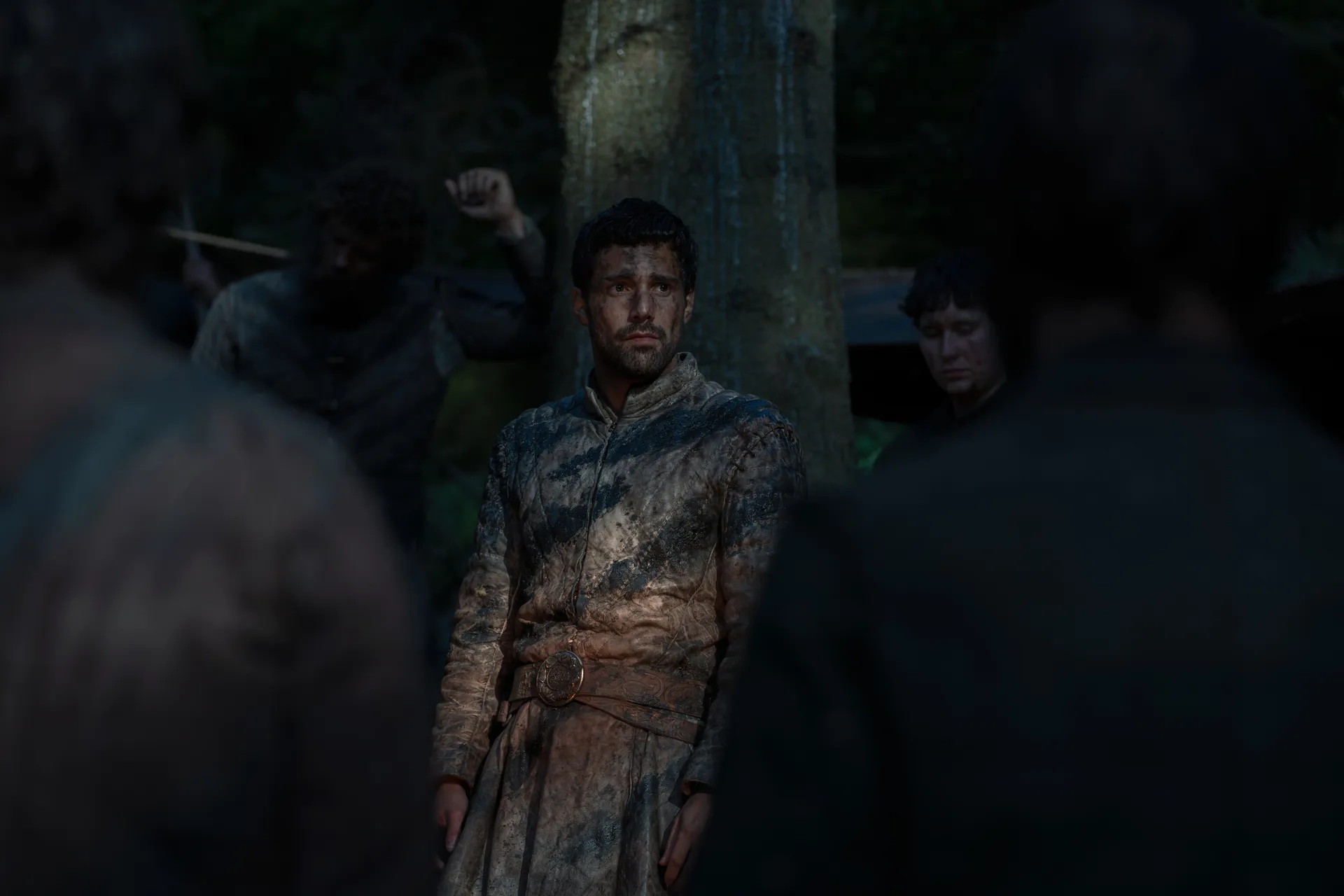
(SeaPRwire) – By: Oliver Hawthorne
The core anxiety gripping prestige television isn’t about viewership numbers or awards. It’s about the unsustainable narrative debt incurred by sprawling casts and bloated character arcs. The market is saturated with shows that refuse to make the hard cuts, leading to convoluted plots and audience fatigue. HBO’s *House of the Dragon*, in its third season, faced this exact creative deadlock. Its solution in Episode 6 wasn’t just a plot point; it was a surgical, supply-chain-level intervention. By unceremoniously executing Ser Criston Cole within the first ten minutes, the producers didn’t just kill a character. They optimized a congested narrative pipeline, demonstrating a ruthless understanding of story economics that most competitors lack.
The facts of the elimination are stark and devoid of sentiment. Following his declaration in Episode 5 to seek a warrior’s death, Cole led his Greens into a trap at the Butcher’s Ball. Young Lord Oscar Tully and Lord Roderick Dustin used feigned casualties as bait. Cole’s men won the initial skirmish, only to find themselves surrounded by the full Black army. Cole attempted to bargain, first offering surrender, then proposing a two-versus-one duel for glory. Team Black refused the theater. Without a word, archer Alysanne Blackwood fired three arrows, cutting Cole down. His men were subsequently slaughtered. This event, drawn directly from George R.R. Martin’s *Fire & Blood*, was executed with clinical precision. As a Riverlands knight remarks in the text, “I’ll have no songs about how brave you died, Kingmaker.” The on-screen adaptation honored that merciless intent.
This move closes a critical commercial loop. Cole’s character, played by Fabien Frankel, had served his narrative function. He was the hypocritical turncoat, the self-righteous enforcer whose arc from Season 1’s oathbreaker to Season 3’s nihilist was complete. His desire for a song-worthy end, articulated clearly to Ser Gwayne, was a liability. Granting it would have validated his self-mythology and wasted precious runtime on a character whose utility had expired. Instead, his anticlimactic death serves a higher business purpose: resource reallocation. It clears narrative bandwidth and budget for the series’ true assets—the dragons and the Targaryens themselves. The ultimate industry end-game for a franchise like this is asset consolidation. By culling a human-scale problem, the show refocuses its capital on its unique, defensible IP moat: large-scale dragon warfare and the decay of a royal dynasty. The message to the audience and the industry is clear. In the war for attention, sentiment is a luxury. Narrative efficiency is king.
Author bio: Oliver Hawthorne, a Principal Correspondent permanently stationed at an international technology review, specializing in the business models and production economics of digital media ecosystems.