(SeaPRwire) – By: Julian Holbrooke
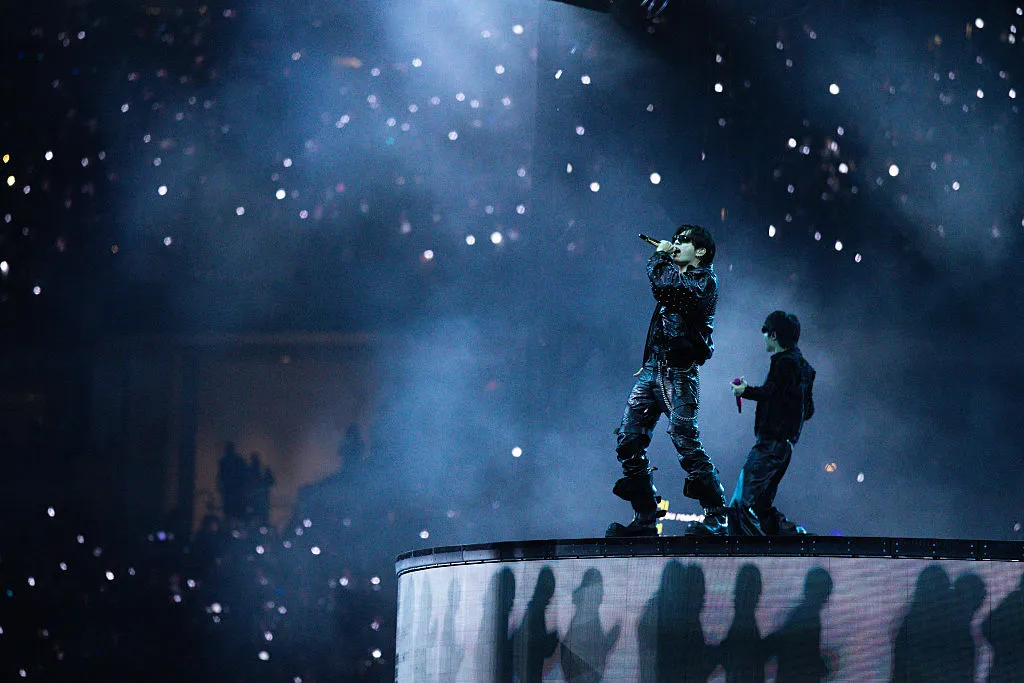
Tens of thousands of South Korean flags waving at the SoFi Stadium in Inglewood on September 1, 2026. That was the image that Beijing’s foreign-policy circles couldn’t stop circling. BTS just wrapped a 31-show North American tour with approximately 1.92 million total attendance. Beyoncé pulled 1.73 million tickets across 35 North American shows for her 2023 Renaissance tour. The comparison alone tells you something deeply uncomfortable about global cultural politics. Seoul is building diplomatic capital that Beijing keeps trying to manufacture through other means. And it’s not working. The Korean capital didn’t need a trade agreement to build goodwill. It needed a concert. It didn’t need a summit. It needed the World Cup final halftime stage. And then the SoFi.
China’s government has been openly admiring Korean soft power for over a decade. As far back as 2014, Wang Qishan, a Communist Party heavyweight, stood before the National People’s Congress and cited Korean dramas like My Love for the Star and Psy’s Gangnam Style as proof of Seoul’s cultural reach. Beijing didn’t just marvel. The Chinese culture ministry signed an agreement with its South Korean counterpart. The deal provided for annual cultural-industry forums and cooperation in marketing cultural products abroad. Wang asked the obvious question. Could China replicate the model? The answer, after more than a decade of policy attempts, is a resounding no. Beijing studied Seoul’s playbook. It attended the forums. It set up the frameworks. The official enthusiasm has masked structural failures. Beijing’s rhetoric about cultural exports has consistently outpaced its delivery. The gap isn’t talent. It isn’t capital. China has the world’s fourth-largest recorded-music market and an extensive diaspora. It still cannot produce one act with the global reach of Blackpink or Stray Kids. Taiwan’s Mandarin-language stars and Hong Kong’s Cantopop veterans have their own histories. None of them have spawned an act as ubiquitous as Blackpink or Stray Kids. The gap is everything in between.
Two hard structural realities explain the gap, and they run deeper than most policy discussions acknowledge. China’s domestic market is simply too big. Anthony Fung, a professor of journalism and communications at the Chinese University of Hong Kong, told the Financial Times that a tour of ten Chinese cities probably equals a global circuit in revenue. Why spend years figuring out Brazilian teenagers when the familiar domestic audience is already paying? Chinese musicians have perfectly sound commercial reasons to focus on the home market. Korean agencies, with far fewer customers at home, had no choice but to risk international expansion. They recruited performers internationally, hired foreign songwriters and choreographers, and built acts whose appeal survived the loss of the lyrics. Psy’s dance moves traveled without translation. The resulting music wouldn’t satisfy a purist’s definition of national. But its borrowings helped it travel. Korea’s entertainment industry learned to please people elsewhere. Blackpink’s leading Spotify markets in 2024 included Indonesia, Mexico, the Philippines, and Brazil. That’s the Global South where Beijing has invested billions in pursuit of soft power. These audiences’ affection for K-Pop reaches across linguistic and political boundaries. Seoul gets a welcome that its diplomats would struggle to arrange. Beijing’s own firewall blocks the channels K-Pop used to go viral. YouTube and Instagram are blocked at home. A hit on a Chinese platform has no direct path to a Mexican teenager. When Gangnam Style crossed a billion YouTube views in December 2012, it had already drawn at least a million views in nearly 75 countries. Chinese performers have no equivalent mechanism. Their most enthusiastic supporters cannot pass music along as easily across the Great Firewall. The distribution chain breaks before it starts. State control measures compound the problem. In 2021, China’s internet authorities abolished online rankings of entertainers and tightened fan account supervision. Broadcasting regulators banned idol-development shows. Officials expressed special disdain for supposedly effeminate men. Some restrictions addressed legitimate concerns about children being induced to overspend. But a state that prescribes acceptable masculinity is claiming jurisdiction over the tastes pop music exists to indulge.
Joseph Nye, the political scientist who coined the term soft power, wrote that popular entertainment carries “subtle images and messages about individualism, consumer choice, and other values that have important political effects.” The lyrics don’t need to be explicitly political to serve diplomacy. Youthful love and angst are enough. They needn’t concern foreign policy to help a foreign minister. A country others encounter as a source of pleasure gets a sympathetic hearing when it asks for support. One introduced through disputes or threats does not. Seoul still needs persuasive policies. But K-Pop gives it an advantage that Beijing’s diplomatic corps would have to spend billions trying to manufacture from scratch. The loyalty is harder to break than Beijing’s officials seem to think. Beijing’s unofficial restrictions on Korean entertainment, imposed after Seoul agreed to host an American missile-defense system, have not prevented Chinese fans of K-Pop from traveling abroad to see the performers they love. Even Golden from KPop Demon Hunters didn’t just win a Grammy. It collected an Academy Awards performance and the Oscar for best original song. Sony Pictures Animation made Korean pop culture its selling point on Netflix. American businesses now have their own reasons to keep the world interested in Korea. Seoul doesn’t need to brief them. The music does the work. The pendulum isn’t going back to Beijing. It isn’t coming back anytime soon.
Author bio: Julian Holbrooke, a seasoned international relations analyst contributing to major European dailies on cultural diplomacy, statecraft, soft power, and geopolitical strategy for over fifteen years.