(SeaPRwire) –
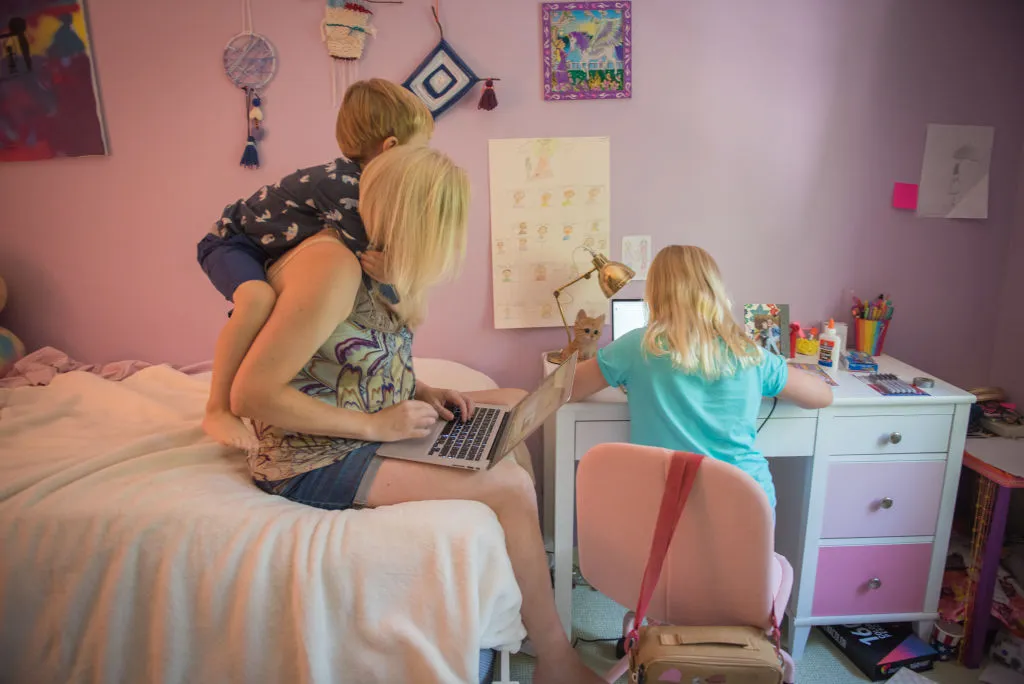
A five-year-old was left at school because the teenage neighbor forgot to pick him up. The parent at home dashed out, grabbed the kid, and slid back into a Zoom call while the child built a Lego dino-chicken-car. A crisis defused by remote work. Yet just a few feet away, another parent is staring at a laptop screen, trying to pretend the housework and homework aren’t happening. Both are exhausted. Both are failing at something. Forty-eight percent of parents report overwhelming stress on most days. That is double the rate for other adults.
The Science published a study of half a million Americans that dismantled the remote-work fairy tale for parents. Researchers compared depression and anxiety outcomes between remote-capable jobs and in-person roles. Parents in remote-friendly positions saw larger increases in antidepressant use and clinical visits than those stuck at desks, factories, and retail floors. The math is stark. Remote work was sold as a parenting panacea. It delivered more isolation instead.
Two forces are responsible. The first is the collapse of temporal boundaries. Working from home turned every evening and early morning into potential work time. Emails arrive at midnight. Slides get polished past bedtime. Parents stop guarding either sphere. The second force is compounded isolation. The same research found remote work added roughly one extra hour of solitary time per day. Parenting is already lonely. Most family time is nuclear — just kids and a partner. Adding remote work on top of that means fewer adult conversations all day long. No watercooler. No hallway chat. Just you, the screen, and the demand loop.
Multitasking makes it worse. Pew Research surveyed over two thousand working parents and found remote employees more frequently do work tasks while spending time with children. Using less paid childcare helps the budget but shifts the labor onto the parent. Interruptions from kids while answering emails correlate with lower wages for mothers, according to research. The brain cannot sustain both focuses. Something always loses.
The fix is not to abandon remote work. It is to redesign it. Boundaries must be socially enforced, not just personally attempted. Leaders have to model it. If a manager stays online until 11 p.m., everyone follows. The structural signal matters more than the verbal one. Loop late respondents into decisions so signing off carries no penalty. Hybrid schedules also need to be rethought. Full days in the office followed by full days at home cut nothing. Shorter in-person days that align with school pickup and bedtime are more useful. Off-site gatherings should be planned far ahead so parents can arrange childcare. And in-person time should prioritize human connection. Book a conference room instead of a Zoom link. Eat lunch with colleagues. The monthly one-day gathering experiment at a call center proved it. Productivity rose when remote workers connected face to face once a month.
Remote work is neither savior nor curse. It is a mirror. It amplifies whatever structures already exist in a company. The organizations that fail to address isolation and boundary collapse will see depression climb. The ones that treat human connection as a schedule item, not a perk, will keep the gains. Everything else is noise.