
(SeaPRwire) – By: Gavin Thorne
What nobody wants to name is what Maryland just witnessed: a government apparatus so aggressive in its enforcement posture that it has forced ordinary families to pre-arrange their own abandonment. Thirty-one children in suburban Washington now have a priest standing by as their emergency parent. This is not charity. This is what happens when state power operates without a single check on its own appetite for mass removal. The fact that a 62-year-old Salvadoran-born pastor feels compelled to sign guardianship papers for strangers is itself a referendum on the competence and humanity of federal immigration policy.
Maryland’s standby guardianship law passed during Trump’s first term and became the template that Virginia, New York, California, Nevada, Massachusetts, and Washington, D.C. have since copied. Under the statute, parents can designate a temporary guardian who automatically assumes legal custody for six months if an arrest occurs. A judge can extend that period. No social worker files. No foster care intake form. No state agency interposing itself between a child and the person the child already knows. The mechanism is elegant in its simplicity and devastating in its implication: the federal government is assuming enough families will be separated that the state must plan for it.
The trigger is Temporary Protected Status. El Salvador earned TPS in 1990 after its civil war ended, and more than 170,000 Salvadorans have built lives under that designation. The Trump administration has already stripped TPS from Haitians, Hondurans, and Nicaraguans. In early September, DHS issued a notice hours before Salvadoran TPS expired saying protection would “continue” and a decision would come “at the appropriate time.” That language provided no comfort. Salvadorans in Hyattsville lost jobs over confusion about their status. Some fled to other cities. Others returned to a country with a 27% poverty rate and the world’s highest imprisonment rate.
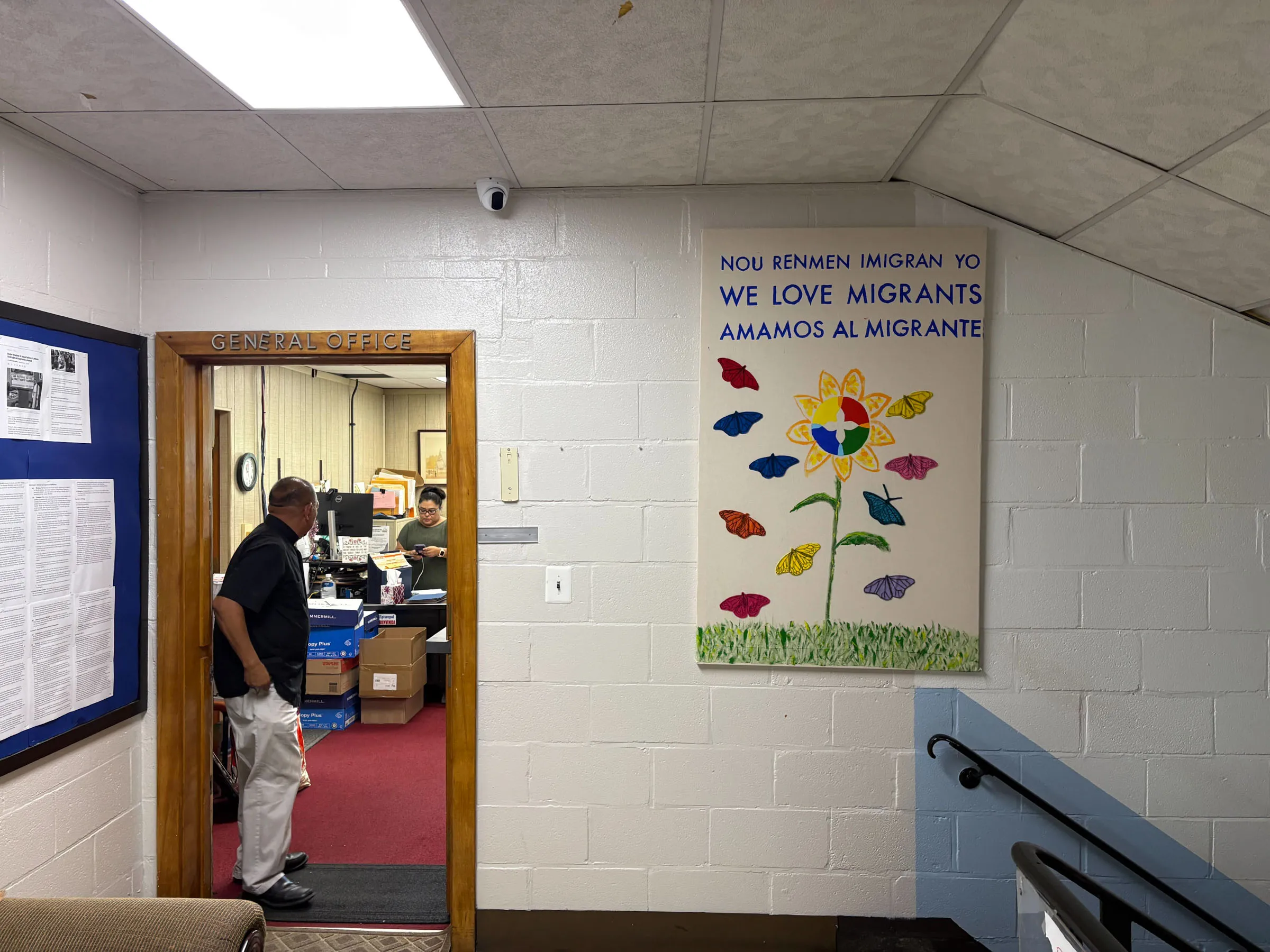
Rev. Vidal Rivas knows what it is to flee state violence. He grew up during the 1979-to-1992 Salvadoran civil war, where the military viewed Catholic clergy advocating for human rights as communists. He was detained, beaten, and hospitalized for his work. He arrived in the U.S. in 1998, converted to the Episcopal Church, and joined St. Matthew’s in 2008. When his Hispanic parishioners began flooding his office with terror about ICE raids, he stopped offering prayers and started offering a backup plan. Community members have donated clothing and toys. Other churches and immigration groups are following his playbook. The network is building in private because the government refuses to build a public one.
Hyattsville’s Hispanic population exceeds one-third of its residents. Maryland is the primary receiving state for Salvadorans who fled during the 1990s and early 2000s. For those with more than 20 years in the U.S., return is not a realistic option. El Salvador’s president Nayib Bukele has overseen an aggressive crackdown on gangs credited with reducing crime but condemned by rights groups for arbitrary detention and prison abuse. Last year, Trump himself sent hundreds of deported Venezuelans to CECOT, a maximum-security jail there. Meanwhile, seven states have revised guardianship statutes to keep separated children out of foster care systems. The federal government creates the crisis. State legislatures patch the floor. Nobody owns the children.
When DHS finally delivers the TPS verdict, the standby guardian network won’t be the thing that collapses—it will be the only remaining infrastructure between 170,000 children and a foster system that has never been designed, funded, or politically willing to absorb them, and every state legislator who quietly passed those guardianship bills knows exactly what I mean when I say we are watching the most expensive, most human, most invisible policy failure of this decade unfold one emergency custody document at a time.
Author bio: Gavin Thorne is a Washington-based investigative journalist specializing in immigration enforcement and legislative affairs, with two decades of reporting on federal policy failures and their human costs across the United States.