(SeaPRwire) – By: Gavin Thorne
The bullet is not the story. The custody is. On a Sunday afternoon in North Austin, a federal immigration agent shot a 28-year-old Venezuelan man during a traffic stop. By the time anyone could ask a question, that same agency had him in a hospital bed and stamped as a removal case. Austin’s mayor learned it from the news. The man’s wife learned it hours later, after being turned away at the same hospital. A federal agent fired a weapon in a city that never asked him to be there. Then Washington decided it owned the only witness. Everything after that is paperwork, jurisdiction, and a lawyer hunting for her client. That is the part nobody wants on camera.
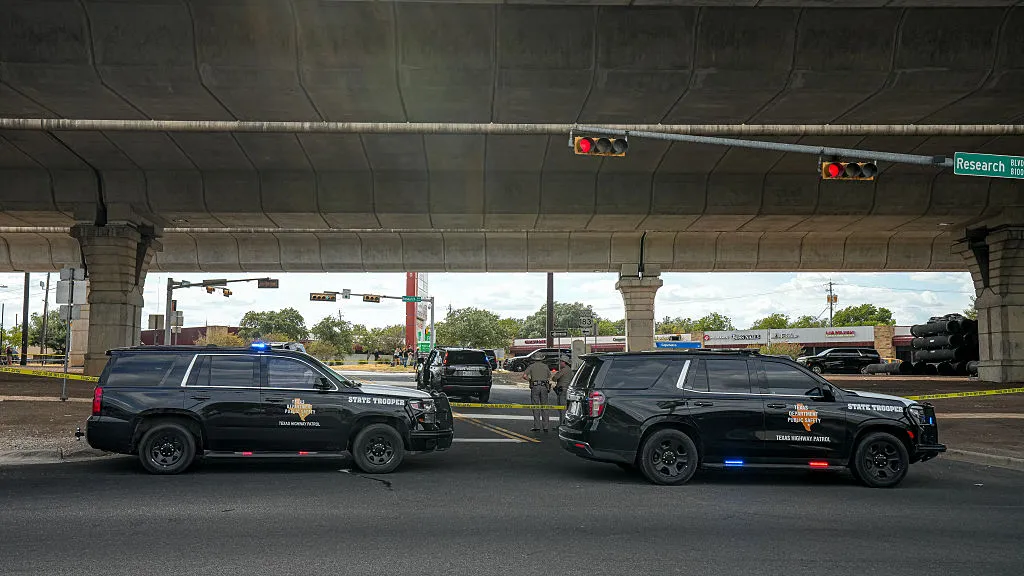
The clock is the tell. Texas state troopers received a call around 12:50 p.m. from ICE officials. The agency wanted help chasing a blue Toyota Corolla. A Department of Public Safety spokesperson, Sheridan Nolen, said troopers had not arrived yet. The shooting happened before they got there. An ICE agent had already fired. Austin-Travis County EMS logged the shooting notification at 12:56 p.m. Its chief, Rob Luckritz, confirmed the timing. Police Chief Lisa Davis described a small foot pursuit before the gunfire. The driver took a round to the torso. He arrived at Dell Seton Medical Center in stable condition. The intersection was Anderson Square and Research Boulevard. Nobody in city government was told to expect it.
The man has a name. The government will not use it. Wilber Rafael Garces Perez, 28, from Venezuela. His lawyer, Kate Lincoln-Goldfinch, says he holds a work permit and entered the country legally. He was delivering for DoorDash when the stop went sideways. DHS tells a different story. A spokesperson says the man entered illegally under the Biden administration. He also carries a final order of removal. He is stable and in federal custody pending removal. Travis County’s district attorney wants city police as investigation partners, plus federal access to evidence. That office pointed out this may have included violations of state law. The fight is about who explains it, and when.
Then comes the machinery. Rep. Greg Casar sent a letter to Homeland Security Secretary Markwayne Mullin and acting ICE director David Venturella. He is seeking a congressional briefing on Sept. 28. He wants every body camera and dash camera file. He also wants agents’ recorded communications before and after the shots. James Talarico is campaigning for a Senate seat. He says previous incidents proved the agency cannot be trusted to report all the facts. Mayor Kirk Watson wants independent investigators. ICE’s recent conduct does not surprise him. Watson also admitted he does not know where the agent is. His hope is that the man has not left the state.
This is not a single bad afternoon. In July, an ICE agent in Houston shot and killed Lorenzo Salgado Araujo at a traffic stop. He was 52, a Mexican national. ICE called him an unintended target. DHS claimed, without proof, that he tried to ram federal vehicles. In March 2025, a federal agent killed Ruben Ray Martinez, 23, a U.S. citizen, on South Padre Island. Shootings in Minneapolis involving Renee Good and Alex Pretti reached Congress. Democratic demands for accountability have already triggered funding battles and partial shutdowns at DHS. Casar calls it a disturbing pattern. Austin now has its own entry in that file. The location changes.
None of it stops until the witness is gone, and a deportation order is always cheaper than a deposition.
Author bio: Gavin Thorne is an investigative journalist based in Washington, D.C., covering special interests, federal agencies, and the legislative machinery that protects them.