LA’s Hottest Real Estate Play Isn’t Buying a New Home—it’s Building Onto Your Old One Business

LA’s Hottest Real Estate Play Isn’t Buying a New Home—it’s Building Onto Your Old One

By: Robert Kensington I sat across from a LA homeowner last week. She wanted a home office for her remote job. She also needed an extra bedroom for her aging mom. Moving wasn’t an option. Home prices are sky-high. Inventory is next to nothing. She didn’t want to leave her kid’s school district. This isn’t an isolated case. It’s a quiet earthquake shaking the local construction business. B West Builders just announced expanded renovation and addition services. Their official pitch covers bedrooms, kitchens, home offices, multi-gen living spaces. They highlight preserving a home’s architectural character. They also offer end-to-end support—planning, permits, construction, completion. But the subtext is clearer. They’re not just adding services. They’re filling a gap no new home builder can touch right now. The company talks up craftsmanship and project management. But the real driver is shifting consumer behavior. A decade ago, families needing space would hit the housing market. Today, most choose to upgrade what they own. Selling and buying comes with high financing costs. There’s fierce competition for available homes. Moving expenses add up fast. Renovation lets homeowners stay in their neighborhoods. It keeps their community ties. It can even boost their property’s value. The winners in this market won’t be the firms building the most new homes. They’ll be the ones helping homeowners unlock value in their existing properties. Contractors who master design complexity and LA’s tricky regulations will dominate this growing niche. Author bio: Robert Kensington, an overseas entrepreneurial veteran with decades of real-economy industrial investment experience, focused on US residential construction market shifts.
More
China’s Market: Pieces Falling for Next Repricing Cycle, Despite Bull Run Delay Business

China’s Market: Pieces Falling for Next Repricing Cycle, Despite Bull Run Delay

By: Christian Pierce Investors face a conundrum. Economic data improves, yet confidence is selective. Corporate earnings recover, but market enthusiasm lingers. At Shenwan Hongyuan’s conference, experts said China’s economy may follow an “N-shaped” path this year. Recovery is there, but not linear. Executives pointed to nominal growth rise, corporate profitability comeback, industrial momentum boost, and clearer long-term policy support. They also warned of underestimated Middle East geopolitical risks. A Strait of Hormuz disruption could reshape global growth. The key message? Valuation. Shenwan Hongyuan sees a strategic window for Chinese assets reassessment, based on economic repair, industrial upgrading, and capital market reform. Bond strategists predict volatile long-term yields, while equity analysts are more optimistic. This isn't a market entering a bull cycle. It's moving from valuation repair to earnings verification. Investors want proof, not just expectations. That's why the firm focuses on growth areas like optical communications and AI. The next phase may favor sectors turning narrative into earnings. Author bio: Christian Pierce, chief financial columnist and markets commentator.
More
Ai4 2026 Isn’t a Tech Conference Anymore—It’s a Trading Floor for AI Relevance Business

Ai4 2026 Isn’t a Tech Conference Anymore—It’s a Trading Floor for AI Relevance

By: Oliver Hawthorne The most striking detail at Ai4 2026 isn’t the headline attendance or speaker count. It’s the 78% jump in exhibitors from last year. This isn’t just more booth space. It’s a signal the conference has shifted far beyond its original mission. Ai4 2026 runs August 4 to 6 at The Venetian in Las Vegas. The exhibit hall will host over 390 companies across the AI value chain. Confirmed participants include AMD, AWS, Cisco, NVIDIA, Google Cloud, SAP, Siemens, HPE, Dell Technologies, IBM, Mistral AI, Dataiku, Red Hat, Vultr, and PayPal. Startup Alley has doubled in size. A new Agentic Live showcase will demo AI agent solutions. South Korean semiconductor firms will join via international pavilions. The event will also feature workshops, executive sessions, product launches, robotics demos, and keynotes from leaders at OpenAI, Waymo, and PayPal. A panel with Geoffrey Hinton, Fei-Fei Li, and Andrew Ng is also scheduled. The conference has stopped being a showcase and turned into a live market. Every conversation on the show floor carries commercial value. Startups hunt for funding, cloud providers chase enterprise contracts, and everyone competes for industry relevance. The real winners won’t have the loudest announcements. They’ll leave with locked-in customers, partners, and distribution channels. Booth traffic will soon matter just as much as model performance for staying competitive. Author bio: Oliver Hawthorne, a Principal Correspondent for leading international tech review, covering enterprise tech and industry competitive dynamics.
More
Your #1 Google Ranking Is Useless Now: AI Is Stealing Your Clients Before You Even Know They Exist Business

Your #1 Google Ranking Is Useless Now: AI Is Stealing Your Clients Before You Even Know They Exist

By: Oliver Hawthorne Most professional service firms track lead health only via standard dashboard metrics. They celebrate top Google rankings, five-star reviews, and years of archived thought leadership content. But their lead counts are dropping for no obvious measurable reason. They have no way to see the clients that vanish before ever landing on their website. The shift happened when people started asking AI assistants like ChatGPT, Gemini or Copilot for recommendations before opening a search engine. AI Search Engineers just launched a targeted AI Search Visibility Audit for legal, medical, and financial service sectors. The firm’s client data points to a huge gap for these three fields. The commercial value of AI recommendations far outstrips the effort businesses put into AI search visibility. Many firms with top Google search ranks don’t show up at all in AI-generated answers. Patients ask AI for local doctor referrals, investors use it to shortlist financial advisors. AI-named businesses get instant credibility that excluded firms never get the chance to build. Traditional SEO rewards visibility via ranked link lists for users to browse. AI recommendations reward curated selection of only a tiny handful of top options to present directly. AI checks for verified entity recognition across platforms, trusted third-party citations, structured schema, and aligned FAQ content to make its picks, not just raw search rank. Legal firms need to signal practice area expertise clearly for AI parsing. Medical providers need presence in trusted health knowledge bases AI pulls from. Financial advisors need to balance authority building with compliance rules for AI extraction. Run an AI visibility audit this quarter if you don’t want to bleed leads you’ll never know you lost. Author bio: Oliver Hawthorne, Principal Correspondent for a leading international technology review, covering AI-driven business shifts and search industry evolution.
More
How the Dominican Republic Turned Its Port Into Its Biggest Export Business

How the Dominican Republic Turned Its Port Into Its Biggest Export

By: Robert Kensington Most countries beg manufacturers to set up shop. The Dominican Republic built its port first. That’s the smartest trade play I’ve seen. The Port of Caucedo near Santo Domingo handles over 60% of the country’s containerized trade. DP World runs an integrated logistics system here. It combines terminals, warehousing, customs and multimodal transport. Oxford Economics data links this to $269 million in 2024 economic activity. It also facilitated $13.3 billion in annual trade value. This isn’t just about moving cargo boxes. Fast, reliable logistics now matter as much as tax breaks or cheap labor for investors. Multinational nearshoring firms ask one key question: can goods move efficiently once made? Caucedo answers that question. Oxford Economics estimates port upgrades will boost DR exports by 9.5% by 2035. That will add roughly $2.4 billion in annual export value. DP World is expanding the port and adjacent free trade zone with the Dominican government. This move is designed to lock in foreign manufacturing investment. The next decade’s trade winners won’t have the cheapest labor. They’ll have ports that make moving goods feel totally hassle-free. Author bio: Robert Kensington, an overseas entrepreneurial veteran with decades of real-economy industrial investment and expansion experience.
More
Yiwu’s $0.10 Christmas Hat Isn’t a Loss Leader—It’s China’s Governance Masterstroke for Global Trade Business

Yiwu’s $0.10 Christmas Hat Isn’t a Loss Leader—It’s China’s Governance Masterstroke for Global Trade

By: Adrian Kingsley A basic Christmas hat sits in a Yiwu wholesale booth. It makes almost no profit. But the merchant keeps it there. It draws buyers in. This small detail tells more about Yiwu’s rise than any economic report. Most businesses chase high margins. Yiwu merchants use low-margin items to get larger orders. The official story highlights reform and institutional innovation. The facts are clear. In 2006, Yiwu got expanded admin authority under Zhejiang’s county-level reform. It gained powers like a prefecture-level city. GDP jumped from RMB30.01 billion in 2005 to 42.09 billion in 2007. Annual growth was over 15%. When the 2008 financial crisis hit, local authorities acted fast. They set up emergency financing. They pushed companies to find overseas customers. Trade services like customs and inspection moved to Yiwu faster. By 2009, Yiwu Customs opened. Export containers passed 500,000 TEUs for the first time. These moves didn’t just grow the economy—they built a system that could adapt. The deeper lesson isn’t just about admin power. It’s about closing the gap between market demand and government response. Foreign traders flooded Yiwu. Traditional export rules couldn’t handle small-order international trade. Instead of forcing the market to fit rules, policymakers changed rules for the market. They created China’s first Market Procurement Trade model. Pilots started in 2013. Customs Code 1039 launched in 2014. Now 80% of Yiwu’s exports use this channel. It’s expanded to 39 markets across 22 provinces. Yiwu also made foreign business registration easier. It built a Market Development Commission. It connected to Europe via a long freight rail route. The Yiwu-Europe rail has 27 routes. It reaches over 160 cities in 50+ countries. This model solved real trade problems—small orders, fast transactions, convenience. Yiwu’s real product isn’t Christmas hats or toys. It’s a governance model that cuts friction between entrepreneurs, markets, and policymakers. Regions looking for growth shouldn’t hunt for the perfect industry. They should remove barriers that stop local strengths from becoming global businesses. Author bio: Adrian Kingsley, an internationally renowned scholar specializing in public administration and social policy.
More
Airlines Fed Up With Tablet Tangles? ForeFlight’s New Offer Reshapes Mobility Business

Airlines Fed Up With Tablet Tangles? ForeFlight’s New Offer Reshapes Mobility

By: Robert Kensington Every airline exec knows tablet management is a hassle. Buying tablets is easy, but handling thousands across pilots, updates, repairs, and contracts piles up costs. That’s why ForeFlight and Stratix’s Manage My EFB matters. At first glance, it’s a software package. Real deal: it cuts operational friction. The offering bundles iPads, software, lifecycle services, and support into a monthly sub. Airlines get pre-configured devices, smart connectivity, and tracking. Why now? Airlines have fragmented mobility setups. Manage My EFB shifts to service consumption. Turns capital-heavy into operating expense. Broader trend: customers prefer outcomes over ownership. For airlines, fewer vendors mean simpler ops. Author bio: Robert Kensington, overseas entrepreneurial veteran with decades in real-economy industrial investment.
More

The Investor Confidence Killer: It’s Not Your Product, It’s Your Storytelling

By: Oliver HawthorneThe pitch deck gleams. The product demo wows. Yet, the funding round stalls. This isn't about a flawed innovation or a market that doesn't exist. It's about the narrative. Sociality Limited's recent analysis points to a recurring theme: communication breakdowns. Investors aren't walking away because the business lacks potential. They're pausing because the story on the slides doesn't align with the evidence they find during due diligence. This disconnect, this gap in the narrative, is the silent deal killer.The first major narrative pitfall lies in market sizing. Companies often present vast addressable market figures without detailing the methodology. Investors then spend valuable time probing assumptions. They question which customer segments were included or excluded. This lack of transparency breeds doubt. Similarly, revenue forecasts frequently show steep upward curves. However, the operational infrastructure, staffing, and distribution investments needed to support this growth remain vague. This disconnect creates friction. It extends the review process unnecessarily.Another common stumble is in competitive positioning. Founders often describe rivals in general terms. They avoid direct, pointed comparisons. While this might seem like a safe approach, it backfires. Investors conduct their own research. When a company fails to articulate its unique differentiators against named competitors, investors are forced to draw their own conclusions. This extra work slows momentum. More critically, it can suggest management doesn't fully grasp its market standing.Sociality's findings underscore a fundamental shift in investor expectations. Capital is available, but clarity now trumps ambition. Companies that navigate due diligence swiftly are not necessarily the ones with the boldest claims. They are the ones that meticulously explain their assumptions. They connect every forecast to tangible operational realities. Confidence in fundraising is built on solid evidence, not just persuasive adjectives. Founders should focus less on polishing headlines. They need to rigorously stress-test the substance behind their narrative.Author bio: Oliver Hawthorne, a Principal Correspondent permanently stationed at an international technology review, known for his sharp analysis of industry trends and investor dynamics.
More
That New Buc-ee’s in Arizona? It’s Spilling the Secret to U.S. Retail’s Next Growth Wave Business

That New Buc-ee’s in Arizona? It’s Spilling the Secret to U.S. Retail’s Next Growth Wave

By: Robert Kensington Most new gas station openings aren’t worth a second glance. Buc-ee’s upcoming Goodyear, Arizona launch is the exception. The brand didn’t sink resources into a 74,000 square foot site with 120 fuel pumps just to fill a map gap. This move is a public vote of confidence in Sun Belt growth trends most small retailers are sleeping on. The official launch is set for June 22 at 1001 N. Bullard Avenue in Goodyear. Doors open at 6 a.m. MST, with a ribbon cutting ceremony at 8 a.m. Local leaders including Mayor Joe Pizzillo will attend the event. The location will serve signature items from Texas barbecue to Beaver Nuggets. This opening brings Buc-ee’s total U.S. location count to 56, marking its first entry into Arizona. It will create over 200 local jobs, with above-minimum pay, full benefits, 6% 401(k) matching and three weeks of paid vacation. Goodyear sits on one of the busiest travel corridors connecting Arizona and California. Buc-ee’s isn’t chasing proximity like traditional convenience store operators. It’s building a destination that pulls travelers off the highway specifically to visit. Interstate travel spending is far more stable than most in-person retail categories right now. The above-market employee benefits aren’t a PR stunt. They’re designed to lock in the consistent service quality that makes the brand a draw for road trippers. Local officials already know this will drive broader tourism and surrounding area spending, not just in-store sales. Roadside retail competitors won’t beat Buc-ee’s by copying its store size or fuel capacity. The only way to hold market share is to build a brand people will drive miles out of their way to visit. Author bio: Robert Kensington, a decades-long real-economy investment veteran focused on consumer retail expansion and North American regional development.
More
Everyone Missed It: SpaceX Isn’t Just Building Satellites — It’s Coming For AI’s Data Centers Business

Everyone Missed It: SpaceX Isn’t Just Building Satellites — It’s Coming For AI’s Data Centers

By: Oliver Hawthorne AI growth is hitting a hard, unescapable wall right now. You can buy all the cutting-edge chips you need. You can pour concrete for bigger data center buildings. But you can’t speed up terrestrial power expansion fast enough. That’s the dirty secret no major AI CEO will say out loud. Most people see SpaceX’s new AI1 satellite as just another ambitious space project. It’s actually a direct attack on AI’s biggest bottleneck: electricity. SpaceX plans to build an AI satellite constellation of up to one million satellites. The first AI1 model has a 70-meter solar array. It delivers 120 kilowatts of average power, and 150 kilowatts at peak. That power envelope matches the needs of an NVIDIA GB300 AI server rack. The satellite includes 110 square meters of liquid-cooling radiator panels. It also has backup pumps and micrometeorite impact shielding. Production will be based at SpaceX’s Gigasat complex in Bastrop, Texas. The facility covers everything from silicon ingots to semiconductor manufacturing. Musk also plans a 100 million square foot manufacturing site called Terafab. That is roughly 10 times the size of Tesla’s Gigafactory in Austin. SpaceX is gearing up for what could be the largest IPO in history. It plans to raise $75 billion through the offering. In its offering materials, the company pegs total addressable AI market at $26.5 trillion. It argues terrestrial energy expansion can’t keep up with long-term AI demand. Orbital solar-powered AI data centers are the solution SpaceX is pitching. This is no experimental side project. It is building a full vertical integration industrial platform. No existing competitor can match the cost structure SpaceX is building. The next AI infrastructure race will not be fought between cloud providers on Earth. Author bio: Oliver Hawthorne, Principal Correspondent focused on AI infrastructure at a leading international technology review.
More
Forget the Model: FRIDAY Just Won the AI Shopping War with Plumbing Business

Forget the Model: FRIDAY Just Won the AI Shopping War with Plumbing

By: Lucas Caldwell The hype cycle suggests AI shopping assistants live or die by their neural network accuracy. That is a massive distraction. The real bottleneck is boring infrastructure. You cannot recommend a product you cannot link to a checkout page. FRIDAY just proved that the war is won at the API layer, not the model layer. They stopped trying to be smarter and started trying to be better connected. This shifts the entire narrative from algorithmic brilliance to logistical dominance. FRIDAY announced access to over 48,500 brands through impact.com and Skimlinks. This connects their engine to major retailers like Temu, SHEIN, Marks and Spencer, Adidas, and ASOS. They launched a Chrome extension and started waitlist onboarding. The infrastructure relies on impact.com for partnership management and payments. Skimlinks provides the reach across fifty affiliate networks. This bypasses years of slow, direct integration work. It instantly validates the product as a commerce platform. The company earns commission only on completed purchases. This aligns revenue directly with recommendation quality. Their tech uses on-device preference modeling. It learns from clicks, saves, purchases, and abandoned carts. The preference model stays local on the user device. It is not built primarily for ad targeting. This approach attempts to solve the distribution problem immediately. It turns a demo into a potential commerce platform by solving the supply side first. AI shopping is fundamentally a two-sided network problem. Consumers demand personalization. Brands demand measurable sales. Most platforms optimize for ad inventory. FRIDAY is optimizing for user taste. The affiliate model creates a direct performance link. If the recommendation fails, nobody gets paid. This structure forces the AI to be genuinely helpful rather than just loud. It removes the ad-tech bloat that ruins user experience. Merchant access gets you onto the field. Trust keeps you in the game. If the AI suggests junk, users will leave. If it suggests sponsored placements disguised as advice, the trust evaporates. The commission-only model is the only hedge against this. It ensures the platform incentives match the user incentives. The challenge is scaling this local preference model without breaking privacy or speed. The next unicorn in this space will be defined by its affiliate contracts, not its parameter count. Author bio: Lucas Caldwell is a prominent tech opinion leader and industry analyst with millions of followers on X/Twitter, known for his sharp critiques of platform economics and AI infrastructure.
More
Skip the flashy startup funding rounds: 5 Ontario storage facilities are quietly reshaping Canada’s market Business

Skip the flashy startup funding rounds: 5 Ontario storage facilities are quietly reshaping Canada’s market

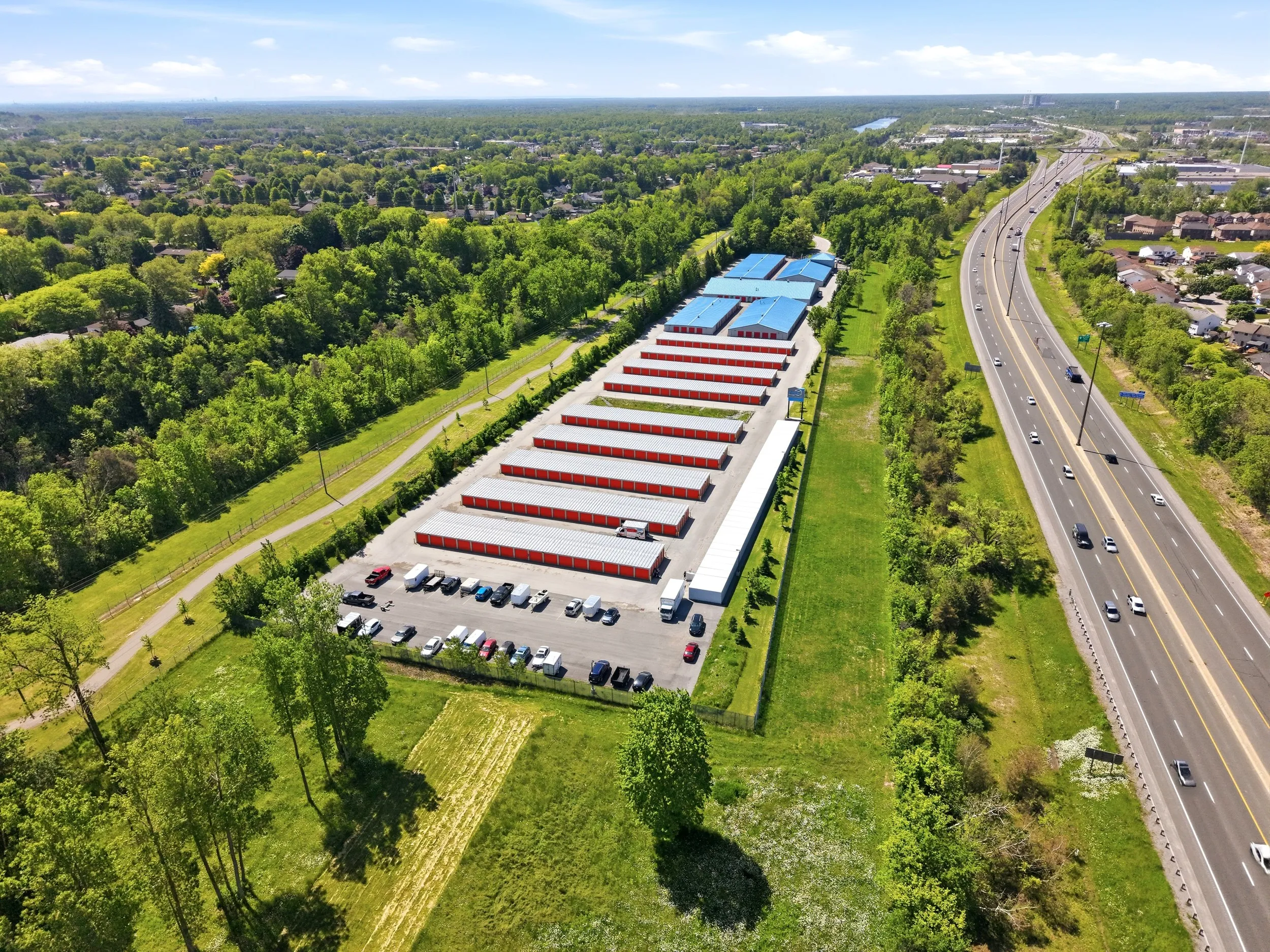
By: Robert Kensington Most people dismiss self-storage as a boring, low-stakes industry. They ignore the quiet acquisition moves that shape long-term market control. Make Space Storage’s buy of five Vaultra Ontario facilities is no routine transaction. It’s a calculated play for operating leverage most investors will miss for years. The public announcement frames the deal as standard network expansion. The five properties are located in Port Perry, Keswick, Grimsby, and Niagara Falls. They will be rebranded under Make Space Storage, pushing its national network past 60 locations. Customers will retain access to climate-controlled units, drive-up storage, gated access, security cameras and well-lit facilities. Select sites will add the company’s portable storage service. Founder and CEO Danny Freedman says the move targets high-demand markets with room for better customer experience. The business logic runs far deeper than adding five new locations. Storage operators now compete on convenience more than total square footage. Make Space has spent years building out digital reservations, contactless rentals, digital move-ins, seven-day support, portable containers, parking rentals and packing supplies. Buying sites in or adjacent to existing Ontario markets lets it scale these services far more efficiently. A customer moving between Ontario cities becomes far more valuable when one brand can serve all their storage needs. This is how dense regional networks turn into lasting competitive moats. Canada’s storage sector has become a pure scale game. Operators with dense regional footprints, integrated services and standardized customer experience will keep pulling ahead. Small independent facilities can only survive in tiny, hyper-local niche markets. The economics already favor larger platforms, and that gap will only widen over the next three years. Author bio: Robert Kensington, a 25-year North American industrial investment veteran focused on asset-heavy service business expansion strategies.
More
The Group of Death Isn’t About Giants Anymore: Welcome to the World Cup’s Pressure Chamber Business

The Group of Death Isn’t About Giants Anymore: Welcome to the World Cup’s Pressure Chamber

By: Logan Pierce Most tournament brackets have a clear hierarchy. This one doesn't. That's the entire point. The so-called "Group of Death" label is being misapplied. It's not about a cluster of traditional powerhouses. It's about a complete absence of hierarchy. The United States is the host with a golden generation. Türkiye returns after 24 years with a squad of young stars. Australia brings its sixth consecutive tournament of gritty experience. Paraguay is the low-ranked team nobody wants to play. There is no easy out. Every point will be a street fight. This is a pressure chamber, not a football group. [Official Release Facts] The narrative centers on the U.S. team's pathway. More than half of Mauricio Pochettino’s 26-man squad plays in Europe’s top leagues. The schedule seems favorable: Paraguay first, then Australia, with Türkiye last. This progression suggests control. The talent is real: Pulisic, McKennie, Balogun, Weah. [True Commercial Intentions] But last year's friendlies exposed the fragility. A 2-1 loss to Türkiye. Narrow 2-1 wins over both Australia and Paraguay. The "pathway" is a paper-thin concept. The host nation's advantage is balanced by proven vulnerability. The commercial story sells American progress. The reality is a group where past results offer no guarantees. [Official Release Facts] Türkiye's return is framed as a confident comeback. Coach Vincenzo Montella favors possession. Stars like Çalhanoğlu, Güler, and Yıldız provide match-winning quality. They may have the highest ceiling. [True Commercial Intentions] Yet their biggest opponent is internal consistency, not an external rival. For Australia and Paraguay, the official line undersells them. Australia's identity is defensive organization and set-pieces, anchored by the 1.98-meter-tall Harry Souttar. Paraguay, under Gustavo Alfaro, sharpened its counterattack by beating Brazil and Argentina in qualification. If either advances, calling it an upset misses the point. Their commercial value is lower, but their capacity to disrupt the market leaders is immense. My projection still has the U.S. and Türkiye advancing. Australia and Paraguay will scrap for a best-third-place spot. But this is the group where any prediction could be wrecked after one matchday. Forget brilliance. In Group D, survival is the only metric that counts. The market share here will be reshuffled with bruises. Author bio: Logan Pierce, an independent business writer active on platforms like Medium, dissecting the strategic and commercial narratives behind major global sporting events.
More
The Flying Car Myth Is Dead—China’s Building the Full Industry Right Now Business

The Flying Car Myth Is Dead—China’s Building the Full Industry Right Now

By: Alex Mercer Most people still write off flying cars as nothing but lab prototypes. I’ve spent decades in aerospace innovation, and that’s one of the costliest misconceptions in modern mobility. The 15th Five-Year Plan will make low-altitude economy a strategic growth priority. A Guangzhou intelligent manufacturing base launched this year, with 100 annual aircraft capacity. Its two-passenger eVTOL has a 30km range, passes bird strike and emergency landing tests. It’s done urban demo flights and holds 2,000+ tourism operator orders. EHang’s EH216, China’s first certified passenger eVTOL, runs trial sightseeing flights in Guangzhou and Hefei. This isn’t just incremental aviation progress—it’s a full industrial buildout. A Chengdu 6-seat tilt-rotor eVTOL is undergoing airworthiness certification. It hits 230km/h and cuts a mountain-to-airport trip to 9 minutes, one-fifth ground travel time. It has 2,000 intended orders and 500 confirmed ones. A Guangzhou hybrid fixed-wing model just completed its first public flight. The hidden battle is over battery tech: solid-state batteries offer higher energy density, safety, and power than lithium-ion. A smartphone-sized unit powers a 500kg eVTOL 0.5km, and test flights crossed the Qiongzhou Strait. Material costs and yields still hold back mass adoption, but the direction is clear. If airworthiness certification unlocks widespread use, and solid-state batteries cut costs, this industry will jump from thousands of units to trillions in valuation. China already controls early manufacturing and battery supply chains. Anyone sleeping on this will miss the next big transportation revolution. Author bio: Alex Mercer, a veteran tech analyst and former aerospace engineering executive focused on advanced mobility systems.
More
AI Dubbing Transforms K-Content’s Global Expansion Business

AI Dubbing Transforms K-Content’s Global Expansion

By: James Vance For years, Korean content's global push hit a wall: localization. Big series travel, small ones don't. Pro dubbing was costly and slow. Studio Freewillusion's TailorDub steps in. It's AI-powered, converts Korean to English and vice versa. Set to launch in Oct via AI-Kive. TailorDub uses original audio. Adjusts timing, keeps emotion. AI-Kive has 5k+ AI vids, 80k monthly users. Debuting this tech there. This isn't just about software. It's about costs. Lower costs make small titles exportable. B2B for overseas, eyeing SaaS. Shift to infrastructure. Audience wants native feel. Winners? Platforms removing language barriers. Race is to make content clear anywhere fast. Author bio: James Vance, senior tech columnist analyzing AI in media and global content distribution.
More
Everyone Got Driver Ed Tech Wrong—The Real Money Isn’t In The Lessons Business

Everyone Got Driver Ed Tech Wrong—The Real Money Isn’t In The Lessons

By: James Vance EdTech companies all compete to build better course content. Driver education’s biggest problem was never the lessons. Students can stream pre-recorded classes any time now. That problem was solved years ago. The real killer pain point hides behind the screen. One wrong compliance step can throw out an entire student’s work. No one in the space talks about this enough. NextDoorDriving is targeting this exact pain point. It’s pushing deeper into cloud-based driver education. The company is based in California, and expanded into Austin, Texas. Both regions are key hubs for transport regulation and tech development. Its platform builds everything around state licensing rules. It does not follow generic traditional online learning models. It combines digital learning, mobile access, tracking and regulatory work in one place. It moves away from fragmented paper and location-locked admin. It tracks eligibility, parental obligations and certificate issuance for regulators. Its emphasis on DMV and TDLR integration matches new agency requirements. This isn’t just a driver ed story. It’s a blueprint for all regulated mandatory education digitization. Government agencies now demand digital records, real-time compliance and secure identity checks. EdTech tools in this space are more than learning tools. They become core regulatory infrastructure. Providers that mix solid user experience with reliable regulatory execution gain a structural advantage. NextDoorDriving bets California’s scale and demand will speed up this transition. The winners in regulated learning won’t be the firms with the most course videos. They will be the quiet operating system connecting education, compliance and licensing behind the scenes. Author bio: James Vance, Senior Columnist at a top-tier international tech weekly, covers digital infrastructure and regulatory technology.
More

Tire Factories to Shared Lines: How China and Serbia Are Redefining Industrial Collaboration (And It’s Flying Under the Radar)

By: Robert Sterling The quiet shift between China and Serbia isn’t about trade anymore. It’s about building together. Marko Čadež, Serbia’s Chamber of Commerce head, let that slip in his latest remarks. A decade ago, Chinese firms were scarce in Serbia. Now 2000 Chinese-backed enterprises operate there. The real story isn’t the number—it’s the shift from buying and selling to shared production. Official stats tell a steady story. Čadež says Chinese investors like Linglong Tire and HBIS Group have boosted Serbia’s auto and machinery manufacturing. But look deeper: this isn’t just foreign investment. It’s about integrating production lines, not just exporting goods. The relationship is moving beyond transactions to collaboration. The momentum goes both ways. A 40-year-old Serbian bearing maker from Temerin opened an 80,000 sqm factory in Hebei in April 2025 with a Chinese joint venture partner. On paper, it’s expansion. In reality, it’s co-investment. 2025 bilateral trade hit $6.48 billion, up 13% year-over-year. The FTA (effective July 2024) isn’t just cutting tariffs—it’s opening doors to shared production. European execs I talk to now ask where to build, not just sell. Serbia is top of their list. Supply chains don’t deepen because governments sign deals. They deepen when businesses find building together more profitable. If this continues, China-Serbia ties won’t be measured by customs data. They’ll be measured by the number of factories with both countries’ fingerprints. Author bio: Robert Sterling, overseas entrepreneurial veteran with decades in real-economy industrial investment and expansion.
More
Forget AI model benchmarks—your power bill will decide who wins the next AI race Business

Forget AI model benchmarks—your power bill will decide who wins the next AI race

By: James Vance The AI race’s biggest bottleneck no longer lies in model performance or parameter size. It hides in the monthly electricity bills landing on C-suite desks. Executives spent years stressing over runaway cloud spending. Now they face a far stiffer constraint: access to enough reliable power to run their AI workloads. Every surveyed senior exec at $1B+ annual revenue firms says energy management will be a core KPI in two years. That’s no minor shift—energy conversations have left facilities teams and entered boardrooms. The numbers leave no room for argument. 68% of surveyed executives saw energy costs rise at least 10% last year, driven by AI and data-intensive operations. Nearly all expect costs to keep climbing over the next 12 to 18 months, while only 22% say their firms are highly prepared. US data centers consumed 4% of national electricity in 2024, a figure projected to reach 12% by 2028. A 100-megawatt modern data center uses as much power as roughly 80,000 American households. Traditional PUE metrics no longer offer enough visibility. Firms now need workload-level insight into every watt they consume. This trend mirrors the rise of FinOps a decade ago, when cloud spending spun out of control for lack of clear accountability. The biggest energy savings don’t come from post-hoc optimization tweaks. They come from early infrastructure choices, like switching to all-flash storage systems. Virgin Media O2 cut storage energy use by 98% after that shift, British Telecom saw over 90% reductions, and THG Ingenuity cut data center power use by 80% with no operational disruption. 74% of leaders are already optimizing existing infrastructure, 69% are partnering with energy-efficient cloud and storage providers. The next phase of AI competition won’t be won by whoever deploys the largest model. It will be won by whoever knows exactly how much every watt of that model costs to run. Author bio: James Vance, senior tech columnist covering enterprise AI, cloud infrastructure and data center economics for top international tech outlets.
More
Forget the Test Itself: The 12.9 Million Gaokao Exposes China’s Hidden Governance Muscle Business

Forget the Test Itself: The 12.9 Million Gaokao Exposes China’s Hidden Governance Muscle

By: Adrian Cole Most global coverage of the Gaokao fixates on student stress. Few stop to analyze the system that makes the test possible. This year, 12.9 million students across China sat the 2026 Gaokao starting June 7. The real story isn’t the test questions. It’s the massive public coordination behind the exam. The list of official measures shows how extensive this effort is. All Chinese cities run noise control programs around exam halls. Public transport operators cut unnecessary disturbances near sites. Construction near testing centers is fully restricted during the exam. Beijing keeps its subway green channel open for test takers. Ride-hailing platforms prioritize exam-related trips. Police offer expedited ID services for students who lose their documents. Market regulators ban unreasonable price hikes for nearby hotels. Chengdu rolled out a 15-day psychological support program for students, parents and teachers. Fairness is the core priority driving all this work. This year, the Ministry of Education pushed for stronger action against tech-enabled cheating. Local governments upgraded intelligent security systems to catch prohibited devices. Shandong added Beidou positioning to track exam papers through the full process. Guangdong coordinated multiple agencies to crack down on illegal cheating gear sales. Inner Mongolia uses a "2+1" security model combining human and AI monitoring. Forecasts call for heavy rain and storms across southern and eastern China from June 6 to 9. Officials warn students to add extra travel time to get to exam sites. Standardized testing is a school event in most other countries. In China, the Gaokao is a full nationwide governance exercise. It pulls in transport, police, health, weather and digital security teams. Fairness for 12.9 million students depends just as much on work outside the exam hall. Large-scale equal opportunity only works when every small detail is coordinated. Author bio: Adrian Cole, an internationally renowned scholar focusing on public administration and social policy, studying large-scale institutional coordination.
More
Why Fast-Growing AI Startups Are Ditching Perks To Sell You Opportunity Business

Why Fast-Growing AI Startups Are Ditching Perks To Sell You Opportunity

By: James Vance Most best workplace awards are just corporate marketing fluff. AI startups growing fast almost always break culture before revenue. Hiring 10x more people in a year is easy. Keeping accountability, trust and execution intact is not. That’s why Campfire’s 2026 Inc. Best Workplaces win caught my eye. The whole industry is panicking about talent, but most are solving it the wrong way. Campfire grew from 10 employees to more than 115 in one year. It was one of 507 companies recognized by Inc. this year. The award is based on employee surveys run by Quantum Workplace. Founder John Glasgow centers hiring on drive, curiosity and ownership. Campfire builds AI-native ERP software for finance and accounting teams. It combines general ledgers, revenue automation, close management and reporting in one system. Its Ember AI agents are trained exclusively on accounting data. They automate reconciliation, anomaly detection and report drafting. Customers close books five times faster and save hundreds of thousands annually. When you sell productivity tools, your own workplace is part of your product story. The commercial value of this award isn’t the trophy on the wall. It’s the signal it sends to the market. AI software companies are entering a new phase. Attracting specialized talent will soon be harder than attracting capital. Companies that build rapid growth environments for employees gain an edge long before product features get compared. The next battle in enterprise AI won’t be won on algorithms alone. It will be won by companies that prove joining early makes you better at your craft. Author bio: James Vance, senior columnist at a top international tech weekly, covers enterprise software, AI and corporate culture.
More