
Sixteen months of expansion sounds like a victory lap. It isn’t. Vietnam’s manufacturing PMI hit 52.3 in October, up from 51.9, and every headline writer will call that momentum. The problem sits one layer down. Total new orders keep rising. Export orders keep falling. And October’s overall order growth was the slowest of the entire sixteen-month run. I’ve sat in enough sourcing meetings this year to know what that split means. The domestic and regional buyers are still placing. The overseas customers are trimming. Meanwhile employment fell for a third straight month, driven by resignations rather than layoffs, which tells you operators are squeezing existing teams instead of adding shifts. That’s not a growth story. That’s a holding pattern with a positive sign in front of it.
The facts deserve a clean read. The S&P Global survey of roughly 400 manufacturers shows output expanding for a sixth month, but at its weakest pace of the run. Input cost inflation accelerated to its fastest since June, pushed by fuel and transport. Supplier delivery times stretched to their worst since April. Manufacturers responded the only way available, raising output prices and buying ahead of delays. Now the other dataset. Registered FDI hit USD 54.85 billion as of 31 October 2026, up 74 percent year on year, the highest since 2009. Newly licensed projects numbered 3,478, with manufacturing taking 47.5 percent of newly registered capital. But disbursed capital, the money actually spent, rose only 13.1 percent to USD 24.08 billion. Of that, 82.9 percent went into manufacturing. Singapore led new registrations at USD 9.52 billion, South Korea followed at USD 5.81 billion. Ho Chi Minh City captured over USD 10.3 billion across 1,761 new projects. Registrations are a promise. Disbursement is a factory.
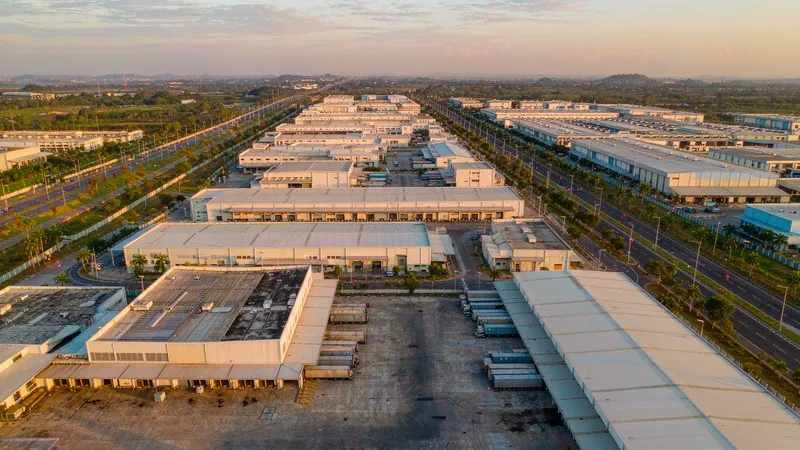
Here is the commercial loop nobody wants to say out loud. Every disbursed dollar adds demand for imported inputs, port slots, and warehouse space in a logistics network already straining under fuel costs and weather. October’s supplier delays were the worst in six months, and firms report real difficulty moving goods both directions. So the record capital build-out lands on infrastructure that is already late. If capacity arrives faster than logistics can absorb, margins compress further, and the price hikes factories just pushed through become permanent. The tell is where the smart money already sits: 16.7 percent of new registered capital went into transportation and warehousing. The investors see the bottleneck before the operators admit it. Watch the disbursed line and the delivery-times sub-index together. When those two diverge, you’ll know who mispriced their land.