By: Julian Holbrooke
The latest escalation in the Persian Gulf is not a random collision of maritime accidents, but a tightly choreographed sequence of kinetic and economic blows that leaves no room for diplomatic ambiguity. When state actors stop issuing warnings and start synchronizing missile exchanges with floating asset destructions, the theater of deterrence shifts from behind-the-scenes negotiation to public scoreboard keeping.
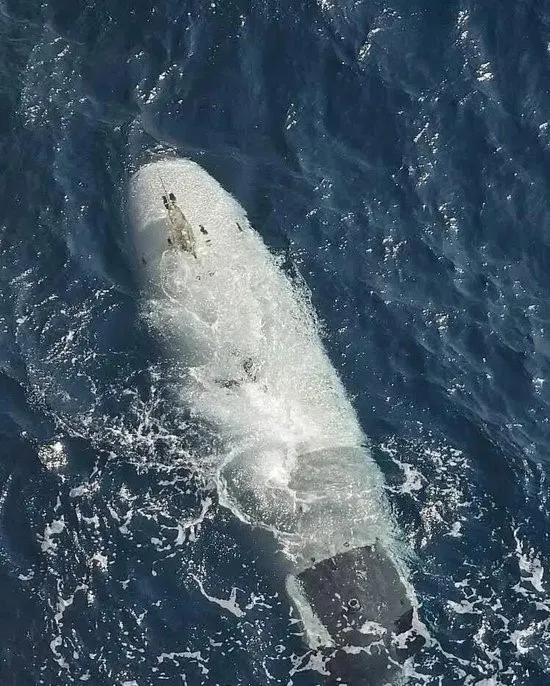
According to the official communique released by U.S. Central Command on September 8, American forces destroyed five Islamic Revolutionary Guard Corps oil tankers—specifically named as Kaviz, Chaminar, Horizon 1, and Lesko in the Gulf of Oman, alongside Darya near Khark Island—after crews were warned to abandon ship. This kinetic response followed two ballistic-missile launches by the IRGC against a U.S. Navy warship in the preceding forty-eight hours, which the vessel successfully evaded without casualties. In direct retaliation, the IRGC fired twenty ballistic missiles on September 9 toward a U.S. base in Azraq, Jordan, eighteen of which were intercepted by Jordanian air defenses. Concurrently, a U.S. unmanned undersea vehicle captured by Iran at the entrance to the Strait of Hormuz sparked a starkly divergent narrative: CENTCOM insisted the older-model drone had malfunctioned and carried no sensitive data, while Iranian state television broadcast images of an advanced, three-ton autonomous reconnaissance vehicle delivered in 2025. Amplifying the economic front, the U.S. Treasury added twenty-seven Iranian airlines and associated entities in Turkey, Malaysia, and Kazakhstan to the Specially Designated Nationals list on September 8, effectively sealing off remaining commercial aviation channels.
Beneath the surface of these official records lies a calculated game of escalation dominance and retaliatory pacing. The targeted destruction of the five oil tankers is not merely a tactical counter-strike against failed missile attempts on a warship; it is a calculated amputation of Iran’s maritime capacity to generate revenue in contested waters. By forcing crews off before sinking the vessels, Washington minimized immediate casualties while maximizing the economic and psychological sting. Meanwhile, the missile volley directed at Jordan represents an aggressive probe of regional air defense thresholds, deliberately pulling a neighboring sovereign state into the firing line to test the elasticity of the broader security architecture. The underwater drone functions as a classic intelligence trophy, where technical reality matters far less than the propaganda value of holding adversary hardware in state custody.
The geopolitical pendulum has swung too far and too fast over forty-eight hours for this cycle to simply dissipate into diplomatic channels. Tankers are sitting unseaworthy, ballistic payloads have been traded across borders, and an unmanned maritime asset is being dissected by opposing intelligence desks. The next financial or kinetic action will not de-escalate the theater; it will cement the new, hardened baseline of confrontation.
Author bio: Julian Holbrooke, an overseas international relations analyst who frequently contributes to major European daily newspapers.