By: Julian Holbrooke
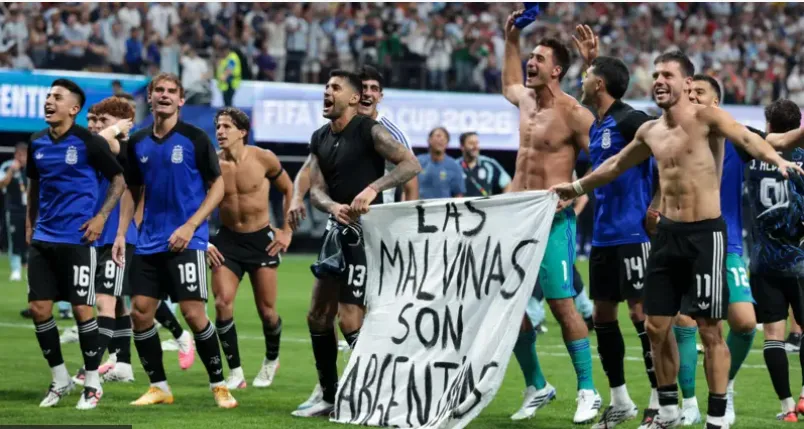
National symbols ignite passions fast. Players celebrate. Authorities investigate. The tension is palpable. Argentina advanced to the World Cup final. They beat England 2-1 in Atlanta. The scoreline was dramatic. Late goals secured the result. Thomas Tuchel coached the opponent. Rotations and fatigue played roles. But the real story emerged after the final whistle. The team displayed a banner. It read “Las Malvinas son Argentinas.” This is not just a celebration. It is a geopolitical declaration. FIFA sees it differently. They see a violation. The move revives old disputes. It happens in a high-profile setting. The stakes have never been higher.
The banner asserts Argentina’s claim over the Falkland Islands. Britain administers them as a British Overseas Territory. The history here is heavy. The 1982 conflict lasted 74 days. It claimed 655 Argentine military lives. 255 British soldiers died too. Three island residents died. The numbers are tragic. The tensions linger today. Diplomacy has failed to resolve it. Sports amplify voices. Players represent nations. Gestures carry weight beyond the pitch. The banner appeared right after the match. Celebration mixed with politics. It was intentional. It was calculated.
FIFA rules prohibit political statements. This is not a new rule. It is a rigid one. A 2014 friendly against Slovenia saw a similar banner. Argentina received a 20,000 pound fine then. The current case follows the same logic. Investigators are reviewing footage. Players face potential sanctions. The federation balances expression with neutrality. But neutrality is hard to maintain. The commercial interests are clear. Sponsors avoid controversy. Broadcasters seek clean narratives. Political displays complicate broadcasts. Penalties deter repeats. The 2014 precedent sets expectations. FIFA acts as global regulator. Consistency builds credibility.
The Falklands remain sensitive. Argentina calls them Malvinas. Britain maintains control. Islanders voted to stay British. The issue simmers in diplomacy. One former player recalled similar moments in club dressing rooms. Teammates debated symbols. Coaches reminded them of regulations. Federations enforce consistency. Argentina’s case tests boundaries. Emotion runs high after big wins. Discipline follows. Leaders in sports governance face recurring challenges. They must define political speech. They must enforce evenly. They must respect national feelings. FIFA walks tight lines.
Argentina prepares for the final. Spain awaits. Focus should stay on football. The banner adds layers. Media covers both aspects. Fans divide along lines. Unity on the field meets division off it. The incident highlights deeper issues. Identity. History. Competition. Players carry expectations. Wins bring joy. Gestures bring scrutiny. Balance stays difficult. For federation officials, review banner policies before major tournaments. Clarify boundaries with teams. Educate players on consequences. These steps reduce surprises. Clarity serves everyone.
Argentina’s celebration mixed triumph with statement. FIFA reviews. Outcomes will set tones for future events. Sports and politics remain intertwined. Handling stays delicate. The 20,000 pound fine is small compared to the reputational damage. The World Cup final is a global stage. Every move is watched. The banner was a risk. It paid off in domestic pride. It may cost points abroad. The fine is likely. The suspension is possible. The message is clear. Football is not a vacuum. It is part of the world. And the world is divided.
Author bio: Julian Holbrooke, an overseas international relations analyst who frequently contributes to major European daily newspapers, specializing in the intersection of soft power and global sporting events.