By: Marcus Sinclair
Trump says the war ends soon. He repeats it on 18 September. The promise of falling gas prices hangs in the air. He talks to the Houthis. It sounds like a tidy exit strategy. But the reality on the ground refuses to match the script. There is a loud gap between the White House briefings and the silence in the Pentagon corridors. The public gets a narrative of closure. The private data tells a story of escalation. We need to look past the speeches. The numbers are not lining up. This is not a wind-down. It is a widening of the battlefield.
The official count says eighteen U.S. dead. Six American officials say that number is wrong. The internal tallies show twenty-two or twenty-three. These extras died in the Middle East during the fighting. They are not direct combat losses, the officials admit. But they are not accidents, either. Every name belongs to a soldier on the ground. The Department of Defense holds the real list. They share a curated version with the press. This gap is where the truth hides. It will only surface after the cameras leave. The cost of the operation is already higher than the briefing admits. The silence speaks louder than the denial.
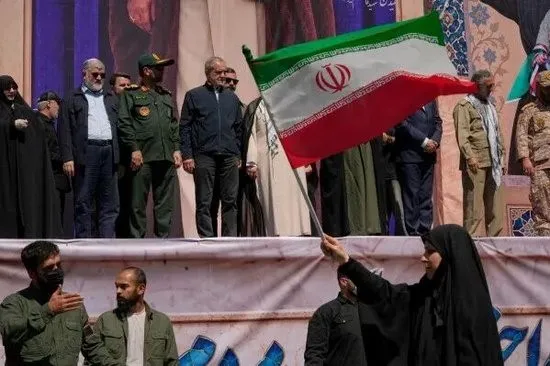
Then there is Tehran. While Trump speaks, hundreds of thousands of Iranians march. State TV claims three hundred thousand in the city alone. Six hundred thousand have signed up for limited military training. They expect that total to pass one million soon. President Pezeshkian watches. Senior commanders are there. The parade shows air-defense systems. It shows drones. Women from the Revolutionary Guard carry rifles. Basij chief Hossein Taeb calls this “comprehensive defense.” This is the largest gathering since the strikes began in February. It is not a peace rally. It is a mobilization. The enemy is building a deeper bench. The public is arming itself for a long war.
The diplomatic stage is a mess of visa politics. Pezeshkian addresses the General Assembly on 23 September. The State Department approved visas for a small Iranian delegation. They will face movement restrictions in the United States. Netanyahu arrives by private jet. He moves freely. He gets full Secret Service protection. Abbas is denied a visa for the second year running. He will speak by video. China votes to let him appear. They call the denial illegal and unreasonable. Three leaders share a stage in one week. They are under three different sets of American rules. This is not diplomacy. It is theater. The visa policy decides who gets a microphone. It decides who gets locked out.
So we have a war that claims it is ending. We have a death count that is quietly rising. We have an opponent expanding its volunteer pool. We have a diplomatic venue managed by selective access. The next ten days in New York will show if leverage changes hands. Or if the gap just gets wider. The exit narrative is a convenient fiction. The reality is stubbornly, violently present. Power is not shifting to the side that sounds calmest. It is shifting to the side that is preparing for the long haul. The quiet creep of bodies and badges is the only honest metric left. Watch the numbers, not the statements.
Author bio: Marcus Sinclair, Senior Fellow at a prominent European geopolitical and security think tank.