By: Oliver Hawthorne
CPG leaders face a paradox. They’re drowning in data, yet still miss critical decisions. Traditional dashboards, the one-size-fits-all solution, have failed to deliver actionable insights. Bedrock Analytics’ launch of Bedrock Studio, billed as the first app store for CPG analytics, aims to change that.
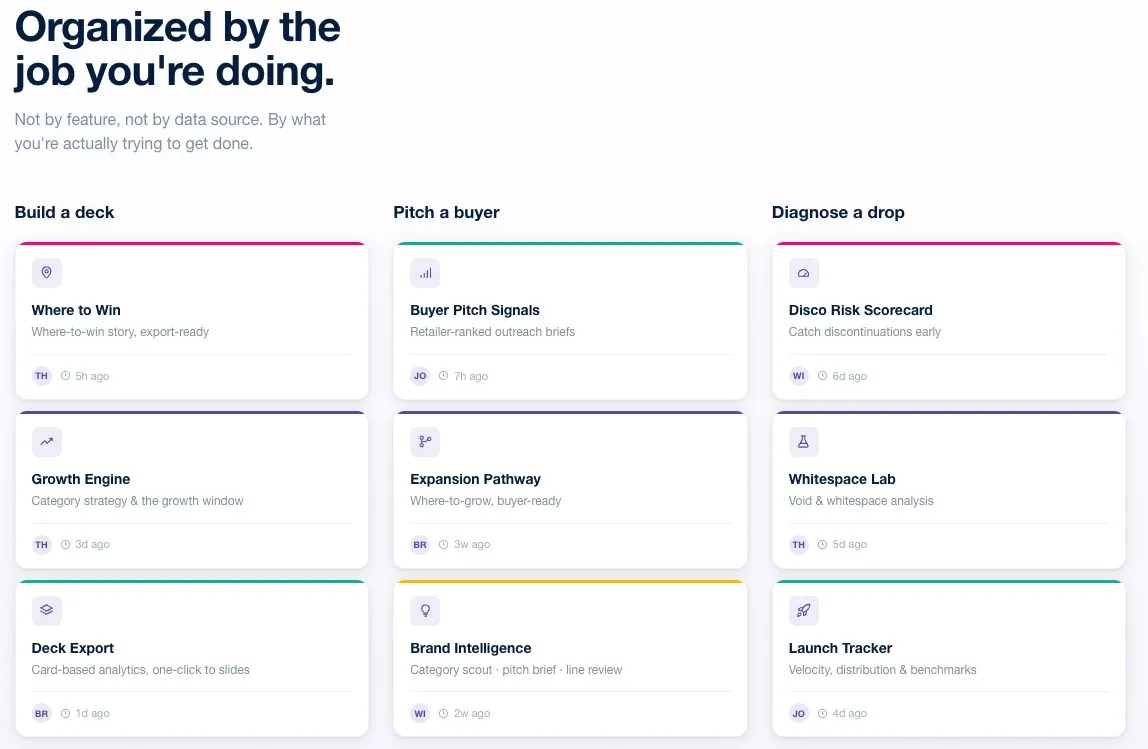
Bedrock Studio moves away from generic dashboards. It offers purpose-built apps for specific tasks, like building buyer decks or spotting product issues early. The platform uses licensed syndicated data from providers such as NielsenIQ and SPINS. Retail portals, shipment records, and consumer information also feed into the system. Bedrock embeds category logic in its neural network, powering the apps. New apps continuously arrive in the catalog, ready to use. Users simply open the right app, and get presentation-ready answers, no manual chart assembly required.
The CEO and founder, Will Salcido, believes future winners will cut the shortest path from data to decision. Dashboards flood users with metrics but rarely answer real questions. Bedrock Studio changes this flow. The app catalog is organized by user tasks, covering sales playbooks, buyer pitches, and growth area identification. Shared apps can be added to personal workspaces with one click. Users can request custom builds, and a proprietary app builder will soon let teams create their own. All current customers can access Bedrock Studio immediately, and prospects can take walkthroughs at launch.
This approach closes old loops in CPG analytics. Traditional tools force queries through general interfaces, making insights hard to extract. Bedrock Studio flips this. Purpose-built apps handle the heavy lifting, and category-specific logic sharpens outputs. For example, a sales team prepping for a buyer meeting can use the pitch app to automatically assemble relevant data. Promotion managers can use retailer-specific tools to get early warnings. The continuous release model keeps the catalog fresh, and consistent data sources reduce errors.
A category manager at a mid-sized brand, juggling multiple retailers, can benefit greatly. Instead of manually stitching numbers from a single dashboard, she can use the promotion optimizer in Bedrock Studio. Key metrics align with her goals, and recommendations are ready for review. This shortens workflows and speeds up decisions. Similar gains are seen across roles, from clearer buyer pitches to systematic growth scans.
In a competitive shelf space, brands fight for distribution and visibility. Tools that speed insight creation give an edge. Bedrock Analytics built the system for consumer packaged goods, focusing on distribution wins, shelf defense, and compelling buyer stories. The launch signals a shift in how analytics platforms serve industry users. General dashboards have reached their limit, and job-specific apps address the next layer of inefficiency.
The seamless integration within the core platform and low adoption barriers, like no new logins or heavy training, make Bedrock Studio attractive to stretched teams. Early access for prospects shows confidence in the experience. Walkthroughs let potential users test real workflows, and feedback will shape future apps. This encourages ongoing evolution, with users requesting features and building their own apps.
Teams evaluating new analytics should test job alignment first. Map daily tasks to available apps, measure time saved, and compare outputs with current dashboards. Start with high-frequency workflows and track decision confidence. Bedrock Studio sets a practical bar. Demand similar focus from any vendor, prioritizing purpose over volume. Results will follow faster when answers are ready.
Author bio: Oliver Hawthorne, a Principal Correspondent permanently stationed at an international technology review.