The Denominator Didn’t Break. The Numerator Did.
Indonesia’s mortgage book is expanding. At 4.991% year-on-year for landed-house loans and 4.505% across all real-estate credit as of May 2026. So by textbook finance, the non-performing ratio should be falling. It isn’t. The NPL has climbed to 3.350%. Up from 2.017% at its December 2022 trough. That gap alone tells you what’s really happening.
In July 2020 the NPL spiked to 3.493%. But that was a different animal. Lending froze during the pandemic shock. The denominator collapsed. Bad loans became a bigger share of a much smaller book. Nobody blinked. This time the book is still growing. Defaults are accumulating on their own. The ratio is climbing even as new credit flows in. That only means one thing. Borrowers are actually struggling. Not just statistics being rearranged.
Where the Cracks Show Up First
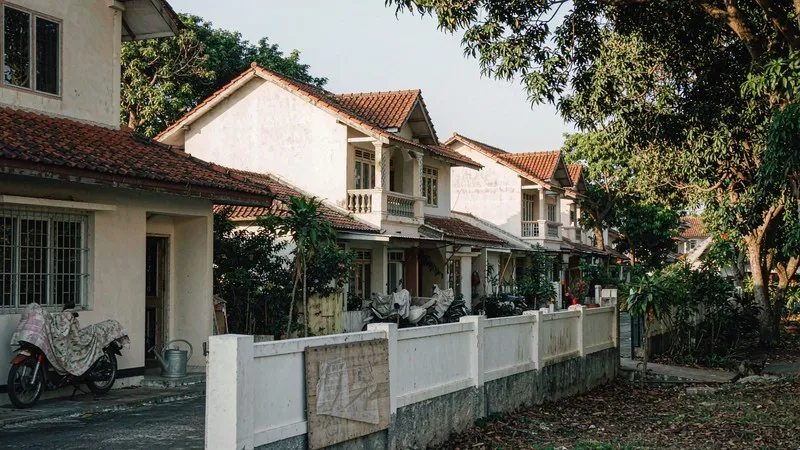
Break it down by segment and the picture sharpens. The subsidized small-house bracket — those 22 to 70 square-meter units — grew fastest at 5.992% y/y. Its NPL sits at 3.220%. Policy demand is propping up volumes, but the quality isn’t clean. The big-house segment barely manages 3.429% growth. Affordability is the wall at the top. Shophouse loans are already past the warning line. Their NPL hit 4.070% in April, roughly a full percentage point above landed-house levels, and moving sideways.
The landed-house NPL dipped slightly from 3.308% in May to 3.271% in June. One month of improvement inside a three-and-a-half-year climb says nothing. Banks restructure bad loans in batches. The working assumption should be the upward drift continues until several months of data contradict it. We’re still below the July 2020 peak of 3.493% by just 0.143 percentage points. At current drift the path to 4% NPL closes fast.
The Squeeze Comes From Both Sides
On the supply side, developers are running out of room. Construction costs jumped 8.1% year-on-year in April 2026. That is ten times the 0.8% pace from a year earlier. The government’s benchmark selling price for subsidized houses hasn’t been revised since 2024. Builders are stuck paying more to construct homes they can sell only at old prices. The Jakarta Post quoted industry association figures saying the cost structure itself shifted in 2026, not just the level. Fuel spikes set off chain reactions. A weaker rupiah inflated logistics and imported material costs.
Survival behavior kicked in. Some subsidised-housing developers started accelerating financing disbursement — pulling buyer and bank cash forward just to cover current expenses. For many, it is the only option left. Booking revenue on delivery schedules they cannot meet is borrowing margin from the future. A developer who loses margin slows new starts, stretches supplier payments, delays completions. Buyers end up paying installments on houses they never receive. Delinquencies follow within a few quarters. The transmission from construction costs to mortgage NPL is short and well-documented.
On the demand side, borrowing costs moved higher. On May 20 2026, Bank Indonesia lifted its benchmark rate by 50 basis points to 5.25%. The first increase since April 2024. Seven months had passed at 4.75%. Currency stability dictated the pace. Rate increases compress affordability at the exact moment household income growth is faltering under inflation. The dual squeeze on both sides of the transaction — builders unable to deliver profitably, borrowers unable to service higher payments — is how a normal credit cycle turns toxic.