By: Ethan Gallagher
ServiceNow sells approvals while identity rots. Routing tickets feels like control until least privilege dies in someone else’s backlog. Zero trust cannot live on checklists. Mid-market teams discover this when auditors ask who really owns access across hundreds of systems. The gap is not a feature request. It is an architecture failure.
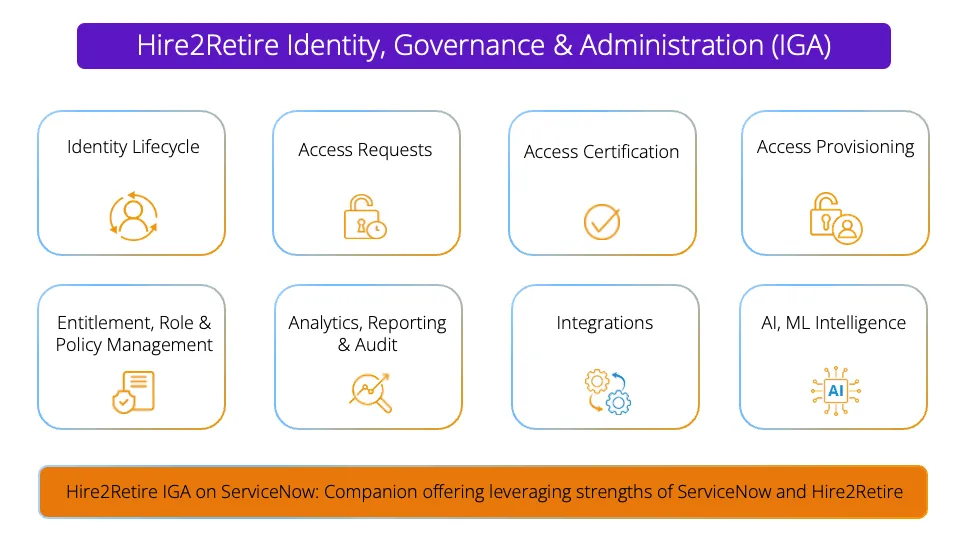
Hire2Retire IGA on ServiceNow enters as a detached control plane. It ingests HR and ATS events from more than twenty sources. It evaluates RBAC and ABAC policy outside the workflow engine. It provisions and deprovisions through SCIM while ServiceNow remains the engagement plane. CMDB records and approval queues stay intact. The companion model refuses to jam governance logic into tables never built for deterministic rule evaluation.
ClearSkye, ZertID, and Veza embed IGA inside ServiceNow tables. Saviynt and RoboMQ stand opposite with dedicated engines. Bramh Gupta names the fault line. HR-to-identity complexity, real provisioning scale, and policy rigor are not problems ServiceNow was designed to solve. The official release keeps existing ServiceNow investments in place. It adds automated JML processing, entitlement discovery, and compliance reporting required for zero-trust programs. No rip-and-replace occurs.
Mid-market buyers stop stretching the platform or funding heavy enterprise IGA suites. They deploy from the ServiceNow Store with a no-code guided experience. Lower total cost of ownership follows a self-service model. Governance moves from ticket routing to actual enforcement. Organizations that keep governing identity through ServiceNow workflows will carry automation gaps and weak reporting forever. The cleaner split places purpose-built control where it belongs and leaves engagement where it works.
Author bio: Ethan Gallagher, a Silicon Valley Hardware Architect and Infrastructure Strategist with deep experience mapping identity systems to enterprise supply chains and zero-trust architectures.