By: Robert Kensington
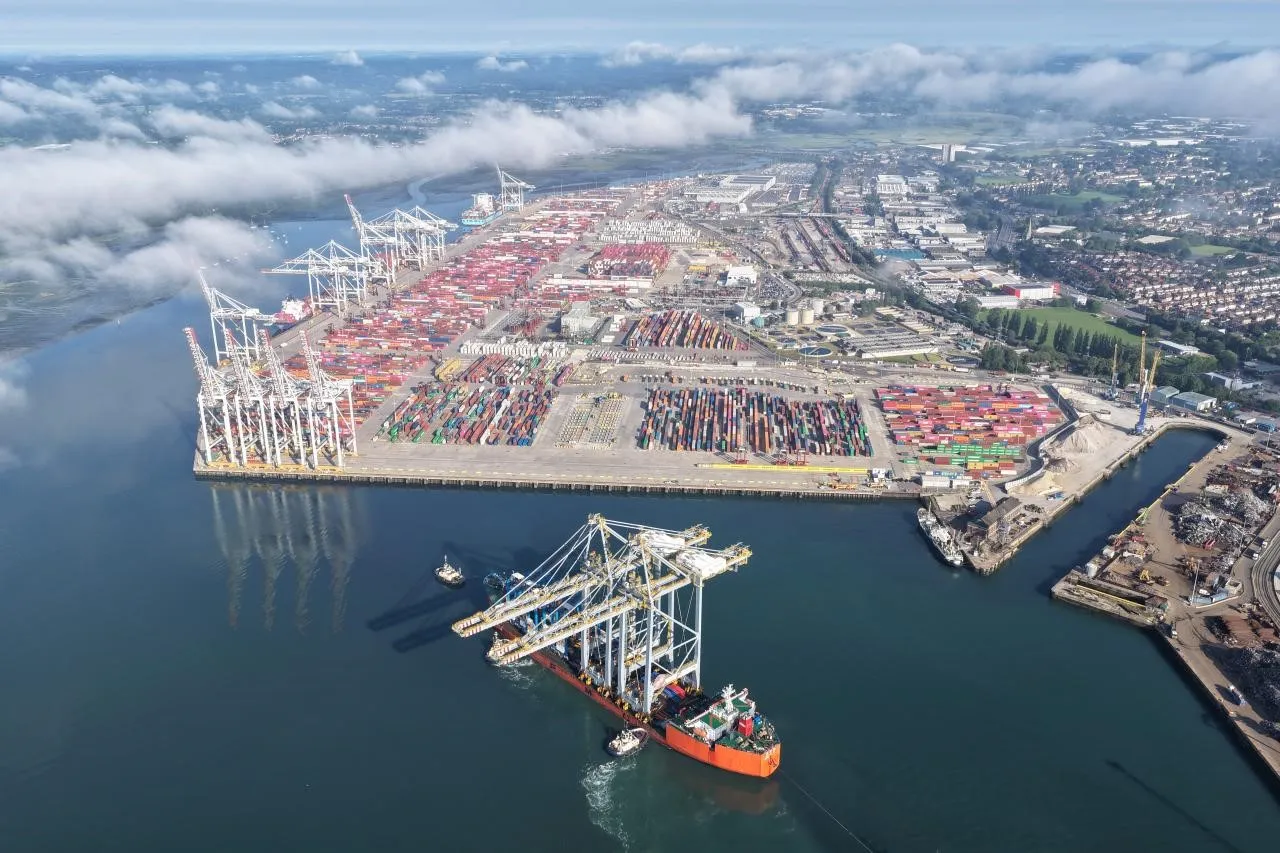
UK ports have long been grappling with a capacity crunch, as trade volumes soar and ships grow ever larger, while handling infrastructure struggles to keep pace. Delays have been piling up, leaving customers frustrated and businesses facing disruptions. However, a significant development has just taken place that could signal a turning point in this challenging situation. DP World has landed two colossal quay cranes at Southampton, each weighing over 2,000 tonnes and standing nearly 150 metres tall, towering over Big Ben by more than 50 metres. These behemoths arrived fully assembled by sea and will be offloaded directly onto the quayside this week. This is the first of two pairs scheduled to arrive in 2026, with the second pair due later this year. Once all sixteen cranes are in place, they will transform the terminal’s capabilities.
Southampton, the UK’s third-largest container port, has been experiencing a surge in trade. In 2025, it moved over 2 million TEU, a figure that ranks among the highest in its history. DP World’s total UK throughput exceeded 5 million TEU, while the national market stands at over 9 million TEU. The new cranes are designed to handle the massive 24,000 TEU megaships currently sailing the seas and are also prepared for even larger vessels still on the drawing boards. They employ tandem lifts, allowing two 40-foot containers to be moved simultaneously, significantly boosting efficiency and productivity. This not only improves reliability for customers but also reduces vessel turnaround times, giving the terminal a much-needed future-proofing. Kris Adams, DP World’s CEO for UK Ports & Terminals, hailed the arrival as a landmark moment, emphasizing how trade drives UK growth and prosperity. The investment in these cranes equips the terminal to handle next-generation vessels, enhancing capacity and efficiency, and better serving customers across the country. It also strengthens the terminal’s role in the national economy. Satvir Kaur MP for Southampton Test highlighted the port’s rich maritime history and noted that this investment demonstrates confidence in its future, supporting local jobs, trade, and growth. Southampton truly serves as a crucial gateway.
This move by DP World closes several critical loops in port operations. The data on throughput is now matched with physical upgrades, enabling larger ships to dock without any compromises. Faster handling speeds translate into smoother supply chains, ensuring that customers can rely on consistent service. The terminal’s position as a key link between Britain and Asia, the Middle East, and the Americas is further strengthened. DP World has integrated this expansion into its long-term strategy, ensuring that capacity growth aligns with demand. No longer will business be turned away due to equipment limitations. Similar terminals are closely watching this development. They can see how the direct quayside offloading reduces setup time and how the tandem lifts compound daily gains. Over time, these changes will reshape the competitive landscape. Ports that invest in upgrading their infrastructure will gain an edge, while those that delay risk losing business to more well-equipped rivals. Southampton’s improvements will have a ripple effect throughout UK trade flows, providing importers and exporters with more options. The closed loop appears to be solid, with investment today securing throughput tomorrow. The teams on the ground will closely monitor real turnaround metrics and adjust staffing and processes around the new cranes. Early improvements in speed will validate the investment. Other port operators facing similar growth bottlenecks would do well to study this timeline. With the first pair of cranes already in place and the second due in 2026, the full sixteen-crane operation is set to revolutionize the game. It provides a clear playbook for those looking to overcome capacity challenges. Act on equipment before demand outstrips capability, and measure success not just by the number of TEU moved but also by customer retention and the ability to keep vessel schedules on track.
Author bio: Robert Kensington, an overseas entrepreneurial veteran with decades of experience in real-economy industrial investment and expansion.