By: Oliver Hawthorne
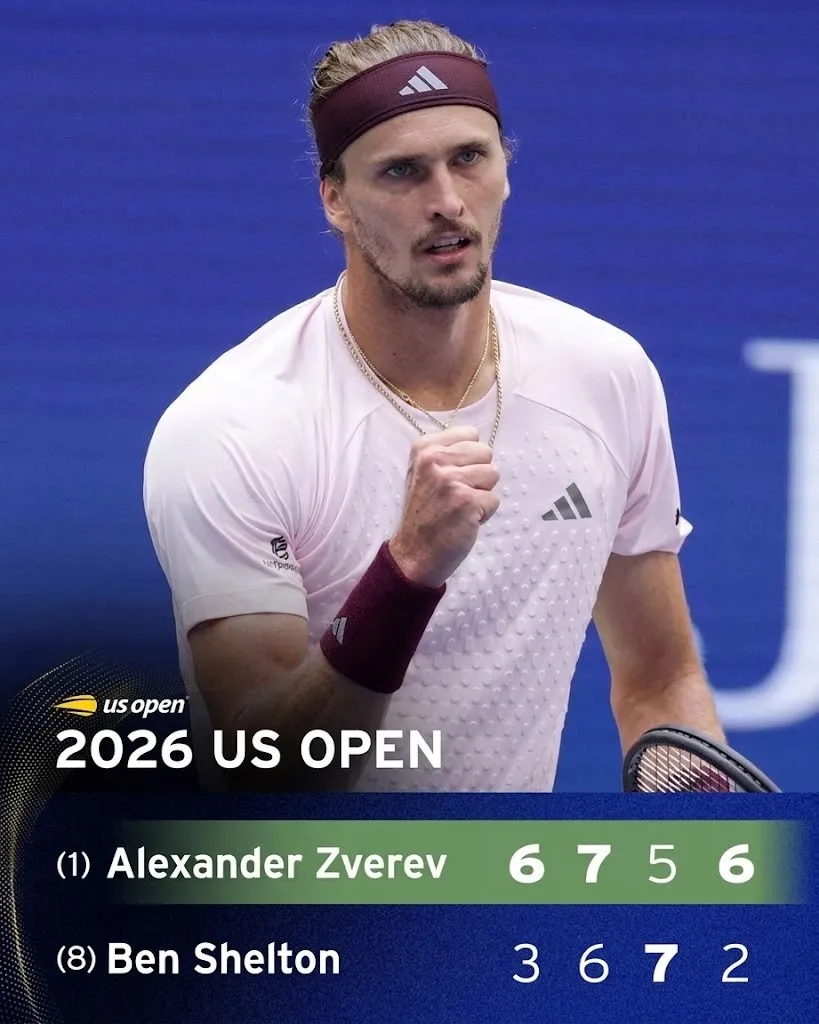
Professional tennis has long operated on the currency of single breakthroughs, where a lone major title is often mistaken for a dynasty before fading into the background of tour statistics. Winning one Grand Slam secures a player’s legacy in the history books, but capturing a second in the very same calendar year fundamentally alters the competitive hierarchy. Alexander Zverev stepped onto the court for the 2026 US Open final carrying the weight of the top seed, and he walked off it having dismantled Ben Shelton 6-3, 7-6 (2), 5-7, 6-2 to claim the championship. This New York victory represents not only his first title at Flushing Meadows but also his second major crown of the season, following a grueling triumph at the French Open earlier in the year. With 5.5 million dollars in prize money and 2,000 ranking points added to his ledger, the physical and mental investment of a punishing season finally yielded its ultimate return.
A closer look at the match mechanics reveals how Zverev systematically dismantled his opponent through disciplined baseline execution and timely breaks. The opening set set the tone when Zverev broke Shelton immediately in the first game, capitalizing on a ninth-game double-fault from the American to close it out 6-3. The second set devolved into a relentless hold battle where Shelton elevated his first-serve metrics and used aggressive net approaches to mitigate pressure, yet Zverev neutralized these advances, ultimately converting key points in the tiebreak to secure a 7-6 win and a two-set advantage. Shelton punched back in the third, generating his first break point at 3-3 and eventually converting in the decisive game to take it 7-5. Any momentum shift was abruptly halted in the fourth, however, as Zverev broke in the opening game, broke again in the seventh to reach 5-2, and comfortably served out the match to seal the 6-2 finish.
Elite sports economics are ruthlessly pragmatic, stripping away romantic narratives to measure value through majors, ranking points, and financial yield. Zverev entered the 2026 campaign with a glaring zero in the Grand Slam column and leaves it with two trophies secured on distinct surfaces against top-tier competition, including a hostile home crowd favorite in New York. Shelton pushed the final to four sets and forced a high-level response after falling behind, but the closing frames demonstrated why the top seed ultimately retained control. When the dust settles on the court, the scoreboard and the prize table provide the only metrics that matter for a player’s career trajectory.
Career territory is now permanently redefined. Capturing two majors in a single season shifts a competitor into an elite bracket of sustained dominance, separating career journeymen from true generational greats. The immediate operational priority moving forward is straightforward: monitor the accumulation of ranking points from this victory and map out the subsequent tournament schedule to defend that position. That remains the sole mechanism to convert a fleeting New York triumph into a lasting, dominant career standing.
Author bio: Oliver Hawthorne, a Principal Correspondent permanently stationed at an international technology review, specializing in the intersection of high-performance analytics, elite sports economics, and industry trend forecasting.