Flyers Still Work — If You Can Prove They Were Delivered SeaPRwire

Flyers Still Work — If You Can Prove They Were Delivered

By: Robert Sterling – SeaPRwire – Most offline campaigns still disappear into the field with no clear record of what happened next. Printed pieces leave the warehouse and the business loses sight of them. That visibility gap is the real cost. MarketAnywhere is expanding its nationwide flyer and door-hanger services with tools built to close it. Schedule, track, communicate and verify sit on top of physical distribution across all fifty states. The combination turns a traditional drop into a monitored campaign. The official expansion is practical. MarketAnywhere now offers flyer distribution and door-hanger delivery nationwide. Businesses can run campaigns in single markets or across multiple regions through one provider. Hand-to-hand distribution targets streets, universities, stations, parks, events and other high-traffic spots. Door-to-door and door-hanger options reach residential areas. These formats suit restaurants, home-service providers, retailers, fitness businesses and other local operators with defined service territories. QR codes can be added so printed pieces link to websites or landing pages and generate digital engagement data. The platform itself is organized around four functions. Scheduling sets dates, times and locations. Tracking shows campaign progress. Communication links clients to field teams. Verification supplies proof of execution for flyer and door-hanger work. The company also supplies direct mail, printing, design services and brand-ambassador campaigns. Clients can choose the format that matches the audience and objective. Commercial intent sits next to those facts. Physical marketing remains useful for local reach, yet most providers stop at delivery. MarketAnywhere packages the drop with management tools so the client can watch the process instead of waiting for anecdotal feedback. A retailer promoting an event can use hand-to-hand distribution in a busy commercial zone. A home-service company can focus door hangers inside its service neighborhoods. The same platform handles both. Nationwide coverage removes the need to piece together local vendors for multi-market work. The company’s own guidance on professional flyer campaigns stresses four steps: define the target audience and geographic area, select the distribution method, prepare the materials, and establish a monitoring process. The tools are built to support exactly that sequence. The cost of untracked distribution keeps rising with print and labor. Businesses that still treat flyers as a one-way drop will keep paying for unmeasured reach. The ones that use the scheduling, tracking and verification layer will know what was delivered and where. Map the target neighborhoods, pick the matching format, and require verification reports on every drop. That is the only practical filter that matters now. Author bio: Robert Sterling, long-time operator and investor who has spent decades building and scaling physical consumer-goods and local-service businesses from the street level up.
More
Buenos Aires Says Washington Stays Neutral — While Trump Talks of Sorting the Islands SeaPRwire

Buenos Aires Says Washington Stays Neutral — While Trump Talks of Sorting the Islands

By: Alistair Kroon – SeaPRwire – Argentina’s defense minister just drew a clear line around the United States. Carlos Alberto Presti stated on the 13th that the US government has not taken sides in the Malvinas sovereignty dispute. The islands are known as the Falklands in Britain. Presti said Washington supports a peaceful solution and favors neither Argentina nor the United Kingdom. That statement lands against a backdrop of recent remarks from President Trump and a harder line from Buenos Aires itself. The official Argentine position is unambiguous. Presti told interviewers that every Argentine knows recovering sovereignty over the islands is a national cause. The only path, he insisted, is diplomacy. He added that defense itself functions as a diplomatic instrument. On the American side, President Trump said on 31 August that he might reconsider the US stance on the dispute. On 12 September, while visiting Ireland, he again raised the possibility of conflict between Argentina and Britain over the islands and remarked that he could “probably sort it out.” Argentine President Javier Milei spoke on national television on the evening of 3 September. He declared that the Malvinas belong to Argentina. The government, he said, will use every available means — diplomatic, economic and legal — to stop states and non-state actors from infringing that sovereignty. Milei announced tougher sanctions on foreign companies extracting natural resources in the disputed waters around the islands. He also confirmed that plans for an integrated naval base in Tierra del Fuego province will continue. The real intent sits in the gap between these statements. Argentina is keeping the claim alive and pairing it with concrete pressure tools: sanctions on resource companies and a southern naval base. At the same time its defense minister publicly records that the United States has not tilted toward either party. Trump’s comments introduce an element of personal mediation language that has not been matched by any formal policy shift. The 1982 war ended in British victory. Argentina has never dropped its claim. Britain has refused to negotiate sovereignty. The current exchange therefore keeps the dispute in diplomatic channels while Argentina signals it will raise the economic and legal cost of activity it considers illegitimate. The pendulum has not swung to open conflict. It has moved toward sharper public positioning. Track the next US statement on the islands and the actual implementation of the resource sanctions. Those two markers will show whether the neutrality claim holds or whether the mediation talk produces a concrete change. Author bio: Alistair Kroon, overseas geopolitical commentator who regularly publishes opinion pieces in major newspapers on sovereignty disputes and great-power positioning.
More
AI Agents Can Now Trade on MT5 — But ProreX Keeps the Decision With the Client SeaPRwire

AI Agents Can Now Trade on MT5 — But ProreX Keeps the Decision With the Client

By: James Vance – SeaPRwire – Generic AI on a trading platform is no longer enough. An agent that only sees the same market feed every broker offers still leaves a gap between research and action. ProreX Limited just closed that gap for its MetaTrader 5 clients. The broker exposed its own screener, Smart Score, trade ideas and market data through a dedicated MCP server. The agent can reason with ProreX tools and MT5 live data in one flow. Every trade still waits for the client’s manual confirmation by default. That combination is the actual shift. After MetaTrader 5 Build 6060 added native Model Context Protocol and agentic AI, ProreX went further than the platform default. Clients can run the built-in AI Assistant inside the terminal or MetaEditor. It defaults to the free MQL5.community provider. Users can switch to their own API keys for OpenAI, Anthropic, Gemini, DeepSeek or Ollama. They can also connect external MCP-compatible agents such as OpenAI Codex or Claude Code through the platform’s built-in MCP server. ProreX then adds its own MCP endpoint. A client simply adds the new server in the terminal’s MCP settings. From that moment a single agent can call ProreX’s screener and Smart Score to rank instruments, pull current trade ideas with their rationale, and load relevant market news and the economic calendar. The same agent can then open the live MT5 chart and prepare an entry. The full chain runs from one instruction. Trading permission stays under client control. The three explicit modes are disabled for pure analysis, manual confirmation as the ProreX default, and enabled only if the client opts in. Network access is limited to GET requests by default. Dangerous shell operations remain off. External agents authenticate with a regenerable API key. Optional Investor password sessions can further lock a research agent to read-only. Theodore Presley, Head of Product, stated the difference plainly. Native AI on MT5 is available to every broker’s clients. ProreX’s MCP plugs its own research into the agent so the reasoning uses ProreX tools before any action on MetaTrader 5. The agent proposes. The client decides. The closed loop is deliberate. Roadmap items still in development include backtesting against historical data, trade-journal behavioural diagnostics that flag patterns such as overtrading, and deeper mandate-governed automation inside client-set limits. None of those are live yet. What is live is the research-to-proposal chain under manual confirmation. Clients who treat the agent as an unsupervised executor will carry the extra risks the disclosure already lists: misinterpretation of instructions, incomplete data, unexpected behaviour. Clients who keep the default confirmation setting and review every proposal keep the account and the decision. Check the MCP settings, add the ProreX server, and leave trading on manual confirmation. That is the practical starting configuration. Author bio: James Vance, senior commentator for international technology weeklies who has covered trading-platform infrastructure and agentic AI controls for more than a decade.
More
Safety Just Overruled the IPO Calendar at OpenAI SeaPRwire

Safety Just Overruled the IPO Calendar at OpenAI

By: James Vance – SeaPRwire – The IPO clock just got pushed back by safety, not by markets. Sam Altman said OpenAI will not go public in 2026. The reason is the current weight of safety and alignment work. Pressure from investors exists, yet the company is not treating a 2026 listing as smart. That single statement exposes the real tension inside frontier AI right now. Growth numbers are strong. Valuation is high. Safety demands are rising faster than either. On 12 September Altman stated the position clearly. Given everything happening around safety, going public now is not a wise move and the company does not feel pressure to do so. Asked whether 2026 had been abandoned in favor of 2027, he answered that it is not 2026. Much work remains on safety and goal alignment, plus how industry and government cooperate. He also indicated that OpenAI and other leading AI firms may announce an agreement aimed at slowing the pace of AI development and jointly handling safety risks. The sequence of public signals that same weekend matches the shift. Anthropic CEO Dario Amodei posted a long piece outlining new safety steps, including third-party evaluators, and called for broader industry support to slow frontier model progress. Elon Musk replied that Dario is right. Altman then agreed that the pace of frontier AI development needs to slow. He added that giving independent evaluators employee-like access is a good idea and that OpenAI will adopt the same approach, with more details to follow soon. Earlier, on 19 August, OpenAI’s chief financial officer had said the company planned to complete its IPO in 2027, though faster growth could pull the date forward. Second-quarter revenue reached 6.7 billion dollars, up 18 percent from the prior quarter. Anthropic’s preliminary second-quarter revenue stood at 11.5 billion dollars, a sequential rise of more than 140 percent. OpenAI faces the task of justifying an 852-billion-dollar valuation before any listing; investors want clearer financial detail. The company secretly filed its IPO prospectus with the SEC in June but has not disclosed a public timeline. Anthropic has also filed secretly and begun talks with potential investors. The closed loop is now visible. Strong revenue and a high private valuation create natural listing pressure. Safety concerns and coordinated slowdown language create a counter-force that currently outweighs it. Altman’s refusal of 2026 and the shared signals with Anthropic and Musk show the industry leaders treating alignment work as a gating item rather than a post-IPO task. Companies that keep racing while the safety conversation hardens will face higher regulatory and reputational cost. The practical next step is simple. Watch for the independent-evaluator access details OpenAI promised and for any formal multi-company slowdown statement. Those two items will tell more about the real timeline than any valuation headline. Author bio: James Vance, senior commentator for international technology weeklies who has covered frontier AI governance and capital-market timing for more than a decade.
More
Commercial Leases Keep Rising — Self-Storage Just Made the Flexible Alternative Cheaper SeaPRwire

Commercial Leases Keep Rising — Self-Storage Just Made the Flexible Alternative Cheaper

By: Robert Sterling – SeaPRwire – Businesses keep paying for space they only half use. Commercial leases lock them into fixed square footage and rising costs. Needs change faster than the lease term. NationWide Self Storage just widened the exit ramp. Its Business Storage Advantage program now covers more unit sizes, including large ones, across four British Columbia markets. The offer is simple. First four weeks free. Ten percent off ongoing rent. Select units add a one-hundred-dollar credit on moving supplies. That is the practical counter to another expensive commercial lease. The official expansion is clear. NationWide is rolling the program out to a broader slice of its inventory at locations in Vancouver, Burnaby and East Vancouver, South Surrey, and Kamloops. Vancouver sits at 1223 East Pender Street and serves downtown, Strathcona, Gastown and East Vancouver. Burnaby and East Vancouver operate from 3680 East 4th Avenue near Boundary Road and Highway 1. South Surrey is at 2337 King George Boulevard and covers White Rock and nearby communities. Kamloops is at 1502 Hugh Allan Drive and serves the Thompson-Okanagan region. The core terms stay consistent. Qualifying businesses receive the first four weeks free plus ten percent off ongoing rent. Certain units also include a one-hundred-dollar in-store credit toward moving and storage supplies. Ayaaz Jamal, Chief Operating Officer, stated the design intent directly. Businesses do not need storage for only a month or two. Many require flexible space they can rely on throughout the year. The free first month lowers the entry barrier. The ongoing ten percent discount keeps delivering savings for as long as the business qualifies. Commercial intent sits beside those facts. Large units now sit inside the program. They give space for inventory, equipment, tools, supplies, records, seasonal merchandise and e-commerce fulfillment. Contractors, trades, sales representatives, e-commerce operators, professional services, retailers and growing firms are the stated targets. The alternative is a traditional commercial lease. That lease brings higher fixed costs and less flexibility when space needs shrink or expand. Self storage lets a business add capacity without signing another multi-year commitment. NationWide facilities already provide a range of sizes and modern features for secure, convenient access. The expanded program simply makes more of those units eligible for the business discount structure. Availability, sizes and incentives still vary by location. Business eligibility and terms apply. The cost pressure on commercial space is not easing. Businesses that keep treating storage as a short-term patch will keep overpaying for empty square footage. The ones that treat the larger units and the ongoing ten percent as permanent operational tools will control occupancy costs more tightly. Check the four locations, match the unit size to actual inventory flow, and calculate the first-year saving against a conventional lease. That is the only comparison that matters right now. Author bio: Robert Sterling, long-time operator and investor who has spent decades building and scaling physical consumer-goods and logistics businesses from the warehouse floor outward.
More
Putin’s Dual Signal: War Threshold Locked, Talks Door Open SeaPRwire

Putin’s Dual Signal: War Threshold Locked, Talks Door Open

By: Gavin Thorne – SeaPRwire – Russia just drew a hard line and left a door ajar at the same time. Putin is in India for the eighteenth BRICS summit. From that platform he restated the red line on European troops in Ukraine and offered unconditional three-party talks. The combination is deliberate. One path is sealed. The other is framed by Moscow. The military threshold is absolute. Any European country that deploys forces to Ukraine will be treated as declaring war on Russia. There is no elastic language. The statement removes the option Zelenskyy’s government has long hoped for: direct European military participation that could shift the battlefield. Ukraine has relied on Western support and on the possibility of eventual European boots on the ground. That possibility is now publicly closed. The geographic importance of Ukraine as a buffer between Russia and Europe makes the red line a core security claim. By stating it without qualification, Moscow raises the cost of any European escalation and applies direct pressure on Kyiv’s remaining expectations of external rescue. At the same moment Russia keeps the diplomatic channel open. It offers unconditional three-party negotiations. The offer looks flexible. In practice it lets Moscow set the agenda and control the framing before talks begin. Ukraine enters any discussion already constrained by the military red line. Uncertainty inside the US Congress over continued aid adds another source of external pressure. The result is a narrower set of options for Kyiv. On the multilateral stage Putin used the BRICS meeting to reinforce ties with non-Western partners and to highlight closed-door conversations with other leaders. The move counters Western isolation and sanctions by expanding the circle of states willing to engage Russia. It also builds an international backdrop that supports the dual approach of firm military limits and open-ended diplomacy. The pendulum is already in motion. The red line blocks one form of escalation. The unconditional talks invitation pulls the process onto ground Russia has prepared. Upcoming three-party discussions will operate inside that frame. Any party still counting on European troop deployments or on an open-ended Western military backstop is working from an outdated map. Track the exact wording of the red line in the next official statements and the attendance list for the three-party format. Those two markers will show how tightly the frame holds. Author bio: Gavin Thorne, overseas geopolitical commentator who regularly publishes opinion pieces in major newspapers on great-power red lines and negotiation framing.
More
Bag-in-Box Water Isn’t Flashy — Until Retailers See the Plastic Math SeaPRwire

Bag-in-Box Water Isn’t Flashy — Until Retailers See the Plastic Math

By: Logan Pierce – SeaPRwire – Retailers keep adding premium water SKUs and still end up with shelves full of single-use plastic. The sustainability claims stay thin because the format itself never changes. NWB Finland Oy is walking into ECRM with a different bet. AINA Natural Water arrives in 5-liter and 10-liter bag-in-box packs. The water comes from Northern Finland. The plastic footprint drops hard. That combination is the only thing worth testing on the floor. The official pitch is straightforward. NWB Finland Oy will showcase AINA at the 2026 ECRM Vitamin, Weight Management & Sports Nutrition Session from 14 to 17 September in Palm Beach Gardens, Florida. The product is naturally filtered groundwater from the Pudasjärvi region. It passes through soil, sand and rock, then receives mechanical filtration before packing. Total dissolved solids sit at roughly 32 mg/L. The taste is soft and neutral. The formats are 5-liter and 10-liter bag-in-box. Compared with rows of individual plastic bottles, the plastic volume falls substantially. Marita Weiman, Quality Assurance Manager, put the retailer angle in plain words. Retailers want products that give shoppers a reason to choose them and that also match the values the store wants to project. AINA supplies a premium natural water whose sustainability story is visible in the packaging itself. The company is also preparing its first U.S. consumer availability through OneLavi.com. Pallets are already moving from Finland to the United States ahead of the broader launch. Commercial intent sits next to those facts. Most premium water still sells the same bottle shape and the same plastic problem. Differentiation usually means a new label or a new mineral claim. AINA changes the unit of sale. Larger formats suit homes, offices and everyday use. The distinctive bag-in-box shape breaks the visual monotony of the water aisle. Shoppers see less packaging waste without giving up convenience or quality. That gives retailers a clean message they can put on shelf talkers or in circulars. The list NWB Finland Oy will present at ECRM covers five points: distinctive shelf presence from the 5-liter and 10-liter formats, a clear sustainability story built on reduced plastic, relevance for shoppers who want everyday hydration with less packaging waste, the Northern Finland origin story, and alignment with a retailer’s own sustainability goals. None of those points require the retailer to redesign its supply chain or train staff on a complicated new process. The product arrives ready to merchandise. The aisle will keep filling with conventional bottles until someone forces a format change that actually sticks. Bag-in-box is not glamorous. It is practical. Retailers who still treat sustainability as a label claim rather than a packaging decision will keep carrying the plastic load. The ones who test the larger formats and measure the waste reduction will own the cleaner story. That is the only move that matters at this stage. Put the 5-liter and 10-liter packs on a test bay and count the empty plastic bottles that no longer show up. Author bio: Logan Pierce, long-time operator and investor who has spent decades building and scaling physical consumer-goods businesses from the warehouse floor to the shelf.
More
Two Straits, One Squeeze: Houthis Just Turned the Energy Map Upside Down SeaPRwire

Two Straits, One Squeeze: Houthis Just Turned the Energy Map Upside Down

By: Marcus Sterling – SeaPRwire – The two main arteries for global oil just came under simultaneous pressure. One meeting is being arranged to manage Hormuz. One armed group is locking down Bab el-Mandeb. Energy security is no longer a distant risk. It is a live constraint. Gulf foreign ministers plan to meet Iranian Foreign Minister Araghchi in Salalah, Oman on 14 September. The talks are led by Oman and Iran. The goal is a temporary agreement to manage shipping order in the Strait of Hormuz. That is the official track reported by the Financial Times on 11 September. At the same moment the Houthis issued their own statement. Operations began on 3 September from multiple directions. The aim was to drive out Saudi-aligned forces from parts of Yemen’s western coast. Results claimed: control of six districts in Taiz and Hodeidah provinces covering roughly 5,400 square kilometres. Seven military formations and 38 brigades hit. Hundreds killed, wounded or captured. Some long-held Yemeni prisoners freed. Thirty-two interceptions against Saudi aircraft, nine planes downed. Commercial shipping for all countries remains safe except Saudi vessels. The group says it will keep matching blockade with blockade and escalation with escalation until Saudi forces stop military action and lift the blockade on Yemen. A Yemeni government official added the decisive piece on the same day. Houthi forces took Perim Island inside the Bab el-Mandeb Strait. Government troops withdrew on the night of 10 September. Houthi personnel arrived by boat in the early hours of 11 September and met no resistance. The island splits the narrow waterway into two shipping channels. Houthis have already deployed large numbers of troops and heavy equipment along the coast, including armour seized from retreating government units. They are pushing toward the Zubab area near the strait. On 10 September they also seized the Red Sea port city of Mocha. After government naval forces left the Hanish Islands, Houthi units moved in. Before this round the Houthis already held most of northern Yemen, including the capital Sanaa and the key Red Sea port of Hodeidah. They did not yet control the coastline that directly overlooks Bab el-Mandeb. That has now changed. The real intent sits behind both the diplomatic language and the battlefield claims. After the United States and Israel struck Iran in February, Tehran treated a Hormuz closure as a counter-measure. Once Hormuz traffic came under threat, Bab el-Mandeb became the alternative route for Saudi crude. US Energy Information Administration figures show the shift in numbers. Average oil transit through Bab el-Mandeb rose from 5.6 million barrels per day in the first quarter of 2026 to 8.1 million barrels per day in the second quarter. That equals about 8 percent of global supply. The same waterway now sits inside Houthi strike range. A blockade there would hit energy flows a second time. Chinese Middle East specialist Li Zixin notes that the Houthis already control most of northern Yemen and the critical Red Sea coastal belt. Continued advances raise the chance of a full civil war restart. For the United States the force already committed to Hormuz must now also cover Red Sea escalation. Strategic bandwidth stretches further. For Saudi Arabia the Houthis have already fired ballistic missiles and drones at its southern territory. The kingdom’s own alternative export route through the Red Sea is now directly exposed. At global level the two energy corridors face pressure at once. Supply-chain resilience takes the hit. The pendulum has swung. Diplomatic talk in Salalah may produce a temporary calm around Hormuz. The ground facts around Bab el-Mandeb already rewrite the map. Any operator still treating these two straits as separate problems is behind the curve. Track the island, the port and the daily barrel count. That is the practical next step. Author bio: Marcus Sterling, overseas geopolitical commentator who regularly publishes opinion pieces in major newspapers on Middle East power shifts and energy chokepoints.
More
When Stem Separation Leaves the Browser: LALAL.AI’s On-Device Move at IBC2026 Changes the Real-Time Game SeaPRwire

When Stem Separation Leaves the Browser: LALAL.AI’s On-Device Move at IBC2026 Changes the Real-Time Game

By: James Vance – SeaPRwire – Cloud round-trips still kill the moment for anyone who needs clean stems right now. A guitarist mid-jam cannot wait for a server response. A dubbing house under NDA cannot risk sending finished mixes offsite. That friction is the exact problem LALAL.AI just put on the floor at IBC2026. The company is running its stem-separation engine fully offline inside Neko, a compact wireless AI mini studio from Neko Engineering. Visitors at Stand 14.C45 in Hall 14 can watch a track split live into vocals, drums, bass and guitar with no internet connection and no per-inference fee. Nik Pogorsky, co-founder of LALAL.AI, called it a different kind of product decision after six years of browser-based tools. Vadim Smirnov, CEO of Neko Engineering, said the engine held up in real time on-device hardware without cutting corners on quality. Alongside the hardware demo, LALAL.AI is showing practical post-production cases drawn from broadcast and localization work. Field recordings with wind and traffic noise become clean dialogue in minutes. Finished mixes without delivered M&E tracks yield isolated dialogue so a new-language dub can sit on the original background. Stadium music beds that trigger Content ID blocks can be removed while commentary and ambience stay intact. Final mixes without multitracks can still give up vocal and instrumental stems. Room reverberation from untreated spaces such as conference halls can be stripped. Studios that need strict data security can run the same technology on-premises through the Lyra-powered VST3 and AU plugin inside Ableton Live, Reaper, DaVinci Resolve Fairlight and Adobe Premiere Pro. Anastasia Shikina, business development manager, will be on the stand and framed both the Neko integration and the workflow demos as the same story: usable, controllable audio from material that never arrived clean. The commercial loop is already visible. LALAL.AI’s Voice Cleaner, Stem Splitter, Voice Cloner and VST tools remain available at lalal.ai. The Neko device with the built-in stem splitter is open for pre-order at 349 dollars, down from a 499-dollar retail price, with shipping set for 2027. Nearly seven million professionals already trust the platform. Moving the same engine into a pocket-sized offline device removes the last remaining excuse for cloud dependency in both creative and security-sensitive environments. For any post house or musician still routing stems through a browser tab, the practical next step is simple: book a slot at the stand, test the live split yourself, and decide whether the cloud tax is still worth paying. Author bio: James Vance, long-time senior commentator for international technology weeklies covering audio production, hardware integration and broadcast workflows.
More
Twenty Missiles, Two Days of Silence: The US Base That Suddenly Looked Exposed SeaPRwire

Twenty Missiles, Two Days of Silence: The US Base That Suddenly Looked Exposed

By: Alistair Kroon – SeaPRwire – A core US air base in Jordan took a direct hit and Washington stayed quiet for days. That silence is the real story. Twenty missiles left the ground on the morning of 9 September. The target was Muwaffaq Salti Air Base. The attacker was the Islamic Revolutionary Guard Corps. The trigger was clear in the Iranian account: the day before, US forces had destroyed five Iranian oil tankers. The strike was framed as payback for sovereignty and trade. The base itself is no minor outpost. It hosts F-15, F-16, A-10 and F-35 aircraft. It functions as a central aviation node for US operations across the region. Hitting it was a deliberate choice of weight. Jordan said it intercepted eighteen of the twenty missiles. Iran said the remaining weapons struck important targets, including hangars and preparation areas for F-35 and F-15 jets. Satellite images circulating online showed the apron and hangars with serious damage. Some sections appeared reduced to rubble. These are the competing official claims. The technical details Iran released point to a shift in method. For the first time the force used cluster warheads. The warhead breaks apart above the target and releases hundreds of small high-explosive submunitions. Coverage expands. Precision impact becomes less necessary. The design is meant to complicate layered defenses such as the Patriot system. The missile itself was identified as the Qasem Basir. It carries advanced inertial navigation plus terminal electro-optical sensors. It can lock a target without GPS support. That combination reduces dependence on signals the United States has long been able to jam or deny. The real intent sits behind both the numbers and the hardware. Iran was answering the tanker strikes with a visible demonstration against a high-value US facility. It chose a base that concentrates advanced aircraft and logistics. It used munitions designed to saturate defenses rather than rely on single pinpoint hits. It then publicized the claimed results through satellite imagery. The United States, after the attack, limited its public response to statements that aircraft suffered only light damage and could be repaired quickly. No immediate kinetic reply followed in the days that followed. That restraint, set against the imagery of damaged hangars, creates the gap the region is reading. A base long treated as secure inside Jordanian territory now carries visible scars. The power balance that once looked one-sided looks less absolute. The pendulum has moved. Diplomatic channels may still talk of de-escalation. The ground facts from 9 September already show a different calculation. Iran demonstrated it can reach a key US aviation node with volume and a new warhead type. Washington’s muted reaction after two days of silence leaves the practical question open. Any planner still treating these bases as untouchable is working from an outdated map. Watch the repair tempo at Muwaffaq Salti and the next tanker movement. That is the concrete measure that matters now. Author bio: Alistair Kroon, overseas geopolitical commentator who regularly publishes opinion pieces in major newspapers on Middle East military shifts and great-power signaling.
More
ServiceNow Customers Were Routing Identity Work, Not Governing It — RoboMQ Just Closed the Gap SeaPRwire

ServiceNow Customers Were Routing Identity Work, Not Governing It — RoboMQ Just Closed the Gap

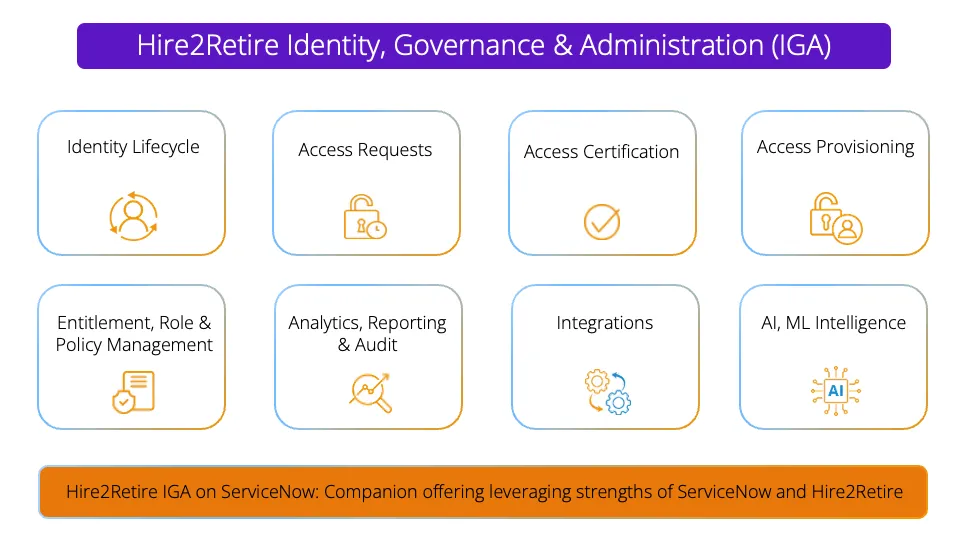
By: Alex Mercer – SeaPRwire – ServiceNow is excellent at approvals, catalogs, and CMDB records. That is not identity governance. Routing an access request through a workflow is not the same as evaluating deterministic policy, discovering entitlements with AI and ML, or running full Joiner-Mover-Leaver automation across hundreds of systems. Most ServiceNow customers still live in that gap. They lack the dedicated engine required for zero-trust and least-privilege postures. RoboMQ just launched Hire2Retire IGA on ServiceNow as a companion app. It keeps every existing ServiceNow investment in place and adds the missing control plane. The official architecture is a clean two-plane split. Hire2Retire sits as the control plane. It ingests HR and ATS events from more than twenty systems. It evaluates RBAC and ABAC policy. It provisions and deprovisions access across hundreds of downstream applications through SCIM. ServiceNow stays the engagement plane. It continues to handle approval workflows, service catalog items, CMDB records, and audit trails exactly as customers already use them. Nothing is displaced. The platform simply gains a purpose-built governance engine that was never there before. The solution is available now on the ServiceNow Store. It is built for self-service deployment with a no-code guided experience. That design targets mid-market organizations and positions the product as a lower total cost of ownership alternative to the heavy professional-services model of traditional enterprise IGA suites. Industry subtext sits right next to those facts. There are currently two clear camps in the ServiceNow identity market. One group builds IGA natively inside ServiceNow tables. ClearSkye, ZertID, and Veza sit in that camp. The other group pairs a dedicated identity engine with ServiceNow as a companion. Saviynt and RoboMQ occupy that side. Bramh Gupta, Head of Products at RoboMQ, stated the choice directly. The hard problems of identity governance at scale are HR-to-identity complexity, deterministic rule evaluation, and real provisioning into hundreds of systems. Those problems are not what ServiceNow’s workflow engine was built to solve. ServiceNow excels at what it does. Hire2Retire was built to handle what it does not. The companion model therefore avoids forcing governance logic into tables and processes that were never designed for it. Customers keep their current ServiceNow processes and tooling. They simply gain automated JML processing, policy evaluation, entitlement discovery, and the compliance reporting required for zero-trust programs. The practical outcome is straightforward. Mid-market teams that already run ServiceNow no longer have to choose between stretching the platform past its strengths or buying a full enterprise IGA suite that demands long implementations and expensive services. They can add a dedicated engine that works alongside the investment they already made. Organizations still trying to govern identity solely through ServiceNow workflows will continue to carry the gaps in automation, policy rigor, and reporting. The companion approach removes that compromise without a rip-and-replace. That is the cleaner split for anyone who needs real governance rather than better ticket routing. Author bio: Alex Mercer, technology director and systems analyst with deep experience inside large-scale identity and access platforms across Silicon Valley engineering teams.
More
Britain’s $40 Million Starshield Bet: Europe Frets Over US Ties While London Digs In SeaPRwire

Britain’s $40 Million Starshield Bet: Europe Frets Over US Ties While London Digs In

By: Gavin Thorne – SeaPRwire – Europe keeps warning about over-reliance on American security infrastructure. Britain is doing the opposite. The UK has now spent nearly forty million dollars on SpaceX satellite services. It is the first country outside the United States to confirm public use of Starshield, the military version of the network. That choice locks British military communications deeper into a single American supplier at the exact moment continental partners are trying to reduce the same exposure. Official figures from the British Ministry of Defence set the scale. The department holds roughly one thousand Starshield terminals and five hundred Starlink terminals. Spending on Starshield sits at about thirteen million pounds, or seventeen point six million dollars, covering both hardware and service. Starlink spending reaches sixteen point five million pounds. The total approaches the forty-million-dollar mark cited in the disclosure. Britain began using Starlink in mid-2022. It started routing military traffic through Starshield via existing Starlink terminals in 2024 and purchased the first dedicated Starshield terminals last year. Starshield terminals can link either to the ordinary Starlink constellation or to a more secure, independent Starshield constellation. The Ministry states that Starshield supplies stronger encryption, military-specific service terms, the highest network priority, more flexible licensing and broader coverage. Pricing shows the premium. A five-terabyte Starshield package costs five thousand five hundred pounds a month. Unlimited service runs twenty-five thousand pounds a month. By comparison a commercial Starlink customer pays one thousand eight hundred thirty pounds a month for two terabytes of global data, with cheaper limited options available. Starshield terminals themselves cost between four thousand and seven thousand pounds, at least double the public price of commercial Starlink units. SpaceX has drawn a clear line. After the company restricted Starlink to entertainment and training use, Britain moved operational traffic onto Starshield. Earlier this year SpaceX raised Starlink prices five-fold during the US-Iran conflict, prompting dissatisfaction among some American officials. Elon Musk responded that the higher rates applied because the service was Starlink rather than Starshield, and that military users should have been on the latter. In its most recent quarterly results SpaceX reported more than six billion dollars in multi-year Starshield contracts from the US government, mainly two large Space Force low-Earth-orbit constellation programs. The same numbers carry a sharper political edge. European governments are actively trying to strengthen their own defense capabilities. They worry that the United States may not maintain its long-term security commitments to the continent. Britain is moving in the opposite direction. It is concentrating military satellite communications on a single American commercial provider whose founder publicly criticized the previous British government under Keir Starmer. Starmer left office this summer. Andy Burnham of the same Labour Party now serves as prime minister and party leader. The conflict in Ukraine since 2022 accelerated military adoption of satellite networks for battlefield communications and drone operations. Britain’s shift from Starlink to Starshield follows SpaceX’s own product split. The higher cost and tighter controls of Starshield are presented as the price of operational security. Yet the concentration of capability in one foreign supplier sits uneasily beside the broader European push for greater autonomy. No alternative European or independent military constellation is named in the British disclosure as a parallel or replacement path. The practical test is immediate. Track the next round of British terminal purchases and the share of operational traffic that actually moves onto dedicated Starshield links. Those two figures will show whether the forty-million-dollar commitment is a temporary bridge or a permanent structural dependence. Until clear parallel capacity appears, Britain’s military communications rest on a single American commercial constellation. Author bio:Gavin Thorne, a veteran geopolitical commentator whose columns appear in major international newspapers and focus on alliance dependencies and military space systems.
More
ISO 27001 at the Edge: ePropelled’s Security Badge Is Now Part of the Propulsion Spec SeaPRwire

ISO 27001 at the Edge: ePropelled’s Security Badge Is Now Part of the Propulsion Spec

By: TechVanguard – SeaPRwire – Defense and aerospace buyers no longer treat information security as a side checklist. They treat it as a gate. Suppliers without audited controls get filtered out before the technical review even starts. ePropelled just cleared that gate. The company announced ISO/IEC 27001:2022 certification for its entire global operation. The badge covers research, engineering and manufacturing sites in the United States, the United Kingdom and India. That single fact changes how the firm sits in front of regulated customers. The propulsion hardware still matters. The audited security management system now sits beside it. ePropelled Group made the announcement on September 8, 2026 from Laconia, New Hampshire through ACCESS Newswire. The firm specializes in smart propulsion solutions and energy management systems for uncrewed vehicles that operate in the air, on land and at sea. ISO/IEC 27001:2022 is the leading international standard for Information Security Management Systems. It requires a structured, risk-based approach to protecting customer, partner and company information. The standard forces organizations to identify risks, assess them, manage them and keep improving the controls as threats change. Official language states the certification demonstrates commitment to confidentiality, integrity and availability of business-critical information. Confidentiality means only authorized people can reach the data. Integrity means the data stays free from unauthorized change or corruption. Availability means the systems and information stay reachable when authorized users need them. The work required a coordinated push across engineering, IT, operations and quality teams in all three countries. They implemented, documented and audited the policies, processes and controls the standard demands. The new certification sits on top of the company’s existing ISO 9001:2015 Quality Management System. Guy Pickering, Global Quality Director, called the result a significant accomplishment that shows the firm safeguards information entrusted by customers, partners and stakeholders worldwide. He added that information security is fundamental in today’s global technology environment and that the certification validates the processes, controls and culture already in place. The same facts carry a sharper commercial edge. Governments, defense organizations, aerospace companies and industrial customers now demand stronger cybersecurity and information governance from every supplier. ISO 27001 supplies independent verification that the management system meets recognized best practices. Without it a propulsion supplier can be locked out of programs that handle sensitive mission data or intellectual property. ePropelled’s certification therefore functions as a passport into those regulated sectors. It covers aerospace, defense, industrial automation, marine and advanced mobility markets. Nick Grewal, Chairman, President and CEO, framed the achievement as the product of teams working across the USA, UK and India. He linked it directly to the existing ISO 9001 badge and said both standards give customers extra confidence that they are dealing with an organization focused on quality, security and continuous improvement while the company grows. The firm was founded in 2018. It holds more than 40 patents across 13 categories. It operates through sovereign supply chains and designs its products to raise performance and cut energy use for uncrewed motion. Those details sit in the official record. They show a company that already sells into high-assurance environments and has now added the formal security layer those environments require. The supply-chain reality is straightforward. Propulsion and energy-management suppliers that want sustained access to defense and aerospace programs must carry audited information-security credentials. ePropelled now holds them across three continents. The next practical step for any buyer is simple. Ask for the certificate scope and the latest audit date. Confirm the controls cover the exact facilities that will handle the program data. Then decide whether the rest of the shortlist can match the same standard. That single check separates suppliers who can stay in the room from those who cannot. Author bio: TechVanguard, a former Silicon Valley technical director now working as an independent analyst focused on edge systems, supply-chain security and dual-use technology.
More
One Supplier or a Dozen Hand-offs: Zekelman Bets Mission Critical Projects Will Choose Simpler Steel SeaPRwire

One Supplier or a Dozen Hand-offs: Zekelman Bets Mission Critical Projects Will Choose Simpler Steel

By: Logan Pierce – SeaPRwire – Mission critical builds do not forgive supply gaps. Data centers and large factories run on tight schedules. Fragmented steel sourcing creates delays that compound fast. Zekelman Industries just launched a campaign that puts the entire portfolio in one place. The message is blunt. Bring the whole project to one partner. Stop juggling separate vendors for pipe, tube, conduit and modular pieces. That is the pitch. Whether owners and contractors buy it will decide if the campaign moves real volume. Zekelman announced the Mission Critical campaign on September 9, 2026 from Chicago through ACCESS Newswire. The company is the leading independent steel pipe and tube manufacturer in North America. It also innovates in modular design and construction. The campaign targets owners, developers, designers and contractors. It introduces them to the full range of Zekelman products and positions the Mission Critical Team as a single, dependable source for both the steel and the project support those jobs require. Official materials list structural steel, electrical raceways, mechanical piping, engineering support, skid fabrication and nationwide distribution. The operating companies under the Zekelman name include Atlas Tube, Picoma, Sharon Tube, Wheatland Tube, Western Tube and Z Modular. Together they run 17 manufacturing locations and employ more than 3,300 teammates across North America. The firm is the top independent producer of hollow structural sections and steel pipe. It is also the leading maker of electrical conduit, elbows, couplings and nipples in the region. Barry Zekelman, Executive Chairman and CEO, stated the core claim: customers should be able to bring one project to one manufacturing partner and know that partner can see it through. Mission Critical makes the full portfolio visible in one place, from hollow structural sections and conduit to fire sprinkler pipe, skid fabrication and engineering support. He added that the bigger the project, the earlier the conversation should start. The commercial intent sits right on the surface of those same facts. Mission critical projects move at a scale and speed that leave little margin for scattered suppliers or uncertain availability. Zekelman says it engages early to optimize designs and lock in product availability, then carries that involvement through delivery. The result, according to the company, is simpler sourcing and higher confidence as programs grow. The campaign itself uses national television, print, digital and social channels. Its tagline reads “The Future Belongs to the Agile.” Creative work points audiences to an interactive online experience where they can examine products and contact the team directly. The public link is https://www.zekelman.com/our-companies/markets-we-serve/data-center-mission-critical/. The company slogan remains Believe in What You Build. No new production capacity, contract awards or capital figures appear in the release. The announcement stays focused on visibility and process: one portfolio, one team, earlier engagement. That is the complete official record. The market test is practical. Large data-center and factory programs already feel the cost of multiple hand-offs. A single source that can supply structural sections, conduit, mechanical pipe and modular elements under one coordination layer removes several failure points. Zekelman now advertises that capability across national media. For any owner or contractor running a mission-critical schedule the next step is direct. Open the interactive site. Map the required products against the listed portfolio. Speak with the Mission Critical Team early enough to lock availability. Then measure whether the single-partner model actually shortens the critical path or simply adds another brochure to the pile. Author bio: Logan Pierce, a veteran industrial investor and operator with decades of hands-on experience building and scaling manufacturing businesses across North America.
More
Two Chokepoints, One Day: Hormuz and Bab el-Mandeb Push Oil Past $100 SeaPRwire

Two Chokepoints, One Day: Hormuz and Bab el-Mandeb Push Oil Past $100

By: Alistair Kroon– SeaPRwire – Oil jumped hard on September 10 because two chokepoints tightened at once. Hormuz stayed contested. Bab el-Mandeb came under fresh pressure from Houthi advances on shore and islands. Benchmark crude cleared one hundred dollars. Diesel in the United States broke six dollars a gallon for the first time. The market priced the risk that neither waterway would return to normal soon. That is the immediate fact on the board. Official statements from the same day lay out the sequence. The U.S. Treasury added individuals and entities linked to Iran’s proxy networks in the Middle East to its sanctions list. The list includes members of Lebanese Hezbollah. The move forms part of the broader economic isolation campaign against Iran. U.S. Central Command reported that its maritime blockade of Iran had already forced ninety-six commercial ships to change course. Iran’s Islamic Revolutionary Guard Corps Navy stated it destroyed a U.S. unmanned surface vessel, hull number 5838, at the entrance to the Strait of Hormuz. The IRGC claimed the strait remains under its control and intelligence surveillance and warned that any hostile action would be met with force. The United Kingdom Maritime Trade Operations office recorded reports of two ships attacked near Hormuz. A master reported seeing four unidentified flying objects strike two vessels west of Seeb in the Sea of Oman. One ship caught fire. The status of the second remained unclear. UKMTO kept the threat level for Hormuz at “severe” and rated the Gulf of Aden plus the Bab el-Mandeb–southern Red Sea corridor as “elevated.” It advised commercial vessels to maintain high vigilance and monitor temporary navigation warnings. In Yemen the Houthis captured the Red Sea port city of Mocha after hours of fighting. Mocha sits in Taiz province roughly eighty kilometers from Bab el-Mandeb and served as a key supply point for government forces on the Red Sea coast. Yemeni government officials said that after the withdrawal of government naval units the Houthis had deployed forces on the Hanish Islands north of the strait. Those islands hold strategic value for monitoring and securing the shipping lane. A Houthi spokesman described the operations as defensive and limited in scope. He said the actions would end once attacks on the group ceased and the blockade was lifted. He asserted that navigation through the Red Sea and Bab el-Mandeb remained safe and normal and posed no threat to international shipping. Before the wider conflict roughly twelve percent of global oil transit passed through Bab el-Mandeb. After the U.S. and Israeli actions against Iran and Iran’s response in Hormuz, the strait became an alternative route for Saudi crude bound for Asia. The same record carries a harder geopolitical edge. Physical disruption in Hormuz has already stranded large volumes of crude inside the Persian Gulf. The ninety-six diverted ships and the reported vessel attacks show the waterway is no longer functioning as a routine transit corridor. Simultaneously the Houthi seizure of Mocha and the Hanish Islands places forces that have previously targeted shipping closer to the second critical passage. Bab el-Mandeb is the remaining outlet for Gulf crude that cannot exit via Hormuz. Any sustained interference there multiplies the supply shock. Oil prices reflected that dual risk on the day. West Texas Intermediate for October delivery rose 6.43 dollars to settle at 102.48 dollars a barrel, a 6.69 percent gain. Brent for November delivery climbed 6.42 dollars to 107.63 dollars, up 6.34 percent. Both contracts reached their highest levels since May and posted the largest single-day advances in nearly two months. U.S. national average diesel prices, tracked by GasBuddy, crossed six dollars a gallon for the first time on record. The market is therefore pricing not only the existing Hormuz constraint but the credible threat that the alternative route through Bab el-Mandeb could also tighten. The practical measure is now binary. Watch daily vessel transit counts through both straits and the status of the Hanish Islands and Mocha. Those two data points will show whether the dual pressure eases or locks in. Until clearances return to pre-escalation levels the geopolitical premium on crude will stay embedded in the price. Author bio: Alistair Kroon, a veteran geopolitical commentator whose columns appear in major international newspapers and focus on energy chokepoints and great-power naval contests.
More
AI Labs Integrates Google’s Gemini into AIV Chatbot to Launch Next-Generation Investment Analytics Platform SeaPRwire

AI Labs Integrates Google’s Gemini into AIV Chatbot to Launch Next-Generation Investment Analytics Platform

SINGAPORE – September 27, 2026 – (DataDurian) – Singapore-based AI Labs, a subsidiary of Web3 education pioneer Academic Labs, today announced that it has integrated Google’s Gemini AI into its flagship AIV Chatbot. The upgrade positions AIV as an advanced, structured investment analytics tool designed to simplify research across cryptocurrencies like Bitcoin and Ether, as well as tech giants including Nvidia and SpaceX. AIV allows users to ask simple questions about assets such as Bitcoin and Ether, as well as technology companies such as Nvidia and SpaceX. It then organizes responses around market outlook, technical analysis, fundamentals and risk, presenting the results in a format resembling a concise research note rather than simply generating “buy” or “sell” signals. The approach is intended to give users a more structured way of thinking about investment decisions. AIV is able to break an investment portfolio down into different sources of risk and return, distinguish between established assets and higher-growth exposures, and examine how seemingly different investments may become correlated during periods of market stress. For technology equities, the same framework can be used to distinguish between areas such as AI infrastructure, cloud computing and consumer platforms, while setting out the main upside and downside cases. The analytics platform is also designed to go beyond identifying potential returns. AIV can frame an investment thesis in terms of the assumptions on which it depends and highlight the conditions that would challenge those assumptions. Key price levels, changes in fundamentals or other “invalidation” scenarios can therefore provide investors with a clearer indication of when an investment view should be reconsidered. Google’s Gemini is central to the platform’s potential. Google’s AI models can work across text, images, video, audio and code, while connecting with current information and interacting with external tools. Applied to AIV, these capabilities will allow the Chatbot to analyze earnings releases, retrieve market data, examine charts and tokenomics documents, calculate portfolio exposures, and explain the results in a conversational format that is easy to understand. Over time, as the technology matures, Gemini could enable investors to upload financial documents or charts for analysis, compare risks across assets, and identify developments that challenge an existing investment thesis. This would move the Chatbot closer to becoming an interactive investment research assistant. “Investors are surrounded by a wealth of information, but information on its own does not create clarity,” said Ryan Chi, CEO and founder. “AIV is being built to help users connect the signals that actually matter.” Kingston Kwek, an advisor to AIV, said the key objective is to make sophisticated investment analytics traditionally associated with professional investors more accessible to a broader audience by tapping Gemini’s extensive analytical capabilities, especially since Gemini has achieved global adoption with hundreds of millions of users worldwide. If AIV can pair Gemini’s ability to summarize and organize information with transparent sources, clear risk controls and plain-language explanations, it could become a powerful research tool for investors navigating the growing overlap between crypto, artificial intelligence and technology equities. Media Contact Company: AI Labs Contact: Media Team Email: ryan@academic-labs.org Website: https://ai-labs.live/
More
Eldorado.gg Now Accepts GCash Payments in Philippine Pesos (PHP) SeaPRwire

Eldorado.gg Now Accepts GCash Payments in Philippine Pesos (PHP)

September 09, 2026 - (SeaPRwire) - Eldorado.gg, the world's largest game items marketplace, now supports GCash as a payment method across all offer categories. Gamers in the Philippines can now pay in Philippine pesos (PHP). What is GCash? GCash is a digital wallet and financial services app in the Philippines that lets users send and receive money, pay bills, and shop online. Users can manage their finances in the app and pay participating merchants by scanning QR codes. Benefits for Filipino gamers Adding GCash lets Filipino gamers shop on Eldorado.gg with ease using a familiar local payment method. To pay with GCash, choose an offer, select GCash at checkout, and follow the prompts to complete your payment in PHP. About Eldorado.gg Tired of grinding and farming? OWN IT. Explore offers on Eldorado.gg and select GCash at checkout. Founded in 2018, Eldorado.gg connects players with sellers of game currency, items, accounts, boosting services, top-ups, and gift cards. Media contact Brand: Eldorado Contact: Media team Email: marketing@eldorado.gg Website: https://www.eldorado.gg
More
No Cook on Stage, a 4.5mm Fold, and Prices That Jump: Apple’s Duo Puts the Real Pressure on the New Boss SeaPRwire

No Cook on Stage, a 4.5mm Fold, and Prices That Jump: Apple’s Duo Puts the Real Pressure on the New Boss

By: TechVanguard – SeaPRwire – The first iPhone event in fifteen years without Tim Cook as CEO just landed. John Ternus stood alone. The product that carried the weight was a foldable called iPhone Duo. It folds like a book. Outer screen sits at about 5.4 inches closed. Inner screen opens to about 7.6 inches, near iPad mini size. Closed thickness hits roughly 9.5 mm. Open it drops to 4.5 mm, the thinnest iPhone ever. That thinness came with clear cuts. Face ID is gone. Touch ID moves to the side power button. Rear cameras shrink to dual 48-megapixel main and ultrawide. No dedicated telephoto. Physical SIM slot disappears. Everything runs on eSIM. The hinge uses more than 100 tiny precision parts. Apple 3D-prints 25 layers of custom photosensitive polymer micro-layers to kill the crease. The machine still packs a TSMC 2-nanometer A20 Pro and Apple’s own C2 5G modem. China price for 256 GB starts at 15,999 yuan. The 2 TB top config reaches 26,499 yuan. That makes it the most expensive iPhone yet. Early production runs only a few hundred units a day under Apple’s strict quality rules. Ming-Chi Kuo’s numbers put second-half 2026 assembly at 7 to 8 million units. Third-quarter volume sits at just 500,000 to 1 million. Pro and Pro Max are expected to ship 20 to 22 million in the same quarter. Pre-orders and official sale slip into the fourth quarter. Supply stays tight through year-end. That is the opening picture. Official facts from the September 10 event, Beijing time 1 a.m. at Cupertino headquarters, under the theme “Unveil a brilliant new chapter and shine bright..” Ternus took the stage for his first full annual test after Cook moved to executive chairman on September 1. Cook’s fifteen-year run lifted Apple’s market value from roughly 350 billion dollars to 4.7 trillion. Ternus joined in 2001. He led the Mac shift from Intel to Apple’s own M-series chips and worked across iPad, AirPods, iPhone and Watch. Cook called him an engineer’s mind with an innovator’s soul. The same event also launched the regular iPhone 18 Pro and Pro Max, new Apple Watch and AirPods. Pro series keeps the aluminum body. New colors include burgundy red and glacier blue. Both use the same 2-nanometer A20 Pro with a 6-core CPU. Two performance cores run 20 percent faster than the prior generation. Main camera moves to a variable-aperture 48-megapixel fusion sensor for more flexible depth and low-light control. Prices rose hard. Pro 256 GB starts at 9,999 yuan, up 1,000 from the last generation. 512 GB hits 11,999 yuan, also up 1,000. 1 TB jumps to 15,499 yuan, up 2,500. A new 2 TB option lands at 20,499 yuan. Pro Max 256 GB and 512 GB each climb 1,000 yuan. 1 TB reaches 16,499 yuan, up 2,500. 2 TB climbs from 17,999 to 21,499 yuan, a 3,500 yuan jump. Standard iPhone 18 and the entry 18e stay off the stage. Apple split the usual full fall lineup. Those lower-priced models move to spring 2027. Storage cost pressure sits behind the increases. Cook himself described the memory price surge in July as a once-in-a-century flood. DRAM stays concentrated among three suppliers. TrendForce put the 256 GB BOM cost rise near 38 percent year-on-year. After the event Apple stock slipped 1.11 percent and closed down 0.28 percent. Market value sat at 4.60 trillion dollars. The subtext is harder. Apple arrives last among major phone makers into the foldable category. Huawei, Xiaomi and others timed their own foldable flagships just before this event. Consumers now have direct side-by-side choices. Apple must justify a price far above ordinary foldables by fixing long-standing pain points. Crease remains the most visible one. Early foldables used tight U-shaped bends. Later designs moved to water-drop hinges for larger bend radius and lower stress. After mechanical gains plateaued, the industry pushed into materials. One Chinese supplier applied chip-level 3D printing of a uniform polymer support layer on irregular hinge parts for better stress relief. Apple’s answer uses its own 100-plus-part hinge plus the 25-layer polymer print. Thickness wins came at the cost of Face ID, telephoto and physical SIM. Battery space and endurance drove the eSIM-only choice. On the AI side Apple Intelligence still has not launched in China. The new Siri AI shows basic tools: spelling correction, photo questions, object removal, spatial view changes. It plans support for 16 languages including simplified and traditional Chinese. Yet it remains unavailable in the domestic market. Apple’s Shanghai entity completed generative AI filing in July for phone use. An English beta is out. French, Japanese, Korean, Portuguese and Spanish arrive in October. Ternus opened by calling the iPhone an intelligent personal hub. The goal is to turn it into the center that links personal data, apps and devices. Foldable opens a new high-price band that is still niche. Siri AI carries the weight of catching the generative wave, but the first features stay far from full system-level agents. Supply-chain names already in the mix include Changxin Technology on UTG cover glass, Lens Technology supplying UTG, CPI film, support plates and 3D glass to a major customer, Jingyan Technology on MIM precision metal for hinge parts, and Yi’an Technology on liquid metal for the hinge main shaft working with Amphenol. Those pieces form a clearer foldable chain from glass and film to metal and print processes. The practical read is direct. A thinner foldable at record price with constrained early volume forces Ternus to prove the new form can carry margin without the old volume machine. Price hikes on the Pro line test whether demand holds under storage inflation. The split launch calendar removes the single fall event that once set the year’s tone. AI still lags in the China market that matters for volume. For anyone watching the next cycle the move is simple. Track actual Duo shipment numbers against the 7-to-8-million full-year target. Watch how fast the crease and durability claims hold up in real hands. Measure whether the higher Pro prices slow the upgrade rate. Then decide if the first answer under the new CEO is enough to reset the growth engine or just the opening bid in a longer fight. Author bio: TechVanguard, a former Silicon Valley technical director now working as an independent analyst focused on mobile hardware, supply chains and product strategy.
More
When the Spectrum Goes Dark: Axonis Mission Node Puts the Decision Where the Fight Actually Is SeaPRwire

When the Spectrum Goes Dark: Axonis Mission Node Puts the Decision Where the Fight Actually Is

By: Alex Mercer – SeaPRwire – Commanders still lose critical minutes waiting for a link that may never come back. Data has to travel home before it becomes intelligence. That single dependency breaks the moment communications degrade or get denied. Axonis just put a self-contained AI environment at the tactical edge to end that wait. Mission Node keeps the data, the models, and the decision right where the mission is happening. No phone-home required. Humans stay in charge. The machine only accelerates the tempo they already set. Axonis introduced Mission Node on September 9, 2026 from Arlington, Massachusetts through ACCESS Newswire. The company describes it as a self-contained, AI-enabled mission intelligence environment built for defense operations at the edge. Official language says it lets organizations connect mission data and AI, generate intelligence, and make governed decisions locally even when links to centralized infrastructure are cut. CEO Todd Barr framed the problem clearly. Traditional architectures still move data to the cloud or a central hub. That creates a critical dependency in contested environments. Mission Node moves the intelligence to the mission instead. Commanders configure the mission, connect their data and AI, surface patterns through prediction, matching, fusion and scoring, then decide and act. The official claim is greater autonomy while humans retain control, interdependence across distributed forces, and continuous adaptation. The Mission Pack sits at the center of that autonomy claim. Commanders use it to set the data, signals, thresholds, decision flows and effects that define the mission. Human intent goes into the framework from the start. That is the official foundation for trusted autonomy. On the interdependence side the architecture is decentralized. Each node runs alone when disconnected and joins enterprise systems when communications return. Multiple nodes can federate intelligence across authorized joint and coalition environments without sharing or centralizing the underlying sovereign data. Adaptability is built on what Axonis calls decisions-as-data. Every decision is saved as a cryptographically sealed artifact. Those records keep the evidence and context. They form a training corpus that can improve models and future decisions. That is the complete official picture as released. The industry subtext is simpler and colder. Contested environments are no longer the exception. They are the baseline. Any architecture that still needs a clean pipe back to a data center is already compromised the moment the spectrum is contested. Mission Node’s design accepts that reality and builds around it. Local operation is not a fallback mode. It is the primary mode. Federation without data centralization is not a convenience feature. It is the only way coalition partners can share intelligence while keeping sovereign data under their own control. Capturing every decision as sealed evidence is not just audit trail theater. It is the mechanism that keeps human accountability intact when machine speed increases. Retired U.S. Army Colonel Yi Se Gwon, author of The Praxis AI Doctrine, put the same point in sharper terms. Human intent must govern machine execution or the decision is not defensible. Mission Node is the infrastructure that turns that principle into running code. AI moves to the data. Decisions are captured as evidence, not reconstructed after the fact. A coalition can share intelligence without centralizing the sovereign data behind it. Those are the exact words released with the product. They line up with the architecture claims and leave little room for interpretation. The platform is being shown at AUSA 2026 in Washington, D.C. Interested parties can book time with Axonis leadership through the provided Microsoft booking link. Further detail sits at axonis.ai/mission-node. Axonis itself came out of a U.S. government solutions provider that served the Department of Defense and Intelligence Community. Its core stance is simple. Bring AI to the data wherever that data lives and turn it into trusted, actionable decisions without moving the data. Decision Intelligence supplies the control layer so every AI-driven outcome stays grounded in the right data, governed by policy, and fully traceable. The supply-chain reality for tactical AI is now clear. Centralized intelligence architectures are becoming liability nodes rather than force multipliers. Mission Node treats the edge as the primary decision surface and the rear link as optional. That shift will force every vendor still shipping cloud-first intel tools to explain how their system survives the first day of denied communications. For operators the practical next step is direct. Get the Mission Node briefing at AUSA or through the company site. Run a live contested-environment scenario against your current architecture. Measure how long decisions stay available after the link drops. Then decide whether the platform you rely on today is built for the Cognitive Age or still assumes the spectrum will stay friendly. Author bio: Alex Mercer, a former Silicon Valley technical director now working as an independent analyst focused on edge AI architectures and defense decision systems.
More
Trump’s Midterm Clock on Iran: “They Can’t Hold On” and the Oil Price That Won’t Wait SeaPRwire

Trump’s Midterm Clock on Iran: “They Can’t Hold On” and the Oil Price That Won’t Wait

By: Alistair Kroon – SeaPRwire – Trump just put a hard date on the Iran war. He says it ends the moment the midterms are over. Not before. The conflict is already in its sixth month. This is the first time he has admitted the timeline runs past November. The claim landed while he was leaving Joint Base Andrews for a Republican midterm gathering in Dallas. “I think this war will end immediately after the election,” he told reporters. Then came the reason. “They can’t hold on. They are desperately trying to influence the election so a bunch of weak guys get in, then leave them alone and let them have nuclear weapons.” That is the core statement. Everything else circles around it. Official words from the September 9 remarks are sparse and direct. Trump was asked whether he expected talks with Iran to resume. His answer: “Frankly, we are not seeking negotiations. Initially I wanted a deal. But we have gone too far. They have almost no territory left.” He added that negotiations remain possible, yet that is not what the administration is considering. On oil prices he offered a longer horizon. Seeing prices fall may take more time than the midterms themselves. At the same time he insisted that once the fighting stops the price will crash at once. The same day Iran stated it had struck ten vessels near the Strait of Hormuz. The list included two American warships and eight tankers. That claim followed a U.S. action the day before that destroyed five Iranian tankers. U.S. Central Command answered on X. The Iranian Revolutionary Guard Corps assertion that two U.S. Navy destroyers were hit is “completely false.” No American naval vessels were attacked. Every Iranian strike failed. A fresh Reuters survey put Trump’s support at 33 percent. The Iran war and rising prices ranked as the main drags. Republicans are already nervous about November. Those are the recorded facts as released. The geopolitical reading of the same words is colder. Trump frames the war’s end as a function of the electoral calendar rather than battlefield conditions alone. The “they can’t hold on” line casts Iran as both exhausted and still active in the U.S. political arena. The nuclear reference is explicit: any softer successor government would, in his view, allow Iran to keep or obtain weapons. By stating that negotiations are not under active consideration he closes the diplomatic door for the remaining weeks before the vote. The oil comment separates the war’s political end from its market end. Prices may stay elevated past election day even if the guns fall silent. The exchange of claims over the Strait of Hormuz the same day underlines the ongoing kinetic risk. Iran asserts hits on U.S. ships and tankers. Central Command denies any damage and labels the attacks unsuccessful. The 33 percent support figure ties the conflict directly to domestic political cost. War and inflation appear together as the factors pulling the number down. That combination is what keeps Republican eyes fixed on November. The pendulum now hangs on two measurable points. First is whether the fighting actually stops in the days after the midterms as claimed. Second is whether oil prices respond with the rapid drop Trump predicts. Until both numbers move the statement remains a political marker rather than a settled outcome. Track the post-election military posture and the daily oil print. Those two data points will show whether the clock Trump set was real or only electoral. Author bio: Alistair Kroon, a veteran geopolitical commentator whose columns appear regularly in major international newspapers and focus on great-power conflict and electoral timing.
More