DENSO Launches Battery Passport Service Supporting Compliance with the European Battery Regulation JCN Newswire

DENSO Launches Battery Passport Service Supporting Compliance with the European Battery Regulation

KARIYA, JAPAN, August 27, 2026 - (JCN Newswire via SeaPRwire.com) - DENSO CORPORATION today launches DENSO Digital Product Passport Solution for Battery (the "Service"), a battery passport service that supports automakers, battery manufacturers and other businesses in complying with the European Battery Regulation while enhancing battery traceability.The transition toward a circular economy, in which resources are continuously reused to improve sustainability, has gained increasing importance in recent years. In Europe, initiatives are underway to introduce Digital Product Passports (DPPs)*1, which digitally manage and provide traceability information about products, enhancing how companies and organizations find new ways to repurpose them. As one use case of DPPs, the battery passport is scheduled to become mandatory from February 2027 under the European Battery Regulation*2 for electric vehicle batteries, light means of transport (LMT) batteries, industrial batteries, and other battery products.To support these efforts and address the regulatory developments, DENSO has launched its battery passport service. Based on the data model developed by the Battery Pass-Ready consortium*3 in Europe, the Service generates battery passports for individual battery products. By utilizing the Service, businesses can efficiently collect battery-related information from their enterprise systems and suppliers, while end users can easily access battery information by scanning QR codes attached to products.The Service also includes access control functionality that enables information visibility to be managed according to the type of user, such as consumers and economic operators*4. This allows organizations to achieve both regulatory compliance and secure data management while respecting data sovereignty principles. In addition, the Service leverages DENSO's expertise in blockchain technologies, which the company has been researching and developing since 2017. By managing records in a chained structure, any modification to a record would result in inconsistencies with related records, creating a mechanism that is theoretically resistant to tampering. This helps ensure the reliability of data required for battery passports.Looking ahead, DENSO plans to expand the Service beyond the battery passport to support other DPPs required under the Ecodesign for Sustainable Products Regulation (ESPR)*5. The Service adopts a multi-connectable architecture that can interface with multiple data platforms, enabling future expansion to a wider range of product categories beyond batteries.DENSO will continue to support regulatory compliance not only in Europe but also across global markets. By helping customers, including automakers, create value through resource circulation, DENSO aims to contribute to the realization of a more sustainable society.For more information about the Service, please visit the product webpage below:https://www.denso.com/global/en/products/sp/dpp/ Service Interface ImageDENSO also shares various initiatives related to battery passports through the news articles listed below. Please refer to them for additional information. https://www.denso.com/global/en/news/newsroom/2025/20250324-g01/https://www.denso.com/global/en/news/newsroom/2026/20260629-g01/https://www.denso.com/global/en/news/newsroom/2026/20260807-g01/*1 Digital Product Passport (DPP): A collective term for digital records that contain a wide range of information throughout a product’s lifecycle, including the manufacturer, materials used, recyclability, and disassembly methods, in order to ensure product traceability and demonstrate sustainability-related information.*2 European Battery Regulation: A regulation that entered into force in the European Union in August 2023 to promote the production and use of sustainable battery products.*3 Battery Pass-Ready consortium: An international consortium established to support compliance with the battery passport requirements of the European Battery Regulation, which will take effect in February 2027, by promoting the development of a testing environment where companies can verify in advance the conformity of their passport data and systems.*4 Economic Operators: Businesses responsible for the manufacture, import, export, sale, or other battery-related activities under the European Battery Regulation.*5 Ecodesign for Sustainable Products Regulation (ESPR): A comprehensive European framework that establishes environmental performance requirements for nearly all products placed on the EU market. The regulation covers areas such as durability, recyclability, reparability, energy efficiency, and the implementation of Digital Product Passports (DPPs). It entered into force in July 2024. Copyright 2026 JCN Newswire via SeaPRwire.com. All rights reserved. www.jcnnewswire.com
More
MHI Thermal Systems Launches TEU Series of New Electric-Driven Transport Refrigeration Units in Europe JCN Newswire

MHI Thermal Systems Launches TEU Series of New Electric-Driven Transport Refrigeration Units in Europe

TOKYO, August 27, 2026 - (JCN Newswire via SeaPRwire.com) - Mitsubishi Heavy Industries Thermal Systems, Ltd. (MHI Thermal Systems), a part of Mitsubishi Heavy Industries (MHI) Group, has started sales in Europe of the TEU series, a new lineup for the Preciso brand of all-electric-driven transport refrigeration units. Sales will be handled by Mitsubishi Heavy Industries Thermal Transport Europe GmbH (MTTE), MHI's European sales arm based in Osnabruck, Germany.Europe is pursuing measures for decarbonization and air quality improvement, especially in urban areas, accelerating the shift to intra-city logistics using vehicles with lower environmental impact. The freight transportation sector in particular is making full-fledged efforts to introduce electric vehicles in many countries and cities across the region, and further adoption is expected going forward. With such rapidly advancing electrification, TRU for the European market, in addition to high environmental performance, need to be adaptable to varied mounting constraints to flexibly accommodate the various battery installations in electric vehicles. Further, achieving both transport quality and operational efficiency through high energy-saving performance that considers overall vehicle efficiency, and compatibility with multiple temperature ranges, has become a key requirement.To meet these needs, MHI Thermal Systems has adopted a modular structure for the TEU series, a first for its product lines, achieving both compactness and weight reduction. By separating the main components of the refrigeration unit—the condenser, evaporator and compressor—into the smallest possible compact modules, the unit can be easily installed in many types of electric vehicles with wide and varied fitting constraints, without interfering with the configuration.In addition, compared to the TU series of conventional sub-engine trailer units, which use a dedicated genset for the refrigeration unit separate from the vehicle's engine, the main unit size of the TEU series has been reduced by around 30% by volume, with a 40% smaller required opening width and area, and a 55% reduction in weight. The compact and lightweight modular structure of the TRU also contributes to extending the range of electric vehicles with lightweight, high-capacity batteries.Despite its compact size, the TEU series has high refrigeration capacity suitable for large trucks, made possible by using an "economizer cycle," a configuration in which a portion of the refrigerant is branched, used to cool the main refrigerant flow, and then injected into the intermediate stage of the compressor during the compression process, thereby enhancing refrigeration capacity. The TEU series also supports a wide range of power supply types, including electric vehicle batteries, vehicle‑mounted generator, and dedicated TRU batteries, making it suitable for a wide range of vehicles.The TEU1400MA is a multi-evaporator system that enables simultaneous transport of cargo at different temperature ranges in a single vehicle. Installation of four types of evaporators of different sizes in partitioned compartments in the cargo compartment allows for simultaneous regulation of multiple temperature zones, supporting flexible operations for carriers.Going forward, MHI Thermal Systems will continue to promote CO2 reduction through advancement in electric systems using inverter technology that enhances energy savings and temperature control, as well as improving operational efficiency with multi-evaporator systems. By addressing the challenges facing the logistics industry, such as working style reforms, improved transport efficiency, and environmental compliance, MHI Thermal Systems will contribute to the realization of safe and secure transport.About MHI GroupMitsubishi Heavy Industries (MHI) Group is one of the world’s leading industrial groups, spanning energy, smart infrastructure, industrial machinery, aerospace and defense. MHI Group combines cutting-edge technology with deep experience to deliver innovative, integrated solutions that help to realize a carbon neutral world, improve the quality of life and ensure a safer world. For more information, please visit www.mhi.com or follow our insights and stories on spectra.mhi.com. Copyright 2026 JCN Newswire via SeaPRwire.com. All rights reserved. www.jcnnewswire.com
More
TANAKA Participates in Girls Meet STEM, Hosting Shonan Plant Tour for Female Junior High and high school Students JCN Newswire

TANAKA Participates in Girls Meet STEM, Hosting Shonan Plant Tour for Female Junior High and high school Students

TOKYO, Aug 27, 2026 - (JCN Newswire via SeaPRwire.com) - TANAKA PRECIOUS METAL GROUP Co., Ltd. (Head Office: Chuo-ku, Tokyo; Group CEO: Koichiro Tanaka) is participating in Girls Meet STEM, a tour-based experiential program in the science, technology, engineering, and mathematics (STEM) fields for female junior high and high school students, organized by the Yamada Shintaro D&I Foundation in collaboration with technical colleges, universities, companies, and research institutions. Under the theme “Gold Is More Than Bars and Jewelry! Discover Gold in Everyday Life and Explore Careers in Gold and STEM”, TANAKA held a plant tour at its Shonan Plant on August 6, 2026.Learning about precious metal analysisRoundtable discussion with female employees from STEM backgroundsTANAKA joined the Girls Meet STEM program with the aim of contributing to the creation of a society in which the younger generation can consider their future paths and careers while broadening their horizons, free from stereotypes regardless of gender or traditional distinctions between the humanities and STEM fields. As part of efforts to support the active participation of diverse talent in the STEM fields, this tour included opportunities to interact with female employees working at TANAKA and a tour of the plant. Twenty participants (11 junior high school students and 9 high school students), selected by lottery from among the applicants, took part in the tour. Following a company presentation, participants toured the Shonan Plant, where they observed the process of recycling precious metals from scraps containing precious metals, as well as the analysis of precious metal grades, deepening their understanding of TANAKA’s businesses, including precious metal recycling and its manufacturing operations. Furthermore, through a hands-on experience with gold bullion, they were able to experience precious metals in a more tangible way. The tour was followed by a roundtable discussion with female employees from STEM backgrounds, during which they shared what had inspired them to pursue STEM, the roles they currently hold, and what they found rewarding about their work. Participants asked questions regarding further education and future careers, and the dialogue with employees gave them the opportunity to visualize what it is like to work in the STEM fields in more concrete terms.After the tour, participants shared their thoughts, making comments like, “I’m currently thinking of going into the humanities, but I’ve realized that a career in STEM could be enjoyable too,” and “I want to take an interest in all sorts of things and try my hand at various challenges without categorizing my pursuits in terms of ‘humanities’ and ‘sciences’.”The diversity, equity, and inclusion (DE&I) lead at TANAKA expressed their commitment to continuing such initiatives in the future: “I would be delighted if this event helped participants feel more connected to the STEM fields and manufacturing, serving as a catalyst for them to reflect on their own career paths and future potential. I also believe that the roundtable discussion provided an opportunity for our female employees to reflect on their own future career paths. We intend to continue offering such opportunities on an ongoing basis.”TANAKA will continue communicating the vital role precious metals play in supporting society, as well as their potential, and remain committed to creating opportunities for the younger generation who will shape the future to deepen their understanding of the STEM fields and broaden their own horizons.Event dayExperiencing the weight of goldGroup photo of all participantsEvent OverviewEvent Name: Girls Meet STEM Shonan Plant Tour“Gold Is More Than Bars and Jewelry! Discover Gold in Everyday Life and Explore Careers in Gold and STEM”Date and Time: August 6, 2026, 1:30 to 4:30 p.m.Venue: Shonan Plant, TANAKA PRECIOUS METAL TECHNOLOGIES Co., Ltd.Eligibility: Students from the first year of junior high school to the third year of high school who are registered as or identify as femaleNo. of Participants: 20 (11 junior high school students and 9 high school students)Program:Opening / company introductionShonan Plant tour・Tour of the process of recycling precious metals from scraps containing such metals・Hands-on experience with bullion・Tour of the department that analyzes precious metal gradesRoundtable discussion with female employeesYamada Shintaro D&I FoundationThe Yamada Shintaro D&I Foundation is a public interest foundation established in July 2021 by Shintaro Yamada, CEO of Mercari, Inc., with the aim of creating a society in which everyone can realize their potential through the promotion of diversity and inclusion (D&I). In particular, it focuses on the gender gap in STEM and runs initiatives to support female junior high and high school students in their pursuit of further education and career paths in the STEM fields.Official website: https://shinfdn.org/en/about Girls Meet STEMGirls Meet STEM is a tour-based experiential program in the STEM fields for female junior high and high school students, which the Yamada Shintaro D&I Foundation runs in collaboration with technical colleges, universities, companies, and research institutions. Participants visit the campuses and laboratories of technical colleges and universities, as well as corporate offices, to gain firsthand experience of real-world STEM environments. In addition, through interactions with female undergraduate and postgraduate students, as well as women in the workplace, the participants are able to expand their options for further education and careers.Official website: https://gms.shinfdn.org/ Company InformationAbout TANAKASince its foundation in 1885, TANAKA has built a portfolio of products to support a diversified range of business uses focused on precious metals. TANAKA is a leader in Japan regarding the volume of precious metals it handles. Over many years, TANAKA has manufactured and sold precious metal products for industry and provided precious metals in such forms as jewelry and assets. As precious metals specialists, all Group companies in Japan and worldwide collaborate on manufacturing, sales, and technology development to offer a full range of products and services. With 5,778 employees, the group’s consolidated net sales for the fiscal year ended December 2025 were 1,097,813 million yen.TANAKA PRECIOUS METAL GROUP Co., Ltd.TANAKA Corporate Websitehttps://www.tanaka.co.jp/english/Press inquiriesTANAKA PRECIOUS METAL GROUP Co., Ltd.https://www.tanaka.co.jp/support/req/other_contact_e/index.htmlPress Release: https://www.acnnewswire.com/docs/files/20260827_EN.pdf Copyright 2026 JCN Newswire via SeaPRwire.com. All rights reserved. www.jcnnewswire.com
More
GA-ASI and Fujitsu sign MOU for the maintenance and operation of unmanned aircraft systems in Japan JCN Newswire

GA-ASI and Fujitsu sign MOU for the maintenance and operation of unmanned aircraft systems in Japan

San Diego, USA and Kawasaki, Japan, August 27, 2026 - (JCN Newswire via SeaPRwire.com) - General Atomics Aeronautical Systems, Inc.(GA-ASI) [1] and Fujitsu Limited (Fujitsu) [2] today announced that they have signed a Memorandum of Understanding (MOU) regarding the establishment of maintenance and operational support capabilities for Unmanned Aircraft Systems (UAS) in Japan as well as their commitment to future technical collaboration.Under the MOU, the companies will begin examining the establishment of a framework under which Fujitsu would provide domestic maintenance and operational support for the MQ-9B, an unmanned aircraft developed and manufactured by GA-ASI for intelligence, surveillance and reconnaissance (ISR) missions. The scope of the discussions includes avionics [3] maintenance, parts management, maintenance training, and maintenance support services within Japan. The companies will also explore future technical collaboration in areas related to mission systems [4], systems integration, and other technologies.Both companies aim to establish a sustainable and secure operational foundation for UAS in Japan. To this end, they will conduct phased evaluations of technologies and business opportunities related to design, manufacturing, and testing capabilities, contributing to Japan's security requirements. In addition to establishing operational support capabilities, the companies will explore future opportunities related to mission systems and systems integration.As security environments around the world continue to grow increasingly complex, Japan faces the challenge of strengthening its wide-area and persistent intelligence-gathering and surveillance capabilities across its vast Exclusive Economic Zone (EEZ). To strengthen maritime surveillance and support security objectives while improving operational efficiency and reducing manpower requirements, Japan's Ministry of Defense has announced plan [5] to procure 23 units of MQ-9B aircraft for the Japan Maritime Self-Defense Force (JMSDF), with its deployment scheduled to begin in fiscal year 2027.The MQ-9B is capable of remaining airborne for more than 24 hours through satellite-based remote operation and can provide real-time, wide-area situational awareness day and night using advanced sensor systems. Stable operation of the MQ-9B in Japan requires the establishment of domestic maintenance and operational support capabilities to address challenges such as prolonged parts procurement lead times and the recruitment and training of personnel with specialized maintenance expertise.GA-ASI has extensive experience, technologies, and proven capabilities in UAS design and manufacturing as well as in the operation of complete UAS mission solutions, including sensors and ground control stations.For more than 10 years, Fujitsu has accumulated experience and expertise in the maintenance and operational support for maritime patrol aircraft [6] operated by the JMSDF.Building on these strengths, both companies aim to realize sustainable and reliable MQ-9B maintenance and operations in Japan.Based on this MOU, both companies will advance discussions regarding collaboration to establish maintenance and operational support capabilities. Looking ahead, they will explore technical collaboration and commercialization opportunities in areas including avionics maintenance, field support, maintenance, workforce education and training, parts management, and supply chain capabilities. In addition, they will further support Japan’s security objectives by examining opportunities to enhance UAS operations through integration with related systems and other advanced operational support capabilities.Kenichiro Miyazaki, Head of National Security Business Unit for Fujitsu Limited, comments:We are delighted to have signed this MOU with GA-ASI to explore collaboration opportunities related to the MQ-9B. Leveraging the technological capabilities Fujitsu has cultivated in the defense sector, as well as our extensive experience in maintenance and operational support, we will contribute to strengthening a sustainable maintenance framework for the MQ-9B in Japan.This MOU marks the first step toward advancing the collaboration between our companies. Looking ahead, we will explore opportunities not only in maintenance and operational support, but also in further technical collaboration, contributing to a stronger security foundation and a stable defense operation in Japan.Zachary Stang, Regional Vice President – Indo Pacific for General Atomics Global, comments:This agreement is an important and substantial step in our efforts to provide optimal support to our Japanese customers. We are excited to leverage Fujitsu’s proven excellence and expertise in maintenance and operational support as we expand the utility of our unmanned aircraft systems in Japan.[1] General Atomics Aeronautical Systems, Inc. (GA-ASI):Head Office: Poway, California, USACEO: Linden Blue[2] Fujitsu Limited (Fujitsu):Head Office: Kawasaki, JapanRepresentative Director and CEO: Takahito Tokita[3] avionics:The electronic systems installed on aircraft and spacecraft, including communications, navigation, radar, flight control, and other mission-critical systems.[4] mission systems:A system that enables an aircraft or defense platform to execute specific operational missions.[5] Ministry of Defense Announcement:See the Ministry of Defense reference document[6] Maritime Patrol Aircraft:Aircraft used for maritime surveillance, intelligence gathering, anti-submarine warfare, and related missions.About GA-ASIGeneral Atomics Aeronautical Systems, Inc., is the world’s foremost builder of Unmanned Aircraft Systems (UAS). Logging more than 9 million flight hours, the Predator® line of UAS has flown for over 30 years and includes MQ-9A Reaper®, MQ-1C Gray Eagle®, MQ-20 Avenger®, and MQ-9B SkyGuardian®/SeaGuardian®. The company is dedicated to providing long-endurance, multi-mission solutions that deliver persistent situational awareness and rapid strike. For more information, visit www.ga-asi.comAbout FujitsuFujitsu’s purpose is to make the world more sustainable by building trust in society through innovation. As the digital transformation partner of choice for customers around the globe, our 100,000 employees work to resolve some of the greatest challenges facing humanity. Our range of services and solutions draw on five key technologies: AI, Computing, Networks, Data & Security, and Converging Technologies, which we bring together to deliver sustainability transformation. Fujitsu Limited (TSE:6702) reported consolidated revenues of 3.5 trillion yen (US$23 billion) for the fiscal year ended March 31, 2026 and remains the top digital services company in Japan by market share. Find out more: global.fujitsuPress ContactsGA-ASIEmail:ASI-MediaRelations@ga-asi.comFujitsu LimitedPublic, Investor and Analyst Relations DivisionInquiries Copyright 2026 JCN Newswire via SeaPRwire.com. All rights reserved. www.jcnnewswire.com
More
Fujitsu establishes cyber defense lifecycle strategy for AI era JCN Newswire

Fujitsu establishes cyber defense lifecycle strategy for AI era

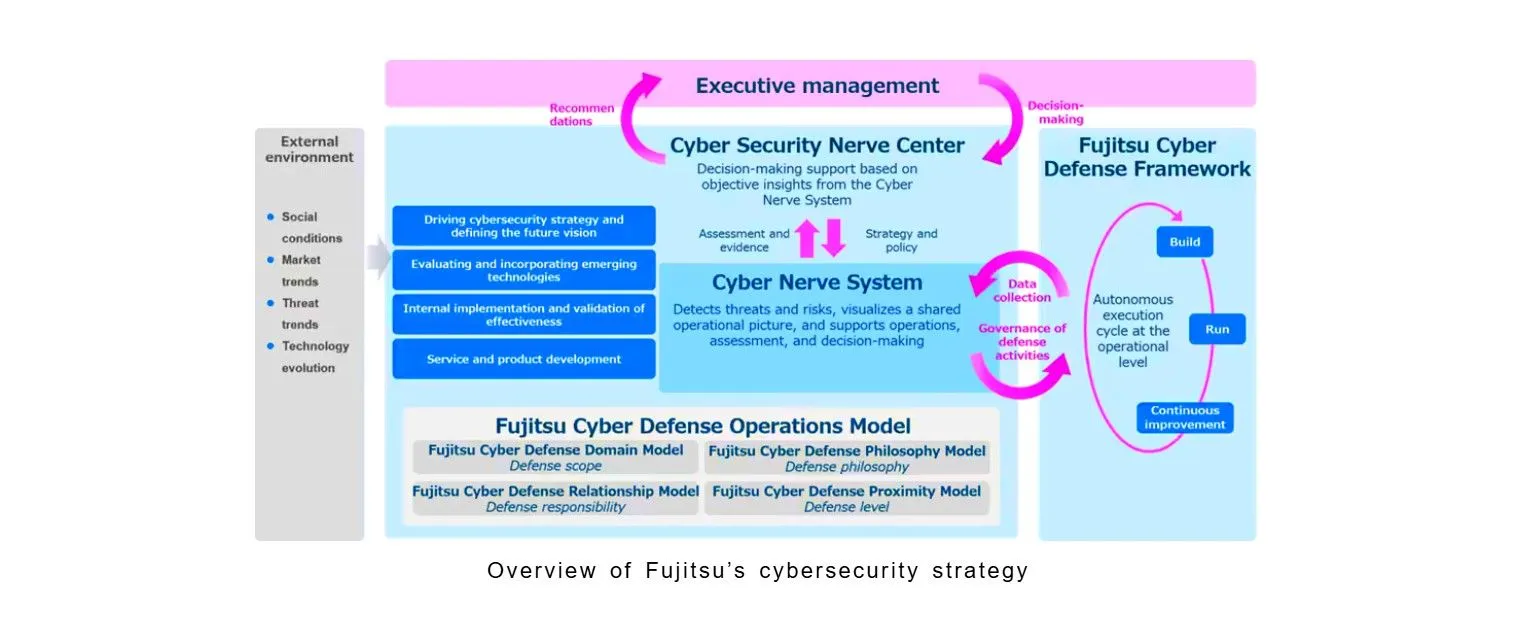
KAWASAKI, Japan, August 26, 2026 - (JCN Newswire via SeaPRwire.com) - Fujitsu Limited today announced the establishment of a cybersecurity strategy to continuously evolve corporate cyber defense capabilities in response to the advancement of generative AI and the increasing complexity of enterprise systems. This strategy implements cybersecurity not merely as an operational measure after IT system construction, but as a cyber defense lifecycle that encompasses strategic planning, design and development, implementation, operation, evaluation, and improvement.Under this strategy, Fujitsu has defined a Cyber Defense Operations Model, which systematizes the approach to building, operating, and improving overall corporate cyber defense capabilities, and a Fujitsu Cyber Defense Framework, which serves as its practical implementation. Furthermore, Fujitsu will establish the Cyber Nerve System, a mechanism that detects cyber threats and risks from data generated through the Fujitsu Cyber Defense Framework and visualizes observation and analysis results. The system helps guide individual cyber defense activities and promotes autonomous execution cycles within operational teams. Fujitsu will also establish a virtual organization called the Cyber Security Nerve Center (“Nerve Center”), which serves as the core of its cybersecurity strategy. Based on objective assessments and evidence generated by the Cyber Nerve System, the Nerve Center supports executive decision-making through reporting and recommendations to management. In addition to consolidating knowledge gained through Fujitsu's Customer Zero initiatives and customer engagements, it drives cybersecurity strategy across organizational functions while incorporating market, threat, and technology trends.Specifically, Fujitsu will evaluate and integrate advanced technologies from Fujitsu Research, Uvance Wayfinders, service development divisions, and external partners. Where necessary, new products and functions will be developed and their effectiveness verified in Fujitsu's own environment. These will then be deployed to customers as advanced defense functions, including consulting, vulnerability assessment utilizing high-performance AI, AI Threat Hunting (1), and AI Red Team Operations (2).Fujitsu will consistently support customers throughout their cyber defense journey, from strategic planning and design/development phases to operation and continuous improvement, by clarifying the gap between the constantly updated overall picture of cyber defense and the customer's current situation. Furthermore, knowledge gained through customer engagements will be fed back to the Nerve Center and reflected in the Cyber Nerve System, services, and software, thereby contributing to the continuous improvement of enterprise cyber defense capabilities and cyber resilience in the AI era.BackgroundWith the rapid evolution of AI technologies in recent years, cyberattacks are becoming increasingly sophisticated and automated. Attackers are leveraging generative AI to perform activities such as vulnerability exploration, attack path analysis, attack code generation, and post-compromise lateral movement within internal systems, in a significantly shorter time and with higher precision than before.Meanwhile, corporate IT environments are rapidly becoming more complex due to the use of cloud services, data collaboration with external parties, and connections with systems forming their supply chains. The scope of defense that companies must manage extends beyond their own systems and networks to include group companies, partners, and subcontractors across the entire supply chain. Under these circumstances, it is becoming increasingly difficult to continuously maintain and improve overall corporate cyber defense capabilities with established security operations predicated on preventing intrusions or detecting and responding after an intrusion.Companies must rethink cyber defense as a critical management priority and strengthen their capabilities to minimize impact and maintain business continuity based on the assumption that cyberattacks will occur rather than seeking to prevent them entirely.Features1. Four sub-models defining enterprise cyber defense in the AI eraThe Fujitsu Cyber Defense Operations Model systematically organizes defense targets, defense philosophy, defense responsibilities, and defense levels through the following four sub-models, clarifying priorities for countermeasures and necessary investments, thereby supporting the continuous improvement of corporate defense capabilities and cyber resilience.The Fujitsu Cyber Defense Domain Model defines the assets that should be protected by the enterprise, viewing them based on their operational roles rather than device types, and encompassing the entire enterprise's defense scope, including IT domains and physical domains such as surveillance cameras and medical equipment.The Fujitsu Cyber Defense Philosophy Model defines the fundamental defense philosophy, incorporating the concept of "deceleration defense." This approach aims not solely to prevent attacks, but to delay attacker actions, creating a time advantage for defenders to observe attacker behavior and implement additional countermeasures.The Fujitsu Cyber Defense Relationship Model defines cyber defense based on relationships surrounding the enterprise, designing defense responsibilities and protection scopes according to relationships with group companies and partner companies, aiming to enhance the cyber resilience of the entire supply chain.The Fujitsu Cyber Defense Proximity Model defines defense levels by organizing the activities required according to the distance from an attacker's objective, helping enterprises determine target defense levels and priorities for security investments.2. Building, operating, and improving enterprise defense with the Fujitsu Cyber Defense FrameworkTo implement the Fujitsu Cyber Defense Operations Model, Fujitsu has defined the Fujitsu Cyber Defense Framework, a practical framework for continuously enhancing effectiveness through building, operating, and continuously improving cyber defense. This enables enterprises to practice cyber defense as a lifecycle that includes strategic planning, design and development, operation, and improvement, rather than just as an operational measure after IT system construction. Furthermore, Fujitsu aims to provide advanced capabilities such as vulnerability assessment utilizing high-performance AI and contributions to Project YATA-Shield (3).Additionally, Fujitsu will build the Cyber Nerve System to detect cyber threats and risks from data generated through execution of the framework and to visualize observation and analysis results. By providing a shared view of the cyber defense environment, the system helps guide individual cyber defense activities and promotes autonomous execution cycles within operational teams.3. The Nerve Center as the core of Fujitsu's cybersecurity strategyThe Nerve Center is a virtual organization of approximately 100 members responsible for defining the strategy and policies of the Cyber Nerve System. Based on objective assessments and evidence generated by the Cyber Nerve System, the Nerve Center supports executive decision-making through reporting and recommendations regarding system shutdowns, cyber defense priorities, and investment policies.By bringing together Fujitsu's knowledge and technologies, it will drive cybersecurity strategy, technology adoption, and service development across organizational functions. Furthermore, while considering market environments and threat trends, it will incorporate new technologies from Fujitsu Research, Uvance Wayfinders, service development divisions, middleware development divisions, delivery divisions, as well as startups and external partners, and reflect them in Fujitsu's own cyber defense strategy.By combining practical knowledge gained through Fujitsu's Customer Zero initiatives with feedback from customer environments and reflecting them in the Cyber Nerve System and customer-facing services, Fujitsu aims to continuously evolve enterprise cyber defense capabilities.Based on this practical knowledge, Fujitsu will promote the commercialization of advanced cyber defense capabilities such as AI Threat Hunting and AI Red Team Operations as services.4. Developing highly specialized human resources to support next-generation cyber defenseFujitsu will promote the development of cybersecurity human resources through its Security Meister program. By continuously incorporating practical knowledge accumulated at the Nerve Center, the latest threat analysis results, and insights gained from actual defense activities into educational programs, Fujitsu will foster specialized professionals such as internal white hat hackers and Security Architects, thereby strengthening the human resource foundation for advanced cyber defense.Future PlansFujitsu will continue to promote its corporate cybersecurity strategy for the AI era, with the Nerve Center as its core organization. Under this strategy, Fujitsu will contribute to enhancing customer cyber resilience by progressively offering consulting services leveraging practical knowledge, system construction and operation services, and AI-powered defense services.Furthermore, Fujitsu will expand services and solutions such as advanced monitoring and automated response, and implementation support for customer environments using AI agents. It will also evolve into a next-generation cyber defense platform supporting enterprises and entire supply chains through integration with Fujitsu technologies, including the large language model Takane.(1) AI Threat Hunting:A method that utilizes AI to analyze large volumes of logs and threat information, actively searching for threats and attack indicators that are difficult to detect through traditional monitoring.(2) AI Red Team Operations:A method that utilizes AI to simulate actual attacks and evaluate security weaknesses in systems, organizations, and operational processes.(3) Project YATA-Shield:A national AI cybersecurity initiative announced by the Japanese government in May 2026. The initiative promotes the proactive use of AI for cyber defense to help protect national security and critical infrastructure against increasingly sophisticated, large-scale cyberattacks driven by advanced AI.About FujitsuFujitsu’s purpose is to make the world more sustainable by building trust in society through innovation. As the digital transformation partner of choice for customers around the globe, our 100,000 employees work to resolve some of the greatest challenges facing humanity. Our range of services and solutions draw on five key technologies: AI, Computing, Networks, Data & Security, and Converging Technologies, which we bring together to deliver sustainability transformation. Fujitsu Limited (TSE:6702) reported consolidated revenues of 3.5 trillion yen (US$23 billion) for the fiscal year ended March 31, 2026 and remains the top digital services company in Japan by market share. Find out more: global.fujitsuPress ContactsFujitsu LimitedPublic, Investor and Analyst Relations DivisionInquiries Copyright 2026 JCN Newswire via SeaPRwire.com. All rights reserved. www.jcnnewswire.com
More
Fujitsu, Tokyu Construction, and Kitano Construction launch field trial for AI that supports construction process management and risk reduction JCN Newswire

Fujitsu, Tokyu Construction, and Kitano Construction launch field trial for AI that supports construction process management and risk reduction

TOKYO, Aug 25, 2026 - (JCN Newswire via SeaPRwire.com) - Fujitsu Limited (Fujitsu), Tokyu Construction Co., Ltd. (Tokyu Construction), and Kitano Construction Corp. (Kitano Construction) will conduct a field trial of an AI solution that supports construction process and risk management at Fujitsu Technology Park (FTP) from August 3 to December 25, 2026.At construction sites within FTP, numerous partner companies, equipment, and materials are involved, while processes such as scheduling, material procurement, applications, inspections, and approvals have complex interdependencies. By analyzing construction schedules, daily reports, procedures, inspection records, and other data, the AI aims to identify potential omissions and risks related to upcoming construction processes, material and personnel arrangements, and required confirmations one to two months in advance.Through the field trial, the three companies aim to reduce risks such as construction delays and omissions in procurement and applications, while addressing challenges including labor shortages and reliance on experienced site managers. The initiative is also expected to improve productivity and facilitate the transfer of expertise at increasingly complex construction sites.BackgroundThe construction industry faces challenges including labor shortages, an aging workforce, and reliance on skilled workers. Construction sites require limited personnel to manage a wide range of tasks, including process management, material procurement, approvals, and inspections.Omissions in planning and procurement can lead to project delays, rework, and safety risks. With growing demands for work-style reform and productivity improvements, there is also a need to create systems that enable younger personnel to perform high-quality site operations by systematically leveraging the knowledge of experienced site supervisors.Against this backdrop, expectations are increasing for initiatives that combine advanced site operations with AI- and data-driven knowledge transfer.Overview of the Field Trial1. OverviewAs part of the FTP Redevelopment Project [1], Fujitsu will verify the effectiveness of its AI for construction process management support with Tokyu Construction and Kitano Construction, targeting different construction works being carried out concurrently by the two companies.The field trial will evaluate:The accuracy of detecting planning omissions and potential delay risksThe usefulness of the information provided by the AIThe effectiveness of supporting site managers and reducing their workloadThe AI's ability to adapt to different data formats and operational processes, including drawings, schedules, and daily work reports used by different construction companies2. PeriodAugust 3, 2026 to December 25, 20263. LocationFujitsu Technology Park4. About the AI for construction process management supportThe AI for construction process management support comprehensively analyzes data accumulated in shared site files, such as drawings, construction schedules, and daily work reports, together with site data related to procedures, approvals, inspections, and safety instructions. Based on applicable laws, ordinances, regulations, and other requirements established by government agencies and municipalities, the AI supports the identification of potential omissions in required applications, material procurement, heavy equipment arrangements, inspections, and coordination with subcontractors. It also presents potential risks that could lead to construction delays, together with the supporting rationale. In addition, the AI supports prompt decision-making by site managers by analyzing discrepancies between construction schedules and daily reports and identifying potential impediments.5. Roles of Each CompanyFujitsu: Planning and development of the AI for construction process management support, analysis of site data, and verification of the AI.Tokyu Construction and Kitano Construction: Provision of site expertise and verification data, and evaluation and feedback from the perspective of construction operations.Future PlansThrough the field trial, Fujitsu, Tokyu Construction, and Kitano Construction will enhance the effectiveness of the AI based on identified issues and requirements.The companies aim to reduce project delays and rework, prevent omissions in applications, approvals, inspections, and material procurement, alleviate the burden of site operations, support young site supervisors, and reduce reliance on skilled workers.Fujitsu plans to further advance verification by utilizing its AI platform Fujitsu Kozuchi and quantum-inspired technology Digital Annealer. Going forward, Fujitsu will promote practical implementation, including integration with photo data, point cloud data, construction drawings, BIM data [2], and internal knowledge held by construction companies.Fujitsu aims to contribute to improved productivity, address labor shortages, and facilitate the transfer of expertise from skilled workers across the construction industry.Tokyu Construction and Kitano Construction will continue to actively promote the use of digital technologies, including AI, to achieve higher productivity at construction sites while enabling more flexible and efficient ways of working.(1) FTP Redevelopment ProjectThe FTP Redevelopment Project is an initiative promoted by Fujitsu in collaboration with Kawasaki City from 2025 to 2035. Based on the concept of "Open Innovation & Technology Park," the project aims to promote demonstrations of advanced technologies and regional co-creation.(2) BIM (Building Information Modeling) dataDigital data that adds material information, specifications, quantities, and information related to construction and maintenance management to a 3D building model.About FujitsuFujitsu’s purpose is to make the world more sustainable by building trust in society through innovation. As the digital transformation partner of choice for customers around the globe, its 100,000 employees work to resolve some of the greatest challenges facing humanity. Fujitsu's range of services and solutions draw on five key technologies: AI, Computing, Networks, Data & Security, and Converging Technologies, which it brings together to deliver sustainability transformation.Fujitsu Limited (TSE:6702) reported consolidated revenues of 3.5 trillion yen (US$23 billion) for the fiscal year ended March 31, 2026, and remains the top digital services company in Japan by market share.Find out more: FujitsuAbout Tokyu ConstructionFounded in 1959, Tokyu Construction is a member of the Tokyu Group, which operates a wide range of businesses serving everyday needs. The company is committed to providing residents with comfortable living environments that offer peace of mind.Find out more: Tokyu ConstructionAbout Kitano ConstructionKitano Construction Corp. is a general construction company founded in 1946 in Nagano, Japan. Specializing in building construction and civil engineering, the company undertakes projects across a wide range of sectors, including public facilities, hotels, commercial properties, residential developments, and infrastructure.Kitano Construction is committed to delivering high-quality construction while advancing digital transformation (DX) and sustainability initiatives that contribute to society.Find out more: Kitano Construction Copyright 2026 JCN Newswire via SeaPRwire.com. All rights reserved. www.jcnnewswire.com
More
ITU-T Standardizes Framework of Low-Latency and Energy-Efficient Networks to Support the AI Era JCN Newswire

ITU-T Standardizes Framework of Low-Latency and Energy-Efficient Networks to Support the AI Era

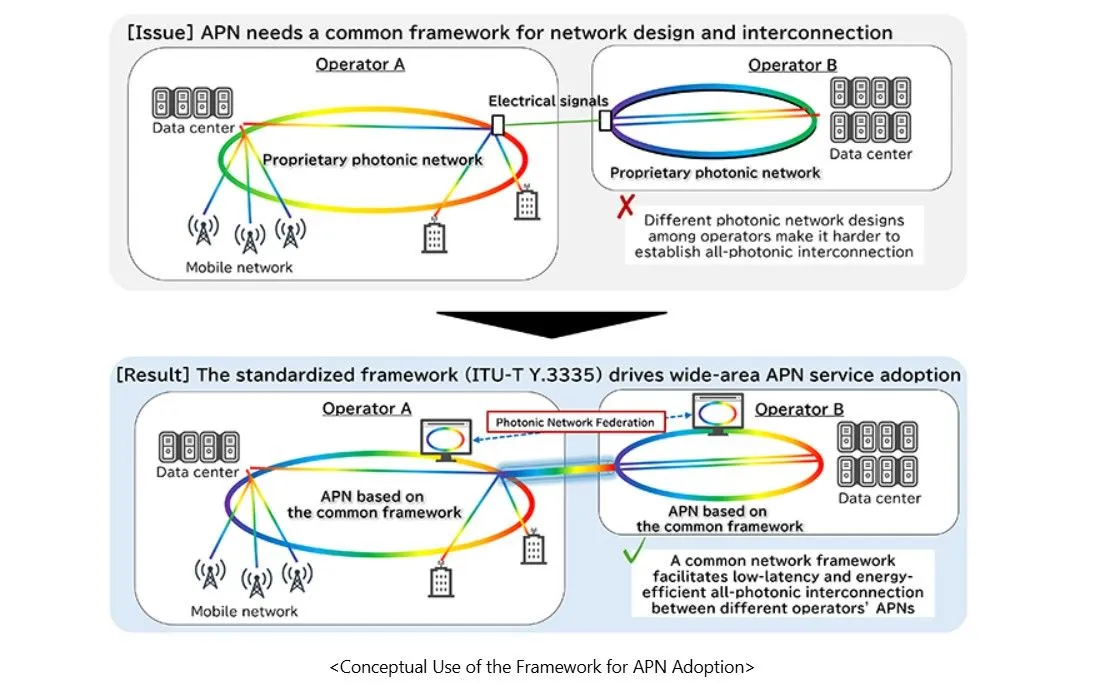
TOKYO, August 21, 2026 - (JCN Newswire via SeaPRwire.com) - KDDI Corporation, NTT, Inc., 1Finity Inc., a Fujitsu company and leading provider of global network solutions, NEC Corporation, Rakuten Mobile, Inc., Oki Electric Industry Co., Ltd., and Sumitomo Electric Industries, Ltd. today announced that the framework of low-latency and energy-efficient networks to support the AI era has been approved as an international standard by the International Telecommunication Union Telecommunication Standardization Sector (ITU-T) on August 13, 2026 [1].This framework will contribute to the realization of All-Photonics Network (APN), a strategic field under the "Strategy for Realizing Next-Generation Information and Communication Infrastructure to Support AI Society - Beyond 5G Promotion Strategy 2.0 -" promoted by Japan’s Ministry of Internal Affairs and Communications.APN is expected to be deployed globally as a foundational network technology for next-generation services, including physical AI, because it enables high-capacity, low-latency, and energy-efficient communications and supports real-time processing of data obtained from sensors and robots in remote locations.Toward this goal, the IOWN Global Forum, an organization dedicated to driving the widespread adoption of APN-based next-generation communication infrastructure, is developing common technical documents on APN architecture and functional requirements. In parallel, research and development on photonic network federation technology, which enables stable interconnection among APNs operated by different providers [2], is also underway to develop interconnection methods and evaluate them using actual equipment. However, achieving global-scale interoperability and adoption, including among operators, countries or regions outside these initiatives, requires establishing a common framework based on broad international consensus.To address this challenge, Japanese telecommunications operators and equipment manufacturers have collaborated to lead the development of this framework. Now standardized as Recommendation ITU-T Y.3335, the framework defines the network configurations and technical requirements for establishing low-latency, energy-efficient communication paths across different operators [3]. It systematically organizes the accumulated knowledge of APNs and research outcomes on photonic network federation technology in a manner independent of any specific organization or implementation method. The approval from ITU-T provides a common framework for APN to be shared globally, making it easier to build APN services spanning multiple operators and enabling the use of high-speed, energy-efficient communication services even across geographically distributed sites.The seven companies will continue to promote standardization activities in Japan and overseas by leveraging network technologies and standardization expertise cultivated in Japan. Within ITU-T, they are also contributing to the development of a Recommendation on functional architecture for low-latency and energy-efficient networks, targeted for October 2028, and will continue contributing to the global adoption of APN to support the AI era.[1] KDDI Corporation, NTT, Inc., 1Finity Inc., NEC Corporation, and Rakuten Mobile, Inc. conducted this work as part of the commissioned research "Research and Development of All-Photonics Network Common Infrastructure Technology" (JPJ012368C09001) under the "Innovative ICT Fund Projects for Beyond 5G/6G" by National Institute of Information and Communications Technology (NICT), Japan.[2] News release dated October 25, 2024Joint proposal by NTT, KDDI, Fujitsu, NEC, and Rakuten Mobile adopted as Japan's Ministry of Internal Affairs and Communications/NICT's "Innovative ICT Fund Projects for Beyond 5G/6G" for social implementation and overseas expansion oriented strategic program (common infrastructure technology establishment)[3] https://www.itu.int/rec/T-REC-Y.3335/enAbout NECThe NEC Group leverages technology to create social value and promote a more sustainable world where everyone has the chance to reach their full potential. NEC Corporation was established in 1899. Today, the NEC Group’s approximately 110,000 employees utilize world-leading AI, security, and communications technologies to solve the most pressing needs of customers and society. For more information, please visit https://www.nec.com, and follow us on LinkedIn and YouTube. Copyright 2026 JCN Newswire via SeaPRwire.com. All rights reserved. www.jcnnewswire.com
More
Mitsubishi Motors Launches the Outlander PHEV in the Philippines JCN Newswire

Mitsubishi Motors Launches the Outlander PHEV in the Philippines

TOKYO, August 21, 2026 - (JCN Newswire via SeaPRwire.com) - Mitsubishi Motors Corporation (hereafter, Mitsubishi Motors) announced that Mitsubishi Motors Philippines Corporation (MMPC), its subsidiary in the Philippines, began sales of the Outlander Plug-in Hybrid Electric Vehicle crossover SUV (Outlander PHEV) in the Philippine market. The launch marks the first introduction of the current-generation Outlander PHEV in the ASEAN region.The Outlander PHEV is Mitsubishi Motors' flagship model, bringing together the company's advanced electrification and all-wheel control technologies. Based on the concept of "EV for everyday driving, hybrid for longer journeys," the model is an electrified SUV that delivers the powerful, smooth and quiet driving performance unique to electrified vehicles, along with safe and reliable driving across a wide range of weather and road conditions.Since its launch in 2013 as the world's first SUV-type PHEV, the Outlander PHEV has been sold in more than 60 countries worldwide and has earned high acclaim in Japan, North America, Europe and Australia. The model has achieved No. 1 sales in the PHEV category in Canada for three consecutive years from 2023 to 2025, while leading PHEV sales in Japan in fiscal 2024 and fiscal 2025*, reflecting its strong customer support in markets around the world.The Philippines is one of Mitsubishi Motors' key markets, where the SUV segment has continued to grow in recent years alongside increasing customer interest in vehicles with strong environmental performance and advanced technologies. With the introduction of the Outlander PHEV, Mitsubishi Motors aims to expand customer choice as it further strengthens its product lineup in the Philippine market.Mitsubishi Motors will continue to deliver new value to customers through compelling models built on its electrification and all-wheel control technologies, while contributing to the advancement of sustainable mobility.Fiscal 2024 is from April 2024 to March 2025. Fiscal 2025 is from April 2025 to March 2026. Copyright 2026 JCN Newswire via SeaPRwire.com. All rights reserved. www.jcnnewswire.com
More
Hitachi High-Tech supports the optimization of coating processes for cathode active materials used in all-solid-state batteries with HMAX Industry utilizing physical AI JCN Newswire

Hitachi High-Tech supports the optimization of coating processes for cathode active materials used in all-solid-state batteries with HMAX Industry utilizing physical AI

TOKYO, August 21, 2026 - (JCN Newswire via SeaPRwire.com) - Hitachi High-Tech Corporation ("Hitachi High-Tech") has completed a demonstration ("the Demonstration") to investigate optimal coating conditions for the surfaces of cathode active materials*1-a process in the manufacturing of all-solid-state batteries, aiming to prevent output degradation and battery deterioration-with Powrex Corporation ("Powrex"). Hitachi High-Tech and Powrex will accelerate collaborative efforts toward its commercialization.Coating is an important factor that directly affects the performance of all-solid-state batteries, and is an advanced technology that requires specialized knowledge and experience. The Demonstration, which leveraged Powrex's technical capabilities in coating, its domain knowledge, and its extensive equipment operation data and Hitachi High-Tech's physical AI that combines analytical technology with AI and informatics technologies*2, validated an efficient approach to identifying optimal coating conditions.We will build a system that enables efficient and data-driven process development that previously relied on the accumulated highly specialized knowledge and vast experience of engineers to repeatedly conduct experiments and prototyping. By offering this as part of HMAX Industry lineup, we aim to contribute to the development of all-solid-state batteries with Lab to Fab*3, to shortening the time required for beginning mass production, and to the stable supply of high-quality all-solid-state batteries.*1 Cathode active materials: Materials that take in electrons during a battery reaction. Metal oxides containing lithium ions are primarily used.*2 Developed and provided in collaboration with Hitachi, Ltd.*3 Lab to Fab: A business model that provides integrated support from R&D to mass production, creating value such as reducing time from development to market launch (Time to Market).Background and ChallengesSecondary batteries*4 used in PCs, smartphones, and EVs (electric vehicles) are widely used as one of the sources of energy that contribute to the realization of a sustainable society. In recent years, instead of lithium-ion batteries, all-solid-state batteries - which use safer, non-combustible solid electrolyte materials-have been attracting attention. In addition to having improved safety, all-solid-state batteries are expected to offer improved energy density and a longer service life thanks to their higher voltages and ability to be used with metal lithium anodes. As a result, we can expect them to deliver many benefits- including increased EV ranges; fewer recharge cycles; smaller, lighter battery packs; and more—and contribute to a decarbonized society.On the other hand, one of the challenges in the adoption of all-solid-state batteries is developing a manufacturing process that can prevent reactions that would lead to a battery output degradation and battery deterioration. Secondary batteries consist of electrodes (positive and negative) and electrolytes, with the ions contained within the electrode's active material generating energy by traveling through the electrolytes. Of these, all-solid-state batteries are attracting attention due to their use of electrolytes that have high ion conductivity and are non-combustible solids, enabling them to be safer and have better battery performance. However, within the course of the all-solid-state battery’s repeated discharge and charge cycles, a resistive element forms at the interface between the cathode's active material and the solid electrolyte, causing energy output degradation. To address this, a method has been strongly adopted whereby the cathode's active material is coated with a lithium-conductive oxide film to prevent the formation of this resistive element. Designing an optimal coating process that achieves uniformity, coverage, and film thickness control for particulate cathode active materials required multiple factors to be considered, such as material composition, compatibility with solid electrolytes, and equipment conditions. As such, investigating these conditions and scaling up required a significant amount of time and workload. In addition, highly specialized knowledge and skills in coating and batteries were required, and in many cases relied on the experience and knowledge of expert workers. This presented a challenge due to the limited number of researchers capable of designing high-quality coating processes.*4 Secondary batteries: Examples of these include lithium-ion batteries and lead-acid batteries, which contribute to reducing resource consumption and waste as they are rechargeable and can be used repeatedly. In addition, all-solid-state batteries and sodium-ion batteries are expected to be adopted and more widely used as next-generation batteries.OverviewPowrex is a manufacturer providing equipment and process solutions centered around powder processing technology*5 to a wide range of fields such as pharmaceuticals, food, chemicals, and battery materials. Its strengths lie in its equipment technology and process design capabilities in powder processes such as mixing, granulation, and coating. In addition to having coating technology for a wide variety of highly complex particle shapes, the company has a proven track record of leveraging its long-standing technological capabilities and knowledge cultivated over many years to create high-quality coating processes based on optimal conditions tailored to particle size distribution and material properties. Hitachi High-Tech provides analytical instruments and electron microscopes to a wide range of fields, including materials, biology, biotechnology, and pharmaceuticals, supporting the analysis and evaluation of various materials and products. In the batteries field, Hitachi High-Tech has also supported the battery material development and mass production investigations with our analytical and analysis technology by providing X-ray fluorescence analyzers (XRF) and scanning electron microscopes (SEM). With One Hitachi, we are also contributing to promoting DX for our manufacturing customers, from R&D to mass production, through the use of Physical AI that combines PROACCELA*6—a digital solution that leverage the Hitachi Group's AI and informatics technologies—and measurement data.*5 Powder processing technology: Technology for processing raw materials into powder and granules.*6 About PROACCELABoth companies are merging the cumulative technological capabilities, expertise, and knowledge they have cultivated over the years with digital technology to streamline these investigations into the optimal processes for achieving high-quality coatings, particularly with regard to configuring and evaluating coating conditions on cathode active material surfaces, for which past investigations would have had to go through repeated trial and error while relying on highly specialized knowledge and experience.Specific demonstration details(1) Developing a quantitative method for physical properties evaluations for cathode active material coatingsMeasuring the coatings of cathode active materials is incredibly difficult as it requires complicated pre-treatment and the use of equipment that demands a high level of specialized knowledge, hence why there was a need to develop a simpler measurement method. In the demonstration, we used Hitachi High-Tech's XRF and SEM, which require no complicated pre-treatment and are easy to operate, to analyze samples with fluidized bed*7 coatings under various manufacturing conditions in Powrex. This enabled us to streamline the evaluation process, and by shortening evaluation time and reducing measurement result variability, we also developed a method for quantitatively evaluating coating conditions such as coating thickness, coating uniformity, and interfacial characteristics. In addition, we were also able to clarify the causal relationships between processing conditions, material properties, and battery performance based on the data obtained.*7 Fluidized bed: A layer of mixed solids and gas whereby the inflow of air from below the powders and particles ("particulate") has caused this particulate to become suspended and mixed with the air. This results in a state in which the particulate and air flow together like boiling water.(2) Optimizing coating conditions through the utilization of process informaticsWe integrated operational data obtained from Powrex's coating equipment, past coating performance data, and evaluation results from the method developed in (1) into a single data table, and then applied Hitachi High-Tech's PROACCELA process informatics (PI)*8 technology. In the past, engineers would have had to go through trial and error while relying on their highly specialized knowledge and experience for investigations. This time, using PROACCELA yielded optimal solutions for high-quality, highly reproducible coating conditions.As a result of the Demonstration, we were able to determine the optimal coating conditions and confirm that this method would reduce development time and the time required for beginning mass production for particle coating, which is highly technically challenging.*8 Process Informatics: A technology that integrates and analyzes data on conditions and measurements from manufacturing and experimental processes, and uses data‑driven approaches to predict performance and identify optimal manufacturing process conditions.Future OutlookBased on the results of the demonstration, Hitachi High-Tech and Powrex will work toward commercializing an optimal coating process proposal, as part of HMAX Industry lineup, in anticipation of the full-scale emergence of the all-solid-state battery market which is expected to emerge around 2030. In addition, for battery materials, we will expand the scope of this application to various coatings and types of materials. Going forward, we will explore expanding into a wide range of fields, including not only the battery industry, but also fields such as high-performance materials, pharmaceutical products, and chemicals.Hitachi High-Tech belongs to the Industrial Solutions Business Unit in Hitachi's Connected Industries (CI) sector, and is focusing on HMAX Industry, a next-generation solutions group that combines domain knowledge and advanced AI with data from a rich installed base of products (digitalized assets). Hitachi High-Tech aims to become a leading company in physical AI, and through its core focus of providing industrial solutions centered on these technologies, aims to maximize lifetime value for its customers and transform industries globally to achieve a prosperous society.About Hitachi High-TechHitachi High-Tech provides cutting-edge technologies, products and services to society and customers with its corporate vision of "Changing the World and Future with the Power of Knowledge" to contribute to a sustainable global environment, healthy, safe and secure lives, and the sustained development of science and industry. We manufacture and sell clinical analyzers, biotechnology products and radiation therapy systems in the healthcare field, semiconductor manufacturing and inspection equipment in the semiconductor field, as well as analytical systems and electron microscopes used in environmental fields and materials research. We are also engaged in a wide range of business areas globally, providing high added-value solutions in battery, communication infrastructure, railway inspection, digital and other industrial and social infrastructure fields. We provide solutions through a deeper understanding of the issues facing society and our customers to contribute to realizing a sustainable society. The company's consolidated revenues for FY2025 were approx. JPY 821.7 billion. For further information, visit https://www.hitachi-hightech.com/global/en/Business ContactBeam Technology & Analytical Systems Business Div.,Core Technology & Solutions Business Group,Hitachi High-Tech Corporation Copyright 2026 JCN Newswire via SeaPRwire.com. All rights reserved. www.jcnnewswire.com
More
Honda Wins Red Dot Awards for EV Outlier Concept and Brand Film for Honda Electric Motorcycle Business in Red Dot Design Award 2026 JCN Newswire

Honda Wins Red Dot Awards for EV Outlier Concept and Brand Film for Honda Electric Motorcycle Business in Red Dot Design Award 2026

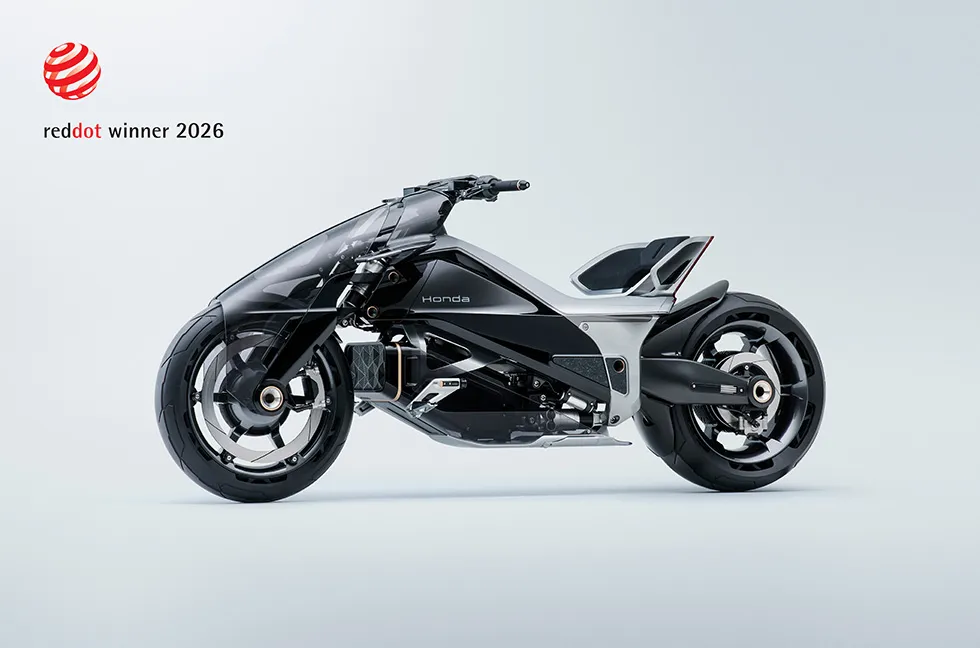
TOKYO, Japan, August 21, 2026 - (JCN Newswire via SeaPRwire.com) - Honda today announced that the EV Outlier Concept was named a Red Dot winner in the Design Concept category of the Red Dot Design Award 2026*, and the brand film for Honda electric motorcycle business, titled “What Is a Motorcycle? / Electric Motorcycles,” was named a Red Dot winner in the Brand & Communication Design category. EV Outlier ConceptThe EV Outlier Concept is a concept model that proposes a new vision for motorcycles beyond 2030, rather than just an extension of existing motorcycles. Honda presented the world premiere of the EV Outlier Concept at the Japan Mobility Show 2025 in October 2025, and the model was well received by visitors.Taking advantage of the high degree of freedom of the layout unique to electric motorcycles, the EV Outlier Concept features in-wheel motors on both the front and rear wheels, achieving dynamic and low-proportion styling. Key design featuresBased on the common design theme for Honda electric motorcycles — Precision of Intrinsic Design — the EV Outlier Concept was designed as a model that is “unconstrained by boundaries.”Taking advantage of the high degree of freedom of the layout enabled by electrification, the riding position has been lowered to the extreme, realizing an exhilarating field of view and an unparalleled sense of acceleration, while creating proportions that further emphasize the rider's low seating position. In addition, smooth surfaces and a smoke-clear body, which highlight the mechanical expression of the model, evoke the image of gliding effortlessly through the air.Brand Film: “What Is a Motorcycle? / Electric Motorcycles”Honda has defined its brand promise for the electric motorcycle business as “Expected life. Unexpected discoveries.” This means Honda electric motorcycle business will work with people to co-create a world full of comfort and excitement, where people can live their lives as they expect, while also enjoying unexpected discoveries — which is a value proposition Honda has set to create electric motorcycles unique only to Honda. The brand film depicts how, based on this brand promise, Honda will explore the potential of 1) unique value only electric mobility products can create, and 2) the future mobility society (ecosystem) where people and electric motorcycles coexist in harmony in society, as well as how people will enjoy the new lifestyles and experiences that lie ahead. Honda electric motorcycle business brand film: What Is a Motorcycle? / Electric MotorcyclesComments by Toshinobu Minami, Managing Director, Chief Operating Officer,Design Center, Honda R&D Co., Ltd.“The Red Dot Design Award is one of the most prestigious awards in the world, and it is a great honor for us that our EV Outlier Concept received the Red Dot award in the Design Concept category, and the brand film, “ What Is a Motorcycle? / Electric Motorcycles,” was named a Red Dot winner in the Brand & Communication Design category. We believe these awards recognize our initiative to anticipate the needs of the future and give shape to new value ahead of the times. Honda will continue to create new values that surprise and inspire people and provide the joy of expanding their life’s potential.”Honda Design award history:https://global.honda/jp/design/work/#award (Japanese)https://global.honda/en/design/work/#award (English)* The Red Dot Award was founded in 1955 and has become one of the most respected design awards worldwide. The award is administered by Design Zentrum Nordrhein Westfalen in Essen, Germany. Copyright 2026 JCN Newswire via SeaPRwire.com. All rights reserved. www.jcnnewswire.com
More
DOCOMO to End the “MANGA MIRAI” Digital Comic Distribution Service and Migrate Purchased Titles to “MangaPlaza” JCN Newswire

DOCOMO to End the “MANGA MIRAI” Digital Comic Distribution Service and Migrate Purchased Titles to “MangaPlaza”

LOS ANGELES,CA, August 21, 2026 - (JCN Newswire via SeaPRwire.com) - NTT DOCOMO, INC. (“DOCOMO”) will end its “MANGA MIRAI” digital comic distribution service, offered in the United States, as of 11:59 p.m. on December 15, 2026 (U.S. Pacific Time). New membership registration, new title purchases, provision of the app, and viewing of titles within the app will end as of 7:00 p.m. on August 19, 2026 (U.S. Pacific Time).In conjunction with the end of “MANGA MIRAI,” customers' user information and their purchased titles (libraries) will be migrated to “MangaPlaza,” a digital comic distribution service for the U.S. market operated by NTT Solmare Corporation (Main office: Osaka City, Osaka Prefecture;“NTT Solmare”). Titles purchased on “MANGA MIRAI” will remain available on “MangaPlaza.”*1“MANGA MIRAI” is a digital comic distribution service that allows customers in the United States to read English versions of Japanese manga. It launched in March 2025 and offered more than 28,000 volumes across 2,400 titles of Japanese manga, but in light of the current business environment, the service will be discontinued. Customers can continue to view their purchased titles on the website until the “MANGA MIRAI” service ends.Upcoming Schedule- End of new membership registration, new title purchases, and provision of the app:7:00 p.m., August 19, 2026 (U.S. Pacific Time)- End of the “MANGA MIRAI” service*2:11:59 p.m., December 15, 2026 (U.S. Pacific Time)When the “MANGA MIRAI” service ends, customers' user information and their purchased titles will be migrated to “MangaPlaza” and remain available.To continue using these titles on “MangaPlaza,” customers must create a “MangaPlaza” account, using the same email address they registered for “MANGA MIRAI” by 11:59 p.m. on September 30, 2026 (U.S. Pacific Time). Please note that titles obtained for free*3 and some purchased titles may be ineligible for migration*4. Additionally, under the “MangaPlaza” Terms of Use, customers who are under 18 years of age as of September 30, 2026 cannot create an account, so any purchased titles and other content will not be migrated. If you do not wish to have your user information and purchased titles migrated*5, please submit an opt-out request through the “MANGA MIRAI” service site by 11:59 p.m. on September 30, 2026 (U.S. Pacific Time).“MANGA MIRAI”: https://mangamirai.com/ (not accessible from Japan)“MangaPlaza”: https://mangaplaza.com/Importantly, customers who fall into any of the following categories will receive separate guidance regarding future steps, such as how their purchased titles will be refunded; this will be sent to the email address they registered for “MANGA MIRAI”:Customers who have completed “MangaPlaza” account creation by the due date, whose purchased titles include titles ineligible for migration*4Customers who are under 18 years of age as of September 30, 2026Customers who have submitted an opt-out request by the due date, indicating that they do not wish to migrate their purchased titles to “MangaPlaza”DOCOMO will continue striving to enhance the value it provides to its customers.*1 Titles obtained for free and some paid titles will be ineligible for migration.*2 Some titles may have their distribution suspended before the service ends.*3 This applies to paid titles purchased for $0 through promotions or similar offers.*4 Details on titles ineligible for migration are scheduled to be announced on the “MANGA MIRAI” service site (https://mangamirai.com/, not accessible from Japan) around mid-October 2026.*5 If you choose not to have your titles migrated, you will no longer be able to view your purchased titles when the “MANGA MIRAI” service ends.About NTT DOCOMONTT DOCOMO, Japan's leading mobile operator with over 91 million subscribers, is one of the global leaders in 3G, 4G and 5G mobile network technologies. Under the slogan “Bridging Worlds for Wonder & Happiness,” DOCOMO is actively collaborating with global partners to expand its business scope from mobile services to comprehensive solutions, aiming to deliver unsurpassed value and drive innovation in technology and communications, ultimately to support positive change and advancement in global society. https://www.docomo.ne.jp/english/ NTT Solmare Company InformationLocation17th Floor, YODOYABASHI GATE TOWER, 4-1-1 Kitahama Chuo-ku, Osaka 541-0041, JapanFoundedApril 1, 2002Business AreasDigital Publication ServicesGaming ServicesAdditional ServicesURLhttps://www.nttsolmare.com/ Copyright 2026 JCN Newswire via SeaPRwire.com. All rights reserved. www.jcnnewswire.com
More
MHI Receives Contract for APM System at Dubai’s Al Maktoum International Airport JCN Newswire

MHI Receives Contract for APM System at Dubai’s Al Maktoum International Airport

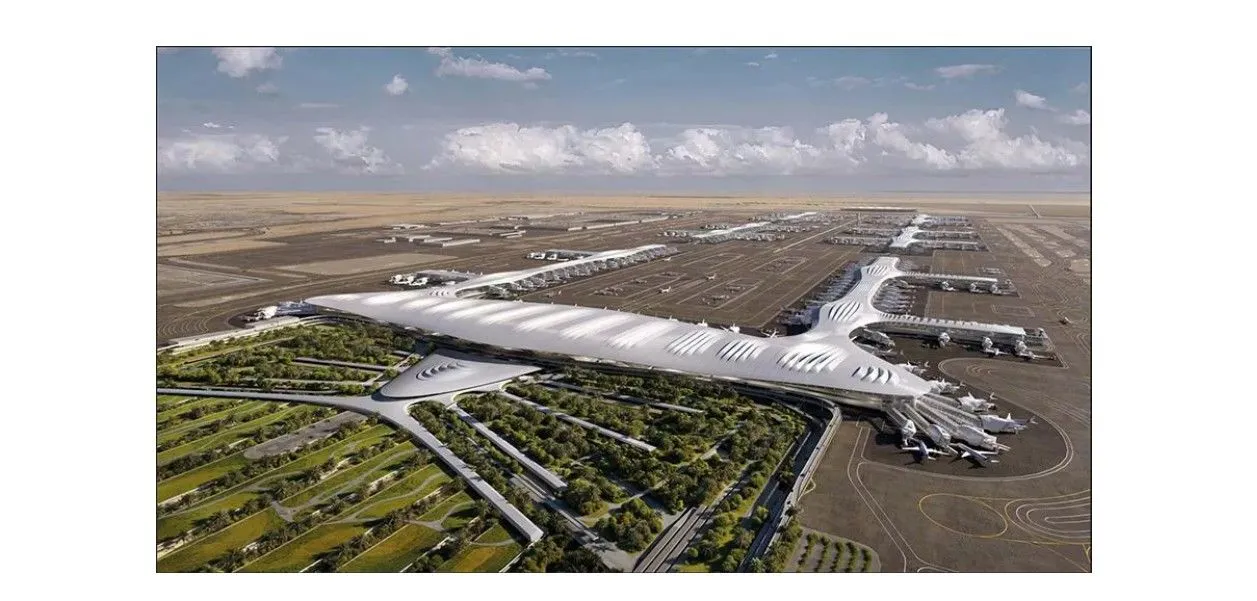
TOKYO, August 21, 2026 - (JCN Newswire via SeaPRwire.com) - Mitsubishi Heavy Industries, Ltd. (MHI) has received an order for an automated people mover (APM) system(*1) for the first phase of the development plan for the new Al Maktoum International Airport in Dubai, United Arab Emirates (UAE). The contract from Dubai Aviation City Corporation (DACC), a Dubai government entity, was awarded to MHI as part of a three-company consortium with MHI Mobility Engineering Services L.L.C. (MHI-MESC), MHI's subsidiary in Dubai, and Indian multinational conglomerate Larsen & Toubro Limited (L&T).The APM system to be delivered under this contract will be the world's largest, with a length of approximately 50 km connecting nine stations, an unprecedented size for an airport APM system.(*2) MHI and MHI-MESC, as the consortium leaders, will handle the design, procurement, and testing for the 165 APM vehicles and signaling system that constitute the core of the system, as well as the overall system integration. L&T will be responsible for the design, procurement, testing, and on-site construction of other subsystems. Completion is scheduled for December 2031.The development of Al Maktoum International Airport is a large-scale national project by the Dubai government that aims to establish one of the world's largest hub airports, with a target opening of 2032. The expectation for the future is for the airport to serve 260 million passengers annually, with plans for further gradual expansion. The APM system will connect the airport's terminals and major facilities, meeting the travel needs of the growing number of passengers. The introduction of this system will improve passenger convenience and shorten travel times, while contributing to efficient airport operations to meet future increases in aviation demand.Previous projects in Dubai include the construction of the Dubai Metro in 2011 by a consortium led by MHI. Currently, MHI provides Operation and Maintenance (O&M) services for the Dubai Metro through its affiliate Keolis MHI Rail Management and Operation LLC.(*3) Additionally, in 2012, MHI completed the APM system supporting passenger transport at Terminal 3 at the current Dubai International Airport, and continues to provide O&M services through MHI-MESC.(*4) Through these projects, MHI Group continues to contribute to the operation of Dubai's transportation infrastructure.(*1) APM systems are used worldwide to connect air terminals, as transportation systems to serve areas near airports, or urban transportation.(*2) At present, the world's largest airport APM systems include Skylink at Dallas Fort Worth International Airport in the U.S., which is the longest with a route length of about 8 km, and The Plane Train at Hartsfield-Jackson Atlanta International Airport in the U.S., which is the world's most heavily traveled, carrying around 91 million passengers annually.(*3) For more information about Keolis MHI Rail Management and Operation LLC, see the following. https://www.mhi.com/news/21032301.html(*4) For more information about the current O&M services contract at Dubai International Airport, see the following.https://www.mhi.com/news/231122.htmlAbout MHI GroupMitsubishi Heavy Industries (MHI) Group is one of the world’s leading industrial groups, spanning energy, smart infrastructure, industrial machinery, aerospace and defense. MHI Group combines cutting-edge technology with deep experience to deliver innovative, integrated solutions that help to realize a carbon neutral world, improve the quality of life and ensure a safer world. For more information, please visit www.mhi.com or follow our insights and stories on spectra.mhi.com. Copyright 2026 JCN Newswire via SeaPRwire.com. All rights reserved. www.jcnnewswire.com
More
MHI-AC&R Develops and Launches “N-Bleath” Compact Ultra-Low Temperature Brine Chiller Using Nitrogen Refrigerant JCN Newswire

MHI-AC&R Develops and Launches “N-Bleath” Compact Ultra-Low Temperature Brine Chiller Using Nitrogen Refrigerant

TOKYO, August 21, 2026 - (JCN Newswire via SeaPRwire.com) - Mitsubishi Heavy Industries Air-Conditioning & Refrigeration Corporation (MHI-AC&R), a part of Mitsubishi Heavy Industries (MHI) Group, has developed N-Bleath,(*1) a compact brine chiller that uses nitrogen (N2), a natural refrigerant, and is capable of handling ultra-low temperature ranges. Sales are scheduled to begin in April 2027. Nitrogen is a natural refrigerant with an ozone depletion potential (ODP)(*2) and global warming potential (GWP)(*3) of zero, contributing to the protection of the ozone layer and curbing global warming. Further, as a completely PFAS-free refrigerant, nitrogen contributes to reducing environmental impacts and health risks. Additionally, the unit is equipped with a newly developed compact electric turbo(*4) from Mitsubishi Heavy Industries Engine & Turbocharger, Ltd. (MHIET). This enables product miniaturization and high efficiency.N-Bleath utilizes the air refrigerant cycle technology adopted by MHI-AC&R over many years of research and development, allowing it to handle a wide range of ultra-low temperatures, from -40℃ to -100℃, with proprietary technology (patent pending) providing exceptional load following capability. As such, expected use cases cover various fields and applications, including process cooling in the medical, pharmaceutical, chemical, and semiconductor sectors, as well as environmental testing in the aerospace and automotive sectors.The unit has a compact and modular design, offering space savings and improved backup capabilities. This lessens the installation constraints inherent with conventional large units and reduces equipment downtime risk. Further, because nitrogen is used as a refrigerant, the unit has a low environmental impact and is safe for people. Additionally, since the unit is not subject to regulations such as Japan's High Pressure Gas Safety Act, maintenance and operation are straightforward.MHIET's compact electric turbo combines a high-performance impeller(*5) and an ultra-high speed motor —developed using aerodynamic performance(Note6) and high-speed rotation technologies cultivated through MHIET's turbocharger development—achieves both a compact, lightweight form factor and outstanding energy efficiency. By adopting oil free bearings, the unit eliminates the need for periodic lubricating oil changes, significantly reducing maintenance requirements. Moreover, because of the advanced thermal insulation, the turbo is capable of cooling into ultra-low temperature ranges below -100℃. Leveraging the energy-saving capabilities, cooling performance, and environmental benefits of this compact electric turbo, MHIET will continue to explore its potential applications across a diverse product lineup and drive the creation of new value in the cold heat and energy sectors.Going forward, MHI Group will promote the widespread adoption of cooling systems utilizing PFAS-free natural refrigerants with ODP and GWP factors of zero, and by supplying compact electric turbos with high energy-saving performance, contribute to reducing environmental impacts in the ultra-low temperature market.(*1) Brine is a type of coolant. N-Bleath uses brine cooled with nitrogen to absorb and carry away heat from equipment or systems. For more details, see the following press release.(Japanese only) https://www.mhi-mth.co.jp/business/engineering/cooling-freezing/n2/(*2) Ozone depletion potential (ODP) is a coefficient expressing the relative amount of degradation to the ozone layer compared to trichlorofluoromethane (CFC-11), a refrigerant previously in wide use which has a fixed ODP of 1.0. The lower the ODP, the lower the destructive impact on the ozone layer.(*3) Global warming potential (GWP) is a coefficient relative to CO2, which has a fixed GWP of 1.0. The lower the GWP factor, the less impact on the environment.(*4) For details about the compact electric turbo, see the following.(Japanese only) https://www.mhi.com/jp/group/mhiet/products/turbocharger/compact-electric-turbo(*5) The impeller is a bladed rotor inside the turbocharger. It rotates to compress and expand air and refrigerant.(*6) Technology to improve aerodynamic performance maximizes the energy-saving performance of electric turbos.About MHI GroupMitsubishi Heavy Industries (MHI) Group is one of the world's leading industrial groups, spanning energy, smart infrastructure, industrial machinery, aerospace and defense. MHI Group combines cutting-edge technology with deep experience to deliver innovative, integrated solutions that help to realize a carbon neutral world, improve the quality of life and ensure a safer world. For more information, please visit www.mhi.com or follow our insights and stories on spectra.mhi.com Copyright 2026 JCN Newswire via SeaPRwire.com. All rights reserved. www.jcnnewswire.com
More
TANAKA Invests in Clean Planet JCN Newswire

TANAKA Invests in Clean Planet

TOKYO, Aug 20, 2026 - (JCN Newswire via SeaPRwire.com) - TANAKA PRECIOUS METAL GROUP Co., Ltd. (Head Office: Chuo-ku, Tokyo; Group CEO: Koichiro Tanaka) announced an investment in Clean Planet Inc. (Head Office: Chiyoda-ku, Tokyo; CEO: Hideki Yoshino), a company engaged in the research and development of its proprietary Quantum Hydrogen Energy (QHe) technology.The investment marks the beginning of a collaboration between TANAKA and Clean Planet, bringing together TANAKA's expertise in precious metal materials technologies and Clean Planet's proprietary Quantum Hydrogen Energy (QHe) technology, an emerging next-generation energy technology expected to contribute to a carbon-neutral future.Background of the InvestmentAs global efforts toward carbon neutrality continue to accelerate, interest is growing not only in renewable energy but also in next-generation energy technologies capable of providing a stable and sustainable energy supply. In these fields, research and development (R&D) activities and investment are gaining momentum, particularly among startups in Japan and overseas, alongside growing efforts toward future real-world implementation.Throughout its history, TANAKA has contributed to innovation across a wide range of industries through its advanced precious metal materials technologies. Looking ahead to its 200th anniversary in 2085, TANAKA continues to pursue new technologies and industries that contribute to the future of both humanity and the planet.This investment forms part of that long-term vision. By supporting innovation in the next-generation energy field, TANAKA aims to deepen its technological expertise while exploring future applications for advanced materials technologies.Future CollaborationThrough this investment, TANAKA will further strengthen its engagement with advanced energy technologies while drawing on its expertise in surface engineering, analytical and evaluation technologies, and other materials-related capabilities to support future materials innovation and technology development.The company will also explore potential synergies between Clean Planet's Quantum Hydrogen Energy (QHe) technology and TANAKA's materials technologies with the aim of enhancing performance and reliability, while identifying opportunities for new products and services.Building on its long-standing expertise in precious metal technologies, TANAKA will continue to create new value through advanced materials innovation, contributing to decarbonization and a more sustainable society.Executive commentsKazuharu Yoshida, Head of People & Culture Design Division, Managing Corporate Officer, TANAKA PRECIOUS METAL GROUP Co., Ltd.Building a sustainable future requires breakthrough technologies, advanced materials expertise and strong partnerships. Quantum Hydrogen Energy (QHe) developed by Clean Planet represents an innovative initiative in the next-generation energy sector. Through this investment, we will draw on our long-standing expertise in unlocking the full potential of precious metals to drive new value creation and contribute to a more sustainable future.Hideki Yoshino, Chief Executive Officer (CEO), Clean Planet Inc.We are honored to receive investment from TANAKA, a global leader in precious metal materials technologies. Quantum Hydrogen Energy (QHe) is an innovative technology with the potential to transform the way energy is generated and used while making a significant contribution to a sustainable society. Realizing this vision requires bringing together cutting-edge energy technologies with world-class materials and manufacturing technologies. We believe this partnership represents an important step toward the commercialization and global deployment of QHe.About TANAKA PRECIOUS METAL GROUP Co., Ltd.Company name: TANAKA PRECIOUS METAL GROUP Co., Ltd.Headquarters: 2-6-6 Kayabacho, Nihonbashi, Chuo-ku, Tokyo, JapanFounded: 1885Incorporated: 2024Representative: Koichiro Tanaka, Group CEOCapital: JPY 100 millionMain businesses of the group: Company responsible for management of TANAKAWebsite: https://www.tanaka.co.jp/english (TANAKA Corporate Website)About Clean Planet Inc.Company Name: Clean Planet Inc.Headquarters: 10F, Shin-Marunouchi Building, 1-5-1 Marunouchi, Chiyoda-ku, Tokyo, Japan Incorporated: 2012Representative: Hideki Yoshino, CEOCapital: JPY 319.68 millionBusiness: Commercial development, deployment, and mass production of clean energy systems for industrial and social infrastructure applications utilizing Quantum Hydrogen Energy (QHe).Website: https://www.cleanplanet.co.jpAbout TANAKASince its foundation in 1885, TANAKA has built a portfolio of products to support a diversified range of business uses focused on precious metals. TANAKA is a leader in Japan regarding the volume of precious metals it handles. Over many years, TANAKA has manufactured and sold precious metal products for industry and provided precious metals in such forms as jewelry and assets. As precious metals specialists, all Group companies in Japan and worldwide collaborate on manufacturing, sales, and technology development to offer a full range of products and services. With 5,778 employees, the group’s consolidated net sales for the fiscal year ended December 2025 were 1,097,813 million yen.TANAKA Industrial Precious Metal Materials Portalhttps://tanaka-preciousmetals.comProduct inquiriesTANAKA PRECIOUS METAL TECHNOLOGIES Co., Ltd.https://tanaka-preciousmetals.com/en/inquiries-on-industrial-products/Press inquiriesTANAKA PRECIOUS METAL GROUP Co., Ltd.https://tanaka-preciousmetals.com/en/inquiries-for-media/Press Release: http://www.acnnewswire.com/docs/files/20260820_EN.pdf Copyright 2026 JCN Newswire via SeaPRwire.com. All rights reserved. www.jcnnewswire.com
More
Fujitsu launches highly secure supply chain information sharing service, leveraging U.S. Exostar’s capabilities and maintaining localized data management and operations in Japan JCN Newswire

Fujitsu launches highly secure supply chain information sharing service, leveraging U.S. Exostar’s capabilities and maintaining localized data management and operations in Japan

KAWASAKI, Japan, Aug 20, 2026 - (JCN Newswire via SeaPRwire.com) - Fujitsu Limited today announced the launch of Fujitsu Trusted Supplychain Service on August 20, 2026. This information sharing service enables secure data exchange and communication across the entire supply chain. The service complies with the NIST SP 800-171 security standard established by the U.S. National Institute of Standards and Technology (NIST) and ensures data management and operations within Japan. Leveraging the capabilities of U.S. Exostar LLC, with whom Fujitsu has collaborated since 2019, this service marks Japan's first SaaS offering of its kind. It is designed for a wide range of companies, including those in the defense industry and critical infrastructure sectors that require stringent security.This service allows companies to securely and safely promote digitalization, reducing the costs and burdens associated with complex system construction and operation. This will enhance business continuity and strengthen competitiveness across the entire supply chain.BackgroundIn recent years, cyberattacks have grown in sophistication and severity. Protecting critical data, such as design information and intellectual property, which are sources of corporate competitiveness, across the entire supply chain has become an urgent management issue for all companies, especially in the defense industry. Without maintaining a consistent security level throughout the supply chain, vulnerabilities can be exploited for attacks and intrusions, thereby exposing the entire supply chain to considerable risks.Amidst growing global concern for economic security, Japan has enacted the Economic Security Promotion Act[1]. Concurrently, from the national security perspective, new information security standards[2] have been introduced for the procurement of defense equipment within the defense industry. These developments have resulted in more stringent security management demands across the entire supply chain. Many of the security requirements stipulated in these laws reference NIST SP 800-171, making compliance with this standard a critical prerequisite for achieving high security levels. Moreover, managing and operating data domestically is becoming increasingly vital for adhering to domestic laws, particularly in light of the risks of information disclosure under foreign legal frameworks.However, individually addressing these stringent requirements poses significant challenges in terms of cost and time.About the ServiceFujitsu Trusted Supplychain Service is an information-sharing service that ensures data exchange and communication both within and between companies in the supply chain, all within an environment compliant with NIST SP 800-171. Since 2019, Fujitsu has held an exclusive distribution agreement in Japan with U.S. Exostar LLC, a company that boasts over 150,000 global implementations, primarily across the U.S. defense, aerospace, and space industries. This new service integrates Exostar's highly reliable authentication and authorization functions, provided by Fujitsu as a localized service tailored for Japan.Moreover, data management is performed in domestic data centers registered under the Information System Security Management and Assessment Program (ISMAP)[3], and monitoring and support operations are performed by Fujitsu's experts within Japan. Customers can thus leverage a global standard security environment within a domestic operational framework, significantly mitigating the risks of information disclosure under foreign laws.The communication functions are based on Microsoft 365, offering familiar usability for seamless implementation and adoption. Fujitsu will also collaborate with Exostar to explore providing AI functions securely within the service.Additionally, Fujitsu Trusted Supplychain Service for U.S. CUI[4] , which utilizes a U.S. cloud infrastructure and operational framework, will be launched simultaneously. Companies requiring compliance with U.S. regulatory requirements for transactions with the U.S. Department of Defense can choose Fujitsu Trusted Supplychain Service for U.S. CUI.Through the provision of this service, Fujitsu aims to support the enhancement of security within Japanese companies' supply chains and contribute to enhancing international competitiveness. Fujitsu will continuously develop and offer advanced services that empower customers' businesses and foster a safe and secure society.(1) Economic Security Promotion Act:A law aimed at preventing situations that could have a severe impact on the lives of citizens and economic activities, by strengthening supply chains and ensuring the safety of critical infrastructure.(2) New information security standards:New information security standards applied by the Acquisition, Technology & Logistics Agency to companies involved in the procurement of defense equipment. In response to increasing cyberattack risks, these standards mandate physical and technical security measures, as well as requiring thorough security education for employees and enhanced supplier management.(3) ISMAP (Information system Security Management and Assessment Program):A system that evaluates and registers cloud services that meet the security requirements of the government, thereby ensuring the security level in government procurement of cloud services.(4) Fujitsu Trusted Supplychain Service for U.S. CUI:A service capable of meeting security requirements for handling U.S. Controlled Unclassified Information (CUI), an information classification defined by the U.S. government. This service provides U.S. Exostar LLC's secure information sharing service for the Japanese market.About FujitsuFujitsu’s purpose is to make the world more sustainable by building trust in society through innovation. As the digital transformation partner of choice for customers around the globe, our 100,000 employees work to resolve some of the greatest challenges facing humanity. Our range of services and solutions draw on five key technologies: AI, Computing, Networks, Data & Security, and Converging Technologies, which we bring together to deliver sustainability transformation. Fujitsu Limited (TSE:6702) reported consolidated revenues of 3.5 trillion yen (US$23 billion) for the fiscal year ended March 31, 2026 and remains the top digital services company in Japan by market share. Find out more: global.fujitsu Copyright 2026 JCN Newswire via SeaPRwire.com. All rights reserved. www.jcnnewswire.com
More
JCB, in Collaboration with Digital Garage, to Conduct a Proof of Concept (PoC) for Stablecoin-Based Payments at a Lawson Store JCN Newswire

JCB, in Collaboration with Digital Garage, to Conduct a Proof of Concept (PoC) for Stablecoin-Based Payments at a Lawson Store

TOKYO, Aug 19, 2026 - (JCN Newswire via SeaPRwire.com) - JCB Co., Ltd. (JCB) and Digital Garage, Inc. (Digital Garage), together with Lawson, Inc. (Lawson), are pleased to announce that they have concluded a Basic Agreement toward conducting a proof of concept (PoC) for in-store payments using stablecoins.Under this agreement, the three companies will combine JCB's stablecoin payment service, Digital Garage's technologies related to payment APIs and back-end systems, and Lawson's expertise in store operations to identify challenges and explore solutions for realizing stablecoin payments at physical stores. The PoC will focus on verifying use cases in which inbound visitors to Japan make in-store payments using the US dollar-pegged stablecoin "USDC."Background to the Basic AgreementAs Japan's cashless payment ratio continues to rise, physical stores are increasingly accommodating a wide range of payment methods. Owing to their high level of convenience, stablecoins are attracting attention around the world as a foundation supporting a new ecosystem for a cashless society, and the market is expanding rapidly. In the payments domain in particular, their use is expected to deliver a broad range of benefits, including reducing the currency-exchange burden on inbound visitors to Japan, further improving the efficiency of fund settlement, and enhancing merchants' cash flow.Through this initiative, JCB's stablecoin payment service, Digital Garage's technologies related to payment APIs and back-end systems, and Lawson's expertise in store operations and POS systems will be brought together to conduct a PoC verifying the potential of stablecoin payments at physical stores.Overview of the PoCIn this PoC, the parties will adopt the CPM (Consumer-Presented Mode) method, in which a barcode containing the stablecoin wallet address information displayed on the user's smartphone is scanned by Lawson's in-store POS. Through this, the PoC will primarily verify the practicality and convenience of the use case in which users make in-store payments using the US dollar–pegged stablecoin "USDC."In addition, the connection between Lawson's in-store POS system and JCB's stablecoin payment service will utilize the code-payment processing technology provided by Canal Payment Service Co., Ltd.The principal roles of each company are as follows:JCB Co., Ltd.Provision of the stablecoin payment service, including the following functions and operations:・Provision of the user-facing web system (payment screen)・Provision of the payment barcode generation functionSettlement of sales proceeds to merchants:・Receives users’ stablecoins, aggregates the sales proceeds, and subsequently pays merchants in fiat currency.Digital Garage, Inc.Provision of payment APIs and backend systemsTechnical support during the PoC periodLawson, Inc.Provision of the store environment for this PoCIntegration between the in-store POS system and JCB's stablecoin payment servicePoC Implementation SummaryImplementation DateThursday, August 20, 2026Target StoreLawson Gate City Osaki Atrium BranchPrimary Target UsersPersonnel from JCB, Lawson, and Digital Garage participating in this PoCSupported WalletBase AppSupported StablecoinUS dollar–pegged stablecoin "USDC" (Base blockchain)Payment MethodCPM (Consumer-Presented Mode) methodVerification ScopeFeasibility of the payment flow; requirements for integration with the POS system; impact on in-store checkout operations; time required to complete a payment; usability of the user-facing web system, among other factors. Initiatives Toward the Social Implementation of Stablecoin Payments in JapanIn January 2026, JCB, together with Digital Garage and Resona Holdings, Inc., launched a collaboration toward the social implementation of stablecoin payments (*1). Under this collaboration, with Digital Garage as a partner, the parties are conducting PoCs on stablecoin payments at physical stores to identify and examine solutions to the challenges involved in realizing stablecoin payments among merchants in Japan.(*1) Press release dated January 16, 2026: "JCB, Digital Garage, and Resona Holdings Launch Collaboration Toward the Social Implementation of Stablecoin Payments" https://www.global.jcb/ja/press/2026/202601161100_others.pdfAbout JCBJCB is a major global payment brand and a leading credit card issuer and acquirer in Japan. JCB launched its card business in Japan in 1961 and began expanding worldwide in 1981. Its acceptance network includes about 72 million merchants around the world. JCB Cards are now issued mainly in Asian countries and territories, with more than 181 million cardmembers. As part of its international growth strategy, JCB has formed alliances with hundreds of leading banks and financial institutions globally to increase its merchant coverage and cardmember base. As a comprehensive payment solution provider, JCB commits to providing responsive and high-quality service and products to all customers worldwide. For more information, please visit: www.global.jcb/en/ContactAnna TakedaCorporate CommunicationsTel: +81-3-5778-8353Email: jcb-pr@info.jcb.co.jp Copyright 2026 JCN Newswire via SeaPRwire.com. All rights reserved. www.jcnnewswire.com
More
CBL International Reports Strong 1H 2026 Results JCN Newswire

CBL International Reports Strong 1H 2026 Results

Kuala Lumpur, August 18, 2026 - (ACN Newswire via SeaPRwire.com) - CBL International Limited (Nasdaq: BANL) (the “Company” or “CBL”), the listing vehicle of the Banle Group (“Banle” or “the Group”), a leading marine fuel logistics company in the Asia-Pacific region, has announced its unaudited financial results for the six months ended June 30, 2026, and declared a special cash dividend of $0.10 per share.1H 2026 Financial and Operational Highlights- Revenue of $395.59 million, an increase of 49.2% year-on-year, driven primarily by higher marine fuel prices amid geopolitical volatility and secondarily by volume growth.- Sales volume grew 10.9%, supported by the cumulative benefits of multi-year network expansion, successful new customer acquisitions, and progressive customer diversification.- Gross profit increased 140.5% to $6.53 million. Gross profit margin expanded 63 basis points to 1.65% from 1.02% in 1H2025, reflecting the Company’s ability to secure reliable supply and fulfill customer requirements at competitive pricing amid heightened market volatility.- Returned to profitability with net income of approximately $1.50 million, compared with a net loss of $992,000 in 1H2025, mainly attributable to higher sales volumes, improved gross profit margin, continued operating expense discipline, and better operational efficiency.- Global service network expanded to more than 70 ports across Asia Pacific, Europe, Australia, Africa, and Central America, strengthening CBL’s position as a global one-stop marine fuel logistics platform.- In April 2026, acquired a 50.5% majority stake in Green Marine Energy Holdings Limited, expanding upstream into sustainable feedstock distribution and strengthening physical bunker capabilities in Malaysia.- Banking facilities expanded as of June 30, 2026, providing enhanced financial flexibility to support working capital and growth initiatives. - Subsequent events: On July 16, 2026, the Company announced a 1-for-13 reverse share split of its Class A and Class B ordinary shares, effective for trading on July 20, 2026. The reverse share split was effected primarily to regain compliance with Nasdaq’s minimum bid price requirement. On August 3, 2026, the Company received notification from Nasdaq that it had regained compliance with Nasdaq Listing Rule 5550(a)(2).- The Company has declared a special cash dividend of $0.10 per share for both Class A and Class B ordinary shares, with a record date of August 28, 2026 and a distribution date of September 18, 2026.Financial Performance OverviewThe Company reported consolidated revenue of $395.59 million for the six months ended June 30, 2026, representing a 49.2% increase from $265.17 million in the same period of 2025. The increase was driven primarily by the surge in global oil prices arising from the escalation of Middle East geopolitical tensions and secondarily by the 10.9% growth in sales volume.Gross profit rose 140.5% to $6.53 million from $2.71 million, while gross profit margin expanded from 1.02% in 1H2025 to 1.65% in 1H2026. This 63-basis-point improvement reflects CBL’s strengthened ability to secure reliable supply and meet elevated customer demand at competitive pricing amid tighter Middle East bunker availability and heightened market volatility. The multi-year investments in network coverage and supplier relationships enabled the Company to capture demand arising from vessel rerouting while protecting and expanding margins.Total operating expenses increased by 2.2% year-on-year to $3.49 million from $3.42 million, demonstrating continued cost discipline. Selling and distribution expenses increased by (+9.6%) in line with higher volumes, while general and administrative expenses remained at the same level as the same period in 2025. The Company recorded operating income of $3.04 million compared with an operating loss of $701,000 in 1H2025, and net income of approximately $1.50 million compared with a net loss of $992,000 in the prior-year period.Strategic Expansion and Operational ExcellenceCBL’s multi-year strategy of port expansion and supplier development continued to deliver tangible results. As of 30 June 2026, the Company’s global service network had expanded to more than 70 ports, enabling it to serve key global trade routes with competitive pricing and reliable delivery.Asia Pacific remained the primary revenue driver. Elevated bunker demand arising from vessels redirected away from the Middle East toward Far East and intra-Asia corridors was captured through the strengthened regional network. Sales concentration among the top five customers declined to below 60% (compared with 60.4% in 1H2025 and 66.7% in 1H2024), while revenue from the top 12 global container liner customers increased to 68.6% from 60.1%. Customers acquired within the past two years contributed 23.5% of total sales during the first half of 2026.Despite significant geopolitical disruptions—including the escalation of Middle East conflicts involving Iran, threats to close the Strait of Hormuz in March 2026, ongoing Red Sea instability, and the impacts of U.S. tariff policies—CBL demonstrated strong resilience. CBL’s diversified supplier network enabled the Company to secure supplies under constrained conditions and successfully meet elevated customer demand in the Far East and other regions. The overall impact on CBL has so far been limited in negative terms and supported volume growth.It remains the Company’s strict policy to refrain from supplying vessels subject to sanctions, with reference to the United Nations Security Council Consolidated List—a policy upheld rigorously throughout the period.A key strategic development was the April 2026 acquisition of a 50.5% majority stake in Green Marine Energy Holdings Limited. Green Marine operates complementary businesses in sustainable feedstock distribution and licensed bunkering of conventional and biofuels in Malaysian waters. This investment enhances CBL’s upstream capabilities, supports integrated biofuel supply chain development, and strengthens its physical bunker capabilities in Malaysia.Management Commentary and Future OutlookDr. Teck Lim Chia, Chairman and CEO of CBL International Limited, stated, “Our first half results mark an important milestone. Our return to profitability was driven by the tangible payoff from multi-year investments in our global supplier network and operational capabilities. Despite significant geopolitical disruptions and market volatility, we grew sales volume by 10.9% and expanded our gross profit margin by 63 basis points. The acquisition of a majority stake in Green Marine further positions us upstream in the sustainable fuel value chain and strengthens our physical bunker capabilities in Malaysia. These achievements underscore the resilience of our business model and the effectiveness of our long-term strategy.As regulatory frameworks for maritime decarbonization continue to evolve and customer demand for lower-carbon fuels is expected to strengthen, CBL is well positioned with ISCC certifications, an expanding sustainable energy portfolio, and the Green Marine platform. We remain focused on disciplined cost management, further network expansion, and capturing opportunities across both conventional and sustainable marine fuels to deliver sustainable growth and long-term shareholder value, including through the declaration of a special cash dividend of $0.10 per share.”Looking ahead, CBL expects to:- Further integrate Green Marine’s feedstock distribution and Malaysian bunkering capabilities, while scaling biofuel offerings and exploring LNG and methanol solutions to support customers’ decarbonization goals.- Maintain disciplined cost management, continue to increase operational efficiency and leverage expanded banking facilities and capital markets tools to support working capital, growth initiatives, and potential shareholder return programs.- Remain vigilant regarding geopolitical risks, oil price volatility, U.S. trade policy developments, and regulatory changes, while staying cautiously optimistic about the outlook for the second half of 2026 and beyond.About CBL International LimitedCBL International Limited (Nasdaq: BANL) is the listing vehicle of Banle Group, a reputable marine fuel logistics company based in the Asia Pacific region that was established in 2015. We are committed to providing customers with one-stop solution for vessel refueling, which is referred to as a bunkering facilitator in the bunkering industry. We facilitate vessel refueling mainly through local physical suppliers in over 70 major ports covering Australia, Belgium, China, Hong Kong, India, Japan, Korea, Malaysia, Mauritius, Netherlands, Panama, the Philippines, Singapore, Taiwan, Thailand, Turkey, and Vietnam. While the Group’s primary focus remains on its established bunkering facilitation services, it has taken a measured step to broaden its presence in the sustainable energy supply chain through the distribution of sustainable fuel materials and biofuel supply. The Group actively promotes the use of alternative fuels and holds the ISCC EU and ISCC Plus certifications, as well as an EcoVadis Silver Medal.For more information about our company, please visit our website at https://www.banle-intl.com.Forward-Looking StatementsCertain statements in this announcement are not historical facts but are forward-looking statements. Forward-looking statements generally are accompanied by words such as “believe,” “may,” “could,” “will,” “estimate,” “continue,” “anticipate,” “intend,” “expect,” “plan,” “should,” “would,” “plan,” “future,” “outlook,” “potential,” “project” and similar expressions that predict or indicate future events or trends or that are not statements of historical matters, but the absence of these words does not mean that a statement is not forward-looking. These forward-looking statements include, but are not limited to, statements regarding estimates and forecasts of other performance metrics and projections of market opportunity. They involve known and unknown risks and uncertainties and are based on various assumptions, whether or not identified in this press release and on current expectations of BANL’s management and are not predictions of actual performance. These forward-looking statements are provided for illustrative purposes only and are not intended to serve as and must not be relied on by any investor as, a guarantee, an assurance, a prediction or a definitive statement of fact or probability. Actual events and circumstances are difficult or impossible to predict and will differ from assumptions. Many actual events and circumstances are beyond the control of BANL. Some important factors that could cause actual results to differ materially from those in any forward-looking statements could include changes in domestic and foreign business, fuel prices and tariffs, market, financial, political and legal conditions. The Company undertakes no obligation to update or revise publicly any forward-looking statements to reflect subsequent occurring events or circumstances, or changes in its expectations, except as may be required by law. Although the Company believes that the expectations expressed in these forward-looking statements are reasonable, it cannot assure you that such expectations will turn out to be correct, and the Company cautions investors that actual results may differ materially from the anticipated results and encourages investors to review other factors that may affect its future results in the Company’s filings with the SEC.CBL INTERNATIONAL LIMITED(Incorporated in the Cayman Islands with limited liabilities)For more information, please contact:CBL International LimitedEmail: investors@banle-intl.com Copyright 2026 JCN Newswire via SeaPRwire.com. All rights reserved. www.jcnnewswire.com
More

NEC Begins Research to Establish a Leading Underwater Acoustic Platform Model JCN Newswire

NEC Begins Research to Establish a Leading Underwater Acoustic Platform Model

TOKYO, Aug 18, 2026 - (JCN Newswire via SeaPRwire.com) - NEC Corporation (NEC; TSE: 6701) has been awarded a contract for "Research on Underwater Acoustic Foundation Models Using Self-Supervised Learning (Part 1)," focusing on dual-use applications, as part of the "Innovative Breakthrough Research" program conducted by the Defense Innovation Science and Technology Institute of Japan's Agency for Defense Equipment. NEC has commenced research on the project and aims to complete development of the foundation model by fiscal year 2027.The project involves training a model on vast amounts of underwater acoustic data to build a world-leading foundation model for underwater acoustics. The goal is to realize general-purpose generative AI, similar to large language models (LLMs), for underwater acoustics.Utilizing the foundation model will enable more accurate and rapid understanding of underwater phenomena and facilitate the creation of a digital twin of the ocean. The technology is expected to expand applications beyond defense to areas such as marine life and resource exploration, environmental monitoring, and high-precision earthquake prediction.Overview of the Underwater Acoustic Foundation Model Under DevelopmentBackgroundOceans cover more than 70% of the Earth's surface and contain many mysteries. Efforts are underway to promote their sustainable use, including the exploration of marine life and resources and the prediction of events occurring on the seafloor.Because light and radio waves barely penetrate water, sound waves are an effective method for a wide range of observation and recognition tasks. Underwater sound waves are captured as acoustic data using sonar and hydrophones and analyzed by skilled experts using advanced signal-processing techniques and expertise.However, analyzing vast amounts of data requires significant time and concentration, while limitations remain in the level of accuracy that can be achieved.About the Underwater Acoustic Foundation ModelWhile the development of language foundation models is advancing worldwide, few general-purpose foundation models for underwater acoustics have been developed. Existing efforts have largely focused on AI models specialized for specific applications or tasks.Conventional AI models require large amounts of labeled data, making them difficult to apply to applications or tasks where only limited labeled data is available. In underwater acoustics, collecting labeled data is particularly challenging, making it difficult to develop large-scale AI models.Building on more than 90 years of experience in sonar technology development, NEC will develop a general-purpose underwater acoustic foundation model. The effort will leverage the large-scale learning expertise gained through "cotomi," NEC's proprietary AI technology, as well as self-supervised learning technology that enables large volumes of data to be used without labeled data.The large-scale underwater acoustic data used for training will be collected through public-private partnerships.Future DevelopmentsNEC will collaborate with the Defense Innovation Science and Technology Institute to develop the foundation model, demonstrate its effectiveness, and complete its construction by fiscal year 2027.Moving forward, NEC will continue research and development aimed at high-precision visualization and a better understanding of the underwater environment. By implementing the foundation model, NEC aims to contribute to strengthening defense capabilities and developing the maritime industry through dual-use applications, supporting a safe, secure, and sustainable society.(1) Innovative Breakthrough Research ProgramThe Innovative Breakthrough Research program is conducted under managers recruited from outside Japan's Ministry of Defense. It is part of an initiative by the Agency for Defense Equipment to create innovative and groundbreaking functions and technologies that fundamentally strengthen defense capabilities or transform society.(2) "cotomi""cotomi" is a core AI technology developed by NEC. Copyright 2026 JCN Newswire via SeaPRwire.com. All rights reserved. www.jcnnewswire.com
More
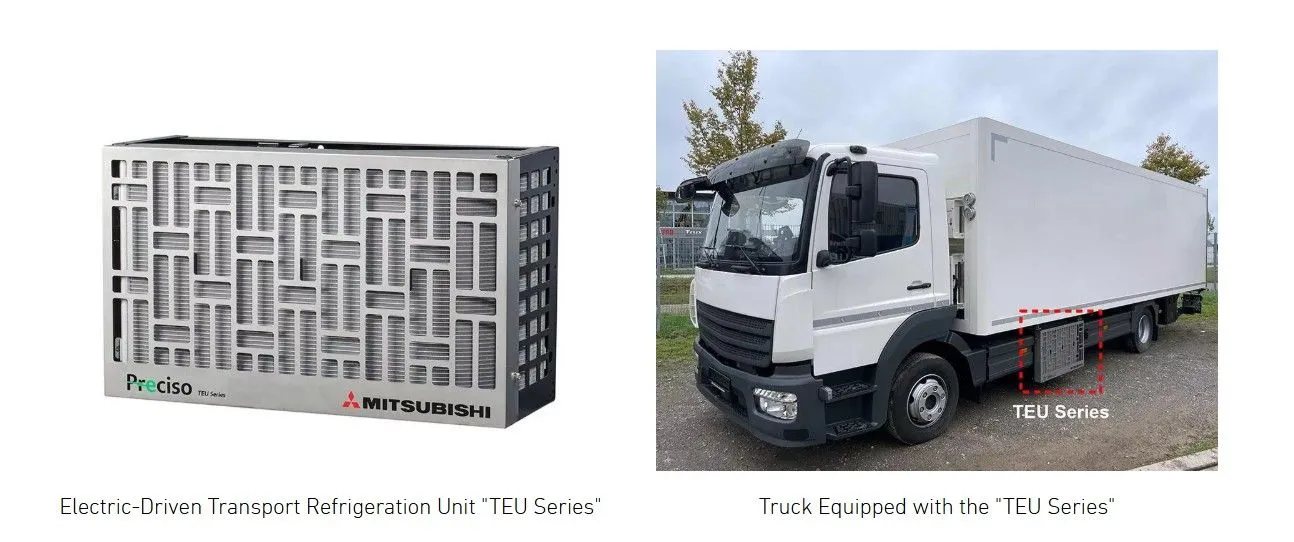
Mitsubishi Motors to Launch the All-New ASX VR-e Battery EV in Australia and New Zealand This Year JCN Newswire

Mitsubishi Motors to Launch the All-New ASX VR-e Battery EV in Australia and New Zealand This Year

TOKYO, Aug 18, 2026 - (JCN Newswire via SeaPRwire.com) - Mitsubishi Motors Corporation (hereafter, Mitsubishi Motors) announced that it will launch sales of the all-new ASX VR-e, a battery electric vehicle (BEV) for the Australian and New Zealand markets in 2026. The model will be supplied on an OEM basis by Foxtron Vehicle Technologies Co., Ltd. (Foxtron), a subsidiary of Hon Hai Precision Industry Co., Ltd. (Foxconn), a Foxconn Group company.The all-new ASX VR-e will be introduced in the small SUV segment in Australia and New Zealand, where demand for BEVs continues to expand, particularly in urban areas. The model is positioned as a compelling new option for customers seeking advanced technology, driving performance, and distinctive styling, while delivering strong environmental performance.The ASX nameplate carries forward the heritage of the compact SUV ASX (Active Sports Crossover), a long-established name in Australia and New Zealand. The VR-e designation is inspired by the Galant VR-4, Mitsubishi Motors' iconic high-performance sports sedan. The name combines the sporty character associated with the VR heritage and the "e" for electrified technology, together with advanced features. Mitsubishi Motors engineers extensively tested the vehicle on local roads and implemented dedicated suspension tuning to achieve responsive handling with a high level of road-holding performance, faithfully responding to the driver's intentions. True to the VR name, the model delivers a sporty and engaging driving experience.The exterior design emphasizes aerodynamic performance. Key features include a distinctive S-duct that channels airflow from the center of the front bumper over the hood surface, and active grille shutters that help reduce aerodynamic drag depending on driving conditions. Horizontal stripe motifs have been incorporated into the front and rear lighting signatures, C-pillars, and dedicated wheel design, creating an advanced and cohesive design identity.Under its Mid- to Long-Term Vision, Mitsubishi Motors is strengthening its product lineup with a focus on its off-road vehicle portfolio and ASEAN strategic models. In the area of electrification, the company is leveraging collaboration with Alliance partners for EVs while concentrating on the development of its proprietary HEV and PHEV technologies. Through these efforts, Mitsubishi Motors aims to deliver both environmental performance and the distinctive driving characteristics that define the brand. Going forward, Mitsubishi Motors will continue to enhance its product lineup through collaboration with the Alliance and other partners while further accelerating its electrification initiatives. Copyright 2026 JCN Newswire via SeaPRwire.com. All rights reserved. www.jcnnewswire.com
More

Hitachi Energy Invests $300 Million in China to Expand Grid Manufacturing Capacity JCN Newswire

Hitachi Energy Invests $300 Million in China to Expand Grid Manufacturing Capacity

Hitachi Energy, a global leader in electrification, today announced a US$300 million investment in China to strengthen its global manufacturing footprint and address rapidly growing demand for transformers.The investment will expand the company's power transformer and component manufacturing capacity in Hefei, Anhui Province, strengthening the resilience of the global transformer value chain and helping ease supply constraints.Key HighlightsExpands Hitachi Energy's power transformer and component manufacturing capacity and expertise in ChinaReinforces the global transformer value chain and helps ease supply bottlenecksLeverages China's manufacturing, innovation, and talent strengths to support demand for mission-critical grid equipmentThe investment underscores China's strategic importance to Hitachi Energy's global growth ambitions and supply chain resilience. It forms part of the company's US$9 billion global investment plan, the largest in the industry, to expand manufacturing capacity, engineering, R&D, and partnerships as global demand for energy solutions continues to accelerate.“As demand for electricity surges, driven by rapid growth in AI, data centers, mobility and industrialization, the need for critical grid equipment has never been greater,” said Bruno Melles, CEO of Business Unit Transformers at Hitachi Energy. “Building on our continued commitment in China, this expansion is an example of how we are strengthening our manufacturing capabilities and reinforcing the resilience of local and global transformer value chains to better support our customers in building more secure, affordable, and sustainable energy systems for the electricity era.”“This significant investment reflects our long-term commitment to our customers, partners, and market and demonstrates our confidence in China’s manufacturing ecosystem,” said James Zhao, Executive Vice President and Region Head North Asia, Hitachi Energy. “The establishment of a state-of-the-art power transformer factory and the new ultra-high voltage bushing facility, as well as the launch of the digital production line of tap changers, are key milestones in the company’s presence in the country. Together, this investment will support China’s development of a new energy system while meeting growing demand from customers around the world.”With more than four decades of operations in China, Hitachi Energy has a strong presence with 11 manufacturing sitesand capabilities spanning the full value chain, including R&D, consulting, sales, engineering, manufacturing, and services.About Hitachi EnergyHitachi Energy is a global leader in electrification, powering the electricity era to meet the energy demands of today and the next 25 years. As the energy arm of Hitachi Group, more than three billion people depend on its pioneering, mission-critical technologies to power their daily lives.With more than a century of innovation, Hitachi Energy is addressing the urgent challenge of evolving the world's energy system to ensure abundant, secure, affordable, and sustainable power. With an installed base in more than 140 countries, the company serves as a grid ecosystem partner across the utility, industry, data center, and transportation sectors.Headquartered in Switzerland, Hitachi Energy employs more than 56,000 people in 60 countries and generates approximately US$20 billion in revenue.About Hitachi, Ltd.Through its Social Innovation Business (SIB), which brings together IT, operational technology (OT), and products, Hitachi aims to continuously transform social infrastructure through digital technologies and contribute to a harmonized society where the environment, wellbeing, and economic growth are in balance.Hitachi operates worldwide across four sectors: Digital Systems & Services, Energy, Mobility, and Connective Industries, as well as a Strategic SIB Business Unit focused on new growth areas. With Lumada at its core, Hitachi creates value by combining data, technology, and domain knowledge to address customer and social challenges.Revenues for FY2025, ended March 31, 2026, totaled ¥10,586.7 billion, with 606 consolidated subsidiaries and approximately 290,000 employees worldwide. Copyright 2026 JCN Newswire via SeaPRwire.com. All rights reserved. www.jcnnewswire.com
More