The 16th Asian Logistics, Maritime and Aviation Conference concludes today ACN Newswire

The 16th Asian Logistics, Maritime and Aviation Conference concludes today

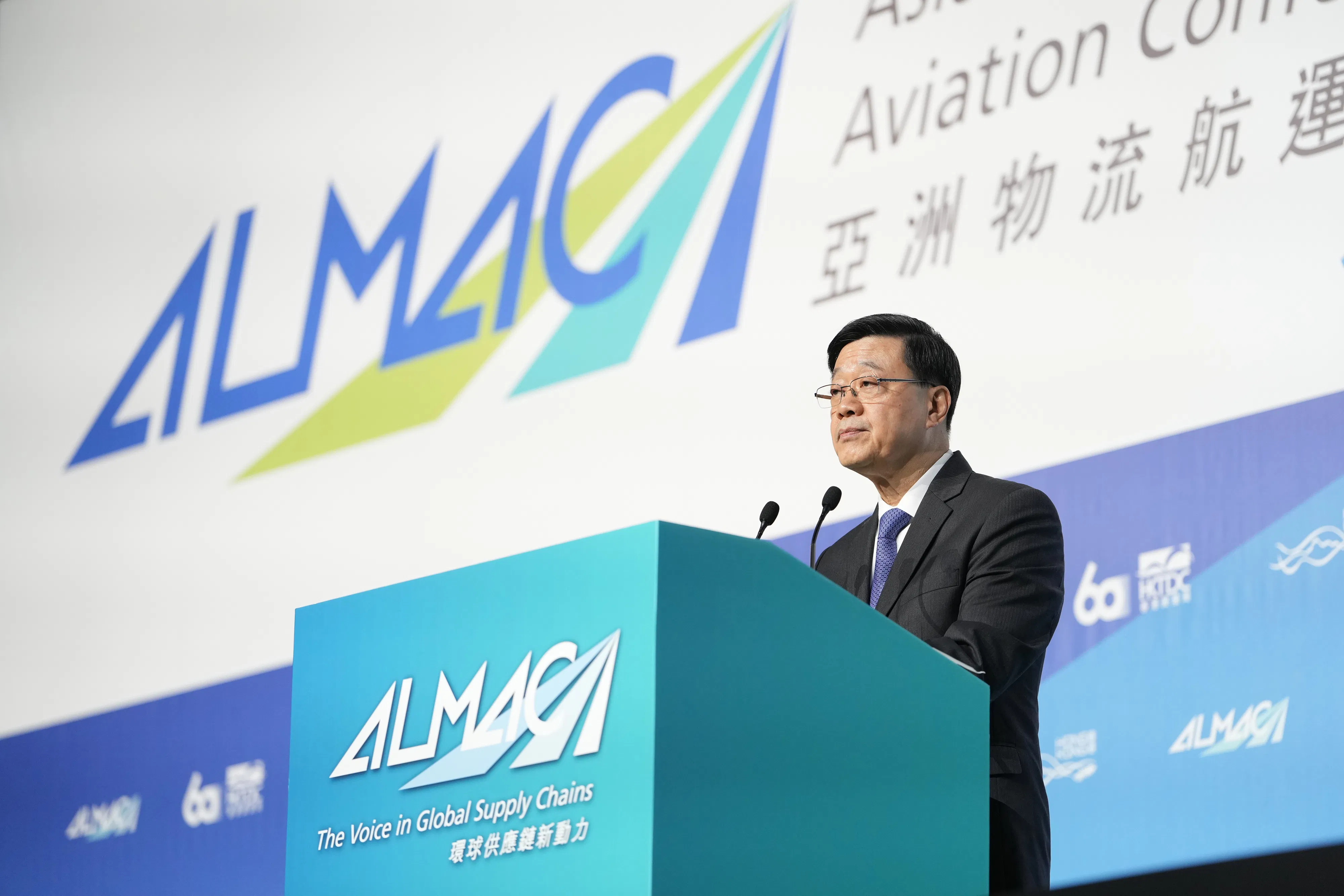
HONG KONG, November 17, 2026 - (ACN Newswire via SeaPRwire.com) - The 16th Asian Logistics, Maritime and Aviation Conference (ALMAC), jointly organised by the Government of the Hong Kong Special Administrative Region (HKSAR Government) and the Hong Kong Trade Development Council (HKTDC), concludes today at the Hong Kong Convention and Exhibition Centre. The conference brought together more than 80 industry leaders from the maritime, air cargo, logistics and supply chain sectors, who shared their insight at over 20 thematic forums and workshops. It attracted more than 2,400 participants from over 40 countries and regions, setting a new record for attendance.The 16th Asian Logistics, Maritime and Aviation Conference, jointly organised by the Government of the Hong Kong Special Administrative Region and the Hong Kong Trade Development Council, concluded successfully. The two-day conference attracted more than 2,400 participants from over 40 countries and regionsIn addition to exploring the prospects and business opportunities in the maritime, air cargo, logistics and supply chain sectors, the conference also facilitated tangible business collaboration. Over 400 business-matching sessions were arranged over the two days, resulting in the signing of over 30 memoranda of understanding (MoUs) covering various areas, including maritime transport, air cargo, logistics and technology.The Airport Authority Hong Kong, the Hong Kong and China Gas Company Limited and EcoCeres announced a collaboration to advance the development of a Sustainable Aviation Fuel (SAF) blending facility, to support the target of achieving an SAF consumption ratio of 1% to 3% for flights departing Hong Kong International Airport by 2030, in line with the relevant policy direction set out in Hong Kong’s First Five-Year Plan.The Transport and Logistics Bureau and the Global Sustainable Transport Innovation and Knowledge Center deepened their collaboration on green marine fuels. The Bureau also signed a “Partner Port” MoU with Qingdao Port Group to strengthen collaboration between Hong Kong and Qingdao in areas including port and logistics operations and port digitalisation.Meanwhile, the Hong Kong Association of Freight Forwarding and Logistics, Hong Kong Air Cargo Industry Services Limited (Hacis) and Vietnam logistics provider U&I Logistics announced the successful extension of Hacis’s “SuperLink China Direct” intermodal land-air service to Vietnam via the Chinese Mainland and Hong Kong. John Lee, Chief Executive of the HKSAR, delivered a special address at the Asian Logistics, Maritime and Aviation ConferenceSanphet Bunyamanee, Deputy Minister of Transport of the Ministry of Transport of Thailand, delivered special addressesMohamed Fathy, Assistant Minister of Transport for Maritime Transport Affairs and Head of the Central Administration for Investment of Egypt, delivered special addressesJohn Lee, Chief Executive of the HKSAR, delivered a special address on the second day of the conference. The conference was also honoured to welcome Zhao Gang, Governor of the Shaanxi Provincial People’s Government; Sanphet Bunyamanee, Deputy Minister of Transport of the Ministry of Transport of Thailand; and Mohamed Fathy, Assistant Minister of Transport for Maritime Transport Affairs and Head of the Central Administration for Investment of Egypt, who delivered special addresses. John Lee said this year’s ALMAC, themed “Driving Inclusive Growth through Innovation and Sustainability”, focuses on three key priorities: growth, innovation and sustainability. He said: “Growth opens markets. Innovation gives businesses the tools to compete. Sustainability prepares them for the future. Together, they make inclusive growth possible. They create opportunities for major operators and smaller enterprises alike. Hong Kong, the world's "super-connector" and "super value-adder", brings together the Chinese Mainland, international networks and professional expertise. We stand ready to turn these strengths into shared opportunities for you and your business future.” Extending the conference's exchange and collaboration outcomes by launching African Market Day to help businesses capture opportunities in AfricaThis year’s ALMAC focused on global supply chain development and opportunities for cross-regional collaboration. To extend the outcomes of the conference’s exchanges, the HKTDC organised African Market Day on the second day of the conference. As Africa’s economy continues to develop, the continent creates diverse opportunities across industries. The event brought together market experts, business leaders and representatives from African countries to analyse economic trends and business prospects, and share practical experience. It aims to help SMEs understand the latest developments in the African market and identify business opportunities, while fostering economic and trade collaboration between Hong Kong and African countries. The event attracted over 430 business representatives and received an enthusiastic response. African Market Day was held alongside the Asian Logistics, Maritime and Aviation Conference, helping SMEs capture business opportunities in AfricaExpanded international scope sets new attendance recordJacky Chung, Acting Executive Director of the HKTDC, said: “This year’s ALMAC concluded successfully, bringing together more than 2,400 industry leaders and participants from over 40 countries and regions, and facilitating the signing of over 30 MoUs. This demonstrates Hong Kong’s strengths as an international maritime and trade centre and an aviation hub. ALMAC and the concurrent African Market Day complemented each other. While ALMAC focused on the latest developments and collaboration opportunities in the maritime, logistics and supply chain sectors, African Market Day provided an in-depth analysis of the African market environment and shared practical business experience. Together, the two events helped SMEs keep abreast of the latest developments in the African market, opportunities arising from logistics connectivity, and practical strategies for market expansion. This not only promoted economic and trade ties between Hong Kong and Africa, but also enabled logistics, maritime and supply chain companies to explore opportunities in emerging markets. It also echoed the National 15th Five-Year Plan and the HKSAR Government’s first Five-Year Plan for Hong Kong, supporting the industry in seizing the development potential of emerging markets.” African Market Day brought together market experts, business leaders, and representatives from African countriesAddressing three key industry topics and exploring the latest trendsThis year’s ALMAC aimed to enhance Hong Kong’s competitiveness and promote sustainable economic development. As an annual event for the logistics, maritime, air cargo and supply chain sectors, the two-day conference brought together industry representatives from around the world to explore the latest industry trends and challenges. Discussions focused on three key topics: global supply chain trends, the development of Silk Road Maritime, and green energy development.At a time of uncertainty in global trade and supply chains, technology is becoming a key factor enabling businesses to build resilience and strengthen their ability to respond to changes and maintain their competitiveness. At the session “Propelling the Next Wave of Logistics and Supply Chain Innovation”, speakers examined how businesses can transform their operations amid an increasingly complex global environment to support sustainable transformation and long-term growth. Over 400 business-matching sessions were arranged over the two-day conference, resulting in signing over 30 MoUs covering various areas, including maritime transport, air cargo, logistics and technologyAs the world accelerates towards net-zero emissions, the energy system is also undergoing a transition, with far-reaching implications for long-term economic growth. The Green Energy Forum on the second day of the conference examined new developments in the global energy economy and the energy transition in the logistics industry. Sham Man Fai, Group Chief Technology Officer and COO of Green Fuels and Chemicals Business of The Hong Kong and China Gas Company Limited, said: “Different energy and different technologies require different infrastructure. Any market has to be connected to the actual consumption, and that has to come from a decision or a choice. So, how to prioritise the investment, the production and the demand, and how that is going to be concentrated in a strategic location and in the marketplace is very important.” Scott Childress, Chief Financial Officer of Network of the Future and Chief Sustainability Officer of UPS, said: “The idea of value creation through sustainability is super important. When you find a durable transition, when all of a sudden you can connect these and those pillars that you talk in the work that the vigor to go and find the right solution in the right location and tie that to value, those solutions are much easier to execute.” The inaugural “Silk Road Maritime” thematic seminar highlighted the platform’s leading role in promoting connectivity and enhancing supply chain stability. Speakers explored how the platform could deepen international collaboration and strengthen the resilience and sustainability of global supply chains. The conference also featured the “Vietnam-Hong Kong Air Cargo and Logistics Gateway Seminar: Creating New Opportunities Through Multimodal Connectivity” and “Thailand: A Strategic Aviation Gateway to ASEAN”. These sessions examined ways to promote cargo flows between ASEAN and Hong Kong and explore potential business opportunities in response to increasingly close economic and trade ties with ASEAN, Hong Kong’s second-largest trading partner and export market. The conference featured an AI Workshop, where Steve Ng, Head of Supply at Hong Kong & Taiwan Reckitt and Lead of eCOM AI and Digital Transformation at Taiwan Reckitt, shared insights. Using AI agents from Google Cloud and Gemini to demonstrate, he illustrated that the key to business success lies not simply in mastering AI tools. The Youth Empowerment Workshop brought together industry representatives to discuss how businesses can maintain an edge in talent recruitment and management, thereby ensuring their long-term vitality and resilience. This year’s ALMAC exhibition featured more than 100 exhibitors. In addition to the Supply Chain Management and Logistics Services, Maritime and Port Services, and Logtech and Digital Trade zones, the exhibition introduced a Green Energy Zone for the first time. It showcased the latest developments in green energy and carbon-reduction technologies, covering areas such as green energy consultancy, infrastructure and energy storage. The Hong Kong’s NextGen Logistician Awards 2026 presentation ceremony, proposed by the HKSAR Government's Transport and Logistics Bureau under the Action Plan on Modern Logistics Development, was held on the second day of the conference. The awards recognise young logistics talent who have made outstanding contributions or demonstrated exceptional potential in areas such as innovative, high-end, smart and green logistics. Liu Chun-san, Under Secretary for Transport and Logistics of the HKSAR Government, presented the awards. Photo download: https://bit.ly/4C9a93K Media enquiriesYuan Tung Financial Relations:Louise Song Tel: (852) 3428 5690 Email: lsong@yuantung.com.hkTiffany Leung Tel: (852) 3428 2361 Email: tleung@yuantung.com.hk HKTDC's Communications & Public Affairs Department:Dawn Yuen Tel: (852) 2584 4575 Email: dawn.nh.yuen@hktdc.orgClayton Lauw Tel: (852) 2584 4472 Email: clayton.y.lauw@hktdc.orgHKTDC Media Room: http://mediaroom.hktdc.com About HKTDC The Hong Kong Trade Development Council (HKTDC) celebrates its 60th anniversary this year. The HKTDC is a statutory body established in 1966 to promote, assist and develop Hong Kong's trade. With over 50 offices globally, including 13 in the Chinese Mainland, the HKTDC promotes Hong Kong as a two-way global investment and business hub. The HKTDC organises international exhibitions, conferences and business missions to create business opportunities for companies, particularly small and medium-sized enterprises (SMEs), in the mainland and international markets. The HKTDC also provides up-to-date market insights and product information via trade publications, research reports and digital news channels. For more information, please visit: www.hktdc.com/aboutus. Copyright 2026 ACN Newswire via SeaPRwire.com. All rights reserved. www.acnnewswire.com
More
Abu Dhabi’s 1 GW AI Campus Needs More Power Than the Country Forecast ACN Newswire

Abu Dhabi’s 1 GW AI Campus Needs More Power Than the Country Forecast

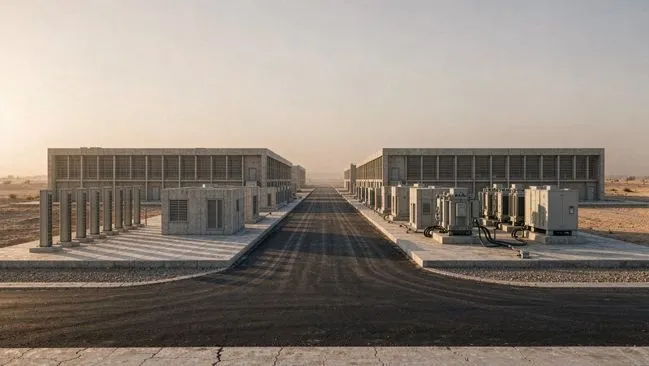
HONG KONG, Nov 17, 2026 - (ACN Newswire via SeaPRwire.com) - The first 200 MW of Stargate UAE are supposed to be live this year. The site sits inside a 26 square kilometre campus in Abu Dhabi, built by G42 through its subsidiary Khazna, operated with OpenAI and Oracle, and fitted with roughly 100,000 Nvidia Grace Blackwell GB300 chips. The partners put the investment at up to $10 billion for a 1 GW cluster.That cluster is the easy part to describe. The hard part is the meter.A megawatt tells you how fast a facility draws power. It does not tell you how much electricity it will consume in a year, and it does not tell you whether the grid can deliver that power at three in the morning in August, when the air conditioning load across the emirate peaks and the solar farms are dark. Those two questions decide whether the promised capacity arrives on schedule, and how much new generation Abu Dhabi has to build around it.The public numbers on both sides are already in circulation. They are rarely put in the same sentence.The 200 megawatt number hides the annual billStart with the chips, because they set the floor. TrendForce estimated that a GB300 system with 72 chips draws about 140 kilowatts. At that rate, the 100,000 chips announced in May 2025 work out to roughly 1,400 systems and about 196 MW of information technology load, which is why the partners landed on 200 MW for the first phase in 2026.Convert the IT load to what the utility sees. Modern desert builds in the UAE are designed at a power usage effectiveness of about 1.18, so a 2026 design of 200 MW of chips becomes roughly 236 MW at the fence line. Run that for a full year and the phase consumes about 2.1 TWh.Two point one terawatt hours is not a rounding error in this market. Wood Mackenzie estimated that every data centre in the UAE consumed about 3 TWh in 2025, roughly 2% of national electricity demand of 173 TWh. The first phase of one project, running flat out, would add two thirds of the entire country's existing data centre consumption.Scale it up and the arithmetic gets louder. The full 1 GW Stargate cluster becomes 1.18 GW at the fence and about 10.3 TWh a year. The 5 GW campus announced in 2025 becomes 5.9 GW and about 51.7 TWh a year, close to 30% of the country's total 2025 demand.These are ceilings, not forecasts. Training clusters do not run at 100% load every hour, and no operator signs up for that. Cut the utilisation to 70% and the 1 GW cluster still needs about 7.2 TWh a year. Cut it to 50% and it needs 5.2 TWh, which is more than the 6 TWh that the whole national data centre estate is projected to consume in 2030.Table 1: Load converted to annual energy at an assumed design PUE of 1.18 and full utilisationLoadIT capacity (MW)Facility load (MW)Annual energy (TWh)Share of 2025 national demandStargate phase 12002362.11.2%Full Stargate cluster1,0001,18010.36.0%UAE-US AI Campus5,0005,90051.729.9%UAE data centres, 2025 actualn/an/a3.01.7%Source: Wood Mackenzie via Data Center World Middle East 🔗, with conversions calculated from published capacity figuresThe last row is the one to keep in view. The country's entire data centre fleet used 3 TWh last year. Its flagship AI project is designed to use several times that on its own.Two forecasts, one gridIn March 2026, Wood Mackenzie put UAE data centre demand at just over 6 TWh by 2030, more than double the 2025 level. EWEC, the Abu Dhabi utility that procures the emirate's power and water, has used a similar figure in its own planning work.Read that forecast next to the campus arithmetic and the two numbers do not fit. The 6 TWh estimate was built on colocation demand: the racks that banks, telcos and cloud regions rent today, plus growth in the same shape. A 5 GW AI campus is not a bigger version of that business. It is a single customer whose load arrives in 200 MW blocks and whose utilisation curve is set by GPU replacement cycles, not by office hours.The difference matters for anyone selling into this market. If you plan against 6 TWh, you size transformers, chillers and backup generation for a country that adds roughly 3 TWh of new data centre load over five years. If you plan against the campus pipeline, you are sizing for a single site that could pass that number before 2030.Both numbers can be right at the same time. The forecast describes the market that exists. The campus describes the demand that has been announced but not yet energised. The gap between them is the thing nobody has published: how much of Stargate's 1 GW is already inside the 2030 figure of 6 TWh, and how much sits on top of it. My reading is that the 6 TWh is a colocation forecast with an AI campus stapled to it, and that the first revision will come from the utility rather than the researchers.Larry Ellison, Oracle's chief technology officer, described the intent at launch: "This first-in-the-world platform will enable every UAE government agency and commercial institution to connect their data to the world's most advanced AI models." That is a statement about demand, not about supply. There is a clue in the way the project is being built. Khazna, the G42 data centre arm that holds about 60% of the UAE's commercial wholesale capacity, is the builder. Its own pipeline target is 1,000 MW. Stargate's first phase, due in 2026, would absorb a fifth of that. When the same company is both the landlord for the national forecast and the contractor for the campus, the two demand curves get blended in a boardroom long before they reach a public statistic.Firm power is the scarce item, not sunshineAbu Dhabi has an unusual starting position for a Gulf AI hub. It is the only country in the Middle East with an operating nuclear fleet. Barakah supplies about 21% of UAE electricity output, and EWEC lists 4,170 MW of Barakah capacity in service with another 1,390 MW to come. Solar contributed about 9% of generation in 2025, with official projections taking that above 20% by 2040.Neither source solves the problem on its own. Nuclear runs flat and cannot follow a training cluster that ramps when a batch job starts. Solar runs for the middle of the day and stops. The campus needs both energy and firm capacity, and the firm capacity is what costs money.The procurement list shows how the emirate is filling that gap:Taweelah C, a 2.6 GW combined cycle gas plant at the Al Taweelah complex, with Siemens Energy supplying three SGT5-9000HL gas turbines and two steam turbines. TAQA leads it with Al Jomaih and Sembcorp, China Energy Engineering is the EPC contractor, and commissioning is expected in late 2028.The round the clock renewable project developed by Masdar with EWEC, which pairs 5.2 GW of solar with 19 GWh of battery storage to deliver 1 GW of firm output. Financial close came in July 2026 at about $6.1 billion, with operations targeted for 2027.Barakah's remaining units, which add baseload without new fuel logistics.Put the gas plant next to the campus and the scale becomes concrete. A 2.6 GW combined cycle plant running at a 60% capacity factor from 2029 produces about 13.7 TWh a year, which is more than the full 1 GW Stargate cluster needs even at full load. One power station, built for grid flexibility and carbon capture readiness, covers the flagship cluster with room to spare.The battery project is the more interesting bet, because the arithmetic is tight. Nineteen gigawatt hours of storage against 1 GW of promised firm output is 19 hours of delivery at full rate. That is enough to carry a night. It is not enough to carry a week of heavy dust or a gas outage, and it explains why the gas plant is still in the plan.What the campus buys before it buys chipsThe conventional way to read a project like this is as a chip order. The operational way is as a procurement queue, and the first items on it are not silicon.A 200 MW phase needs high voltage substations, transformers, switchgear and chillers before a single rack is installed. Those items have lead times measured in years, not months, and they compete with every other Gulf megaproject for the same factory slots. G42 said in October 2025 that civil, structural and mechanical work was ahead of schedule and that all long lead equipment had been procured. That sentence is the most informative line in the whole announcement, because it tells you the constraint the company was managing.Cooling is the second queue. A design PUE of 1.18 in a desert climate implies liquid cooling at the rack and closed loop heat rejection, not evaporative cooling that drinks water. That changes the equipment list: coolant distribution units, rear door heat exchangers, dry coolers sized for 45 degree ambient air. It also changes the maintenance contract, because a coolant leak in a 140 kW rack is a fire risk, not an inconvenience.The third queue is people. A campus of this size needs mechanical and electrical technicians, network engineers and security staff on site around the clock, in a country where the data centre workforce is thin. The regional buildout is adding capacity faster than it is adding trained staff, and that gap shows up as higher operating costs and longer commissioning.For suppliers, the sequence matters more than the headline number. In the 2026 phase, the first $1 billion goes to switchgear, transformers, cooling and construction. Chips are the last thing to arrive and the first thing to be quoted.The licence that came before the concreteStargate UAE exists because Washington changed a rule. The Biden administration had restricted advanced AI chip exports to countries including the UAE. The Trump administration rescinded that rule in 2025, and the Commerce Department set up a bilateral working group to check that the project met US security standards.That sequence explains the shape of the deal. The UAE side committed to reciprocal investment in US AI infrastructure, and the US side opened the export channel. The campus is the visible half of a bargain whose other half sits in American data centres.The licence also sets the pace of the chip pipeline. Microsoft's experience is the clearest example: a September 2025 export licence authorised 60,400 A100-equivalent units, on top of the 21,500 it had already deployed. Every one of those units has to be ordered, shipped, racked and cooled before it earns anything.For anyone modelling the project, the lesson is that the constraint moves. In 2025 it was the export licence. In 2026 it is long lead electrical equipment and grid connection. In 2028 it may be the gas turbine queue that is already stretching into the early 2030s in other markets.Khazna is the bottleneck and the beneficiaryKhazna's position explains a lot about how this market actually works. It builds the campus, it holds the majority of wholesale colocation capacity, and it is the delivery vehicle for Microsoft's 200 MW expansion. When one company is the landlord, the contractor and the operator's local partner, capacity gets allocated by relationship as much as by price.The Microsoft numbers show the pattern. The company's cumulative UAE commitment has reached $15.2 billion, including $7.9 billion for 2026 to 2029, of which $5.5 billion is AI and cloud infrastructure. A separate $544 million hyperscale site in Dubai is being built with du, and AWS has committed $1 billion with e&.Add Stargate's 1 GW and the colocation market forecast starts to look conservative. RAX puts the UAE colocation market at $1.39 billion in 2026, rising to $3.90 billion by 2030 at a 21.7% compound annual growth rate. That forecast was built on leased racks sold by the megawatt. It does not model a single tenant taking 1 GW of dedicated capacity, because until this year there was no such tenant.The other side of the same coin is pricing power. With 400 MW of colocation capacity recorded in 2026 and a pipeline target of 1 GW, Khazna can price scarcity. Tenants who need capacity in 2027 are not negotiating against a competitive market. They are negotiating against a queue.Connectivity softens the picture a little. The UAE hosts 19 international submarine cables, with fibre to the home at 99.5% coverage in 2024. The country is a genuine transit point between Europe, Asia and Africa, which is why hyperscalers keep landing here rather than in a cheaper neighbour.The free subscription that makes curtailment expensiveOne detail in the Stargate package sits outside the engineering and inside the politics. The UAE became the first country to offer ChatGPT to its residents nationwide, and the project carries a commitment to provide ChatGPT Plus to citizens and residents at no charge. The service lists at $20 a month.That commitment changes the cost of failure. A delayed commercial data centre annoys its tenants. A delayed national AI platform that every resident has been promised annoys everyone, and it does so in public. The operators have an incentive to energise whatever capacity exists, even at poor utilisation, rather than wait for the optimum.It also gives the project a social return that is easy to defend in budget negotiations. The electricity bill for a 1 GW campus is large, but it is being spent inside a country that treats AI capacity as public infrastructure, the same way it treats desalination and the nuclear fleet. That framing is why the gas plant, the battery project and the campus are moving on parallel tracks rather than in sequence.The risk sits in the sequencing. Taweelah C is not expected to commission until late 2028. The round the clock renewable project targets 2027. The first 200 MW is meant to be live this year. For at least one summer, the campus will be drawing on a grid whose new firm capacity has not arrived yet, backed by a nuclear fleet that is already committed and a solar fleet that stops at sunset.Three numbers to watch before 2028The project was announced with one test attached: if no matching procurement lands before 2028, construction is running behind the story. That test is now measurable. Watch three things.Substation and transformer awards tied to the Abu Dhabi campus, not to the Dubai or Microsoft projects.The commissioning date of Taweelah C, because the gas plant is the firm capacity behind the 1 GW cluster.Any revision to the 6 TWh national forecast, which is the only public number that would have to move if the campus is counted on top of the colocation market.Until one of those moves, the plain reading is that Abu Dhabi has announced more AI load than its published demand forecast contains, and has arranged the generation to serve it on a schedule that runs one to two years behind the buildings. That is not a failure. It is what building infrastructure at this speed looks like.Data basisData as of November 2026. Capacity figures come from G42, OpenAI and Oracle announcements as reported by Reuters and Khaleej Times, and from the project description published by Data Center World Middle East. National demand of 173 TWh and the 3 TWh to 6 TWh data centre range come from Wood Mackenzie's March 2026 analysis. Energy conversions multiply facility load by 8,760 hours and assume a constant draw, which overstates consumption for any cluster that idles; the utilisation cases above show the range, not a prediction. The PUE of 1.18 is a design average for modern UAE builds, not a metered figure for this site. Stargate capacity and investment are targets disclosed by the partners, not completed assets.SourcesData Center World Middle East 🔗, the strategic case for UAE data centre investment, 2026Khaleej Times 🔗, Stargate UAE to begin in 2026, May 2025EWEC 🔗, generation portfolio and Barakah capacity listing, accessed November 2026 (site home)Enerdata 🔗, TAQA selects Siemens Energy turbines for Taweelah C, June 2026RAX 🔗, AI data centre demand in the UAE, 2026About Global Infinity LabsGlobal Infinity Labs is an AI innovation company specializing in MCP data services. This article was prepared by our expert team using insights and data provided through our MCP platforms.Contact: support@globalinfinitylabs.com Copyright 2026 ACN Newswire via SeaPRwire.com. All rights reserved. www.acnnewswire.com
More
Anew Climate to Supply Bio-LNG to Singapore for Carbon Measures’ Pilot in First Cross-Continental Application of Product-Level Carbon Intensity Standards and Product Carbon Accounting ACN Newswire

Anew Climate to Supply Bio-LNG to Singapore for Carbon Measures’ Pilot in First Cross-Continental Application of Product-Level Carbon Intensity Standards and Product Carbon Accounting

SINGAPORE, SG & HOUSTON, TX, Nov 16, 2026 - (ACN Newswire via SeaPRwire.com) - Anew Climate (Anew) will supply biomethane and technical expertise for Carbon Measures' first Bio-LNG pilot, utilizing and moving low-carbon fuel from the United States to Singapore. The complex value chain will be the first to test carbon accounting methodology. To ensure alignment with today's highest-quality chain-of-custody tracking systems, the value chain will be certified under the International Sustainability and Carbon Certification (ISCC) system. The pilot, launched November 12 at COP31, will help identify methodological and implementation opportunities leveraging carbon intensity data to enable markets and regulators to comparably recognize emissions impacts.Shipping companies are increasingly asked to prove the carbon intensity of the fuel they buy. While we have the technology to measure and track carbon data throughout the supply chain, without a globally adopted standard it becomes difficult to contract. Applying a globally accepted product-level accounting methodology to calculate the carbon intensity of Bio-LNG delivered across continents will be the first step in building a global framework we need to scale low carbon fuel adoption,For Anew, the pilot opens a new route to market for low-carbon fuel in Singapore, one of the world's largest bunkering hubs."Anew has long been a first mover in environmental commodity markets, and we're proud to take this step with Carbon Measures," said Andy Brosnan, President of Low Carbon Fuels at Anew Climate. "We're particularly excited to explore how a ledger-based system can account for avoided emissions in a way that incentivizes new project investment and ensures no double counting.""Multistakeholder co-creation, industry participation, and direct government engagement are crucial to developing solutions that work across global supply chains," said Amy Brachio, CEO of Carbon Measures. "Anew Climate is playing an important role in our first Singapore pilot, bringing its expertise in lower-carbon fuels and supplying the Bio-LNG to test product-level carbon accounting across an international value chain. The learnings will help us develop practical solutions that can inform effective policies, create demand for lower-carbon products, and accelerate industrial decarbonization at scale."The Singapore pilot is the first of several Carbon Measures plans across countries and product categories. Read the Carbon Measures announcement.About Anew ClimateAnew Climate, LLC is a global leader of diverse climate solutions built on the principles of transparency and accountability. We bring innovative products and services to the public and private sectors to help reduce or offset their carbon footprints, restore the environment, and ensure our clients' investments create economic value as well as durable climate impact. With an expansive portfolio of low and negative carbon fuels, Anew Climate delivers tailored solutions that reduce emissions and accelerate sustainability goals across diverse market segments. Anew is majority owned by TPG Rise, TPG's global impact investing platform. The company has offices in the U.S., Canada, Germany, Hungary, Singapore and Spain with an environmental commodities portfolio that extends across five continents.Media ContactRebecca Brownpr@anewclimate.comAbout Carbon MeasuresCarbon Measures is a global coalition of businesses across industries committed to reducing carbon emissions by aligning market incentives with the actions needed to drive impact at scale. The coalition aims to accelerate innovation by developing a globally adopted framework for product-level carbon accounting and advocating for mandatory product carbon intensity standards. Together, these efforts are designed to unlock durable market demand for lower-carbon products. Grounded in sound science and financial accounting principles, the framework would enable governments to set more effective policies, help businesses differentiate their products, and empower markets to drive competition that delivers meaningful emissions reductions.Media Contactmedia@carbonmeasures.orgSOURCE: Anew Climate, LLC Copyright 2026 ACN Newswire via SeaPRwire.com. All rights reserved. www.acnnewswire.com
More
FG Communities Holdings Inc. Declares Cash Dividend on Its 8.00% Cumulative Preferred Stock, Series A ACN Newswire

FG Communities Holdings Inc. Declares Cash Dividend on Its 8.00% Cumulative Preferred Stock, Series A

CHARLOTTE, N.C., Nov 16, 2026 - (ACN Newswire via SeaPRwire.com) - FG Communities Holdings Inc. (Nasdaq: FGC, FGCPP) (the “Company” or “FG Communities Holdings”) today announced that it has declared a quarterly cash dividend on its 8.00% Cumulative Preferred Stock, Series A (the “Preferred Stock”). In accordance with the terms of the Preferred Stock, the board of directors of the Company declared a Preferred Stock cash dividend of $0.50 per share (equivalent to $2.00 per share annually on the $25.00 liquidation preference) for the period commencing on September 15, 2026 and ending on December 14, 2026. The dividend is payable on December 15, 2026 to holders of record on December 1, 2026. The Preferred Stock is currently listed on the Nasdaq Stock Market and trades under the ticker symbol “FGCPP”. Kyle Cerminara, Chairman & CEO of FG Communities Holdings, stated, “With this declaration, we will have paid a dividend on our Series A Preferred Stock for 35 consecutive quarters, every quarter since it was issued in 2018. We appreciate our preferred stockholders’ continued confidence as we build a portfolio of income-producing real estate, with an emphasis on manufactured housing communities that serve the affordable housing market.” About FG Communities Holdings Inc. FG Communities Holdings Inc. (Nasdaq: FGC, FGCPP) is focused on the acquisition, ownership and operation of income-producing real estate, with an emphasis on manufactured housing communities. The Company also conducts merchant banking activities, including advisory services, capital formation and investments in other businesses. Forward-Looking Statements This press release contains forward-looking statements within the meaning of Section 27A of the Securities Act of 1933, as amended (the “Securities Act”), and Section 21E of the Securities Exchange Act of 1934, as amended (the “Exchange Act”). These statements are therefore entitled to the protection of the safe harbor provisions of these laws. These statements may be identified by the use of forward-looking terminology such as “anticipate,” “believe,” “budget,” “can,” “contemplate,” “continue,” “could,” “envision,” “estimate,” “expect,” “evaluate,” “forecast,” “goal,” “guidance,” “indicate,” “intend,” “likely,” “may,” “might,” “outlook,” “plan,” “possibly,” “potential,” “predict,” “probable,” “probably,” “pro-forma,” “project,” “seek,” “should,” “target,” “view,” “will,” “would,” “will be,” “will continue,” “will likely result” or the negative thereof or other variations thereon or comparable terminology. In particular, discussions and statements regarding the Company’s future business plans and initiatives are forward looking in nature. We have based these forward-looking statements on our current expectations, assumptions, estimates, and projections. While we believe these to be reasonable, such forward-looking statements are only predictions and involve a number of risks and uncertainties, many of which are beyond our control. These and other important factors may cause our actual results, performance, or achievements to differ materially from any future results, performance or achievements expressed or implied by these forward-looking statements and may impact our ability to implement and execute on our future business plans and initiatives. Management cautions that the forward looking statements in this press release are not guarantees of future performance, and we cannot assume that such statements will be realized or the forward-looking events and circumstances will occur. Such risks include market conditions, financing availability, acquisition opportunities, integration of acquired properties, leverage and dilution, liquidity, potential conflicts of interest arising from related-party transactions, operating performance and other factors described in the Company’s filings with the Securities and Exchange Commission. Future dividends on the Preferred Stock are subject to declaration by the board of directors. Our expectations and future plans and initiatives may not be realized. If one of these risks or uncertainties materializes, or if our underlying assumptions prove incorrect, actual results may vary materially from those expected, estimated or projected. You are cautioned not to place undue reliance on forward-looking statements. The forward-looking statements are made only as of the date hereof and do not necessarily reflect our outlook at any other point in time. We do not undertake and specifically decline any obligation to update any such statements or to publicly announce the results of any revisions to any such statements to reflect new information, future events or developments. Investor Relations IR@FGCommunities.comir.fgcommunities.com Copyright 2026 ACN Newswire via SeaPRwire.com. All rights reserved. www.acnnewswire.com
More
Guoquan Food Releases 2026 Q3 Business Update: Beyond the 10,000-Store Milestone, Focus Shifts Toward Quality Enhancement as Proactive Investments Build Long-Term Growth ACN Newswire

Guoquan Food Releases 2026 Q3 Business Update: Beyond the 10,000-Store Milestone, Focus Shifts Toward Quality Enhancement as Proactive Investments Build Long-Term Growth

Hong Kong, Nov 16, 2026 - (ACN Newswire via SeaPRwire.com) - On November 12, Guoquan Food (Shanghai) Co., Ltd. (stock code: 2517.HK) issued a voluntary announcement to disclose its latest business developments for the third quarter of 2026. According to the announcement, as of September 30, 2026, the Company recorded revenue of approximately RMB1,900 million to RMB2,000 million, and a core operating profit of approximately RMB30 million to RMB40 million.Beyond the 10,000-Store Milestone, Focus Shifts Toward Quality Enhancement; Membership and Own Online Channels Grow SimultaneouslyWith the 10,000-store milestone reached, the Company's operational focus is shifting from store network expansion to quality enhancement of existing outlets. In the third quarter of 2026, the net increase of stores in township-level markets was 916, accounting for approximately 66% of the total net increase based on the announcement's data, with lower-tier markets remaining the primary driver of store network growth.The scale of membership and the GMV of own online mall channels expanded simultaneously, with registered members increasing by 54.9% year-on-year and GMV of own online mall channels growing by over 50% year-on-year. Against the backdrop of slowing traffic dividends on third-party platforms, the accelerated growth of own channels demonstrates that the Company's private domain operation capabilities and omnichannel fulfillment system are generating endogenous momentum. On revenue, despite the high base created by platform traffic dividends in the same period last year, revenue remained broadly stable, while the store network's demand-capture capacity and repeat-purchase base remain solid.Industry Logic Shifts: Large-Store Model Becomes Core Vehicle for Quality EnhancementAt the industry level, the "dining at home" market still has growth potential. According to Frost & Sullivan, the compound annual growth rate of home meal products is projected to reach 20.7% from 2022 to 2027, with the market size expected to exceed RMB940 billion by 2027. Meanwhile, the development logic of the dining industry has shifted from scale expansion to refined operations. In an increasingly saturated market, what is being tested is not only the speed of store openings but also the profitability of the single-store model, product competitiveness, and long-term operational capabilities. The large-store format upgrades Guoquan has promoted in recent years reflect its effort to enhance individual stores' capacity to capture demand. In the first half of this year, the Company completed large-store format upgrades at 684 stores, expanding product categories, adjusting store layouts, and increasing ready-to-eat offerings to cover more home dining needs; during the same period, revenue from sales of products to existing stores increased by 7.4% year-on-year.Large stores are no longer just product sales terminals; they also undertake functions such as product display, membership operations, community interaction, and real-time fulfillment, enhancing the store's ability to cover the demands of surrounding households.Diversified Formats Extend Home-Dining Scenarios; First Hong Kong Store Explores Regional MarketsGuoquan summarizes its product direction as "One Home, Three Tables and Five Meals." In practice, it is gradually expanding from hotpot and barbecue to breakfast bakery products, Chinese light meals, Western food, baked and fried products, and beverages. In innovative businesses, 96 Guoquan camping outlets were put into operation in the first half of the year; Guoquan's stir-fry business is exploring a freshly prepared dining model using standardized ingredients and smart equipment. From community food retail to outdoor dining and convenient Chinese meals, Guoquan is gradually enriching its offline business formats, creating more application scenarios for existing products, supply chains, and brand resources.While continuing to advance store upgrades and explore diversified formats in the Chinese mainland market, Guoquan has also begun to expand into new regional markets. In August 2026, Guoquan's first store in Hong Kong, China, opened in Wan Chai. According to public information, the store introduced in-store dining elements in addition to home food retail, further enriching the brand experience. Guoquan has also established a regional headquarters in Hong Kong, China, to accumulate experience for subsequent business expansion.Demand-Production Integration Supports Lower-Tier Market Penetration; County-Level Ecosystem Collaboration DeepensSupporting the store network's continued penetration into lower-tier markets is Guoquan's demand-production integration foundation. Upstream, the Company relies on 7 self-operated food ingredient production bases and nearly 300 suppliers to practice the "one-product-one-factory" strategy; midstream, it leverages 21 digitalized warehousing and logistics centers to support product circulation. On the online front, Guoquan continues to expand brand exposure through content platforms such as Douyin, with both the Douyin GMV of stores and the omnichannel GMV of Guoquan Farm achieving significant growth. A new pathway—where content generates demand and the 10,000-store network fulfills orders—is taking shape.In terms of county-level expansion, Guoquan recently stated at a lower-tier market matchmaking event in Jiangyin that it will prioritize mature communities in county towns, core commercial districts in townships, and commercial spaces suitable for renovation. The Company will be responsible for products, warehousing and distribution, and operating systems, while local partners will handle site selection and community services.Looking forward, the Company will remain committed to the all-scenario dining concept of "One Home, Three Tables and Five Meals," further explore demand across home consumption scenarios, continue to research, develop, and iterate a diversified portfolio of set meals and product combinations, steadily advance store upgrades and refined operations, strengthen the membership ecosystem, and continuously enhance store operating efficiency and market competitiveness. The Company will also continue to develop various innovative businesses to strengthen its diversified growth engines. Copyright 2026 ACN Newswire via SeaPRwire.com. All rights reserved. www.acnnewswire.com
More
The 16th Asian Logistics, Maritime and Aviation Conference opens today ACN Newswire

The 16th Asian Logistics, Maritime and Aviation Conference opens today

HONG KONG, Nov 16, 2026 - (ACN Newswire via SeaPRwire.com) - The 16th Asian Logistics, Maritime and Aviation Conference (ALMAC), organised by the Hong Kong Special Administrative Region (HKSAR) Government and the Hong Kong Trade Development Council (HKTDC), opens today (16 November) and runs for two days at the Hong Kong Convention and Exhibition Centre. Under the theme “Driving Inclusive Growth through Innovation and Sustainability”, the conference aligns with the National 15th Five-Year Plan, the HKSAR Government’s first “Five-Year Plan for Hong Kong” and the latest Policy Address to enhance Hong Kong’s competitiveness and support sustainable economic development, while reinforcing the city’s position as an international trading and maritime centre and an aviation hub. As an annual flagship event for the industry, the two-day conference brings together more than 80 distinguished speakers, including government officials and global industry leaders, to explore topics inclusive of the transformation of global supply chains, opportunities in ASEAN and along the Silk Road, high-value-added supply chain services and green energy, helping businesses to seize global opportunities and explore emerging markets.The 16th Asian Logistics, Maritime and Aviation Conference, organised by the HKSAR Government and the HKTDC, opens today. Under the theme “Driving Inclusive Growth through Innovation and Sustainability”, this year’s conference brings together more than 80 distinguished speakers to explore industry trends and opportunitiesProfessor Frederick Ma, Chairman of the HKTDC, said in his welcome remarks: “Global supply chains are undergoing profound change. Geopolitical tensions and economic fragmentation are reshaping established trade patterns. At the same time, digitalisation, new technologies and the transition to a greener economy are transforming how goods and services move around the world. AI and electronics have become an important driver of export growth, while the rising share of air freight by value reflects a shift towards high-value, technology-intensive trade. This evolution is also creating greater demand for sophisticated supply chain management services. As a global trading hub, Hong Kong combines international connectivity with strengths in logistics, finance, professional services, innovation and technology. Our role as a superconnector is not simply to bring markets together, but to add value by connecting the Chinese Mainland’s innovation and manufacturing capabilities with global markets.”He added: “Under the national 15th Five-Year Plan and Hong Kong’s first Five-Year Plan, our city is positioned to strengthen its status as an international trading centre, maritime centre and aviation hub. These priorities have shaped the theme of this year’s ALMAC: “Driving Inclusive Growth through Innovation and Sustainability.” Businesses, large and small, must be able to access opportunities in established as well as emerging markets. Innovation is essential if companies are to build smarter and more resilient supply chains, while sustainability must increasingly be embedded in how those supply chains operate.”Professor Frederick Ma, Chairman of the HKTDC, delivered the opening remarks at the opening sessionThis year’s conference features an enhanced international presence and an impressive line-up of speakers. This morning, Jennifer Nordquist, Deputy Director-General of the World Trade Organization, delivered a keynote address entitled “Global Spectrum: Transforming Supply Chains for Inclusive Prosperity”, exploring how governments and businesses can strengthen collaboration to address uncertainties in global trade and supply chains.Jennifer Nordquist said: “For policymakers, the priority must be to maintain fair trade policies, invest in infrastructure, simplify border procedures, and strengthen international cooperation. For businesses, it means diversifying suppliers to de-risk over-dependence on just a few markets, embracing digital technologies, and building partnerships across networks in new markets."Jennifer Nordquist, Deputy Director-General of the World Trade Organization, delivered a keynote addressComprehensive discussions on supply chain development and greater exploration of ASEAN opportunitiesOn the first day, the session “The Acceleration for Growth: Collaboration, Innovation and Sustainability” was moderated by Ir Dr Kelvin Leung, International Vice-President (East Asia) and Past President (Hong Kong) of the Chartered Institute of Logistics and Transport. Speakers including Scott Childress, Chief Financial Officer of UPS Network of the Future and Chief Sustainability Officer of UPS; Todd Soller, Chief Supply Chain Officer of Patagonia; and Evan Xue, Vice President of JD Group and President of Asia Pacific JD Logistics, examined the ripple effects from evolving trade policies and economic fragmentation, and shared forward-looking development directions and practical strategies to help stakeholders collectively build a more resilient, sustainable and inclusive global trading system.The session “Global Value Chain Forum - Elevating Growth: Supply Chain Leadership in an Evolving Landscape” was moderated by Nelson Chow, President of the Institute for Supply Management – Hong Kong Branch, Professor of Practice in the Department of Logistics & Maritime Studies of Hong Kong Polytechnic University Business School, and Founder and Chief Executive Officer of Gentle Breeze Asia. Speakers included Bjoern Neal Kirchner, Corporate Vice President of Supply Chain Management at Henkel; Todd Soller, Chief Supply Chain Officer of Patagonia; Mohamed Taha, Director of Logistics and Supply Network Operations at Procter & Gamble; and Alexander Tschentscher, Vice President of Supply Chain and Logistics Excellence and Supply Chain Strategy at Siemens AG. They explored how businesses can turn disruption into a driving force for transformation and identify growth opportunities amid the interplay of geopolitical shifts, climate pressures and technological disruption, converting volatility into shared value that benefits industries and economies.The session “The Acceleration for Growth: Collaboration, Innovation and Sustainability” explored forward-looking investment directions and practical strategiesEconomic and trade ties between ASEAN and Hong Kong have continued to deepen. ASEAN is Hong Kong’s second-largest trading partner and export market after the Chinese Mainland. In the first nine months of this year, Hong Kong’s total exports to Vietnam and Thailand increased by 55.2% and 64.2% year on year, respectively. Because of Vietnam’s rapid development in manufacturing and export trade in recent years, new opportunities have emerged for Hong Kong’s logistics, freight forwarding and air cargo sectors.To address these issues, ALMAC introduced the “Vietnam-Hong Kong Air Cargo and Logistics Gateway Seminar: Creating New Opportunities Through Multimodal Connectivity” session. Speakers include Amy Chan, Deputy Secretary for Transport and Logistics of the HKSAR; Nguyen Xuan Phuc, representative of the International Institute of Logistics & Supply Chain (IILS) in Vietnam; Gary Lau, Chairman of the Hong Kong Association of Freight Forwarding and Logistics; and Bert Ng, Director of Hong Kong Air Cargo Industry Services Limited. They examined ways to facilitate cargo flows between Vietnam and Hong Kong and unlock potential business opportunities from various perspectives, including government policies, innovative customs measures and cross-sector collaboration. The seminar also focused on the successful pilot project undertaken by Hacis, a subsidiary of Hong Kong Air Cargo Terminals Limited, to extend its “SuperLink China Direct” service to Vietnam, sharing practical experience and insights from the initiative.The new session, “Vietnam-Hong Kong Air Cargo and Logistics Gateway Seminar : Creating New Opportunities Through Multimodal Connectivity”, examined ways to facilitate cargo flows between Vietnam and Hong Kong and unlock potential business opportunitiesThailand is one of Hong Kong’s top 10 export destinations. A session, “Thailand: A Strategic Aviation Gateway to ASEAN”, was also held, with representatives from Airports of Thailand Public Company Limited, exploring how Thailand’s latest air cargo development plans can strengthen aviation connectivity within ASEAN and facilitate international trade.Examination of smart supply chains and digital trade to drive sustainable growthAnother session held today, “Propelling the Next Wave of Logistics and Supply Chain Innovation”, brought together Alexandru Duca, Director of the Head of Automation and Operation Technology at A.P. Møller-Maersk; Frosti Lau, Chief Executive of Hong Kong Air Cargo Terminals Limited; Dr Horst Kloeden, Global Vice President of Automation and R&D at DP World; William Lee, Head of Digital Intelligence at SF Supply Chain (Hong Kong & Macau); and James Rosengren, the Global Supply Chain Lead – Value Creation and Sustainability at Mars Inc. They examined how the convergence of technologies such as artificial intelligence, advanced analytics, automation, machine learning, blockchain and the Internet of Things is reshaping business operations, the competitive landscape and growth pathways amid an increasingly complex global environment. They also shared how businesses can integrate emerging technologies into their systems, processes and operational capabilities to support sustainable transformation and long-term growth.The Green Energy Zone made its debut, showcasing the latest developments in green energy infrastructure, services, carbon-reduction technologies and applicationsThe session “Digital Trade Evolution: Reshaping the Future of Global Trade, Logistics and Finance” features Steven Beck, Director of Trade and Supply Chain Division of the Asian Development Bank; Dr Yann Duval, Chief of Trade Policy and Facilitation Section of the United Nations Economic and Social Commission for Asia and the Pacific; Emmanuelle Ganne, Chief of Digital Trade and Frontier Technologies of the World Trade Organization; and Sammy Wong, Managing Director and Head of Business Banking, Commercial Banking, Hong Kong at the Hongkong and Shanghai Banking Corporation. They discussed the rise of digital trade and the pivotal role of real-time cargo data in enhancing supply chain transparency and liquidity. They also examined how digital integration can break down traditional barriers between logistics and finance, paving the way for a more seamless, connected and intelligent global trading system.This year’s ALMAC exhibition features more than 100 exhibitors, representing an expansion in scale from last year. In addition to the Supply Chain Management and Logistics Services, Maritime and Port Services, and Logtech and Digital Trade zones, a new Green Energy Zone showcases the latest developments in green energy and carbon-reduction technologies, covering areas such as green energy consultancy services, infrastructure and energy storage.Business Matching sessions continue to be offered at the conference, bringing together shippers and logistics service providers to foster more regional partnershipsChief Executive John Lee and senior government officials from various countries will deliver special addresses tomorrowTomorrow, John Lee, Chief Executive of the HKSAR, will deliver a special address, together with Sanphet Bunyamanee, Deputy Minister of Transport of Thailand; Mohamed Fathi, Assistant Minister of Transport for Maritime Transport and Head of the Central Administration for Finance and Investment, Ministry of Transportation of Egypt; and ZHAO Gang, the Governor of Shaanxi Province.The second day of the conference will feature a series of fascinating programmes, including the inaugural thematic seminar on Silk Road Maritime, the Green Energy Forum, the LSCM Maritime Summit 2026, the Supply Chain Management and Logistics Forum, an Artificial Intelligence Workshop and a Green Energy Workshop. Industry representatives from the International Chamber of Shipping, Lloyd’s Register Hong Kong, the Mærsk Mc-Kinney Møller Center for Zero Carbon Shipping and the Hong Kong and China Gas Company Limited will share their insights.The HKTDC will also organise an “African Market Day” tomorrow to help SMEs stay updated on the latest developments in African markets, identify business opportunities and formulate market expansion strategies, while promoting economic and trade cooperation between Hong Kong and African countries. Jacky Chung, Associate Executive Director of the HKTDC, will deliver the opening remarks, while Dr Bruce Pang, Director of Research at the HKTDC, will provide an analysis of African markets. Market experts and business leaders will also be invited to share business opportunities and practical experience.The 16th Asian Logistics, Maritime and Aviation ConferenceDate16-17 November 2026 (Monday to Tuesday)VenueHall 3FG, Hong Kong Convention and Exhibition CentreWebsitesAsian Logistics, Maritime and Aviation Conference: https://almac.hktdc.com/conference/almac/enConference programme: https://almac.hktdc.com/conference/almac/en/programmeList of conference speakers: https://almac.hktdc.com/conference/almac/en/speakerPhoto download: https://bit.ly/48nXxYQMedia enquiriesYuan Tung Financial Relations:Louise SongTel: (852) 3428 5690Email: lsong@yuantung.com.hkTiffany LeungTel: (852) 3428 2361Email: tleung@yuantung.com.hkHKTDC’s Communications & Public Affairs Department:Dawn YuenTel: (852) 2584 4575Email: dawn.nh.yuen@hktdc.orgClayton LauwTel: (852) 2584 4472Email: clayton.y.lauw@hktdc.orgHKTDC Media Room: http://mediaroom.hktdc.comAbout HKTDC The Hong Kong Trade Development Council (HKTDC) celebrates its 60th anniversary this year. The HKTDC is a statutory body established in 1966 to promote, assist and develop Hong Kong's trade. With over 50 offices globally, including 13 in the Chinese Mainland, the HKTDC promotes Hong Kong as a two-way global investment and business hub. The HKTDC organises international exhibitions, conferences and business missions to create business opportunities for companies, particularly small and medium-sized enterprises (SMEs), in the mainland and international markets. The HKTDC also provides up-to-date market insights and product information via trade publications, research reports and digital news channels. For more information, please visit: www.hktdc.com/aboutus. Copyright 2026 ACN Newswire via SeaPRwire.com. All rights reserved. www.acnnewswire.com
More
Hong Kong Jewellery Mission visits Singapore ACN Newswire

Hong Kong Jewellery Mission visits Singapore

Hong Kong, Nov 16, 2026 - (ACN Newswire via SeaPRwire.com) - 15 November 2026, To help the Hong Kong jewellery industry capture opportunities arising from ASEAN market growth and regional economic development, the Hong Kong Trade Development Council (HKTDC) led a jewellery mission comprising 25 Hong Kong industry representatives to Singapore from 10 to 13 November. During the visit, the delegation exchanged views with local jewellery associations, retail brands, e-commerce companies, design institutions and business leaders to gain insights into the latest market trends, explore potential collaboration, and further strengthen connections between the Hong Kong and ASEAN jewellery industries. HKTDC led a jewellery trade mission comprising 25 Hong Kong industry representatives to Singapore from 10 to 13 November to gain insights into the latest market developments and explore business opportunitiesDuring the visit, the HKTDC, together with the Hong Kong Economic and Trade Office in Singapore and Invest Hong Kong, organised a networking luncheon attended by around 80 industry representatives and buyers. The event featured a panel discussion on market trends and collaboration opportunities in the Hong Kong and Singapore jewellery sectors, with representatives from both markets sharing their experiences and discussing how major trade fairs and other channels could help foster industry exchange and cooperation. The delegation also conducted nearly 100 one-on-one business matching sessions with local buyers to identify potential partnerships and business prospects.(from left) Fabio Massimo Cascapera, President of the Diamond Exchange of Singapore; Samuel Cheng, Associate Director of the HKTDC; Elsa Hung, Director of the Hong Kong Economic and Trade Office in Singapore; Winston Chow, Chairman of the HKTDC Jewellery Advisory Committee; Leung Kwan Ho, HKTDC Regional Director of South East Asia & South Asia; Charles Ho, President of the Singapore Jewellers Association; and Dennis Chiu, Chairman of the Hong Kong Singapore Business Association, attended the networking luncheonLeung Kwan Ho, HKTDC Regional Director of South East Asia & South Asia, said in his welcome remarks at the luncheon: “Singapore has long been an important partner of Hong Kong, and we share a close economic relationship. Singapore serves as a key gateway to Southeast Asia, while Hong Kong provides unparalleled access to Chinese Mainland and the Guangdong-Hong Kong-Macao Greater Bay Area. By leveraging these complementary strengths, there are significant opportunities for the jewellery industries of our two economies to deepen collaboration and achieve mutual growth. The HKTDC will continue to connect jewellery businesses worldwide and create opportunities for collaboration through its international exhibitions, conferences and business-matching platforms.” The networking luncheon featured a panel of representatives from Hong Kong's jewellery industry, local jewellery organisations and buyers discussing market trends and collaboration opportunities in the Hong Kong and Singapore jewellery sectorsWinston Chow, Chairman of the HKTDC Jewellery Advisory Committee, said in his opening remarks: “Hong Kong’s fine jewellery exports to ASEAN in the first seven months of this year recorded a robust year-on-year increase of 5.7%. Notably, Singapore continues to solidify its role as our regional anchor, posting a steady 6.3% increase. This growth highlights not only a strong market opportunity but also scope for greater collaboration with local companies.”Delegation members conducted a series of one-on-one business matching meetings with local buyersHong Kong jewellers engage with ASEAN premium market stakeholdersDuring the visit, the delegation met with a range of jewellery industry organisations, chambers and corporate representatives in Singapore, including the Consumers Association of Singapore, Singapore Jewellers Association, Jewellery Design and Management International School, e-commerce companies and major shopping mall ION Orchard. The delegation also visited renowned jewellery brands and companies, including On Cheong Co. Pte. Ltd., RISIS and Benny's Gems Creations, gaining first-hand insights into local retail trends, online and offline consumer behaviour patterns, and the latest developments in jewellery design and innovation.HKTDC, in partnership with Solitaire, organised a networking event to help Hong Kong jewellery representatives engage directly with key stakeholders in Singapore's premium consumer marketIn addition, the HKTDC partnered with leading Asian jewellery publication Solitaire to organise a networking event. The event attracted more than 60 industry leaders and enthusiasts, giving Hong Kong jewellery representatives direct access to key stakeholders and potential customers in Singapore's premium consumer market. The gathering helped forge new business connections and raise the profile of Hong Kong jewellery brands in the ASEAN region.In addition to the Singapore mission, HKTDC will hold its twin jewellery shows, the world’s largest one-stop jewellery marketplace, in March 2027. The picture shows a vibrant crowd at the Hong Kong International Jewellery Show 2026Through international exhibitions and conferences, outbound missions, overseas promotions, business matching and other initiatives, the HKTDC has long supported the industry in expanding into global markets and building international business networks. Following the Singapore mission, the HKTDC will hold its twin jewellery shows in March 2027 under the “Two Shows, Two Venues” format. The 13th Hong Kong International Diamond, Gem & Pearl Show will take place from 2 to 6 March 2027 at AsiaWorld-Expo, featuring a wide range of diamonds, gemstones, pearls and jewellery raw materials. The 43rd Hong Kong International Jewellery Show will be held from 4 to 8 March 2027 at the Hong Kong Convention and Exhibition Centre, showcasing finished jewellery pieces. As the world’s largest one-stop jewellery marketplace, the shows bring together global buyers and exhibitors, highlighting Hong Kong’s status as an international trade capital jewellery sourcing and trading hub.The Singapore mission is also one of the key promotional activities under the Hong Kong SAR Government's “Economic and Trade Express”. The initiative aims to help Hong Kong SMEs and start-ups capture overseas opportunities while attracting more enterprises to invest and establish operations in Hong Kong. By leveraging the HKTDC's global business network and professional support services, the initiative helps companies build international connections and expand into overseas markets.Photo download: https://bit.ly/4zKv0c6WebsiteHong Kong International Jewellery Show: https://www.hktdc.com/event/hkjewellery/enHong Kong International Diamond, Gem & Pearl Show: https://www.hktdc.com/event/hkdgp/enMedia enquiries:For enquiries, please contact:HKTDC Communication and Public Affairs Department:Serena CheungTel: (852) 2584 4272Email: serena.hm.cheung@hktdc.orgAbout HKTDCThe Hong Kong Trade Development Council (HKTDC) celebrates its 60th anniversary this year. The HKTDC is a statutory body established in 1966 to promote, assist and develop Hong Kong's trade. With over 50 offices globally, including 13 in the Chinese Mainland, the HKTDC promotes Hong Kong as a two-way global investment and business hub. The HKTDC organises international exhibitions, conferences and business missions to create business opportunities for companies, particularly small and medium-sized enterprises (SMEs), in the mainland and international markets. The HKTDC also provides up-to-date market insights and product information via research reports and digital news channels. For more information, please visit: www.hktdc.com/aboutus. Copyright 2026 ACN Newswire via SeaPRwire.com. All rights reserved. www.acnnewswire.com
More

OBI Pharma Signs Collaboration and License Agreement with Novartis ACN Newswire

OBI Pharma Signs Collaboration and License Agreement with Novartis

TAIPEI, TAIWAN, Nov 16, 2026 - (ACN Newswire via SeaPRwire.com) - OBI Pharma, Inc. (4174.TWO) ("OBI") announced that it has entered into a Collaboration and License agreement with Novartis Pharma AG ("Novartis") to develop next generation Antibody-Drug-Conjugates (ADCs) with novel payloads, using OBI's suite of platform technologies.Under the terms of the agreement, Novartis will receive worldwide rights to OBI's related patents and know-how using its ADC platform technologies on an exclusive basis for selected, undisclosed Novartis payload classes. In parallel, under the collaboration OBI will evaluate novellinker approaches with the Novartis payloads. Novartis will further have the option to expand the agreement to include additional novel payload classes.This agreement marks an important milestone for OBI and underscores the value of its differentiated ADC technology platform. The agreement recognizes the potential of OBI's proprietary technologies, including GlycOBI®, EndoSymeOBI®, HYPrOBI®, and GlycOBI DUO®, and supports OBI's strategy of expanding the global application of its ADC technologies through strategic agreements.Ya-Chi Chen, Pharm.D., acting Chief Executive Officer of OBI Pharma, Inc., commented: "We are delighted to enter into this agreement with Novartis, a leading pharmaceutical company in innovative oncology drug development with extensive commercialization capabilities. This agreement recognizes the scientific and commercial potential of OBI's proprietary ADC technologies and reflects the value of our differentiated platform. By combining OBI's ADC expertise with Novartis's resources and capabilities, we aim to advance next-generation therapies that could deliver meaningful benefits to patients.""Engaging with OBI's expertise and technologies in antibody-drug conjugation to create potential ADCs with novel payloads is an important part of our oncology ADC strategy. This collaboration supports our ambition to innovate novel therapies and potentially expand treatment options for patients," said Shiva Malek, Global Head of Oncology, Biomedical Research at Novartis.Under the terms of the agreement, OBI will receive an upfront payment of USD 30 million and is eligible to receive development, regulatory and commercial milestone payments for a total potential deal value exceeding USD 2 billion. In addition, OBI is eligible to receive tiered royalties on net sales of the licensed products resulting from the collaboration.About Obrion® ADC TechnologyOBI has developed the proprietary Obrion® ADC Technology Platform, which integrates multiple ADC-enabling technologies to support the development of next-generation ADCs. At the core of Obrion® is GlycOBI®, a glycan-based conjugation technology with a flexible, plug-and-play design compatible with a broad range of antibodies, linkers, and payloads, while supporting different drug-to-antibody ratios (DARs).Powered by OBI's proprietary dual-function enzymatic technology, EndoSymeOBI®, and highly hydrophilic and stable linker technology, HYPrOBI®, GlycOBI® enables the efficient and scalable production of site-specific, homogeneous ADCs under GMP conditions. GlycOBI DUO® further expands the capabilities of the Obrion® platform by enabling next-generation ADC modalities, including dual-payload ADCs.About OBI PharmaOBI Pharma is a clinical-stage global oncology company established in 2002 and headquartered in Taiwan, with operations in the United States and Australia. The company is focused on developing innovative cancer therapeutics and advancing proprietary antibody-drug conjugate (ADC) technologies to address unmet medical needs and provide new treatment options for patients.Forward-Looking StatementsStatements included in this press release that are not a description of historical facts are forward-looking statements within the meaning of the Private Securities Litigation Reform Act of 1995. Such forward-looking statements include, but are not limited to, statements about future clinical trials, results and the timing of such trials and results. Such risk factors are identified and discussed from time to time in OBI Pharma's reports and presentations, including OBI Pharma's filings with the Taiwan Securities and Futures Bureau.COMPANY CONTACT:Jukka MuhonenExecutive Director, Business DevelopmentOBI Pharma USA, Inc.email: jukkamuhonen@obipharma.comtel.: +1 617 821 0292SOURCE: OBI Pharma, Inc. Copyright 2026 ACN Newswire via SeaPRwire.com. All rights reserved. www.acnnewswire.com
More

Indonesia’s AI gap: 54 percent use it, 14 percent work with it ACN Newswire

Indonesia’s AI gap: 54 percent use it, 14 percent work with it

HONG KONG, Nov 16, 2026 - (ACN Newswire via SeaPRwire.com) - An owner of a food business in Jakarta runs the whole company on WhatsApp. Orders arrive there. Suppliers send invoices there. Staff photograph receipts and send them to the same group chat. When someone offers to sell her "AI", the pitch is usually a chatbot that answers customers faster. That pitch misses the job. The job is the work after the chat: matching invoices to orders, chasing payments, filing records.This gap between talking to AI and working with AI shows up in the national numbers. Indonesia has one of the highest rates of casual AI use in Southeast Asia. It has one of the lowest rates of AI inside business workflows. The distance between those two numbers is where most companies are stuck, and the three ways out of that position cost very different amounts of money and time.The two numbers measure different peopleThe e-Conomy SEA 2025 report, published by Google, Temasek and Bain & Company, puts standalone generative AI use among Indonesia's working population at 54 percent. The six-country regional average is 58 percent. Thailand sits at 63 percent, Vietnam at 65 percent, Malaysia at 68 percent and Singapore at 70 percent. Indonesia's internet penetration is 81 percent, so the base is there.The consumer-side numbers run even hotter. The same report says 79 percent of Indonesian users have taught themselves to use AI tools. Veronica Utami, Google's country director in Indonesia, said at the report launch that 80 percent of users in the country interact with AI daily. She gave one detail that shows the scale: Indonesians generate 18 million images per day on the Nano Banana image feature alone. Revenue from AI-enabled apps in Indonesia grew 127 percent year on year, the fastest in the region. Consumer interest in AI runs about three times the global average, by her account.The enterprise-side numbers tell the other half of the story. Microsoft's own adoption tracking puts AI use inside Indonesian organizations at 14.1 percent in one measurement period and 14.8 percent in the next. Compare that with the 54 percent individual figure and the ratio is about 3.65 to 1. People play with AI at home. Companies have not rebuilt their work around it.The pattern holds across tools. Claude's usage tracking shows 23 percent penetration in Indonesian computer and math occupations and 25 percent in education. Lazada reports 31 percent of its Indonesian sellers using its AI sales assistant. These are real numbers, and they are all in the 20 to 30 percent band, far above the 14 percent organization figure and far below the 54 percent consumer figure.The regional spread shows Indonesia is not an outlier in the casual-use number. It is an outlier in the size of the gap.MarketWorking-population GenAI useInternet penetrationSingapore70 percentAbove 90 percentMalaysia68 percentAbove 90 percentVietnam65 percent87 percentThailand63 percentAbove 90 percentIndonesia54 percent81 percentPhilippines53 percent70 percentSource: Google, Temasek and Bain e-Conomy SEA 2025 🔗, as reported October 2026.Where AI actually touched Indonesian commerce in 2025 was not the office. It was the selling floor. Video commerce, the format where sellers stream and sell inside chat-adjacent apps, grew its active seller count 75 percent year on year to 800,000 sellers. Transaction volume rose 90 percent to 2.6 billion transactions. The overall digital economy is closing on 100 billion dollars in gross merchandise value, with e-commerce at 71 billion dollars. Those transactions increasingly ride on AI-adjacent rails: recommendation feeds, AI-dubbed product videos, automated customer replies. The consumer adoption number and the commerce number describe the same people.The surveys behind these numbers measure different populations, so the exact gap between 54 and 14 percent is an estimate rather than a measurement. Estimates vary on where casual use ends and operational use begins. The direction does not. Casual use runs far ahead of operational use, and the gap is wider in Indonesia than in most of the region because the consumer base grew so fast.Why the obvious answer stallsA company that wants to close this gap usually starts the same way. Someone buys subscriptions to a global AI tool, hands them out, and waits for productivity. In Indonesia this stalls for three reasons that stack on top of each other.The first is language. Global models speak English first. Bahasa Indonesia works, but the languages of daily commerce do not. A shop owner in Surabaya who answers customers in Javanese or Sundanese cannot hand those conversations to a model that fumbles both. The e-Conomy data shows consumer AI activity concentrated in exactly these local-language interactions, which is why adoption exploded among individuals and crawled inside firms.The second is money in the wrong currency. Global AI subscriptions bill in US dollars, typically 20 to 30 dollars per user per month. For a 50-person company that is 12,000 to 18,000 dollars a year before any integration work. That is not a large number by global standards. Against Indonesian SME margins it competes directly with payroll.The third reason is legal, and it arrived on a schedule. Indonesia's Personal Data Protection Law, UU PDP 27/2022, took full effect in October 2024. Its implementing regulation GR 33/2026 requires controllers to keep a register of processing activities, run impact assessments before higher-risk processing, and honor the right to object to automated decisions. Cross-border transfers of personal data need a legal basis, and remote access from outside Indonesia counts. The Otoritas Jasa Keuangan has issued AI governance guidance for banks, and the regulator treats customer data inside AI prompts as personal data like any other.Enforcement is no longer theoretical. In November 2026, the coffee chain Fore Kopi reported a leak of 5.7 million customer accounts to Komdigi, the communications ministry. The company filed the report itself and apologized publicly. Whatever the investigation finds, the case lands in a system that now has a working complaint channel and a 72-hour breach notification rule for controllers.None of this makes global AI tools illegal. It makes them a compliance project. Sending customer chat histories through a model hosted in another country now needs a documented lawful basis, a transfer mechanism and an impact assessment. For a bank, the review alone can take six months. For a two-person trading company, it takes either a lawyer they cannot afford or a shortcut they should not take.Path one: global subscriptions, kept in their laneThe cheapest path is also the most common. A company buys seats on a global tool and uses it where the compliance surface is thin: internal English-language work, drafting, summarizing, coding, analyzing its own non-personal data.The cost is known and small. A team seat runs 25 to 30 dollars per user per month at current list prices. Deployment takes an afternoon. The tools are the best in the world at general reasoning and English output. For a company whose staff already read and write English at work, this path delivers value in week one.The lane restrictions are the whole point. Customer data stays out. Personal data stays out. Anything the PDP Law would call processing of personal data stays out, because the models sit on servers in other countries and no company wants to build a cross-border transfer file for a chatbot subscription. One Jakarta bank described in a 2026 industry guide kept GPT-4o for internal English tooling while moving its customer-facing Bahasa chatbot to local infrastructure. That split is the pattern the market found: global tools for the back office, local systems for the front line.The weakness of this path is that it barely touches the 14 percent number. Internal drafting makes individuals faster. It does not automate invoices, reconcile orders or answer Javanese customers. Companies that stop here stay stuck between the two adoption curves, paying a new subscription and reporting no change in output.Path two: the sovereign hosted routeThe second path is new in 2026. Sahabat-AI is the open-source model family built by GoTo and Indosat Ooredoo Hutchison, now at 70 billion parameters, running on Lintasarta's GPU Merdeka infrastructure inside Indonesia. The project had a public origin worth recalling: NVIDIA's chief executive introduced it at Indonesia AI Day in 2024, the model family reached 70 billion parameters by mid-2025, and the consumer platform arrived in early 2026. The public chat service is free, on the web and inside the GoPay app. The government put its weight behind the launch: Komdigi and Indosat presented the platform together in Jakarta on February 25, 2026.Minister Meutya Hafid framed the goal plainly: technology must reach everyone, without language or cultural barriers. Patrick Walujo, GoTo's chief executive, called the 70B release a statement of support for local technology. Vikram Sinha, Indosat's president director, was more specific about the infrastructure. "Sahabat-AI is a national asset," he said. "GPU Merdeka stores and processes data directly at home."The model speaks five Indonesian languages as first-class citizens: Bahasa Indonesia, Javanese, Sundanese, Balinese and Batak. Industry reviewers who tested the 70B model against global alternatives rate it the only option that handles Javanese well enough for production use. For a bank or a retailer whose customers write in those languages, that capability has no substitute at any price.Hosting inside Indonesia solves the compliance problem by construction. Prompts stay on Indonesian soil, processed by an Indonesian operator, under Indonesian law. The managed inference service on GPU Merdeka prices at roughly IDR 7,500 per million tokens, which industry comparisons put at parity with the cheapest tier of global API pricing. For most deployment sizes, compliance comes free with the subscription.The honest weakness is the ecosystem. The model family has accumulated about 35,000 downloads on Hugging Face, mostly of the smaller 8B and 9B variants. Independent review databases count fewer than 40 production deployments with public reviews. Tooling for fine-tuning, monitoring and evaluation is thin next to what surrounds the global models. A company choosing this path in 2026 buys compliance and language fit, and accepts that more of the integration work is self-service. It cannot yet buy the finished product it wants off a shelf, and whether a specific capability exists cannot be verified from a brochure; it has to be tested on the company's own tasks.Path three: self-hosting the open weightsThe third path takes the same model and moves it in-house. Sahabat-AI ships open weights under permissive licenses, so a company with its own GPUs can run the model entirely on its own hardware. Nothing leaves the building.The economics flip at scale. Serving 50 million Bahasa tokens per day through a global API costs roughly 8,000 dollars per month. A self-hosted node with eight H100 GPUs costs roughly 12,000 dollars per month all-in, and then each additional token is free at the margin. Below a few hundred million tokens monthly, the API wins. Above it, ownership wins, and the gap widens with volume. A company processing millions of customer conversations can reach the crossover within its first year.The costs that decide this path are not the GPUs. Self-hosting requires MLOps capability that most Indonesian companies do not have on staff: capacity planning, model updates, evaluation pipelines, incident response. Hiring or training that team is a multi-quarter project. The public-sector and bank deployments that succeeded started 12 to 18 months before their deadlines.There is a middle version of this path that most SMEs should hear about. Managed inference on GPU Merdeka gives the data residency of self-hosting without the operations team. The token price is close to global API parity. For companies between the subscription tier and the hardware tier, this middle seat is usually the right answer.The three paths, side by sideThe table compresses the trade-offs. Prices are list or estimate levels as of late 2026 and change often.PathMonthly cost levelTime to first outputPDP Law positionBest fitGlobal subscriptions20-30 USD per userDaysTransfers need a legal basis; keep personal data outInternal work, English output, small teamsSahabat-AI managed (GPU Merdeka)Near global API parity, around IDR 7,500 per million tokensWeeksData stays in IndonesiaCustomer-facing Bahasa and local-language serviceSelf-hosted 70B nodeAbout 12,000 USD for an 8x H100 node, marginal tokens free2-4 quarters including teamFully on-premisesHigh-volume processors with MLOps staffRef: costs compiled from vendor list prices and industry deployment guides cited in the Sources section.The work after the chatWhichever path a company picks, the subscription is the cheap part. The expensive part is the same for all three: connecting the model to the work. This is what the e27 column on Southeast Asian SMEs argued in November 2026. Most small businesses in the region already run on WhatsApp, the author noted, so the first AI purchase should not be a chatbot. It should be the system that takes what the chatbot hears and does the follow-up work: matching payments, updating the order sheet, filing the receipt.That integration work is where the real money goes, and it is also where vendors' price lists go quiet. An integration project for a mid-sized retailer, connecting an AI service to its order flow and accounting, typically costs more in implementation labor in the first year than in model fees. The labor is billed in rupiah, by local firms, which is one more reason the domestic ecosystem around the models matters as much as the models themselves.Indonesia's largest AI operator learned the same lesson at national scale. Indosat used AI-driven personalization on its own network and cut user churn by 50 percent over 90 days while lifting average revenue per user more than 6 percent, to 2.62 dollars. The capital expenditure saved through AI-optimized network planning reached about 86.5 million dollars. Asked what he would change, chief executive Vikram Sinha did not point at the technology. He said he would have pushed adoption across the organization harder and earlier. The machines were never the bottleneck. The habits were.Who should buy which pathThe choice reduces to three questions: where does the data live, what languages do the customers speak, and how many tokens per month.A company under 50 staff, doing internal work, with English-capable staff: buy the global subscriptions, keep personal data out, spend the savings on an integration project for the two workflows that actually cost time.A company with customer-facing service in Bahasa or local languages, handling personal data, with no MLOps team: use the managed sovereign route, and treat the language coverage of Javanese, Sundanese, Balinese or Batak as the feature that justifies the switch.A company processing millions of tokens daily, with or willing to build an operations team: self-host the open weights, accept the 12,000 dollar monthly floor, and stop paying per token at scale.The two adoption numbers will not converge on their own. The 54 percent learned to use AI because it was free and fun. The 14 percent will climb only when the work after the chat gets built, and the three price tags above are what the building actually costs in Indonesia in 2026.Data basisAdoption figures come from the e-Conomy SEA 2025 report by Google, Temasek and Bain & Company, released in November 2025, and from Microsoft adoption tracking cited in the accompanying research. Enterprise figures for Claude and Lazada come from the tool operators' published usage data. Sahabat-AI capability, pricing and launch details come from the operators' announcements of February 25, 2026 and industry deployment guides published in 2026. Cost estimates for the three paths use list prices and the industry-standard deployment benchmarks cited in the text; all are estimates and change with pricing updates. The Personal Data Protection Law framework follows UU PDP 27/2022, GR 33/2026 and OJK guidance as described in published legal analyses. The Fore Kopi breach report is from November 2026. Data as of November 2026.LimitationsThe 54 percent and 14 percent figures measure different populations with different survey methods, so the 3.65 ratio is indicative rather than exact. Token and subscription prices shift quarterly, and the self-hosting crossover point depends on utilization that no public dataset discloses. Production deployment counts for Sahabat-AI cannot be verified beyond public reviews. Regulatory interpretation of GR 33/2026 is still settling in practice.SourcesBusinessWorld 🔗 — e-Conomy SEA 2025 regional GenAI adoption figures, October 2026VOI 🔗 — Google Indonesia launch remarks, 18M daily images, November 2025ITBeat 🔗 — Sahabat-AI platform launch with Komdigi, February 2026Technologue 🔗 — GoTo and Indosat executive remarks on Sahabat-AI 70B, 2026ITNews Asia 🔗 — Indosat AI Grid results and Sinha remarks, 2026Software Listing 🔗 — SEA sovereign LLM deployment costs and benchmarks, 2026e27 🔗 — SME chatbot workflows column, November 2026CNBC Indonesia 🔗 — Fore Kopi data breach report to Komdigi, November 2026Lexology 🔗 — Indonesia AI legal framework snapshot, 2026About Global Infinity LabsGlobal Infinity Labs is an AI innovation company specializing in MCP data services. This article was prepared by our expert team using insights and data provided through our MCP platforms.Contact: support@globalinfinitylabs.com Copyright 2026 ACN Newswire via SeaPRwire.com. All rights reserved. www.acnnewswire.com
More
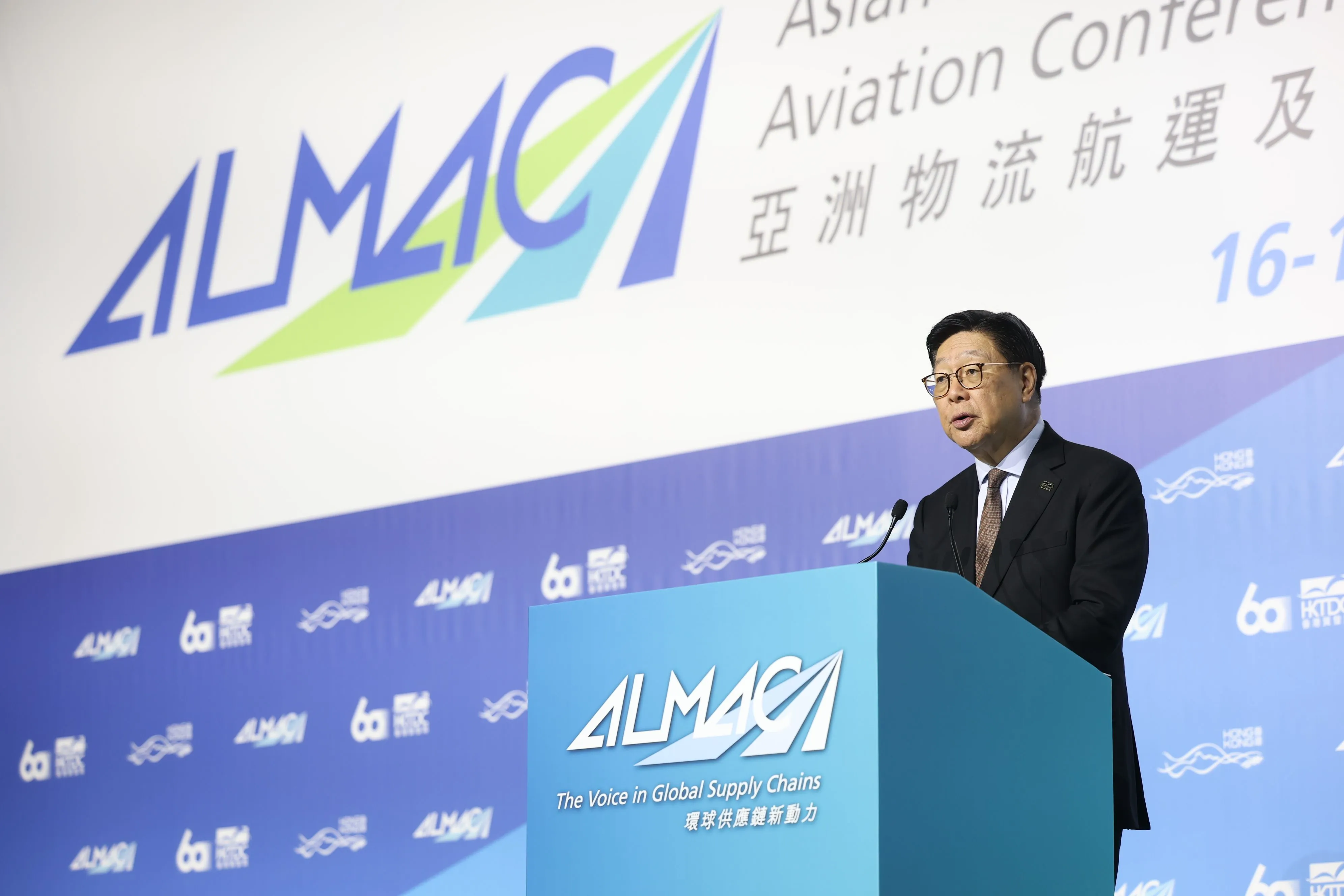
Jay Chou Concept Stock and G-DRAGON’s Agency Upgrade Partnership to Jointly Develop AI and Robotics Products ACN Newswire

Jay Chou Concept Stock and G-DRAGON’s Agency Upgrade Partnership to Jointly Develop AI and Robotics Products

Hong Kong, Nov 16, 2026 - (ACN Newswire via SeaPRwire.com) - Building on the existing cooperation in concerts, exhibitions, artist IP and derivative product development, the two parties will further expand the scope of cooperation and establish a strategic partnership in the fields of global robot entertainment and AI robotics. They will work together on global robot parks, global robot tours, and the joint development of AI trendy toys and companion robots, to serve the Chinese, Korean and global markets.The signing ceremony opened with a robot fashion show and a robot dance performance jointly staged by the two parties and UNITREE. Set to classic BIGBANG tracks, the performance brought to life a new stage format that fuses IP with technology. Star Plus Legend said: “The robots on stage come from China, and the creative ideas from Korea. Behind this scene are the two parties’ long-standing, in-depth communication and mutual trust, and a shared development vision for integrating IP with technology. Our judgement on the long-term direction has always been in sync.”According to official information, Galaxy Corporation is a Korean entertainment-technology unicorn founded in 2019. Its roster brings together leading artists spanning music and film, including G-DRAGON (Kwon Ji-Yong), Song Kang-ho, Kim Jong-kook and Lee Tae-min. Galaxy has already translated “celebrity IP + robots” into physical scenarios: in Seoul, Korea, it operates Galaxy Robot Park, the world’s first embodied AI-themed space, where humanoid robots take the stage to K-pop choreography, and with Dubai as its Middle East hub, it has launched Galaxy Robot Arena Dubai, continuing to explore new entertainment formats for fans worldwide.Founded in 2017, Star Plus Legend Holdings Limited centres its business on IP creation and operation, leveraging IP-driven synergies to drive the coordinated development of AI + robotics and other businesses. The Company was successfully listed on the Main Board of the Hong Kong Stock Exchange in July 2023 and is known as the “Jay Chou concept stock”. Deeply bound to its core celebrity Jay Chou, Star Plus Legend has built the superstar IP “CHOUCHOU” and tailor-made Jay Chou’s first outdoor reality show, “J-Style Trip”, which has aired for three seasons. In AI + robotics, Star Plus Legend has joined hands with UNITREE, with the two serving as each other’s strategic partners worldwide to jointly develop consumer-grade robot products with strong IP attributes.From “IP Collaboration” to “IP × Technology”The partnership between the two parties did not begin today. In November 2025, Star Plus Legend subscribed, through an industrial fund, for no more than 7% of Galaxy’s issued share capital and became a strategic shareholder. The cooperation scope agreed at the time covered co-hosting world tour concerts with Galaxy’s artists, large-scale themed exhibitions, and the development of artist IP and derivative products. The new MOU deepens cooperation further on that basis, marking an extension of the relationship from project-level content collaboration to category co-creation and scenario co-creation powered by AI and embodied AI.Early Proof Points: Two Embodied AI Entertainment Scenarios Already Up and RunningBefore the MOU was signed, each party had already delivered an observable proof point. In November 2026, Star Plus Legend opened the world’s first Pandabot Cafe in Tsim Sha Tsui, Hong Kong. Combining “embodied AI + AIGC + top-tier IPs”, the store brings IP into everyday consumer spaces as an interactive physical presence, testing whether IP embodiment can support a single-store model that is workable and iterable. Galaxy Robot Park, for its part, turns robot performance and interaction into a venue-scale experience, testing whether robot entertainment can move beyond a one-off spectacle and become a system that can be replicated across venues. Together, the two point to the outlines of the next-generation embodied AI entertainment and consumption scenario: IP that is “present” and “responsive” in physical form, spaces continuously refreshed by computing power and content, and experiences orchestrated across scenarios by platform capabilities. In other words, a consumer scenario in which IP, space and the operating system are coupled.Strategic Alignment: Two Statements, One DirectionGalaxy CEO Choi Yong-ho sums up the company’s path as “today, tomorrow and the day after”: today is centred on IP and content; tomorrow is mainly about developing the AI and robotics businesses; and the day after refers to the aerospace business. Star Plus Legend’s judgement is equally clear: “the next stop for IP is AI”. Star Plus Legend CFO Lai Kwok Fai Franki said earlier during the China International Import Expo that the next stop for IP lies in its integration with AI and embodied robots, which will form a very large market, and that what embodied AI addresses is the question of IP “being present and responding”. The two strategic formulations point to the same judgement: AI and robotics give IP a perpetual vehicle, one that no longer depends on an individual’s physical presence but allows IP to interact and perform around the clock, across geographies and on a sustainable basis. This will keep expanding the boundaries of IP in expression, interaction and value, taking IP off the screen and into people’s everyday lives, and enabling richer, more diverse emotional connections and scenario-based experiences. These two examples take that judgement beyond words, and turn the partnership from a handshake over direction into the matching of complementary capabilities.Complementary Strengths, Co-building an EcosystemAn aligned long-term judgement needs complementary capabilities to support it. Star Plus Legend has deep experience in full-chain IP operation and, drawing on China’s mature supply chain and manufacturing and mass-production capacity in AI and embodied AI hardware, excels at turning plans into products and delivering those products worldwide; Galaxy brings deep reserves of content creativity and cutting-edge experience in operating robot performances. Applied to the next-generation embodied AI entertainment and consumption scenario, the key to this complementarity lies not in each party’s capabilities as such, but in integrating consumer-scenario operation with hardware mass production, and multi-robot coordination with the replication of performance systems, into a single set of scenario capabilities aimed at entertainment and consumption spaces that combine IP stickiness, embodied interaction and replicability. This also explains how the MOU’s three directions relate to one another: robot parks serve as the scenario platforms, robot tours as content output, and AI trendy toys and companion robots as a way to extend interaction into daily life, forming a consumer journey that runs from “presence” to “companionship”.Together, the two parties will combine industrial manufacturing capability with the power of creative content, bringing Eastern creativity to a broader stage in a language the world understands, jointly opening up new space for the integration of IP and robotics, and delivering new entertainment-technology experiences to consumers in China, Korea and beyond.About CompanyStar Plus Legend Holdings Limited (6683.HK) was founded in 2017 and primarily focuses on IP creation and operation, leveraging IP-driven synergies to expand into AI + robotics and new consumption in the healthy lifestyle sector. The Company was successfully listed on the Main Board of the Hong Kong Stock Exchange in July 2023, approved for inclusion in the Hang Seng Composite Index in February 2024, and formally entered the Hong Kong Stock Connect in March of the same year. In September 2025, Star Plus Legend announced the acquisition of approximately 1.17% equity in National Stadium Co., Ltd. (the operator of the Bird’s Nest), becoming the only private-sector shareholder of the Bird’s Nest to date. In November of the same year, Star Plus Legend announced that it had become a strategic shareholder of Galaxy Corporation Co., Ltd (“Galaxy”), a well-known entertainment management company in South Korea, strengthening its global IP presence. Galaxy boasts a roster of globally influential artists, including Kwon Ji-Yong (also known as G-DRAGON), Kim Jong-kook, Song Kang-ho and Lee Tae-min.In the field of IP creation and operation, the Company maximizes the influence of its artists by creating personalized character and content IPs tailored to each individual. In terms of character IPs, the Company has established deep collaborations with core celebrities such as Jay Chou and Liu Keng-hung, resulting in two iconic IPs — “CHOUCHOU” and “Coach Liu”. And the cumulative number of fans of the existing celebrity IP portfolio has reached 280 million. In 2023, the Company collaborated with a top Hollywood visual effects team to create the digital human of “CHOUCHOU” for Jay Chou and launched the first metaverse trailer, “The Awakening”. The authorization of the digital human of CHOUCHOU to China Mobile as its Dynamic Star Ambassador, 5G Metaverse Pioneer, and 5G Video Ringtone Ambassador signifies Star Plus Legend’s successful expansion of its IP licensing business into the digital content sector. In 2022, the Company assisted Liu Keng-hung in becoming a national fitness coach and also developed his official anime-style persona and digital human, “Coach Liu”. In 2026, Liu Keng-hung was selected into the first batch of quality online streamers under the Quality Online Streamer Cultivation Project.The Company continues to expand its IP portfolio and is developing CHOUCHOU&FRIENDS as a global celebrity IP and trend-culture platform. Its global flagship store in Shanghai and its flagship store in Changsha are now open, and the Company continues to expand its store network. The Company also introduced a original IP character, “WAKAEMO” and launched a collaboration programme with 100 international pop artists to build a global artist network and promote the internationalization of Chinese celebrity IPs.In terms of content IP, the Company created Jay Chou’s first outdoor reality show “J-Style Trip” in 2020, which has aired for three seasons. In 2024, it launched “Yue Lai Yue Kuai Le”, a music talk show hosted by Harlem Yu. In 2025, the Company rolled out micro-variety shows and sports variety shows featuring Liu Keng-hung, including “Nothing But Fifty” and “Geng Wo Qi Jiu Dui Le”, as well as the city fitness family event series “Geng Fitness 5KM” and the fun competition “G-VERSE Celebrity Tennis Invitational”, among others. In terms of events, the Company invests in or produces the world tour concerts of Jay Chou and Kwon Ji-Yong, as well as concerts featuring artists from the Star Plus Legend portfolio. Relying on its own IP resources to drive content development, the Company has launched the “Finding CHOUCHOU” cultural tourism project in over twenty cities worldwide, deepening the integrated development of “IP + Culture + Tourism + Business + Sports + Performance”. In September 2025, Star Plus Legend partnered with Shanghai Museum to host the themed art show “The Remarkable Ancestors — CHOUCHOU’s Time Travel Adventure”, making “CHOUCHOU” the first celebrity IP to enter a national museum. To mark the 25th anniversary of Jay Chou’s debut, the Etersource brand announced the release of the officially authorized Jay Chou “Carnival” World Tour collectible cards series, for which Star Plus Legend serves as the exclusive global distributor.In the AI + robotics segment, the Company announced a strategic partnership with UNITREE, a global leader in robotics. The two parties will serve as each other’s strategic partners worldwide and will jointly develop consumer-grade Robot products. The first collaborative product, a quadruped robot dog with strong IP attributes, made its first public debut at the opening ceremony of the Shanghai Tourism Festival. Furthermore, Star Plus Legend and UNITREE have established a joint venture to explore the new field of “IP + Robotics + AI”. The Joint Venture Company will be primarily responsible for the creation and development of consumer-grade IP robots (including pet quadruped robots and performing humanoid robots) and IP derivative products (the “Products”), and will have exclusive rights to sell and operate the Products.In the new consumption in the healthy lifestyle sector, the Company focuses on developing and selling health management and skincare products. Its portfolio includes several brands: MODONG, a health management brand that promotes low-sugar and low-carb diet; Bonggie, which features food products with clean ingredient list; Dr. INYOU, which focuses on nutrition balance; Dr. MG, a skincare brand which targets recombinant collagen; and VIVICYCLE, a light-exercise lifestyle brand that integrates fitness into everyday life. According to CIC, MODONG Coffee ranked first in China's bulletproof drink market by gross merchandise value (GMV) for six consecutive years from 2020 to 2025, with cumulative sales reaching 130 million cups over the six years. Bonggie Matcha Powder became the best-selling product in the Douyin natural powder market in 2023. In addition, the MODONG brand has received honors such as the “AA Well-known Trademark” and “Jiangsu Famous Trademark”. In March 2025, MODONG underwent brand revitalization and launched the new MODONG MAGIC series, promoting the brand concept “A Cup On-the-Go: Crafting Magic for Healthy Living”, and officially announced Hannah Quinlivan as the brand ambassador.In terms of its business model, Star Plus Legend is driven by a dual-engine model: new emotional-consumption IP and embodied AI. On the IP side, the Company is committed to “co-creating IP with top-tier celebrity” and, through its industry’s only “replicable closed-loop model for celebrity IP value growth”, delivers full-chain operation of celebrity IP across incubation, commercialization and full value growth. On the AI side, guided by the core philosophy that “AI is the next stop for IP,” the Company brings embodied AI robots into real consumer scenarios, enabling IP to evolve into a partner that can walk, think and interact.Star Plus Legend’s Official Website: www.6683.hkMedia inquiries:Star Plus Legend’s Media Relations Email: media@splegend.com Copyright 2026 ACN Newswire via SeaPRwire.com. All rights reserved. www.acnnewswire.com
More
SCGJWD Strengthens Its Position as a Leading Integrated Logistics Provider in ASEAN Through Strategic Freight Forwarding Partnership with Triple i ACN Newswire

SCGJWD Strengthens Its Position as a Leading Integrated Logistics Provider in ASEAN Through Strategic Freight Forwarding Partnership with Triple i

BANGKOK, THAILAND, Nov 16, 2026 - (ACN Newswire via SeaPRwire.com) - SCGJWD Logistics Public Company Limited (SCGJWD), a leading integrated logistics and supply chain solutions provider in ASEAN and a member of SCG Group, is taking a significant step to strengthen its regional competitiveness through a proposed business integration between its subsidiary, SCGJWD Freight Co., Ltd. (SJWDF), and Triple i Logistics Public Company Limited (III). The strategic partnership aims to combine the strengths of both companies in international freight forwarding, enhance their service capabilities and create a more comprehensive logistics platform to serve customers across ASEAN and international markets.SCGJWD Logistics Co-CEOs: Mr. Bunn Kasemsup (L) and Mr. Charvanin Bunditkitsada (R)Under the proposed transaction, SCGJWD will acquire newly issued ordinary shares of III through an exchange of SJWDF shares together with a cash payment. In addition, SCGJWD will acquire certain existing ordinary shares of III from current shareholders through a cash transaction. Upon completion, SCGJWD is expected to hold a 24.50%stake in III, while SJWDF will become a wholly owned subsidiary of III. The transaction is expected to be completed in the first quarter of 2027, subject to approval by III’s Extraordinary General Meeting of Shareholders and the fulfilment of relevant conditions precedent.The partnership brings together complementary strengths that will significantly enhance the companies’ international freight forwarding capabilities. SCGJWD contributes substantial sea freight volumes, a strong base of corporate customers and an extensive logistics infrastructure, supported by its established capabilities in cross-border transportation, warehousing, customs brokerage and distribution. Triple i brings specialized expertise in air freight, covering both wholesale and retail services, aviation-related logistics and an extensive network of domestic and international partners.By combining these capabilities, the companies aim to build a stronger and more competitive freight forwarding platform, with greater scale, broader network coverage and enhanced capabilities across air, sea and land transportation. The collaboration is also expected to strengthen their purchasing power, improve operational coordination and expand the range of freight and logistics solutions available to customers.“Strengthening our position in ASEAN requires more than expanding our geographical presence. It requires the ability to connect markets through a comprehensive logistics network and deliver integrated solutions that meet customers’ increasingly complex supply chain needs. This strategic partnership with Triple i will enhance our international freight forwarding capabilities by combining our strong sea freight business, regional infrastructure and customer base with Triple i’s specialized air freight expertise and international network. Together, we aim to build a stronger regional platform and create greater value for customers across ASEAN,” said Bunn Kasemsup, Co-Chief Executive Officer of SCGJWD.As one of ASEAN’s leading integrated logistics providers, SCGJWD offers a broad portfolio of logistics and supply chain services across the region. Its capabilities span port and terminal operations, general and specialized warehousing, cold chain logistics, fulfilment, domestic and cross-border transportation, multimodal transportation, freight forwarding, customs brokerage and distribution. With investments, operations and strategic networks across multiple ASEAN markets and China, the company is positioned to connect customers with logistics resources and supply chain solutions across the region.This regional presence is particularly important as global supply chains face increasing disruption from geopolitical tensions, armed conflicts, trade restrictions, changing regulations and unexpected disruptions to major shipping routes. In such an environment, businesses need logistics partners that can respond quickly, identify alternative routes and transportation options, and adjust supply chain strategies to maintain the flow of goods.With its integrated logistics network and multimodal capabilities, SCGJWD aims to provide customers with greater flexibility to adapt their transportation plans as circumstances change. When a particular route or mode of transportation is disrupted, the ability to leverage alternative options across air, sea and land, supported by regional infrastructure, warehousing and cross-border networks, can help customers maintain supply chain continuity and reduce their exposure to disruption. The addition of Triple i’s air freight expertise and international partner network further strengthens this flexibility, broadening the options available to customers when speed, capacity or route availability becomes critical.For multinational companies and businesses operating across ASEAN, the combined capabilities offer access to a more connected logistics ecosystem. From international air and sea freight to cross-border land transportation, warehousing, customs brokerage and distribution, customers can access a broader range of services through an integrated regional network. This enables more flexible shipment planning, better coordination across supply chain activities and the ability to respond more effectively to changing market conditions.“Today, supply chain resilience is just as important as cost and delivery efficiency. Geopolitical tensions, conflicts and disruptions to major trade routes can affect the movement of goods across markets with little warning. Businesses need logistics partners with a strong regional network and the ability to adapt quickly, whether by adjusting transportation modes, identifying alternative routes or leveraging logistics infrastructure in different markets. With SCGJWD’s integrated logistics capabilities and regional presence, combined with Triple i’s air freight expertise and international network, we aim to give customers greater flexibility and more options to keep their supply chains moving, whatever challenges arise,” said Charvanin Bunditkitsada, Co-Chief Executive Officer of SCGJWD.Following completion of the transaction, both companies will continue serving their respective customers under their existing brands. SJWDF will continue providing freight forwarding services under the SCGJWD brand, while benefiting from access to an expanded range of services and capabilities through the partnership.Through this strategic collaboration, SCGJWD aims to further strengthen its position as a leading integrated logistics and supply chain solutions provider in ASEAN, while building a stronger regional freight forwarding platform. By combining logistics infrastructure, specialized expertise and international networks, the partnership represents another step towards creating more resilient, flexible and connected supply chains for businesses across the region.About SCGJWD Logistics PCL (SET: SJWD)SCGJWD Logistics PCL was created when SCG Logistics Management Co Ltd and JWD InfoLogistics PCL, two leading logistics and supply chain service providers at the ASEAN level, together announced a merger deal on Oct 24, 2022, to become the largest Integrated Logistics and Supply Chains Solutions Provider in ASEAN. Formally recognized on Feb 24, 2023, the Company is jointly managed by Co-Chief Executive Officers (Co-CEOs) Mr. Bunn Kasemsup, representing SCGL, and Mr. Charvanin Bunditkitsada, representing JWD. (SET: SJWD) https://www.scgjwd.com/enPress release by MT Multimedia Co Ltd for SCGJWD Logistics PCL.For more information, please contact:Thiyaporn Sriadunphan (Dah)Tel: +66 87 556 6974E-mail: thiyaporn.s@mtmultimedia.com Copyright 2026 ACN Newswire via SeaPRwire.com. All rights reserved. www.acnnewswire.com
More

FWD and Junior Achievement inspire over 60,000 students in Asia to dream big with financial literacy ACN Newswire

FWD and Junior Achievement inspire over 60,000 students in Asia to dream big with financial literacy

Hong Kong, Nov 16, 2026 - (ACN Newswire via SeaPRwire.com) - FWD Group Holdings Limited (“FWD Group” or “FWD”) named the winners of the JA SparktheDream Social Challenge 2026 Asia Pacific Finals on Friday, as its financial literacy programme, JA SparktheDream, operated by Junior Achievement (“JA”) reached the milestone of bringing financial education to 60,000 students across Asia.The JA SparktheDream Social Challenge is an annual showcase that gives students a chance to put what they have learned into practice. The finals brought together 14 teams from seven markets: Hong Kong SAR, Indonesia, Japan, Malaysia, the Philippines, Singapore and Thailand. Judges assessed the projects on social relevance, innovation and creativity, solution feasibility, and passion and persuasion.Team EcoSpark from Manito Central School, Albay in the Philippines took first place with “Ecocycle Saving Hub”, an initiative that transforms waste into resources while promoting sustainability and supporting the local community. Second place went to Team Colsafearn from SMK Pantai Sepang Putra, Selangor in Malaysia, with Team Finshield from SMP Nation Star Academy, Surabaya in Indonesia awarded third place.Cathy Knezevic, Group Chief Corporate Affairs Officer, FWD Group, said, “Congratulations to all the finalists. These students remind us that when a young person cares about something and has the knowledge and encouragement to act, they can help their communities grow. Financial literacy gives young people the confidence to make informed choices, plan ahead and dream big. Together with our partners at JA, we’re proud to help more young people across Asia build the skills and self-belief to shape their futures and celebrate living.”Now in its fifth year, JA SparktheDream combines financial education with social and life skills. Through interactive games, digital activities and classroom sessions supported by FWD volunteers, students learn about money while building skills they can use beyond the classroom.Dr Vivek Kumar, President and Chief Executive Officer of JA Asia Pacific, said, “One of the greatest investments we can make is in the potential of young people. At JA, we see every day how financial capability, entrepreneurial thinking and real world learning empower learners to become changemakers in their communities. Together with FWD, the JA SparktheDream Social Challenge provides a platform where learners across Asia Pacific can turn purpose into action, demonstrating that one idea, backed by knowledge, confidence and collaboration, can make a meaningful difference.”Champions of the JA SparktheDream Social Challenge 2026 Asia Pacific Finals - Team EcoSpark from Manito Central School, Albay in the Philippines - whose idea was to transform waste into resources while promoting sustainability and supporting the local community.In second place was Team Colsafearn from SMK Pantai Sepang Putra, Selangor in Malaysia, for a mobile application that rewards users for collecting waste and keeping their communities clean and safe.Third place went to Team Finshield from SMP Nation Star Academy, Surabaya in Indonesia, whose initiative uses a board game to help families learn about scam prevention and financial literacy.Since 2022, JA SparktheDream has reached over 60,000 students in 370 schools, involved more than 1,500 FWD volunteers, and expanded beyond financial literacy to include broader themes of financial inclusion, social responsibility, wellbeing and community engagement, preparing students to meet the future with confidence. Among surveyed participants, an average of 88 per cent gained an understanding of money's role in daily life, while 81 per cent developed a greater awareness of community needs.FWD and JA first piloted JA SparktheDream in Hong Kong SAR and Singapore in 2022. The programme has since been recognised with a Silver Award in the 2023 Investor and Financial Education Awards from the Investor and Financial Education Council in Hong Kong SAR; a Bronze Stevie Award at the Asia-Pacific Stevie Awards 2024 for Innovative Achievement in Corporate Social Responsibility in the Philippines; and a Special Mention in the 2024 Bisnis Indonesia Corporate Social Responsibility Awards in Indonesia.About FWD GroupFWD Group (1828.HK) is a pan-Asian life and health insurance business that serves over 40 million customers across 10 markets, including BRI Life in Indonesia. FWD’s customer-led and tech-enabled approach aims to deliver innovative propositions, easy-to-understand products and a simpler insurance experience. Established in 2013, the company operates in some of the fastest-growing insurance markets in the world with a vision of changing the way people feel about insurance. FWD Group is listed on the Hong Kong Stock Exchange under the stock code 1828. For more information, please visit www.fwd.comFor media inquiries, please contact: groupcommunications@fwd.comAbout JA Asia PacificJunior Achievement (JA) was founded in 1919 to help bridge the gap between classrooms and workplaces. JA delivers hands-on learning in work readiness, financial health, entrepreneurship, STEM, sustainability and related areas. JA Worldwide delivers more than 23 million learning experiences each year in over 100 countries and has been nominated for the Nobel Peace Prize every year since 2022.In 2026, JA Asia Pacific reached more than seven million youth across 14 markets and engaged more than 90,000 teachers and volunteers in the region.Learn more about us here: www.jaasiapacific.org Copyright 2026 ACN Newswire via SeaPRwire.com. All rights reserved. www.acnnewswire.com
More
Mambu and Mastercard expand cross-border payment capabilities for banks across APAC ACN Newswire

Mambu and Mastercard expand cross-border payment capabilities for banks across APAC

SINGAPORE, Nov 16, 2026 - (ACN Newswire via SeaPRwire.com) - Mambu and Mastercard today announced the expansion of their strategic collaboration into Asia Pacific, enabling financial institutions that use Mambu to offer fast, secure and transparent cross-border payment services to their SME and retail customers.Through this collaboration, Mambu will connect Mastercard Move, Mastercard's portfolio of global money movement capabilities, with its Intelligent Core, a cloud-native core banking and payments platform built to process, orchestrate and extend financial services at scale. This will give Mambu customers a pre-built connection to integrate Mastercard Move's cross-border payment capabilities, helping reduce implementation complexity and accelerate time to market.The integration will enable financial institutions to offer cross-border payment capabilities within digital banking journeys, creating a more seamless customer experience.The collaboration builds on Mambu's expansion into payments following its acquisition of Numeral in 2024. It will provide a broad foundation for banks to develop cross-border payment services that meet the changing needs of SME and retail customers as demand continues to grow for transparent and frictionless international payments."Adding cross-border payment capabilities shouldn't require financial institutions to take on years of integration work or rethink their entire tech stack. By integrating Mambu's Intelligent Core with Mastercard Move, we are giving our customers a simpler way to introduce these capabilities, accelerate time to market and continue building on the investments they've already made.That's the value of a composable foundation: it lets the Intelligent Core keep extending what financial institutions already trust, rather than replacing it." said Fernando Zandona, CEO at Mambu"Despite advances in digital payments, moving money across borders remains complex and fragmented, with people and businesses expecting greater speed, transparency and certainty. Mastercard Move combines global reach with trusted money movement capabilities to help financial institutions meet those expectations," said Pratik Khowala, Global Head of Transfer Solutions, Mastercard.Mastercard Move enables money to move within and across more than 200 countries and territories and in more than 150 currencies, reaching 17+ billion endpoints and 95% of the world's banked population.Mambu will participate in Singapore FinTech Festival 2026, taking place from 18 to 20 November in Singapore, where its team will engage with financial institutions and industry partners on the evolving requirements of digital banking and payments across Asia Pacific, including opportunities to simplify cross-border transactions and expand international payment services. Mambu team will be available at booth #4D39.About MambuMambu is the world's only true SaaS cloud banking platform. Founded in 2011, it enables banks, lenders, credit unions, fintechs, retailers and other organisations to design and launch modern financial products with speed and flexibility. Our unique, composable approach allows independent components, systems and connectors to be assembled in any configuration to meet business goals and customer needs. The platform supports core banking, deposits, lending, payments and Islamic banking. Mambu offers a modular, future-ready and scalable product that grows with businesses. Whether launching a single product or transforming an entire banking stack, Mambu provides the agility and reliability needed to succeed in today's financial landscape. More than 260 customers in over 65 countries rely on Mambu, including Western Union, Commonwealth Bank of Australia, N26, BancoEstado, Raiffeisen Bank, ABN AMRO and Bank Islam.About MastercardMastercard powers economies and empowers people in 200+ countries and territories worldwide. Together with our customers, we're building a resilient economy where everyone can prosper. We support a wide range of digital payments choices, making transactions secure, simple, smart and accessible. Our technology and innovation, partnerships and networks combine to deliver a unique set of products and services that help people, businesses and governments realize their greatest potential.Media ContactsMambuEmail: press@mambu.comWebsite: https://mambu.comPR InquiryJensen Matthews PR APACContact: Loredana MateiEmail: loredana@jensenmatthews.comwww.jensenmatthews.comSOURCE: Mambu Copyright 2026 ACN Newswire via SeaPRwire.com. All rights reserved. www.acnnewswire.com
More
Indonesia’s ITS Celebrates 66th Anniversary and Officially Closes KSTI 2026 ACN Newswire

Indonesia’s ITS Celebrates 66th Anniversary and Officially Closes KSTI 2026

Surabaya, East Java, Indonesia, Nov 16, 2026 - (ACN Newswire via SeaPRwire.com) - Institut Teknologi Sepuluh Nopember (ITS) reaffirmed its commitment to advancing science, technology, and the downstream development of national innovations. This commitment was highlighted during the Open Senate Meeting marking the culmination of ITS's 66th Anniversary celebrations, which also served as the closing ceremony of the 2026 Indonesian Science, Technology, and Industry Convention (KSTI) at Grha ITS on Friday (November 13).ITS Rector, Prof Bambang Pramujati ST MSc Eng PhD, delivering the 2026 Rector's Annual Report.Held under the theme 'Making Meaningful and Sustainable Contributions,' the event was attended by the Minister of Higher Education, Science, and Technology, Prof Brian Yuliarto ST MEng PhD; the Deputy Minister of Higher Education, Science, and Technology; the Director General of Research and Development at the Ministry of Higher Education, Science, and Technology; the Deputy Governor of East Java; former ITS rectors; professors; lecturers; and administrative staff.In his scientific oration, Brian highlighted the importance of higher education institutions in addressing national challenges through research and innovation. He emphasized that downstream development is a strategic approach to optimizing the potential of natural resources while strengthening national industries. "I am confident that ITS will produce science and technology pioneers whose innovative works will help build major industries that become a source of national pride," he stated.In line with this vision, ITS Rector Prof Bambang Pramujati ST MSc Eng PhD presented the university's achievements, including its recent entry into the world's top 500 universities in the QS World University Rankings. Looking ahead, ITS aims to reach the world's top 300 by 2030. To support innovation downstreaming, the ITS Science Techno Park (STP) also provides regular mentoring to 50 startups annually. Several research innovations, including electric tractors, have also been adopted and utilized across Indonesia.ITS's commitment to innovation downstreaming was further demonstrated through the organization of KSTI 2026 in collaboration with the Ministry of Higher Education, Science, and Technology on November 11–13. ITS was selected as the host venue for an exhibition showcasing 567 innovative products from hundreds of universities, industries, and research institutions. Other activities included Business Matching, discussion and policy forums, robotics competitions, and hackathons.The Director General of Research and Development at the Ministry of Higher Education, Science, and Technology, Dr M Fauzan Adziman ST MEng PhD, officially closed the event on November 13, 2026, while presenting the overall attendance figures. "Over the three days of the event, KSTI 2026 attracted approximately 17,000 visitors who came to explore and discover opportunities for the further development of various innovations," Fauzan remarked.The closing of KSTI 2026, coinciding with the culmination of ITS's 66th Anniversary celebrations, underscores the university's role in accelerating research commercialization and fostering an innovation ecosystem that delivers meaningful contributions to national development.-Antara Copyright 2026 ACN Newswire via SeaPRwire.com. All rights reserved. www.acnnewswire.com
More
Shaping the Future Together: Voices from Around the World at the III International Symposium ‘Creating the Future’ in Russia ACN Newswire

Shaping the Future Together: Voices from Around the World at the III International Symposium ‘Creating the Future’ in Russia

Moscow, Russia, Nov 16, 2026 - (ACN Newswire via SeaPRwire.com) - The III International Symposium 'Creating the Future' brought together more than 8,000 participants from 109 countries at the Russia National Centre in Moscow. It is a key event within the global ecosystem of the Open Dialogue "The Future of the World: A New Platform for Global Growth".Symposium 'Creating the Future', photo: press service of the Russia National CentrePublic figures, scientists, futurists and representatives of culture, media and business exchanged ideas and experience to develop positive scenarios for the future. The President of Russia sent a message of greeting to participants, noting the event's international standing and the practical value of bold, unconventional ideas and solutions. Russian economist Maxim Oreshkin formally opened the Symposium on 12 November.Oreshkin said representatives of 19 more countries had joined the project in 2026. He announced the opening of submissions for the third season of the Open Dialogue, which invites experts, businesspeople and researchers worldwide to submit essays on humanity's future. In 2026, the competition received more than 1,600 entries in 20 languages from over 100 countries. Submissions for the third season are accepted at www.dialog.russia.ru/en/.Inviting authors from different professions and cultures to take part, Oreshkin said the new cycle would focus on people in a changing technological world. Its four themes are "Human Development", "Health Management", "Life Around Us" and "Content in a New Era". The most compelling ideas will inform a new report, and the authors of the best submissions will be invited to Moscow in April to discuss the results.The programme comprised more than 40 lectures, discussions, meetings and training sessions across three tracks: "Human and Values", "Progress", and "Culture and Art". Politicians, scientists, futurists and representatives of creative industries, media, civic and youth organisations took part in interdisciplinary exchanges.Natalia Virtuozova, Director General of the Russia National Centre, described it as a space for national pride and equal international dialogue. She welcomed the participation of 109 countries and said: "Progress represents the direction in which we are moving: we are building up our technological potential, while always remembering that every achievement serves people." She stressed that culture, art and traditional values provide the foundation for the future, and hoped each participant would take away new ideas and discoveries.The II Museum Congress, "The Museum - A Place for Shaping the Future", was among the Symposium's principal events. On 12 November, representatives of 75 Russian and eight overseas museums discussed the transformation of museums in the digital age, connections between young people and history, national traditions and contemporary challenges.Moaza Matar, Director of Curatorial Affairs and Collection Management at the Zayed National Museum in the UAE, said that meeting representatives of other museums had helped her team exchange practices and consider how to make knowledge accessible, especially to students and younger generations. She saw opportunities to continue cooperation with the Russia National Centre.For the first time, the Symposium hosted the Gaming Lobby "Gaming Session of the Future", bringing together game industry experts, developers, gamers and esports fans. Participants discussed video games as a cultural phenomenon and explored Russian releases, including DISTORTION, a story-driven action RPG presented at the event. The developers shared initial testing results, analysis and plans for the game's universe.The open discussion "Drafts of the Future" brought science-fiction writers and futurists together. The programme culminated in the II All-Russian Science Fiction Award, established by the Russia National Centre and the Union of Writers of Russia to renew wider interest in the genre as a stimulus for scientific and technological progress. More than 120 works published in 2025 were nominated. Russian and international writers, translators and artists won awards in five main and two special categories. The new "International Recognition" category aims to support the genre worldwide and introduce Russian authors to overseas audiences.One of its recipients, science-fiction writer and President of the China Science Fiction Writers Association Chen Qiufan, said that examining different periods helps people understand possible futures. He described discussions among writers, futurists and scientists as important for future discoveries, and highlighted science fiction's role in developing young people's imagination and creative thinking, alongside support for authors in Russia and China.The Symposium also addressed the balance between innovation and tradition. The discussion-performance "The Power of Craft: Preserving Heritage for the Future" considered folk crafts as a link between generations and part of the cultural heritage. A new project for young people, the Young Artisan School, was announced for 2027 at the Russia National Centre. It will introduce children to traditional crafts and making objects by hand.During the Symposium, the Center presented a premiere run of "Khorovod. The Energy of Unity", a musical and choreographic parable featuring more than 600 performers from regions across Russia. The production introduced participants to the diverse cultural traditions of the country's peoples and became one of Russia's major cultural events of 2026.Social LinksTelegram: https://t.me/gowithRussiaMedia ContactsBrand: Russia National CentreContact: Olivia StoneEmail: pressa@russia.ruWebsite: https://en.russia.ru Copyright 2026 ACN Newswire via SeaPRwire.com. All rights reserved. www.acnnewswire.com
More
The UAE’s AI Adoption Is a World Record. Paying for It Is Another Story ACN Newswire

The UAE’s AI Adoption Is a World Record. Paying for It Is Another Story

HONG KONG, Nov 15, 2026 - (ACN Newswire via SeaPRwire.com) - In the third quarter of 2026, the typical UAE business that paid for an AI tool spent AED 268 a month on it, according to the first SME Spend Index from Pemo, a Dubai spend-management platform (Pemo, October 2026). That is roughly the cost of a modest office utility bill. In the same quarter, Microsoft's diffusion tracking put the share of UAE residents aged 15 to 64 who had used a generative AI product at 73.3 percent, the highest reading across 147 economies (Microsoft, September 2026). Both numbers describe the same country in the same year. Only one of them describes a purchase.The gap between those two figures is the most important unsolved question in the UAE's AI story. The country leads the world in people trying AI. It has built government infrastructure around that lead. What it has not yet shown, at anything close to the same scale, is businesses converting that usage into paid, integrated, budgeted deployment. This article reads the two data trails against each other, adds what the people operating these tools actually say, and asks a simple question: is the gap one problem or two?The record number, and what it actually countsMicrosoft's AI Economy Institute measures diffusion as the share of people aged 15 to 64 who used a generative AI product or app during a reporting period, based on aggregated telemetry adjusted for device market share and internet penetration (The National, 2026-09-25). On that measure the UAE ran 59.4 percent in the first half of 2025, 64.0 percent in the second half, 70.1 percent in the first quarter of 2026, and 73.3 percent in the second quarter. The global average rose from 16.3 percent to 17.8 percent over the same quarter. Singapore, second on the list, reached 64.3 percent.Three things about that measure matter for reading it honestly.It counts a population, not a workforce. A student using a free chatbot and a procurement officer using an enterprise assistant both sit inside the 73.3 percent.It counts any generative AI product, not paid business tools. Free tiers qualify.It is a usage read, not an outcome read. Nothing in it says what the usage changed.Microsoft UAE's own managing director drew the same line in October 2026. "The biggest shift we are seeing is from AI as a tool to AI as a teammate," Amr Kamel said at the AI Everything Abu Dhabi showcase, adding that human judgement and accountability "remain at the centre" (Zawya, 2026-10-06). The framing is notable for what it concedes: the vendor that publishes the headline adoption number is also the vendor telling businesses that adoption is no longer the hard part. A company report released the same month put it more bluntly, saying businesses "now have to show the productivity and financial returns behind that usage" (tbreak, October 2026).How many businesses are actually payingThe business-side numbers come from three private sources, and they disagree with each other in instructive ways.The AWS "Unlocking the UAE's AI Potential" report, produced with the UAE Artificial Intelligence Office and research by Strand Partners, found 72 percent of UAE businesses say they have adopted AI in 2026, up from 53 percent a year earlier (AWS, 2026). That survey asked 1,000 founders, CEOs and C-suite members through online panels weighted by size, sector and region. A "yes" here is a self-declaration.Pemo's transaction data cuts the same market by what firms actually pay for. Its first AI adoption report, built on settled card and bill-pay transactions from more than 6,000 UAE businesses and over AED 1.4 billion in annual spend, found 12 percent of businesses actively transacting with AI tools in early 2026 (Pemo, April 2026). Its Q3 2026 SME Spend Index, based on roughly 3.5 million anonymised transactions from October 2025 to September 2026, found 29 percent of businesses paid for at least one AI tool, with AI spend about five times its year-ago level and now roughly a quarter of all software spending (Pemo, October 2026). Two details inside that index deserve attention: two-thirds of AI-paying businesses still used a single tool, and the index excludes AI capabilities bundled inside Microsoft and Google suites, so the true paid share is somewhere above its read, not below.The same index shows where paying already runs deep. Technology firms led at 50 percent paying for AI in the third quarter of 2026, with a typical AED 880 a month. Marketing agencies followed at 46 percent. Real estate reached 38 percent and professional services 35 percent by the third quarter of 2026, while construction sat at 17 percent and hospitality at 16 percent.Table 1: What each UAE adoption number measures, 2026MeasureValueWhat it countsRefResidents 15-64 using a GenAI product, Q2 202673.3%Any generative AI usage, free or paid, telemetry-basedMicrosoft AI DiffusionBusinesses self-reporting AI adoption72%Founder/CEO survey answer, 1,000 firms, online panelAWS / Strand PartnersBusinesses paying for at least one AI tool, Q3 202629%Settled card and bill-pay transactions, ~3.5M recordsPemo SME Spend IndexBusinesses transacting AI spend, early 202612%Confirmed transactions among 6,000+ firmsPemo AI adoption reportSource: The National 🔗, Pemo via Communicate Online 🔗There is no official UAE government statistic on business AI use. Every business figure in circulation comes from a vendor survey or a company's own transaction data, and each one counts a different denominator. Treat any single number, including the 73.3 percent, as one lens on one population.What the operators sayThe public record of people running these tools inside UAE organisations is thin but consistent, and it splits into two camps: those describing deployment momentum, and those warning that deployment is where projects die.Amr Kamel, Microsoft UAE managing director, told Gulf News that companies should focus on "measurable outcomes rather than the number of pilots they launch", arguing AI could help organisations take on more work and "tackle tasks that previously needed more time or specialist expertise" (tbreak, October 2026).Ayham Gorani, co-founder and chief executive of Pemo, framed spending as the honest signal: "Spending is one of the clearest signals there is: it shows what businesses prioritise, where they see growth and what they are prepared to invest in" (Pemo, October 2026).On the other side sits the largest piece of counter-evidence in the enterprise AI literature. MIT's Project NANDA report, The GenAI Divide: State of AI in Business 2025, found about 95 percent of enterprise generative AI pilots delivered no measurable profit-and-loss impact, based on 300 public deployments, 150 leadership interviews and a survey of 350 employees (Fortune, 2025-08-18). "The 95% failure rate for enterprise AI solutions represents the clearest manifestation of the GenAI Divide," the report stated. Its lead author, Aditya Challapally, said the root cause was not model quality but a learning gap in integration: "Almost everywhere we went, enterprises were trying to build their own tool." Purchased solutions succeeded about 67 percent of the time in the study; internal builds, about one-third as often.That report predates the UAE's 2026 surge and was not a UAE study. But it describes the failure mode that high-adoption economies run into first, because adoption without integration is exactly the pattern it measured. No UAE-specific equivalent of the MIT study exists in public. That absence is itself a finding.A third camp is quieter: the sector laggards. Pemo's own index shows construction and hospitality firms paying for AI at roughly half the rate of technology firms. Gorani's data says the gap is a budget line, not a technology choice.Two gaps, not oneSo which is it: is the UAE's usage-to-payment gap a single problem, or two conditions that have to hold at once? The evidence supports two, and they fail independently.Gap one is a measurement gap. The headline 73.3 percent counts people using free generative AI. The paid-enterprise share sits far lower, between the 12 percent transacting and the 29 percent paying depending on how strictly you define a payment. Nothing is broken here; the two numbers measure different populations. But the gap guarantees that most public commentary overstates how deep AI runs in the economy. When the federal government announced in April 2026 that half of government services should run through AI agents within two years, it set a deployment target, not a usage target. The diffusion index cannot track progress toward it.Gap two is a conversion gap. Moving from a single paid tool to organisation-wide deployment requires two inputs the market is short of. The first is people: UAE businesses report it takes an average of 5.8 months to hire an employee with the right digital skills, and only 31 percent of businesses describe themselves as at the most advanced stage of AI use, up from 28 percent a year earlier (AWS, 2026). The second is integration discipline: the MIT study's core finding, that generic tools stall inside enterprise workflows because they do not learn from them, applies to any market buying the same tools. The UAE's own spend data shows the conversion is happening but slowly: two-thirds of paying firms still run one tool, and 37 percent run two or more.If only gap one existed, the fix would be re-labelling the statistics. If only gap two existed, the headline number would be a fair signal of future deployment. Because both hold, the 73.3 percent is neither a lie nor a forecast. It is a measure of interest, and interest is the cheapest input in the entire stack.The public money behind the private gapNone of this happens in a policy vacuum, and the state's own programs explain part of the usage surge while exposing how little of it converts. The UAE was the second country after Canada to publish a national AI strategy, back in 2017, and the accumulation shows. In April 2026 the federal government announced an AI framework targeting 50 percent of government sectors, services and operations running through agentic AI within two years, alongside a plan to train 80,000 federal employees, from ministers to new joiners, in agentic AI (The National, 2026-09-25). Abu Dhabi's Digital Strategy 2025-2027 carries an AED 13 billion investment, targets 100 percent sovereign cloud adoption, more than 200 AI solutions, and an ambition to add over AED 24 billion to the emirate's GDP by 2027 (Analytics Insight, 2026). The emirate reports more than 1,000 AI agents planned across government operations.The capital layer moved in parallel. Abu Dhabi's MGX closed its first fund at USD 49 billion in July 2026, above its original USD 45 billion target, invested across 14 companies in semiconductors and AI infrastructure. OpenAI named Stargate UAE its first international deployment, a 1 gigawatt cluster in Abu Dhabi with 200 megawatts expected live in 2026, alongside G42, Oracle, NVIDIA, Cisco and SoftBank. In September 2026, Abu Dhabi's Institute for Foundation Models released six open-source models, the largest at 375 billion parameters (Analytics Insight, 2026).Talent metrics confirm the pipeline is real. PwC counts UAE job postings requiring AI skills at 3.2 percent of postings in 2025, up from 1.0 percent in 2021, a rise of roughly 2,700 postings in the last year alone. AI is now taught in government schools from kindergarten to grade 12, and 22,000 teachers are being trained to use it in assessment and lesson planning (The National, 2026-09-25).Read against the spend data, though, the public programs buy usage, not conversion. Government employment gives 35,000 people Copilot at public expense, which lifts the diffusion number. The AED 13 billion strategy funds infrastructure that private SMEs then use cheaply or free, which lifts the diffusion number further. What no program yet does is pay for the last mile inside a 12-person marketing agency in Sharjah: the integration work, the workflow redesign, the second and third tool beyond the first subscription. That gap is precisely where the MIT finding lives, and no public money in the current wave targets it.Who never sees the gapThe people least exposed to this two-gap structure are the ones consuming the headline number. A diffusion statistic travels well: it is quotable, it ranks the country first, and it has made the UAE a fixture of global AI commentary. The transaction data that would complicate the story sits inside a private platform's customer base of roughly 10,000 businesses and reaches the public once a quarter, in a press release.Government momentum amplifies the same asymmetry. Abu Dhabi has rolled Microsoft 365 Copilot out to about 35,000 public-sector employees across 27 government entities, under an AED 13 billion digital strategy targeting more than 200 AI solutions and an ambition to become the world's first AI-native government by 2027 (Zawya, 2026-10-06; Analytics Insight, 2026). Ajman put a fully agent-driven proactive licensing service into operation in September 2026. Each of these is a genuine deployment. None of them is an SME, and the SME market, where 59 percent of Pemo-tracked AI spend now originates, is where the conversion gap lives.The vendors sit closest to the gap and profit from narrating the top half of it. The AWS survey was researched for a company that sells cloud and AI services; Pemo sells spend management and publishes its own index; Microsoft publishes the diffusion ranking. None of this makes the numbers wrong. It does mean the correction to the record will not come from inside the market. It will come from whatever independent survey or regulator disclosure arrives first.What would tell us the picture changedThree signals are cheap to watch and directly test the two-gap structure.Pemo's Q4 2026 index, due January 2027: if the share of businesses paying for two or more AI tools rises materially from 37 percent, the conversion gap is closing.The sector spread: if construction and hospitality payment rates move above the low twenties, the gap has stopped being a sector story.The federal government's own deployment reporting against its 50 percent agentic-AI target, which, unlike the diffusion index, has an auditable denominator.Until one of those moves, the honest summary of the UAE in late 2026 is this: a country that has solved getting people to try AI, and is only beginning to solve getting businesses to pay for it, one AED 268 budget line at a time.Sourcing and ethics noteThis article rests entirely on published material: Microsoft's AI diffusion reporting as covered by The National, Pemo's two spending reports as distributed to UAE business media, the AWS and Strand Partners survey, and MIT's Project NANDA report as reported by Fortune. Quotes come from named executives in their published statements; no unnamed sources were used. Where reports disagree, the disagreement is presented with each figure's own denominator rather than averaged away. The Pemo data covers that platform's customers and is not a representative sample of all UAE businesses, and its AI category excludes tools bundled in Microsoft and Google suites, a limitation the publisher itself flags. The MIT study is global and predates the UAE's 2026 readings; it is used here as documented evidence of a failure mode, not as a UAE measurement. Data as of November 2026.SourcesThe National 🔗, UAE pulls ahead in global ranking on AI adoption, September 25, 2026Zawya 🔗, AI Everything Abu Dhabi press release with Kamel quotes, October 6, 2026Communicate Online 🔗, Pemo SME Spend Index Q3 2026, October 2026CB Insights 🔗, Pemo UAE AI adoption report, spend up 521%, April 2026Fortune 🔗, MIT NANDA report: 95% of GenAI pilots failing, August 18, 2025tbreak 🔗, Microsoft UAE on Q1 2026 diffusion and Frontier Firms, October 2026About Global Infinity LabsGlobal Infinity Labs is an AI innovation company specializing in MCP data services. This article was prepared by our expert team using insights and data provided through our MCP platforms.Contact: support@globalinfinitylabs.com Copyright 2026 ACN Newswire via SeaPRwire.com. All rights reserved. www.acnnewswire.com
More
Indonesia seeks to preserve historic railway assets as part of global heritage ACN Newswire

Indonesia seeks to preserve historic railway assets as part of global heritage

Semarang, Indonesia, Nov 14, 2026 - (ACN Newswire via SeaPRwire.com) - Indonesia's historic railway infrastructure represents an important part of global transportation heritage that must be preserved while adapting to modern development, according to an Indonesian architecture expert.Visitors explore the historic Ambarawa Railway Museum in Semarang Regency, Central Java. Established in 1873, the former railway station preserves Indonesia's colonial-era railway heritage and serves as a historical tourism destination. (ANTARA/Kahfie Kamaru)Ikaputra, a professor of architecture at Gadjah Mada University (UGM), said Java's railway system reflects the evolution of transportation technology and its influence on urban development, economic activity, and social transformation.Photography enthusiasts capture a passing train at Kedungjati Station in Grobogan, Central Java, Indonesia, during the "Explore The Track, Trace the History" event. The activity, part of KAI's Rail Heritage Forum 2026, brought together 150 photography enthusiasts and railfans to promote railway heritage preservation. (ANTARA/Kahfie Kamaru)Speaking at the "Heritage Reimagined" architecture seminar during Rail Heritage Forum 2026 in Semarang, Central Java, Indonesia on November 9, he emphasized that Indonesia's railway infrastructure should be recognized as both a national historical asset and part of global railway heritage.Indonesia's railway history dates back to 1867, when construction of the country's first railway line began in Central Java.According to Ikaputra, railway heritage includes historic stations, tracks, engineering technologies, and operational facilities that have shaped communities for generations.He stressed that conservation efforts must protect the historical and architectural significance of these assets while allowing them to remain relevant to contemporary society.Meanwhile, President Director of state railway operator PT Kereta Api Indonesia (KAI) Bobby Rasyidin reaffirmed the company's commitment to preserving its extensive historical assets alongside modernizing railway operations."Beyond managing extensive railway assets, KAI also carries a rich historical legacy. That is why we are focused not only on railway operations but also on protecting and preserving our numerous cultural heritage sites," Bobby said.He noted that railways played an important role in Indonesia's history, including supporting transportation during the country's struggle for independence.Bobby also revealed plans to revive historic mining railway routes in West Sumatra, connecting Padang Panjang, Singkarak, and Sawahlunto, as part of the company's heritage preservation efforts."In West Sumatra, God willing, we will revive the historic mining railway routes, from Padang Panjang and Singkarak to Sawahlunto," he said."To shape the future, we must never forget where we came from," Bobby added.Organized by KAI under the theme "1867 & Beyond: Preserving the Past, Shaping the Future," Rail Heritage Forum 2026 brought together academics, heritage experts, and railway stakeholders to explore ways to safeguard Indonesia's railway history for future generations.--Antara Copyright 2026 ACN Newswire via SeaPRwire.com. All rights reserved. www.acnnewswire.com
More
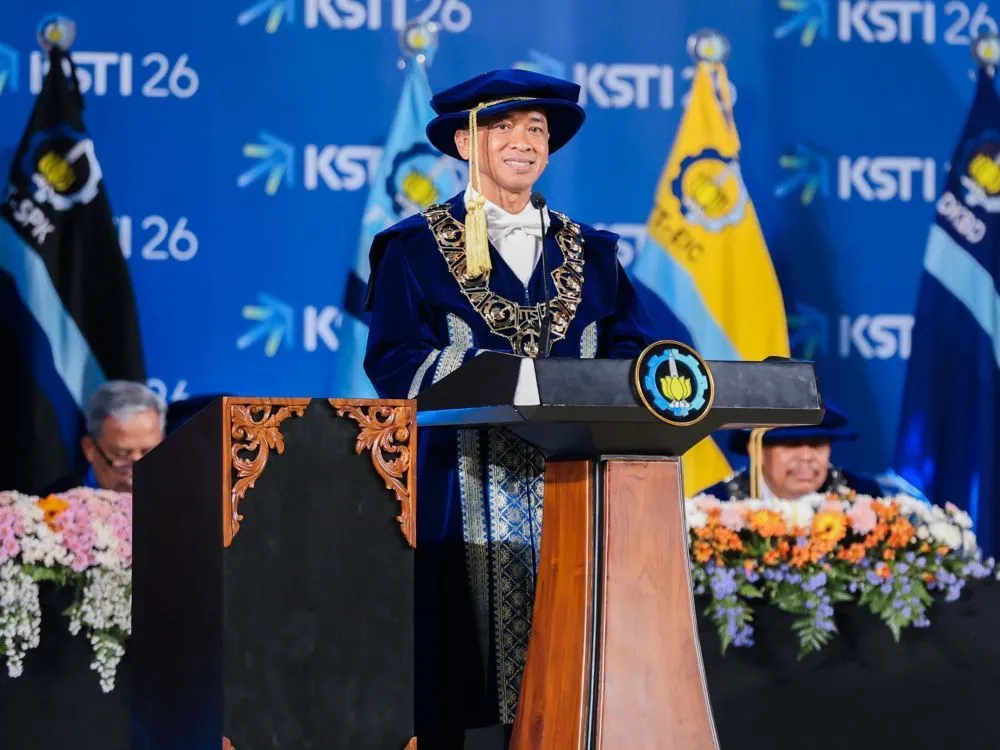
Gigawatts Are Announced. Megawatts Must Be Energized. ACN Newswire

Gigawatts Are Announced. Megawatts Must Be Energized.

HONG KONG, Nov 14, 2026 - (ACN Newswire via SeaPRwire.com) - The number that governs Saudi Arabia's AI infrastructure story is not the biggest one. It is 467, and it counts megawatts: the data center load actually drawing power across the kingdom in the first quarter of 2026, as disclosed by the Ministry of Communications and Information Technology. Against it stand the announcements. HUMAIN, the sovereign AI company owned by the Public Investment Fund, carries a pipeline of 6.6 gigawatts by 2034. The national target under Vision 2030 is 1.5 gigawatts by 2030. Planned capacity tracked at 3.4 gigawatts in the second quarter of 2026. The distance between 467 megawatts and any of those figures is not a rounding error, a financing gap or a demand question. It is an electrical delivery schedule, and it moves at the speed of substations.This article works through what that arithmetic means structurally. The announced pipeline is real capital and real demand, not vaporware, and dismissing it would miss the actual story. The story is that two independent constraints, grid energization on the supply side and anchor-tenant concentration on the demand side, determine which announced gigawatts become billed megawatts, and both constraints bite hardest on the participants least able to wait. Neither constraint is visible in the announcement numbers that dominate the sector's coverage.The gap, measuredThe operational series is short and unambiguous. Saudi Arabia operated 68 MW of data center capacity in 2021, 440 MW at the end of 2025, and 467 MW in Q1 2026, spread across more than 60 facilities, per MCIT figures (Saudi Press Agency, August 15, 2026). Cumulative investment in data centers and digital infrastructure is reported at SAR 56.2 billion by the same official channel, though a separate market tally puts data-center-specific investment nearer SAR 16 billion; the wider figure includes the digital envelope, not just halls and cooling. Growth of roughly six times in four years is a fast buildout by any regional standard, and it is still less than a third of the national target for 2030.Table 1: Saudi data center capacity, from operating load to announced pipelinesMeasureValueStatusSource and periodOperational load, 202168 MWActualMCIT, year-end 2021Operational load, end-2025440 MWActualMCIT, December 2025Operational load, Q1 2026467 MWActualMCIT, April 2026 disclosureNational target1.5 GW by 2030TargetVision 2030 program documentsPlanned pipeline3.4 GWPlannedAsharq Business tracking, Q2 2026HUMAIN interim goal1.9 GW by 2030TargetCEO Tareq Amin, November 2025HUMAIN pipeline6.6 GW by 2034PipelineHUMAIN disclosures, 2025-2026Source: Saudi Press Agency 🔗, August 15, 2026; MCIT quarterly figures as compiled by Saudi Energy Consulting 🔗, 2026Three different denominators hide in that table, and conflating them is how the sector's coverage misleads. Operational load is electricity actually contracted and drawn. National targets are policy commitments with budget lines but no delivery dates. Corporate pipelines are land, capital and intent. The 6.6 GW figure and the 1.9 GW figure are both HUMAIN's, a fact worth pausing on: the company's own interim goal is 27 percent larger than the entire national 2030 target, and both cannot be delivered inside the decade without a step-change in energization speed that nothing in the current record yet demonstrates.The two variables that decide the outcomeThe first structural variable is energization, and its physics is unforgiving. A data center's capacity is the power its equipment can draw, not its floor area or its server count, and the moment capacity exists is the moment a utility connects firm power. Saudi Arabia does have system-level headroom: the grid delivered 160.5 TWh to customers in the first half of 2025, an annualized rate near 321 TWh, so the 2030 target of 1.5 GW works out to roughly 3.7 percent of current deliveries and the 6.6 GW pipeline to about 16 percent. The constraint is not generation in aggregate. It is allocation and delivery: every megawatt of new AI load must pass through a feasibility study, a capacity review, an interconnection point, substation expansion and final grid acceptance, a sequence that industry trackers summarize as "a grid event, not a fit-out."The evidence sits in procurement documents rather than press releases. Tenders ran in the first half of 2026 for a 2,000 MVA bulk supply point and two substations, the physical preconditions for HUMAIN's dense AI load. Transformer lead times run two to four years across the global supply chain. HUMAIN's own behavior confirms the ordering: the company signed its xAI framework, covering 500 MW of power and $3 billion in equity, in November 2025; locked a joint venture with stc's center3 covering up to 1 GW in December 2025; signed a $12 billion financing framework with the National Infrastructure Fund in January 2026; and only then concentrated its chip and application agreements, with AMD, Microsoft, Qualcomm and Adobe, around the 2026 LEAP cycle, where industry tracking put total announced deals at $15 billion. Power first, capital second, chips third. That is the signing order of a company that knows its binding constraint.The second structural variable is anchor concentration. The demand that justifies Saudi Arabia's buildout does not arrive as a smooth market; it arrives as a handful of sovereign-scale commitments, each of which must convert from announcement to contract to energized load. The conversion record so far is mixed. HUMAIN broke ground on twin 100 MW campuses in Riyadh and Dammam in August 2025 with a committed go-live in Q2 2026; as of end-July 2026, the go-live of either campus cannot be verified from any filing or credible report, and the company has declined to disclose delivery progress when asked. The stc/center3 joint venture targeting up to 1 GW was extended but not signed as of a June 2026 filing. DataVolt's Riyadh East project, 44 MW total with 36 MW anchored by HUMAIN, had not closed financing. AWS committed $5.3 billion to its Saudi region and an AI zone with HUMAIN carrying 50 MW by 2028; Microsoft is embedding the ALLaM model into its Copilot stack; AirTrunk's founder Robin Khuda described the partnership as bringing together "the whole digital ecosystem." Each is a real commitment. None so far is billed megawatts.The two variables are independent, and this matters for the argument's testable form. Energization is a supply-side, physical quantity: it moves with procurement, manufacturing and utility scheduling, and no demand event accelerates a transformer. Anchor conversion is a demand-side, contractual quantity: it moves with counterparties' capital cycles and their own global capacity plans, and no substation accelerates a signature. A bottleneck in one does not imply a bottleneck in the other, which is why the sector needs to watch both, and why a month of good news on deals says nothing about power and vice versa.Where each variable is headingEnergization capacity is growing, but on a curve that lags announcements by construction. The visible markers are the substation tenders of the first half of 2026, the bulk supply point procurement for the 6 GW campus, and the quarterly MCIT load series, which added only 27 MW between end-2025 and Q1 2026. At that net-add rate, the 1.5 GW 2030 target requires roughly 260 MW of net additions per year from 2027 onward, five to ten times the current quarterly pace sustained annually. HUMAIN's stated plan, 11 data centers progressing at about 50 MW per quarter, would meet the interim goal only if every site energizes on schedule, with zero slippage across a five-year window, in a market where the two flagship 100 MW campuses have already slipped past one committed quarter.Anchor concentration is heading toward fewer, larger, slower deals rather than many small ones. The sovereign logic is explicit in how the buyers behave: government and enterprise customers paying for "sovereign" AI want models running on in-Kingdom infrastructure with documented evaluation evidence, which pushes workloads to HUMAIN's owned stack rather than to third-party colocation. That concentration is a strength for the champion and a scarcity for everyone else. The xAI, Microsoft, AWS and stc relationships absorb the first gigawatts of priority demand. What remains for non-anchor participants is capacity that energizes later, sells into a market where the sovereign champion sets terms, and carries no committed tenant to underwrite it.What sovereign demand actually consists ofIt is worth spelling out what the anchor tenants are buying, because "sovereign AI" reads like branding until you look at the procurement logic. The Saudi government and its enterprise buyers do not simply want large models; sector reporting through 2026 describes buyers who require models to run on in-Kingdom infrastructure, with documented evaluation evidence and auditable human-oversight records, before a workload counts as sovereign. That requirement converts directly into HUMAIN's architecture. The company must own data centers, contract chips, host models and operate applications, because a government buyer cannot trace a workload through a foreign hyperscaler's multi-tenant regions and still call it sovereign.The commercial structure that follows is an exchange of exclusivity for reach. Microsoft embeds the ALLaM model into its 365 Copilot stack; AWS places ALLaM in Bedrock and hosts HUMAIN's compute on its Marketplace. From the hyperscalers' side, this buys a compliant sovereign offering in a market where foreign operators cannot sell sovereignty themselves. From HUMAIN's side, it buys distribution the champion could never build alone, at the cost of anchoring its demand inside platforms whose global capacity plans it does not control. The vertical integration that looks like strength in the press releases is also a dependency: the sovereign stack's utilization now moves with two American companies' enterprise cycles.This is where the second structural variable stops looking like a constraint and starts looking like a design choice. Saudi Arabia could, in principle, have spread the demand across many tenants the way a commercial colocation market does. It chose concentration, because concentration is what makes the sovereignty claim auditable. The concentration then feeds back into the first variable: a single champion's sites receive priority in the interconnection queue precisely because they carry the state's own demand. The two variables are independent in their physics but coupled in the kingdom's institutional design, and that coupling is the strongest reason to expect the pattern to persist rather than correct.The comparison next doorThe United Emirates runs the same experiment with a different architecture, and the contrast isolates which parts of Saudi Arabia's bottleneck are universal and which are chosen. Reporting on both markets through 2026 describes the UAE model as asset-light: sovereign demand is served through operators that lease and aggregate capacity rather than owning the full stack, letting projects come online faster against rented power and shared infrastructure. Saudi Arabia's HUMAIN sits at the opposite pole, owning land, halls, power contracts, chips and models in one balance sheet, a structure its own leadership frames as vertical integration in service of the sovereign claim.The trade-off shows up exactly where this article's two variables predict. The asset-light model converts announcements to megawatts faster because it buys energized capacity rather than building it; it gives up control over sourcing, pricing and the audit trail that sovereign buyers demand. The heavy model controls everything and therefore waits for everything: its speed is the speed of its own substations. Neither is wrong; they are bets on different customers. For buyers who want sovereignty with evidence, the heavy model wins on compliance and loses on time. For buyers who want capacity now, the light model delivers first and answers questions later.For the region's suppliers and investors, the comparison carries one practical instruction. A gigawatt announced in Riyadh and a gigawatt announced in Abu Dhabi do not carry the same delivery risk, and pricing them alike is the fastest way to own the wrong exposure. The delivery-status gap, energized versus announced, is wider inside the heavy model, which means Saudi projects carry more of the schedule risk and UAE projects carry more of the counterparty risk. Participants should know which risk they are underwriting before they price either.Who feels this firstThe queue of losers, if that is the word, forms in a predictable order. Foreign cloud and colocation entrants without an anchor contract feel it first: they can build shells, but the scarce goods, firm power and sovereign workloads, are being allocated to the champion's stack and its named partners. Chip and equipment vendors feel it second, on their order books: hardware shipped against announcements waits in crates for energized halls, converting vendor revenue recognition into a bet on someone else's grid. Mid-tier colocation operators and capacity resellers feel it third, squeezed between sovereign supply they cannot access and hyperscaler regions that arrive late but arrive complete. Investors price it last and most bluntly: a valuation keyed to announced gigawatts is underwriting construction and grid-connection risk, not demand risk, and the 27 MW quarterly net-add figure is the denominator that discipline eventually re-imposes.The kingdom itself absorbs much of the cost through the sovereign balance sheet, which is the point of a sovereign champion: PIF can hold land, power contracts and financing commitments open for years in a way no private developer can price. That patience is an advantage, and it is also why the private participants around the champion, rather than the champion itself, are the ones whose timelines break first.Table 2: HUMAIN's major commitments, announcement to conversion statusCounterpartyScope announcedAnnouncedConversion status as of mid-2026xAI500 MW power, $3B equity frameworkNovember 2025Framework; campus power not yet energizedstc / center3JV up to 1 GWDecember 2025Extended, not signed, per June 2026 filingNational Infrastructure Fund$12B financing frameworkJanuary 2026Framework; project-level closes pendingAWS$5.3B region; 50 MW AI zone by 20282025-2026Region committed; AI zone capacity target 2028AMD, Microsoft, Qualcomm, AdobeChips, models, applications2026 LEAP cycleAnnounced at $15B total deal valueSource: HUMAIN disclosures and market tracking compiled by NextFin 🔗, 2026; deal values as reported by the companies and Global Data Center Hub 🔗 trackingWhat would prove this call wrongA structural argument earns its keep by naming its own failure signals, so here they are, ranked by how early they fire.The twin 100 MW campuses energize close to a revised schedule, and MCIT's quarterly series jumps by more than 100 MW in one or two quarters. That would show the grid queue is shorter than the procurement record implies, and the supply-side constraint loosens.The 2,000 MVA bulk supply point and substation tenders convert to awarded contracts within two quarters, and equipment orders for transformers show delivery dates inside 24 months. That would compress the energization curve materially.The stc/center3 joint venture is signed with a delivery date, and DataVolt's Riyadh East financing closes. That would show anchor conversion is normalizing rather than concentrating.A non-anchor foreign operator announces an energized, tenanted hall at scale without sovereign workloads. That would falsify the concentration claim directly.If most of these fire through 2027, the right model is a fast-follow market with a temporary grid lag, and the announced pipeline mostly arrives, late. If they do not, the correct reading of 2026's announcement wave is simpler and colder: the kingdom is buying optionality on a power delivery curve that only the sovereign champion can afford to wait for, and everyone else in the value chain is pricing megawatts they have not been promised.Data basisData as of November 2026. The capacity series (68 MW, 440 MW, 467 MW) comes from MCIT disclosures reported by the Saudi Press Agency on August 15, 2026. The SAR 56.2 billion and SAR 16 billion investment figures count different scopes and are presented separately, not averaged. The 1.5 GW national target, the 3.4 GW planned pipeline (Asharq Business, Q2 2026) and HUMAIN's 6.6 GW and 1.9 GW figures are commitments and pipelines, marked as such in the table, never merged with operational load. Grid delivery arithmetic uses 160.5 TWh of first-half 2025 deliveries annualized to about 321 TWh, with target shares computed against that annualized base; the estimate of required net additions divides the remaining distance to 1.5 GW by the years to 2030. Conversion statuses for HUMAIN's commitments come from company statements and market filings through mid-2026 as compiled by NextFin. Definitions: "energized" means firm power contracted and drawn at the interconnection point; "planned" means a disclosed project with no energization date; "pipeline" means a corporate build goal with land and capital attached.LimitationsMCIT publishes quarterly operational load, not energization dates per project, so the gap between contractual power and drawn power is inferred, not observed.HUMAIN's campus go-live status is negative evidence, absence of a service announcement, which cannot distinguish delay from quiet commercial operation.Two low-credibility tracker figures (a 6,600 MW AI-grade pipeline; DataVolt's 1,500 MW NEOM load) were excluded from the tables for provenance.SourcesSaudi Press Agency 🔗, MCIT data center capacity and investment disclosures, August 15, 2026 (site home)Saudi Energy Consulting 🔗, "HUMAIN's 6.6 GW AI Campus Dream: Can Saudi Arabia Power the Data Center Rush?," 2026NextFin 🔗, "Saudi Arabia, UAE Push Ahead With Data Center Plans, but Live Capacity Lags Announced Gigawatts," 2026Asharq Business 🔗, planned capacity tracking, Q2 2026 (site home)Global Data Center Hub 🔗, LEAP 2026 deal value and project tracking, 2026 (site home)About Global Infinity LabsGlobal Infinity Labs is an AI innovation company specializing in MCP data services. This article was prepared by our expert team using insights and data provided through our MCP platforms.Contact: support@globalinfinitylabs.com Copyright 2026 ACN Newswire via SeaPRwire.com. All rights reserved. www.acnnewswire.com
More
The Philippines Will Spend $2.45 Billion on Telecoms in 2026. Watch Where It Doesn’t Go ACN Newswire

The Philippines Will Spend $2.45 Billion on Telecoms in 2026. Watch Where It Doesn’t Go

HONG KONG, Nov 13, 2026 - (ACN Newswire via SeaPRwire.com) - The announcement landed in early September 2026 with the confidence of a milestone: the Department of Information and Communications Technology confirmed that the Philippines' three largest network builders had collectively committed about $2.21 billion in capital expenditure for the year, a figure that rises to $2.4 billion to $2.45 billion once DITO Telecommunity's projected spending is added. Secretary Henry Aguda framed the number as a vote of confidence, crossing the $2 billion mark, he said, means the industry believes in the country. The statement was accurate and, in the way official statements usually are, incomplete. A capital expenditure total is a headline, not a forecast. What determines whether this round of spending actually changes the market is not the sum but its composition, and the composition has shifted in two directions at once: the challenger is spending less than it did last year, while a law passed in 2025 has quietly converted the last mile of the network from a franchise-controlled asset into something any qualified company can register to build.On paper, $2.45 billion of telecom investment in a country of 114 million people looks like an expansion cycle. In practice, two variables decide what this money does: the direction of DITO's build-out, and the pace of registrations under the Konektadong Pinoy Act's new data transmission framework. This article takes each variable apart, checks what the disclosed numbers actually support, and names the signals that would show the reading is wrong.What the $2.45 billion actually buysThe Department's figures rest on company disclosures and earnings briefings available as of August 2026. Three operators account for the confirmed portion:Operator2026 capex guidance (peso terms)Dollar equivalentNotesPLDT Inc.about PHP 55 billionroughly $930 millionlargest single commitmentGlobe Telecombelow PHP 59.4 billion$950 million to $970 millioncapped guidanceConverge ICTPHP 17 billion to 20 billionabout $310 millionmidpoint basisDITO Telecommunityprojected $170 million to $250 millionincluded in the $2.4-2.45 billion rangebelow its 2025 levelConfirmed total (PLDT + Globe + Converge) about $2.21 billiondisclosures as of August 2026Industry total incl. DITO and others $2.4 billion to $2.45 billionDICT estimateSource: Newsbytes.ph, reporting the DICT statement of 1 September 2026Three reading notes before the number gets quoted further. First, the $2.21 billion is guidance, not audited spend, the DICT itself flags that the figures "remain subject to changes in the telcos' spending plans." Second, the dollar conversions are the Department's own, at peso-dollar rates that were not published alongside the announcement; the peso ranges (PHP 55 billion, PHP 59.4 billion, PHP 17-20 billion) are the firmer numbers. Third, DITO's portion is a projection, not a commitment, which is exactly why the spread between the confirmed $2.21 billion and the projected $2.45 billion matters. If DITO spends at the bottom of its range, roughly $190 million of the headline figure is inference.Variable one: DITO is spending less, not moreThe most telling line in the DICT statement is the one about the challenger. DITO Telecommunity, the third player that entered the market in 2021 and broke the PLDT-Globe duopoly, is projected to invest between $170 million and $250 million in 2026, below the PHP 15 billion to PHP 18 billion (roughly $260 million to $310 million at prevailing rates) it spent in 2025. A challenger cutting capex in its sixth year is not a detail; it is a phase change.DITO's build-out followed a pattern familiar from other markets with a state-backed entrant: heavy early spending on towers and spectrum to hit coverage obligations, then a taper as subscriber growth must start paying for itself. The 2026 guidance says the taper has arrived. Two consequences follow, and they do not require inside knowledge of DITO's books to state.The first is competitive. A challenger that stops expanding coverage competes on price with a fixed network. That is good for consumers in the short run and corrosive for everyone's revenue per user in the medium run. PLDT and Globe are simultaneously being asked to spend at record levels, PLDT's PHP 55 billion is its largest annual commitment, while a rival whose growth thesis required sustained capex now has room to undercut on price. On paper the industry is investing heavily. In practice, the pricing pressure that follows a challenger's capex holiday can consume more margin than the capex itself.The second is structural. DITO's retreat shifts the incremental-coverage burden to the government's own programs: the National Fiber Backbone rollout and the accelerated implementation of the Konektadong Pinoy Act. The DICT statement lists both alongside the operators' commitments, and the pairing is not rhetorical. When private capex concentrates in dense, profitable corridors, the unprofitable edges are left to state-funded backbone and to whatever new entrants the open-access regime attracts. Whether the edges get served in 2026-2028 depends far more on those two mechanisms than on the headline number.Variable two: the last mile is now a registration, not a franchiseThe Konektadong Pinoy Act, Republic Act No. 12234, was passed in 2025; its Implementing Rules and Regulations followed in November 2025. The operational hinge came on 2 February 2026, when the National Telecommunications Commission signed Memorandum Circular No. 002-02-2026, the registration and authorization framework for Data Transmission Industry Participants (DTIPs). The framework's core move is the abolition of the legislative franchise requirement for data transmission: entities that move data commercially register administratively with the NTC instead of needing a bespoke act of Congress.The circular splits the industry into four segments, each with its own asset floor, and the floors are calibrated to let small players in at the edge while keeping the core capitalized:SegmentMinimum asset requirementCertificate validityInternational Gateway Facility (IGF)PHP 1 billion (about $16 million)up to 15 yearsCore / Backbone networkPHP 100 millionup to 15 yearsMiddle milePHP 10 millionup to 10 yearsLast milePHP 500,000 (about $8,000)5 yearsSource: eLegal Philippines, on NTC Memorandum Circular No. 002-02-2026A half-million-peso asset floor for last-mile operation is a deliberate policy choice: it prices community networks, cooperatives and small ISPs into the market. The circular adds a "Green Lane" for applications from micro-entities and community-based providers targeting rural and underserved areas, and requires all authorized participants to meet cybersecurity standards, publish annual transparency reports on rates, and file yearly reports, covering investments, coverage, network maps and pricing, to the NTC and the Philippine Competition Commission by 30 April each year. Registrants must also keep a debt-to-asset ratio of no more than 70 percent.In practice, the framework's first year has produced friction rather than a flood. The DICT issued the IRR in November 2025 and the NTC began transitioning existing licensees in the first quarter of 2026, requiring public telecom entities to declare which segments they occupy. By the third quarter of 2026 the Commission was still running focus-group discussions on where the boundary sits between DTIP-regulated data transmission and the older value-added services (VAS) regime, a boundary question that matters because, as one Manila law firm reviewing the year's developments put it, potentially most VAS providers necessarily involve data transmission, yet the NTC currently treats internet access and VoIP as DTIP matters while leaving other VAS under the old regime. The precise line remains unsettled.So the second variable is live but unproven. The law has removed the franchise barrier; the registration thresholds are published; the transition clock is running. What has not yet been demonstrated is volume: how many new last-mile registrants have actually appeared since February, and whether any of them are building outside the corridors the big three already serve. That number is the single most informative statistic in Philippine telecom right now, and it is not in the DICT's capex announcement.The other levers inside the Implementing RulesRegistration is the provision that gets the headlines, but the Implementing Rules bundle several mechanisms that bear directly on how the 2026 capex converts into coverage. Each works on a different constraint, and each has a different failure mode.Mandatory infrastructure sharing. Access providers and owners of passive infrastructure, towers, ducts and fiber, must make essential facilities available on fair and non-discriminatory terms. The aim is to stop duplicate builds and lower the capital cost of rollout. The failure mode is pricing disputes: determining what "fair" access costs where the incumbent controls the asset, which is why the rules require published Reference Access Offers and an access list rather than leaving terms to negotiation.A "Dig Once" policy requiring conduit installation during roadworks. Boring fiber ducts while a road is already open is the cheapest civil-works moment a network builder will ever get. The mechanism is cheap on paper and depends entirely on coordination between the Department of Public Works and the telecom side, a coordination the IRR assigns but cannot force.Spectrum reform through a Spectrum Management Policy Framework. The framework must guide allocation, assignment and recall of frequencies, with periodic review and competition-sensitive allocation, and it introduces mechanisms to reclaim underutilized spectrum and reassign it to more efficient users. This is the provision with the longest shadow over the incumbents, because "underutilized" is a judgment an incumbent can dispute but cannot ignore.Fiscal incentives for investment, including tax holidays, duty exemptions and VAT zero-rating, aimed at pulling private capital into underserved and unserved areas.Cybersecurity as a licensing condition rather than a best practice. Registrants must implement recognized frameworks, ISO/IEC 27001, NIST or CIS, establish incident-response protocols, and report major incidents to the national CERT. Compliance is a condition of continued operation.Taken together, the rules try to attack the cost side of rural coverage from four directions at once: cheaper civil works, cheaper access to existing infrastructure, cheaper spectrum, and cheaper taxes. Whether that adds up to cheaper rural networks depends on implementation details the IRR only sketches. BusinessWorld's legal analysis of the law notes the obvious risk: increased participation does not automatically translate into effective competition, and market fragmentation or continued dominance by incumbents may persist without strong regulatory oversight. The same analysis flags overlapping roles across the DICT, the NTC and the Philippine Competition Commission as a coordination hazard that could fragment regulation.The honest summary of the framework's first year is therefore asymmetric. The cost-reduction levers are live and do not need new legislation; a new entrant digging once, leasing ducts and claiming incentives can already bank the savings. The competition-creating lever, registration itself, is live but its volume is unproven. That asymmetry is why the registration count, not the incentive take-up, is the variable worth watching.The enterprise revenue line is the quiet tellThere is a third, less advertised explanation for why incumbents are willing to spend at record levels while the challenger retrenches: the demand mix has rotated from consumer subscriptions to enterprise data. PLDT's first-half 2026 results carry the signal. Enterprise revenue reached PHP 24.8 billion, with corporate data and ICT services contributing PHP 18.4 billion of it, and PLDT Global's revenue grew 30 percent year on year as the company expanded its role in regional connectivity. Growth of that shape is not driven by household broadband plans; it tracks data-center traffic, cloud interconnection and the AI build-out that the DICT's own announcement cites as downstream beneficiaries of better networks.PLDT metric, first half 2026ValueEnterprise revenuePHP 24.8 billionCorporate data and ICT revenuePHP 18.4 billionPLDT Global revenue growth, year on year30 percentSource: figures as recorded from PLDT disclosures; see Light Reading 🔗 for the 2026 capex contextThe enterprise tilt also explains the international-infrastructure line item that gets least attention: a proposal for a $500 million domestic subsea cable, with an expected completion window of 24 months once begun. Domestic subsea capacity is an odd-sounding priority for an archipelago until the demand mix is considered, inter-island enterprise backhaul between Luzon, Visayas and Mindanao data centers is exactly the constraint that consumer-facing metrics never surface. A 24-month build clock means a decision taken in 2026 lands in 2028, which makes the capex-guidance number for this year a poor predictor of what the network looks like when the AI and data-center demand actually arrives.It depends on which revenue line you believe is permanent. If enterprise data growth is a durable rotation, incumbent capex at PHP 55 billion-plus levels is rational maintenance of a margin engine, and the headline $2.45 billion is not expansion so much as re-platforming. If it is a cycle peak, AI infrastructure demand cooling the way it has cooled elsewhere, the same spending becomes stranded-capacity risk, and DITO's caution starts to look like the sharpest read in the market.Who gets hit first, and in what orderThe restructuring does not land on all participants at once. Ordering the exposure by mechanism rather than by size:VAS providers face classification risk first. The unsettled DTIP/VAS boundary means companies that thought they were lightly regulated content or platform service providers may wake up registered as data transmission participants, with asset floors, cybersecurity certification and annual reporting attached. The Q3 2026 focus-group process will decide how wide that net is cast.Incumbent last-mile operators in dense urban districts are exposed second, and only if registration volume materializes. A PHP 500,000 threshold invites entrants precisely where revenues are richest; in provincial markets, the Green Lane's community-network track is the realistic challenger, and its pace is grant-dependent.DITO's own retail position is exposed third, from the opposite direction: a challenger freezing network growth while rivals monetize enterprise demand will either need a price war, which its cut capex suggests it is preparing for, or a niche strategy the guidance does not reveal.Spectrum holders are exposed last and most slowly, through the Spectrum Management Policy Framework the IRR mandates, including mechanisms to recall underutilized frequencies and reassign them. Recall authority changes behavior long before it is used.Two leading indicators carry most of the information. The first is the NTC's registration count by segment, ideally published monthly: a registry that crosses even a few dozen last-mile registrants within a year of the circular would validate the open-access thesis; a registry that stays in single digits by mid-2027 would show the threshold was not the binding constraint. The second is DITO's 2027 guidance: another year of sub-$300 million spending confirms the taper as strategy rather than timing, and forces a repricing of the competitive intensity every incumbent model assumes.The reading fails under two conditionsThis conclusion fails when either variable moves the other way. If DITO's 2027 guidance reverses, a return to PHP 15 billion-plus spending, presumably tied to new funding or a coverage mandate, the "challenger retrenchment" leg collapses, and the capex composition argument inverts into a renewal of the build-out race. If the NTC's DTIP registry shows hundreds of active last-mile operators serving areas the big three had abandoned, the "friction rather than flood" leg collapses, and the Konektadong Pinoy Act becomes the story rather than the footnote. Both numbers are public or will be; neither requires special access to check. Anyone quoting the $2.45 billion headline without them is quoting a milestone, not a trend.Data basisThe capex figures come from the Department of Information and Communications Technology's statement of 1 September 2026, which consolidated company disclosures and earnings briefings as of August 2026; they were cross-checked across five independent reports of the same announcement (Newsbytes.ph, Telecom Review Asia, Communications Today, Developing Telecoms, Context.ph), which agree on all figures. The regulatory framework rests on Republic Act No. 12234, its Implementing Rules and Regulations of November 2025, and NTC Memorandum Circular No. 002-02-2026 signed 2 February 2026, as summarized by two Philippine legal analyses. PLDT's first-half 2026 enterprise figures and the subsea cable proposal are as recorded in the project's telecom metrics dataset from trade-press reporting. The DITO 2025 spending range is the DICT's own comparison figure. No operator financial statements were read directly; all numbers are second-hand from disclosure-based reporting.LimitationsDollar conversions are the DICT's and vary by report. DITO's 2026 spending is a projection, not a disclosure. The DTIP registration count, the analysis's key leading indicator, was not available at writing; the registry-based claims are therefore forecasts, not findings. The VAS boundary outcome depends on a regulatory process still in consultation.SourcesNewsbytes.ph, PH telco capital spending seen reaching $2.45 billion in 2026, 1 September 2026Telecom Review Asia, Philippine Telco Sector Lines Up USD 2.2B in 2026 CapEx, September 2026BusinessWorld Online, Konektadong Pinoy Act: Expanding access, redefining competition, 2026eLegal Philippines, NTC Sets New Guidelines for Konektadong Pinoy Act, February 2026Law.asia, Philippine digital regulation: Connectivity, fintech developments, 22 October 2026Light Reading, Philippine telcos set $2.2B for infrastructure investment in 2026, 2026About Global Infinity LabsGlobal Infinity Labs is an AI innovation company specializing in MCP data services. This article was prepared by our expert team using insights and data provided through our MCP platforms.Contact: support@globalinfinitylabs.com Copyright 2026 ACN Newswire via SeaPRwire.com. All rights reserved. www.acnnewswire.com
More
AXE Management Partners sells Osaka hotels for JPY 21 billion, nearly twice its purchase price ACN Newswire

AXE Management Partners sells Osaka hotels for JPY 21 billion, nearly twice its purchase price

Hong Kong, Nov 13, 2026 - (ACN Newswire via SeaPRwire.com) - Pan-Asia alternative investment company AXE Management Partners has sold a three-hotel portfolio with 518 rooms in central Osaka to Tokyo-listed real estate investment manager Creal for about JPY 21 billion, according to sources familiar with the transaction. The sale price was nearly twice what AXE paid for the portfolio in 2024.AXE acquired the properties from CapitaLand Ascott Trust for JPY 10.7 billion, or about USD 71 million at the time. Creal completed the purchase on July 31, 2026. The transaction figures were first reported by the publication Mingtiandi. Creal's filings disclosed neither the seller nor the purchase price. AXE could not be reached for comment before publication.Completed in 2018, the hotels were originally operated by WBF Hotels & Resorts, which entered court-supervised restructuring in April 2020 amid the pandemic. Two of the properties had been closed since 2020 when AXE took control. AXE partnered with UK-based IHG Hotels & Resorts to introduce its midscale "Garner by IHG" brand to Asia, marking the brand's first deal outside North America. The properties underwent refurbishment, including redesigned public areas, and reopened in the first half of 2025. The sale closed about a year and a half later.The AXE sale is among several large Osaka hotel transactions in 2026, including a Nomura-managed fund's JPY 38.5 billion purchase of the Centara Grand Hotel Osaka and Japan Hotel REIT's JPY 14.3 billion acquisition of Candeo Hotels Osaka Namba. Together, the transactions suggest continued institutional interest in Osaka's hotel market.AXE was founded by Gary Kwok, a seasoned investment banker who previously held senior positions at Credit Suisse and Bank of America Merrill Lynch, where he served as head of Asia Pacific hospitality, lodging and gaming real estate. According to AXE, he has led transactions totaling more than USD 50 billion during his career.Caption: Gary Kwok, founder and CEO of AXE Management Partners. Image source: Newslink.AXE is reportedly planning further investments in hospitality and commercial real estate in Japan and other Asian markets. Copyright 2026 ACN Newswire via SeaPRwire.com. All rights reserved. www.acnnewswire.com
More